

The United Nations Office at Geneva
Multimedia Newsroom
Lebanon crisis: UN rights chief urges warring parties to agree on ceasefire
UN human rights chief Volker Türk lent his weight to growing ceasefire calls in Lebanon on Tuesday, as senior Israeli cabinet members were reportedly due to meet on a deal to end more than a year of conflict with Hezbollah militants, sparked by the war in Gaza.
The development follows dire assessments from UN aid teams about the cost of “relentless” Israeli attacks on Beirut’s southern suburbs since the weekend, resulting in extensive damage and significant casualties, and forcing more people to flee their homes.
“The High Commissioner reiterates his call for an immediate ceasefire to put an end to the killings and the destruction,” stressed Jeremy Laurence, spokesperson for the Office of the High Commissioner for Human Rights (OHCHR). “Israeli military action in Lebanon has caused widescale loss of civilian life, including the killing of entire families, widespread displacement and the destruction of civilian infrastructure, raising serious concerns about respect for the principles of proportionality, distinction and necessity.”
At the same time, Hezbollah rocket fire has continued into northern Israel, resulting in civilian casualties, the OHCHR spokesperson noted. “Most of these rockets are indiscriminate by nature along with the displacement of many Israeli civilians, which is unacceptable. The only way to end the suffering of people on all sides is a permanent and immediate ceasefire on all fronts: in Lebanon, in Israel and in Gaza.”
The latest update from the UN aid coordination office, OCHA, reported that a deadly air strike on Saturday in Beirut “demolished a residential building, claiming nearly 30 lives and injuring more than 65 people. This is out of a total 84 people killed in the country that day alone, according to the authorities.”
On average, 250 people have been killed every week in November in Lebanon, bringing the death toll to more than 3,700 since the escalation of hostilities in October 2023, OCHA said, while the UN Children’s Fund (UNICEF) condemned the killing of at least nine youngsters between 22 and 23 November, “including boys and girls who were sleeping in their beds”.
The UN agency said that the total number of child deaths has reached at least 240 since October 2023 when Hezbollah rocket fire escalated in response to Israeli bombardment of nearby Gaza.
Despite ongoing security concerns, the UN and humanitarian partners remain on the ground to try to scale up efforts to continue providing critical assistance.
As of 19 November, UNICEF reported carrying out 14 humanitarian convoys, reaching some 50,000 people in areas that are difficult to access, such as Tyre, Rmeich, Marjaayoun and Hasbaya. The UN agency has also supported displaced families living on the streets of Beirut, helping them find shelter amid a severe urban displacement crisis.
Meanwhile late Monday, the UN World Health Organization (WHO) said that it had delivered 48 tons of medical supplies to support the Lebanese health authority’s chronic medication programme, ensuring that 300,000 people “have continued access to essential medicines”.
Lebanon ceasefire call – OHCHR
TRT: 02 min 00s
SOURCE: UNTV CH
RESTRICTIONS: NONE
LANGUAGE: ENGLISH / NATS
ASPECT RATIO: 16:9
DATELINE: 26 NOVEMBER 2024 GENEVA, SWITZERLAND
Speaker:
- Jeremy Laurence, spokesperson, OHCHR
SHOTLIST
-
- Exterior médium-wide: UN Geneva flag alley.
- Wide, UN Geneva Press room, journalists, screens.
- SOUNDBITE (English) – Jeremy Laurence, spokesperson, OHCHR: “The High Commissioner reiterates his call for an immediate ceasefire to put an end to the killings and the destruction. Israeli military action in Lebanon has caused widescale loss of civilian life, including the killing of entire families, widespread displacement and the destruction of civilian infrastructure, raising serious concerns about respect for the principles of proportionality, distinction and necessity.”
- Medium-wide, Press room, journalists.
- SOUNDBITE (English) – Jeremy Laurence, spokesperson, OHCHR: “The Lebanese armed group Hezbollah has also continued to fire rockets on the north of Israel, which has resulted in civilian casualties. Most of these rockets are indiscriminate by nature along with the displacement of many Israeli civilians, which is unacceptable. The only way to end the suffering of people on all sides is a permanent and immediate ceasefire on all fronts; in Lebanon, in Israel and in Gaza.”
- Medium-wide, journalists.
- SOUNDBITE (English) – Jeremy Laurence, spokesperson, OHCHR: “At least seven paramedics were reportedly killed in three separate Israeli strikes on the south of Lebanon, adding to the 226 healthcare workers reported killed between the 7 October and 18 November this year. These are further indications of just how brutal this war has been on civilians.”
- Medium-wide, podium speakers, Press room, TV journalist and camera.
- Medium-wide, Press room, TV screens.
- Medium-wide, TV journalist and camera, control booths.
Similar Stories
1
1
1
Edited News | OCHA , UNICEF , WFP
Aid agencies warned on Friday of the fast-developing humanitarian emergency inside Taiz City in Yemen, which has been encircled by de facto Houthi forces fighting government troops along the country’s west coast.

2
17
1
2
Edited News , Press Conferences , Images | OCHA , WMO
Two UN agencies teamed up on Wednesday to issue an appeal for immediate assistance to help communities already being impacted by the strongest El Niño on record.
3
16
2
2
Edited News , B-roll , Conferences , Images | UNITED NATIONS , UNOG
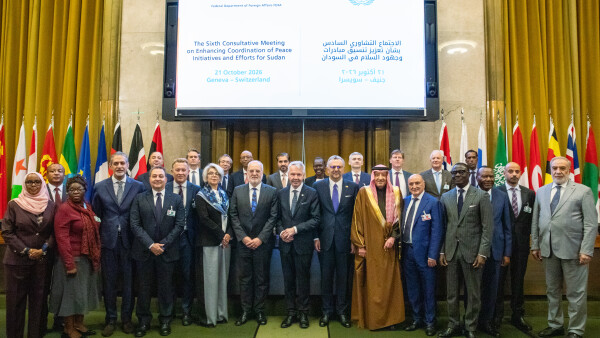
Sixth Consultative Meeting on Enhancing Coordination of Peace Initiatives and Efforts for Sudan
1
1
1
Edited News | UNICEF , WHO , UNHCR
Yemen war continues to force families from homes amid hunger and disease
More than 250,000 people have now fled renewed fighting in Yemen, the UN said on Tuesday, citing particular concern for those sheltering in the southwestern city of Taiz and the wider governorate, where access is “essentially blocked”.

1
1
1
Edited News | UNICEF
A little over one year since a ceasefire agreement was announced between Hamas fighters and Israel, more than 340 children have been reported killed and hundreds more injured, the UN Children’s Fund, UNICEF, said on Friday.

1
1
1
Edited News | UNICEF , IFRC
Six weeks after Nepal’s deadly flooding disaster, communities are still struggling to rebuild their lives, but they will need sustained help as global warming increases the risk of another Himalayan catastrophe, the UN Children’s Fund (UNICEF) said on Friday.

1
1
1
Edited News | WHO
In suspected Russia plague death, testing and monitoring underway – WHO
The death of a lab worker in Russia’s Siberia region has sparked concerns about plague being the cause, the UN World Health Organization (WHO) said on Tuesday, adding that it was following the situation closely.

1
1
Edited News | OHCHR , UNOG
UN Human Rights Chief Volker Türk on Friday provided and oral update to the 63rd session of the Human rights Council on Ukraine.

1
1
1
Edited News | OHCHR , UNOG
UN Human Rights Chief Volker Türk on Friday provided and oral update to the 63rd session of the Human rights Council on the human rights situation in Haiti.

1
1
1
Edited News | WHO
Repeated delays in bringing lifesaving medicines, prosthetics and more from Israel into Gaza risk having devastating consequences on Palestinians who urgently need them in the wartorn enclave, the UN World Health Organization (WHO) said on Friday. “A truck full of non-priority supplies or the right supplies arriving too late, doesn't save lives. That's the question that actually matters," said Dr Reinhilde Van De Weerdt, WHO Representative in the OPT.

1
1
1
Edited News | WHO
DRC: Early access to care and oxygen decisive for Ebola patients’ survival – WHO
In the Democratic Republic of the Congo (DRC), health workers fighting the country’s largest-ever Ebola outbreak are struggling to overcome critical challenges to patient care, the UN World Health Organization (WHO) warned on Tuesday.

1
1
1
Edited News | OCHA , UN
Civilians in Iran are continuing to feel the consequences of months of conflict and military escalation, the UN’s top official in the country has said, as loss of life, damage to civilian infrastructure and mounting economic pressures leave many facing continued uncertainty.