

The United Nations Office at Geneva
Multimedia Newsroom
Amid bombardment in Gaza, UN aid teams resume polio vaccinations in north
UN aid teams prepared to enter northern Gaza at the weekend to resume a mass polio vaccination campaign despite the daily dangers from ongoing bombardment, the UN agency for Palestine refugees, UNRWA, said on Friday.
Speaking to UN News from middle Gaza against a backdrop of intermittent explosions, UNRWA Senior Emergency Officer Louise Wateridge described increasingly dire conditions in the enclave, more than a year since Hamas-led terror attacks in Israel sparked the war.
“Things are really intensifying here. The desperation is just everywhere,” she said. “Already my colleagues I've been speaking to, they just don't know what to do anymore, they don't know where to go, you might hear behind me now, there are continued bombardments going on.”
UNRWA’s efforts to help Gaza’s most vulnerable communities have continued as Israeli legislation passed this week threatens to shut it down. The move has been condemned by UN agencies and beyond, as supporters of the UN agency has reiterated its unique role across the Occupied Palestinian Territories.
“I've sat here for 12 months telling people how every day it gets worse, every day it gets worse. Without UNRWA, that will continue,” Ms. Wateridge said. “I don't even want to imagine the reality on the ground if the largest aid operation in the Gaza Strip is prevented from doing their jobs, because at the moment they're doing everything they can to keep people going to keep people having food, basic medical supplies, you know, prevent disease. We're about to start the second round of polio again tomorrow in the north.”
The polio vaccination campaign in Gaza’s north – coordinated by UNRWA, the World Health Organization (WHO) and the UN Children’s Fund (UNICEF) – aims to reach an estimated 119,000 children under 10 years old with a second dose of novel oral polio vaccine type 2. “However, achieving this target is now unlikely due to access constraints,” WHO said on Friday.
The campaign in northern Gaza follows two successful phases of the second round of vaccinations in central and southern Gaza, which reached 451,216 children – 96 per cent of the objective in these areas.
In the past few weeks, at least 100,000 people have been forced to evacuate from north Gaza towards Gaza City for their own safety, WHO said.
Some 15,000 children under 10 years old who remain in north Gaza towns including Jabalia, Beit Lahiya and Beit Hanoun “still remain inaccessible and will be missed during the campaign, compromising its effectiveness”, the UN health agency said. To interrupt poliovirus transmission, at least 90 per cent of all children must be vaccinated.
After more than a year of destruction, disease spread and death, UNRWA’s Ms. Wateridge said that “hopelessness is really the only word left for Gaza. There's nowhere for anyone to go. You know, 2.2 million people - you have to remind everybody - that they're trapped, there is no way out of the Gaza Strip, and this bombing just continues all day, all night.”
UN staff have also been heavily marked by the experience, the UNRWA spokesperson said, pointing out that morale is “very low. It's been one year where colleagues have been working, they've been putting their lives on the line and many have paid the ultimate price that many have lost their lives in this war they have been killed.”
Shutting down UNRWA would have a devastating impact on Gaza, Ms. Wateridge insisted, as the UN agency “knows the community and the community knows UNRWA. Without UNRWA here, it's impossible for other agencies to come in and do the vast amount of work that UNRWA does.”
Story: “Gaza Humanitarian Update – UNRWA” – 01 November 2024
Speaker: UNRWA Senior Emergency Officer Louise Wateridge
TRT: 02’31”
SOURCE: UNTV CH
LANGUAGE: ENGLISH / NATS
ASPECT RATIO: 16:9
DATELINE: 01 November 2024 – GAZA. Broll taken 1 November 2024 in Middle Gaza and on 31 October 2024 in Khan Younis, southern Gaza.
RESTRICTIONS: None
SHOTLIST
- Wide shot, panning: aftermath of a distant and massive explosion in the direction of north Gaza, 1 November 2024.
- SOUNDBITE (English) UNRWA Senior Emergency Officer Louise Wateridge: “Things are really intensifying here. The desperation is just everywhere. I mean, the people you speak to, already my colleagues I've been speaking to, they just don't know what to do anymore, they don't know where to go, you might hear behind me now, there are continued bombardments going on.”
- Medium-wide shot, images of destruction in Khan Younis seen through a car window, 31 October 2024.
- SOUNDBITE (English) UNRWA Senior Emergency Officer Louise Wateridge: “I've sat here for 12 months telling people how every day it gets worse, every day it gets worse. Without UNRWA, that will continue. I don't even want to imagine the reality on the ground if the largest aid operation in the Gaza Strip is prevented from doing their jobs, because at the moment they're doing everything they can to keep people going to keep people having food, basic medical supplies, you know, prevent disease. We're about to start the second round of polio again tomorrow in the north.”
- Medium-wide shot, rubble-strewn roadsides in Khan Younis from a car window, 31 October 2024.
- SOUNDBITE (English) UNRWA Senior Emergency Officer Louise Wateridge: “Hopelessness is really the only word left for Gaza. There's nowhere for anyone to go. You know, 2.2 million people - you have to remind everybody - that they're trapped, there is no way out of the Gaza Strip, and this bombing just continues all day, all night.”
- Medium-wide shot, rubble-strewn roadsides and destroyed buildings in Khan Younis, filmed from a car window, 31 October 2024.
- SOUNDBITE (English) UNRWA Senior Emergency Officer Louise Wateridge: “If UNRWA is no longer able to work on the ground, if these thousands of colleagues are prevented from doing their jobs, it will have a detrimental impact for the rest of the humanitarian agencies who essentially rely on us here, you know, we really run the coordination of everything.”
- Medium-wide shot, rubble-strewn roadsides and destroyed buildings in Khan Younis, filmed from a car window, 31 October 2024.
- SOUNDBITE (English) UNRWA Senior Emergency Officer Louise Wateridge: “The morale at the moment, as you can imagine for the United Nations - not just UNRWA - it's very low. It's very low. It's been one year where colleagues have been working, they've been putting their lives on the line and many have paid the ultimate price that many have lost their lives in this war they have been killed.”
- Medium shot, destruction in Khan Younis, filmed from a car window, 31 October 2024.
- SOUNDBITE (English) UNRWA Senior Emergency Officer Louise Wateridge: “It knows the community and the community knows UNRWA. Without UNRWA here, it's impossible for other agencies to come in and do the vast amount of work that UNRWA does.”
- Medium shot, destruction in Khan Younis, buildings hollowed-out or collapsed from shelling, filmed from a car window, 31 October 2024.
Similar Stories
1
1
1
Edited News | OCHA , UNICEF , WFP
Aid agencies warned on Friday of the fast-developing humanitarian emergency inside Taiz City in Yemen, which has been encircled by de facto Houthi forces fighting government troops along the country’s west coast.

2
17
1
2
Edited News , Press Conferences , Images | OCHA , WMO
Two UN agencies teamed up on Wednesday to issue an appeal for immediate assistance to help communities already being impacted by the strongest El Niño on record.
3
16
2
2
Edited News , B-roll , Conferences , Images | UNITED NATIONS , UNOG
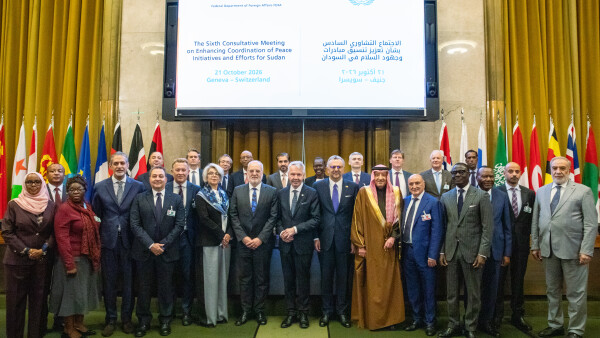
Sixth Consultative Meeting on Enhancing Coordination of Peace Initiatives and Efforts for Sudan

1
1
1
Edited News | UNICEF , WHO , UNHCR
Yemen war continues to force families from homes amid hunger and disease
More than 250,000 people have now fled renewed fighting in Yemen, the UN said on Tuesday, citing particular concern for those sheltering in the southwestern city of Taiz and the wider governorate, where access is “essentially blocked”.

1
1
1
Edited News | UNICEF
A little over one year since a ceasefire agreement was announced between Hamas fighters and Israel, more than 340 children have been reported killed and hundreds more injured, the UN Children’s Fund, UNICEF, said on Friday.

1
1
1
Edited News | UNICEF , IFRC
Six weeks after Nepal’s deadly flooding disaster, communities are still struggling to rebuild their lives, but they will need sustained help as global warming increases the risk of another Himalayan catastrophe, the UN Children’s Fund (UNICEF) said on Friday.

1
1
1
Edited News | WHO
In suspected Russia plague death, testing and monitoring underway – WHO
The death of a lab worker in Russia’s Siberia region has sparked concerns about plague being the cause, the UN World Health Organization (WHO) said on Tuesday, adding that it was following the situation closely.

1
1
Edited News | OHCHR , UNOG
UN Human Rights Chief Volker Türk on Friday provided and oral update to the 63rd session of the Human rights Council on Ukraine.

1
1
1
Edited News | OHCHR , UNOG
UN Human Rights Chief Volker Türk on Friday provided and oral update to the 63rd session of the Human rights Council on the human rights situation in Haiti.

1
1
1
Edited News | WHO
Repeated delays in bringing lifesaving medicines, prosthetics and more from Israel into Gaza risk having devastating consequences on Palestinians who urgently need them in the wartorn enclave, the UN World Health Organization (WHO) said on Friday. “A truck full of non-priority supplies or the right supplies arriving too late, doesn't save lives. That's the question that actually matters," said Dr Reinhilde Van De Weerdt, WHO Representative in the OPT.

1
1
1
Edited News | WHO
DRC: Early access to care and oxygen decisive for Ebola patients’ survival – WHO
In the Democratic Republic of the Congo (DRC), health workers fighting the country’s largest-ever Ebola outbreak are struggling to overcome critical challenges to patient care, the UN World Health Organization (WHO) warned on Tuesday.

1
1
1
Edited News | OCHA , UN
Civilians in Iran are continuing to feel the consequences of months of conflict and military escalation, the UN’s top official in the country has said, as loss of life, damage to civilian infrastructure and mounting economic pressures leave many facing continued uncertainty.