

The United Nations Office at Geneva
Multimedia Newsroom
Edited News | IOM , OCHA , UNICEF , WHO , OHCHR
Knesset UNRWA vote – UN reaction IOM – OCHA – UNICEF – WHO – OHCHR
‘If UNRWA can’t operate, humanitarian system in Gaza will collapse’ – UN
The UN humanitarian and human rights community reacted forcefully on Tuesday to the vote by the Israeli Knesset banning the UN Relief and Works Agency (UNRWA), warning of the devastating impact on millions of Palestinians who depend on it.
They joined their voices to UN chief António Guterres’s who said after the vote on Monday that if implemented, the two new Israeli laws impacting the agency “would likely prevent UNRWA from continuing its essential work” in the Occupied Palestinian Territory as mandated by the UN General Assembly. He insisted that “there is no alternative to UNRWA”.
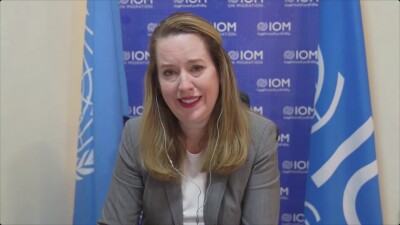
UN migration agency (IOM) Director-General Amy Pope told journalists in Geneva that UNRWA has provided “the backbone of infrastructure within places like Gaza”, including education and health care for people who have been living there for decades. “That's not something that IOM does,” she stressed, explaining that instead, with adequate support, the UN migration agency can help the displaced, “those who need shelter, those who need hygiene kits, those who do not have sufficient access to protection”.
“There's no way for IOM to step in to do what UNRWA has done,” she concluded. “UNRWA is absolutely essential.”
Humanitarian affairs coordination office (OCHA) spokesperson Jens Laerke insisted that the UN is trying to “not have an implementation” of the Knesset decision. He highlighted the outpouring of protest not only from the UN, but also from “prominent government officials… and heads of State”, against a decision which is “wrong” for the millions of Palestinians who require UNRWA’s help.
“If implemented, this would add to the acts of collective punishment that we have seen imposed on Gaza,” he added.
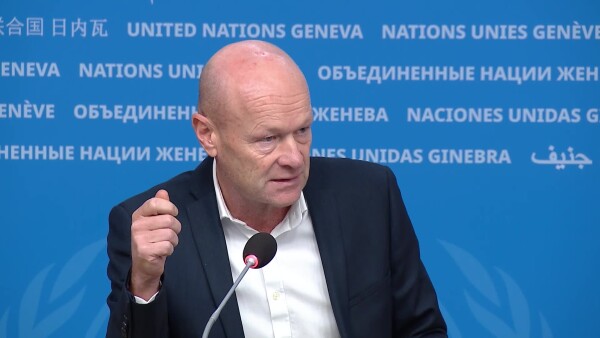
UN Children’s Fund (UNICEF) spokesperson James Elder warned that if UNRWA was unable to operate, “[we] would likely see the collapse of the humanitarian system in Gaza”.
He stressed that UNICEF distributes aid within the Gaza Strip with the support of UNRWA and would become unable to reach people in desperate need throughout the enclave with lifesaving supplies if the Israeli Knesset votes became law after 90 days.
“I'm talking vaccines. I'm talking winter clothes. I'm talking hygiene kits, health kits, water and sanitation” as well as nutrition supplies, he said, in a situation where “we're knocking on the door of famine”.
“A decision such as this suddenly means that a new way has been found to kill children,” he insisted.
Mr. Elder said that with the Strip’s population “physically… on death's door and psychologically in uncharted territory,” taking away health care workers and nutritionists would be lethal for Gaza’s youngsters.
Wider healthcare provision across Gaza is also at risk from the Knesset vote, with some 3,000 out of 13,000 UNRWA staff in Gaza medical workers, said World Health Organization (WHO) spokesperson Tarik Jašarević. This service “couldn't be matched by any agency, including WHO”, he added. Last year, UNRWA provided more than six million medical consultations in health centres run by the agency, with consultations “for more than half of [the] Gaza population,” the WHO spokesperson said, in addition to disease surveillance, malnutrition screening and child immunization services. Notably, UNRWA provided one third of the health workers involved in the polio vaccination campaign which has been rolled out in Gaza since September, Mr. Jašarević said.
A second round of the campaign in the north of the Strip is on hold due to the lack of humanitarian pauses as relentless Israeli bombardments continue. In the current context it is “difficult to imagine” that it could go forward,the WHO spokesperson said. He highlighted that out of 25 requests for humanitarian missions this month, “only seven managed to take place - others were either denied or were impeded”.
Jeremy Laurence of the UN human rights office (OHCHR) said that High Commissioner Volker Türk had pointed to the “potential dire impact” on the rights of all those who depend on UNRWA.
Mr. Laurence reiterated OHCHR’s previous concerns “about Israel’s compliance with international law” with regard to its intense bombardment of Gaza, where tens of thousands of civilians have been killed, according to the local authorities. Mr. Laurence also highlighted that Israel remained bound by its obligations “under a range of human rights treaties”, including the International Covenant on Economic and Social Rights, which enshrines rights to adequate food, housing, education, health, social security, water and sanitation, and work.
“Without UNRWA, the delivery of food, healthcare, education, among other things, to most of Gaza’s population, would grind to a halt,” he said.
“Civilians have already paid the heaviest price of this conflict over the past year. Truly, this decision will only make matters worse for them, far worse.”
-ends-
STORY: Knesset UNRWA vote – UN reaction IOM – OCHA – UNICEF – WHO - OHCHR
TRT: 4:49”
SOURCE: UNTV CH
RESTRICTIONS: NONE
LANGUAGE: ENGLISH / NATS
ASPECT RATIO: 16:9
DATELINE: 29 OCTOBER 2024 GENEVA, SWITZERLAND
1. Exterior wide shot: Palais des Nations, Flag Alley.
2. Wide lateral shot: Speakers at the podium of the press conference from rear; speaker on screens; journalists in the Press room.
3. SOUNDBITE (English) – Amy Pope, Director-General, UN International Organization for Migration (IOM): “UNRWA now has provided basically the backbone of infrastructure within places like Gaza. They provide education, they provide health care, they provide some of the most basic needs, for people who have been living there for decades. That's not something that IOM does.”
4. Wide lateral shot: Speakers at the podium of the press conference from rear; speaker on screens; journalists in the Press room.
5. SOUNDBITE (English) – Amy Pope, Director-General, UN International Organization for Migration (IOM): “What IOM does well and what IOM is doing and can do more of, with the support of the various stakeholders, is to provide humanitarian support. So, support to those who are displaced, support to those who need shelter, support to those who need hygiene kits, support to those who do not have sufficient access to protection. That's where IOM can play a role. So, there's no way for IOM to step in to do what UNRWA has done. UNRWA is absolutely essential.”
6. Wide lateral shot: Speakers at the podium of the press conference from rear; speaker on screens; journalists in the Press room.
7. SOUNDBITE (English) – Jens Laerke, Spokesperson, UN Office for the Coordination of Humanitarian Affairs (OCHA): “We are trying to not have an implementation of this because it's not been - the decision has been made. We have seen, an outpouring of protests and not only from the UN, but I dare say, from very prominent government officials and heads of State, actually, around the world, you know, calling this out as, as this is wrong. For a number of, of reasons, I would say, first and foremost for the millions of Palestinians.”
8. Wide lateral shot: Speaker on screens; journalists in the Press room.
9. SOUNDBITE (English) – Jens Laerke, Spokesperson, UN Office for the Coordination of Humanitarian Affairs (OCHA): “If implemented, this would add to the acts of collective punishment that we have seen imposed on Gaza.”
10. Wide shot: Speakers at the podium of the press conference; speaker on screens; journalists in the Press room.
11. SOUNDBITE (English) – James Elder, Spokesperson, UN Children’s Fund (UNICEF): “If UNRWA's unable to operate, [we] would likely see the collapse of the humanitarian system in Gaza. UNICEF would become effectively unable to distribute lifesaving supplies here. I'm talking vaccines. I'm talking winter clothes. I'm talking hygiene kits, health kits, water and sanitation, RUTF [ready-to-use therapeutic food] on malnutrition - and we know, again, we're knocking on the door of famine - and all range of nutrition supplies. So, a decision such as this suddenly means that a new way has been found to kill children.”
12. Wide lateral shot: Journalists in the Press room; speaker on screens.
13. SOUNDBITE (English) – James Elder, Spokesperson, UN Children’s Fund (UNICEF): “You take away the health care workers, you take away the nutritional support, you take away the people who will provide the lifesaving supplies for a population that is physically absolutely on death's door and psychologically, of course, in uncharted territory. You take away these health care workers, you take away the nutritionists. Then we will see many more children die.”
14. Wide lateral shot: Journalists in the Press room; speaker on screens.
15. SOUNDBITE (English) – Tarik Jašarević, Spokesperson, UN World Health Organization (WHO): “They basically provided more than six million medical consultations last year in health centres that are run by UNRWA. And they have been providing these consultations for more than half of [the] Gaza population. They are also doing immunization of children. They are doing screening for disease surveillance, screening for malnutrition. They have been active in the polio campaign.”
16. Wide lateral shot: Journalists in the Press room; speaker on screens.
17. SOUNDBITE (English) – Tarik Jašarević, Spokesperson, UN World Health Organization (WHO): “Out of 25 requests for missions this month, only seven of them managed to take place. Others were either denied or were impeded. So, in this setting, while we don't have agreement on humanitarian pauses that would cover areas where children are, it is difficult to imagine to have this second round of polio vaccination.”
18. Wide shot: Speakers at the podium of the press conference; speaker on screens; journalists in the Press room.
19. SOUNDBITE (English) – Jeremy Laurence, Spokesperson, UN Human Rights (OHCHR): “Our office has repeatedly raised concerns about Israel's compliance with international law, but can also point to its obligations under a range of human rights treaties, including the cornerstone International Covenant on Economic, Social and Cultural Rights, which Israel is party to. To this extent, without UNRWA, the delivery of food, shelter, health care, education amongst other things, to most of Gaza's population, would grind to a halt.”
20. Various shots of journalists in the Press room.
Similar Stories
1
1
1
Edited News | OCHA , UNICEF , WFP
Aid agencies warned on Friday of the fast-developing humanitarian emergency inside Taiz City in Yemen, which has been encircled by de facto Houthi forces fighting government troops along the country’s west coast.

2
17
1
2
Edited News , Press Conferences , Images | OCHA , WMO
Two UN agencies teamed up on Wednesday to issue an appeal for immediate assistance to help communities already being impacted by the strongest El Niño on record.

3
16
2
2
Edited News , B-roll , Conferences , Images | UNITED NATIONS , UNOG
Sixth Consultative Meeting on Enhancing Coordination of Peace Initiatives and Efforts for Sudan

1
1
1
Edited News | UNICEF , WHO , UNHCR
Yemen war continues to force families from homes amid hunger and disease
More than 250,000 people have now fled renewed fighting in Yemen, the UN said on Tuesday, citing particular concern for those sheltering in the southwestern city of Taiz and the wider governorate, where access is “essentially blocked”.

1
1
1
Edited News | UNICEF
A little over one year since a ceasefire agreement was announced between Hamas fighters and Israel, more than 340 children have been reported killed and hundreds more injured, the UN Children’s Fund, UNICEF, said on Friday.

1
1
1
Edited News | UNICEF , IFRC
Six weeks after Nepal’s deadly flooding disaster, communities are still struggling to rebuild their lives, but they will need sustained help as global warming increases the risk of another Himalayan catastrophe, the UN Children’s Fund (UNICEF) said on Friday.

1
1
1
Edited News | WHO
In suspected Russia plague death, testing and monitoring underway – WHO
The death of a lab worker in Russia’s Siberia region has sparked concerns about plague being the cause, the UN World Health Organization (WHO) said on Tuesday, adding that it was following the situation closely.

1
1
Edited News | OHCHR , UNOG
UN Human Rights Chief Volker Türk on Friday provided and oral update to the 63rd session of the Human rights Council on Ukraine.

1
1
1
Edited News | OHCHR , UNOG
UN Human Rights Chief Volker Türk on Friday provided and oral update to the 63rd session of the Human rights Council on the human rights situation in Haiti.

1
1
1
Edited News | WHO
Repeated delays in bringing lifesaving medicines, prosthetics and more from Israel into Gaza risk having devastating consequences on Palestinians who urgently need them in the wartorn enclave, the UN World Health Organization (WHO) said on Friday. “A truck full of non-priority supplies or the right supplies arriving too late, doesn't save lives. That's the question that actually matters," said Dr Reinhilde Van De Weerdt, WHO Representative in the OPT.

1
1
1
Edited News | WHO
DRC: Early access to care and oxygen decisive for Ebola patients’ survival – WHO
In the Democratic Republic of the Congo (DRC), health workers fighting the country’s largest-ever Ebola outbreak are struggling to overcome critical challenges to patient care, the UN World Health Organization (WHO) warned on Tuesday.

1
1
1
Edited News | OCHA , UN
Civilians in Iran are continuing to feel the consequences of months of conflict and military escalation, the UN’s top official in the country has said, as loss of life, damage to civilian infrastructure and mounting economic pressures leave many facing continued uncertainty.