

The United Nations Office at Geneva
Multimedia Newsroom
Press Conferences , Edited News | UNCTAD
UNCTAD Press Conference: Developments in the Economy of the OPT Report - 12 September 2024
Palestinian economy “in freefall” amid ongoing Gaza conflict - UNCTAD
Gaza’s economy has “collapsed months ago” while in the West Bank, violence and trade restrictions are fueling a massive surge in poverty and unemployment, UN Trade and Development (UNCTAD) warned on Thursday.
The war-torn enclave’s economy has shrunk to less than a sixth of its 2022 level, while up to 96 per cent of its agricultural assets and 82 per cent of all its businesses have been destroyed, according to UNCTAD’s latest report.
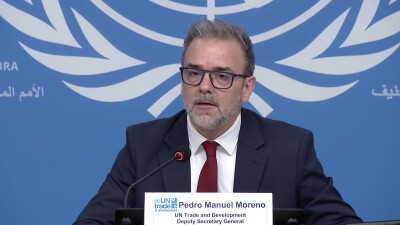
“The Palestinian economy is in freefall,” UNCTAD deputy chief Pedro Manuel Moreno told journalists in Geneva. “The report calls for the international community to halt this economic freefall, address the humanitarian crisis and lay the groundwork for lasting peace and development.”
Mr. Moreno insisted on the need for a “comprehensive recovery plan” for the occupied Palestinian territory, as well as increased international aid, the release of withheld Palestinian revenues withheld by Israel and an end to the blockade on Gaza.
According to UNCTAD, in addition to “unprecedented loss of life” and displacement, the combined impact of Israel’s military operation in Gaza that followed the attacks of 7 October 2023 by Palestinian armed groups in southern Israel, and the conflict’s repercussions in the West Bank “delivered an unparalleled shock that overwhelmed the Palestinian economy across the occupied Territory”.
The Palestinian agricultural sector shrunk by 11 per cent in the last quarter of 2023, which is “especially worrisome” given the sector’s importance in terms of jobs, exports and food security, said Mutasim Elagraa, coordinator of UNCTAD’s programme of assistance to the Palestinian people.
“The agricultural sector is a shock absorber - whenever there's a crisis and Palestinian workers lose their jobs, whether in the domestic economy or with their work in Israel and settlements, they go back to agriculture temporarily, and there they can produce some income,” he explained.
UNCTAD stressed that in the West Bank, settlement expansion and increased settler violence, land confiscations and demolition of Palestinian structures are driving population displacement and record unemployment, with over 300,000 jobs lost since the beginning of the conflict in Gaza.
“It's the highest unemployment recorded for the West Bank,” said UNCTAD economist Rami Alazzeh “Even in the peak of the second Intifada, the highest we've seen is 28 per cent. In the first quarter of 2024, unemployment reached 35 per cent” – almost triple what it was prior to October 2023.
In Gaza, the situation is even more “extreme” UNCTAD said, with two thirds of pre-war jobs lost by January 2024 and the entire population of the enclave dependent on international aid.
“What's left in Gaza is basically the humanitarian support… the humanitarian aid workers, local UN staff, doctors, nurses, that's it,” Mr. Alazzeh said. “The economy basically collapsed months ago.”
Asked about prospects for an economic recovery once the guns are silenced, UNCTAD’s Mr. Elagraa warned that “if we want to return Gaza to pre-October 2023, we need tens of billions of dollars, or even more, and decades.”
-Ends-
Story: UNCTAD Palestine Report – 12 September 2024
TRT: 03’36”
SOURCE: UNTV CH
LANGUAGE: ENGLISH / NATS
ASPECT RATIO: 16:9
DATELINE: 12 September 2024 - GENEVA, SWITZERLAND
SHOTLIST
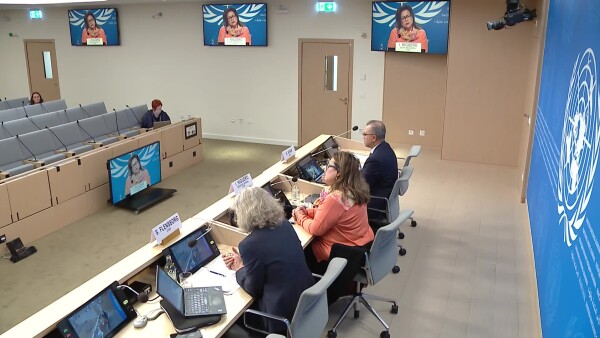
- Wide shot of the press conference room with speakers on the podium.
- SOUNDBITE (English) Pedro Manuel Moreno, Deputy Secretary-General, UN Trade and Development (UNCTAD): “The Palestinian economy is in freefall. The report calls for the international community to halt this economic freefall, address the humanitarian crisis and lay the groundwork for lasting peace and development. This includes considering a comprehensive recovery plan for the occupied Palestinian territory, increased international aid and support, release of withheld revenues and lifting the blockade on Gaza.”
- Medium shot: Press room with journalists and control room at the back.
- SOUNDBITE (English) Mutasim Elagraa, Coordinator, UN Trade and Development (UNCTAD) Assistance to the Palestinian People: “The Palestinian agricultural sector in the last quarter of 2023 shrunk by 11 per cent, and that is especially worrisome because the agricultural sector provides a decent chunk of employment, and it produces income. It produces exports. It contributes to food security, and in Palestine it plays another special role. The agricultural sector is a shock absorber - whenever there's a crisis and Palestinian workers lose their jobs, whether in the domestic economy or with their work in Israel and settlements, they go back to agriculture temporarily, and there they can produce some income.”
- Close shot: Journalist in the Press room.
- SOUNDBITE (English) Rami Alazzeh, Economist, UN Trade and Development (UNCTAD): “Just to give you a comparison: in the peak of the second Intifada, in 2000 to 2002, the Palestinian economy lost 33 per cent of its value. And now we're seeing this drop over one year. Basically, it's the highest unemployment recorded for the West Bank. Even in the peak of the second Intifada, the highest we've seen is 28 per cent. In the first quarter of 2024, unemployment reached 35 per cent. So we're talking about almost triple what it was prior to October 2023.”
- Medium shot: Speakers at the podium in the Press room.
- SOUNDBITE (English) Mutasim Elagraa, Coordinator, UN Trade and Development (UNCTAD) Assistance to the Palestinian People: “The problem is general. It's in Gaza, in the West Bank and in East Jerusalem. It's not just Gaza. Although in Gaza, it is really extreme. It will take decades and high tens of billions of dollars, if not even more, to rebuild Gaza and put it back like where it was before October 2023. So if we want to return Gaza to pre-October 2023, we need tens of billions of dollars, or even more, and decades.”
- Medium shot: Speakers at the podium.
- SOUNDBITE (English) Rami Alazzeh, Economist, UN Trade and Development (UNCTAD): “What's left in Gaza is basically the humanitarian support. There's not much left in Gaza and when you say two thirds of the jobs were lost, already Gaza's unemployment before October 2023 was 45 per cent. So what's left in Gaza now is just the humanitarian aid workers, local UN staff, doctors, nurses. That's it. The economy basically collapsed months ago. So this is what's left in Gaza functioning now.”
- Medium shot: Journalist in the press room.
Similar Stories

1
1
1
Edited News | OCHA , UNICEF , WFP
Aid agencies warned on Friday of the fast-developing humanitarian emergency inside Taiz City in Yemen, which has been encircled by de facto Houthi forces fighting government troops along the country’s west coast.
1
1
1
Press Conferences | UN WOMEN , WFP , WHO
UN WOMEN: Sudan Women and girls one year after the fall of El Fasher; increasing drone attacks across the country; WFP: DRC - Ebola spreads to eighth DRC province as WFP delivers food, builds treatment centres and keeps supplies moving; WHO - Update on Ebola (Bundibugyo Virus Disease)
1
12
1
1
Press Conferences , Images | UNOG
Closing Press Conference following the Sixth Consultative Meeting on Enhancing Coordination of Peace Initiatives and Efforts in Sudan

2
17
1
2
Edited News , Press Conferences , Images | OCHA , WMO
Two UN agencies teamed up on Wednesday to issue an appeal for immediate assistance to help communities already being impacted by the strongest El Niño on record.

3
16
2
2
Edited News , B-roll , Conferences , Images | UNITED NATIONS , UNOG
Sixth Consultative Meeting on Enhancing Coordination of Peace Initiatives and Efforts for Sudan
1
1
1
Press Conferences | CITES
Wildlife trade and conservation policy discussions at the 81st meeting of the CITES Standing Committee (SC81)

1
1
1
Edited News | UNICEF , WHO , UNHCR
Yemen war continues to force families from homes amid hunger and disease
More than 250,000 people have now fled renewed fighting in Yemen, the UN said on Tuesday, citing particular concern for those sheltering in the southwestern city of Taiz and the wider governorate, where access is “essentially blocked”.
1
1
1
Press Conferences | UNHCR , UNCTAD , WMO , OCHA , UNICEF , WHO
UNHCR Hungary’s 1956 Refugee Crisis: 70 Years On, UNCTAD World Investment Forum 2026, Doha, WMO Greenhouse Gas Bulletin and Climate Update for COP31, OCHA Afghanistan: Malnutrition, Girls’ Education and Recovery, UNICEF Yemen: Child Malnutrition and Unsafe Water in Taiz, WHO Inequalities in Noncommunicable Diseases and Risk Factors

1
1
1
Press Conferences | UNHCR
End of UNHCR's 77th Annual Executive Committee (ExCom) meeting week

1
1
1
Edited News | UNICEF
A little over one year since a ceasefire agreement was announced between Hamas fighters and Israel, more than 340 children have been reported killed and hundreds more injured, the UN Children’s Fund, UNICEF, said on Friday.

1
1
1
Press Conferences | UNICEF , IOM , UNHCR
UN Special Assistant to the Personal Envoy Office (SUDAN): Peace Initiatives and Efforts in Sudan; UNICEF: Dire situation of children in Gaza; IOM: Damaged Homes and Energy Attacks Risk Displacing Ukrainians for this winter; UNHCR: update on EXCOM week

1
1
1
Press Conferences | IOM , UNDRR
UN stresses importance of household preparedness for disaster risk reduction.