

The United Nations Office at Geneva
Multimedia Newsroom
Edited News | OHCHR , UNOG
UN Human Rights Spokesperson Ravina Shamdasani on new repressive law in Afghanistan
“The newly-adopted law on “Promotion of Virtue and Prevention of Vice” by the de facto authorities in Afghanistan cements policies that completely erase women’s presence in public – silencing their voices, and depriving them of their individual autonomy, effectively attempting to render them into faceless, voiceless shadows,” she said.
“This is utterly intolerable. UN High Commissioner for Human Rights Volker Türk calls for this egregious law to be immediately repealed,” Shamdasani stated.
“The long list of repressive provisions that this law imposes on women reinforces a number of existing restrictions that violate their fundamental human rights, including their freedom of movement, their freedom of expression, and their right to live free from discrimination. The law includes the requirement to wear clothes that completely cover their bodies from head to toe, including their faces; a ban for transport providers on transporting women unless they are accompanied by a male relative; and the prohibition on women’s voices being heard in public,” Shamdasani said.
Other restrictions in the law, which are vaguely defined, affect other human rights, such as the right to freely practice one’s religion. The law also grants State agents broad, discretionary powers to detain people, impose punishments on them, or refer matters to courts
“The law further tightens the grip on the media sector, with a ban on publishing images of human beings, presumably also those of de facto officials,” the spokesperson said.
“We call on the de facto authorities to immediately repeal this legislation, which is in clear violation of Afghanistan’s obligations under international human rights law,” she said.
“Disempowering and rendering invisible and voiceless half the population of Afghanistan will only worsen the human rights and humanitarian crisis in the country. Rather, this is a time to bring together all the people of Afghanistan, irrespective of their gender, religion or ethnicity, to help resolve the many challenges the country faces,” Shamdasani said.
“When I was in Afghanistan, about two years ago, this should come as no surprise, we were sitting around the table with several women representatives, who were sharing with us the issues that their communities face and solutions. These women were full of solutions. They are in contact with people in the community at a very close level. They understand the issues that are facing the most vulnerable. They have solutions. They need to be given a seat at the table to help implement those solutions. These are partners who are being completely silenced and they're attempting to render them into shadows. Their voices are no longer permissible. Education is no longer permissible. you cannot even see their faces. This needs to stop, and we need to continue talking about it. We need to continue advocating for it and putting pressure on the authorities to listen,” she said.
ENDS
For more information and media requests, please contact:
In Geneva
Ravina Shamdasani - + 41 22 917 9169 / ravina.shamdasani@un.org or
Thameen Al-Kheetan - +41 76 223 77 62 / thameen.alkheetan@un.org
Tag and share
Twitter @UNHumanRights
Facebook unitednationshumanrights
Instagram @unitednationshumanrights
STORY: UN Human Rights Spokesperson Ravina Shamdasani on new repressive law in Afghanistan
TRT: 03:11
SOURCE: UNTV / OHCHR
RESTRICTIONS: NONE
LANGUAGE: English/NATS
ASPECT RATIO: 16:9
DATELINE: 27 August 2024 – GENEVA, SWITZERLAND
SHOTLIST
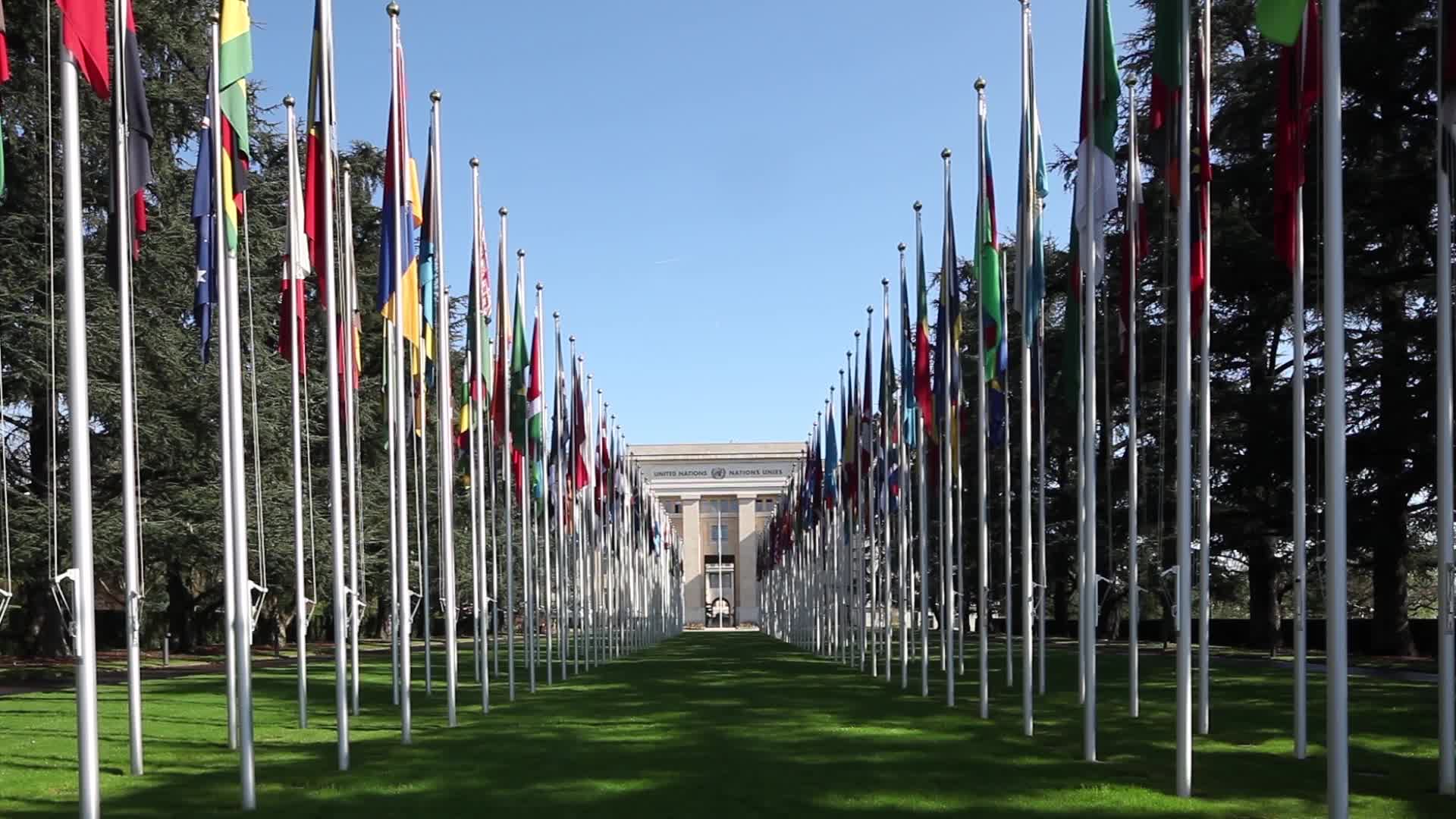
- Exterior shot: Palais des Nations
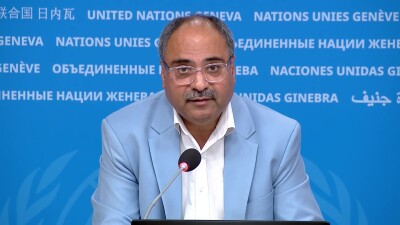
- Interior shot: Briefing room
- SOUNDBITE (English)—Ravina Shamdasani, Spokesperson for the Office of the UN High Commissioner for Human Rights (OHCHR): “The newly-adopted law on “Promotion of Virtue and Prevention of Vice” by the de facto authorities in Afghanistan cements policies that completely erase women’s presence in public – silencing their voices, and depriving them of their individual autonomy, effectively attempting to render them into faceless, voiceless shadows.”
- Cutaway: briefing room
- SOUNDBITE (English)—Ravina Shamdasani, Spokesperson for the Office of the UN High Commissioner for Human Rights (OHCHR): “This is utterly intolerable. UN High Commissioner for Human Rights Volker Türk calls for this egregious law to be immediately repealed.”
- Cutaway: briefing room
- Ravina Shamdasani, Spokesperson for the Office of the UN High Commissioner for Human Rights (OHCHR): “The long list of repressive provisions that this law imposes on women reinforces a number of existing restrictions that violate their fundamental human rights, including their freedom of movement, their freedom of expression, and their right to live free from discrimination. The law includes the requirement to wear clothes that completely cover their bodies from head to toe, including their faces; a ban for transport providers on transporting women unless they are accompanied by a male relative; and the prohibition on women’s voices being heard in public.”
- Cutaway: briefing room
- Ravina Shamdasani, Spokesperson for the Office of the UN High Commissioner for Human Rights (OHCHR): “The law further tightens the grip on the media sector, with a ban on publishing images of human beings, presumably also those of de facto officials.”
- Cutaway: briefing room
- Ravina Shamdasani, Spokesperson for the Office of the UN High Commissioner for Human Rights (OHCHR): “We call on the de facto authorities to immediately repeal this legislation, which is in clear violation of Afghanistan’s obligations under international human rights law.”
- Cutaway: briefing room
- Ravina Shamdasani, Spokesperson for the Office of the UN High Commissioner for Human Rights (OHCHR): “Disempowering and rendering invisible and voiceless half the population of Afghanistan will only worsen the human rights and humanitarian crisis in the country. Rather, this is a time to bring together all the people of Afghanistan, irrespective of their gender, religion or ethnicity, to help resolve the many challenges the country faces.”
- Cutaway: briefing room
- Ravina Shamdasani, Spokesperson for the Office of the UN High Commissioner for Human Rights (OHCHR): “When I was in Afghanistan, about two years ago, this should come as no surprise, we were sitting around the table with several women representatives, who were sharing with us the issues that their communities face and solutions. These women were full of solutions. They are in contact with people in the community at a very close level. They understand the issues that are facing the most vulnerable. They have solutions. They need to be given a seat at the table to help implement those solutions. These are partners who are being completely silenced and they're attempting to render them into shadows. Their voices are no longer permissible. Education is no longer permissible. you cannot even see their faces. This needs to stop, and we need to continue talking about it. We need to continue advocating for it and putting pressure on the authorities to listen.”
- Cutaway: briefing room
Similar Stories
1
1
1
Edited News | UNICEF , WHO , UNHCR
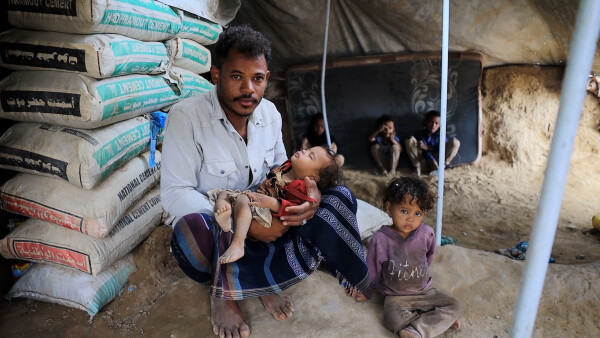
Yemen war continues to force families from homes amid hunger and disease
More than 250,000 people have now fled renewed fighting in Yemen, the UN said on Tuesday, citing particular concern for those sheltering in the southwestern city of Taiz and the wider governorate, where access is “essentially blocked”.

1
1
1
Edited News | UNICEF
A little over one year since a ceasefire agreement was announced between Hamas fighters and Israel, more than 340 children have been reported killed and hundreds more injured, the UN Children’s Fund, UNICEF, said on Friday.

1
1
1
Edited News | UNICEF , IFRC
Six weeks after Nepal’s deadly flooding disaster, communities are still struggling to rebuild their lives, but they will need sustained help as global warming increases the risk of another Himalayan catastrophe, the UN Children’s Fund (UNICEF) said on Friday.

1
1
1
Edited News | WHO
In suspected Russia plague death, testing and monitoring underway – WHO
The death of a lab worker in Russia’s Siberia region has sparked concerns about plague being the cause, the UN World Health Organization (WHO) said on Tuesday, adding that it was following the situation closely.

1
1
Edited News | OHCHR , UNOG
UN Human Rights Chief Volker Türk on Friday provided and oral update to the 63rd session of the Human rights Council on Ukraine.

1
1
1
Edited News | OHCHR , UNOG
UN Human Rights Chief Volker Türk on Friday provided and oral update to the 63rd session of the Human rights Council on the human rights situation in Haiti.

1
1
1
Edited News | WHO
Repeated delays in bringing lifesaving medicines, prosthetics and more from Israel into Gaza risk having devastating consequences on Palestinians who urgently need them in the wartorn enclave, the UN World Health Organization (WHO) said on Friday. “A truck full of non-priority supplies or the right supplies arriving too late, doesn't save lives. That's the question that actually matters," said Dr Reinhilde Van De Weerdt, WHO Representative in the OPT.

1
1
1
Edited News | WHO
DRC: Early access to care and oxygen decisive for Ebola patients’ survival – WHO
In the Democratic Republic of the Congo (DRC), health workers fighting the country’s largest-ever Ebola outbreak are struggling to overcome critical challenges to patient care, the UN World Health Organization (WHO) warned on Tuesday.

1
1
1
Edited News | OCHA , UN
Civilians in Iran are continuing to feel the consequences of months of conflict and military escalation, the UN’s top official in the country has said, as loss of life, damage to civilian infrastructure and mounting economic pressures leave many facing continued uncertainty.
1
1
1
Edited News | WHO , UNICEF
Aid agencies in Yemen highlighted the growing hunger emergency sparked by renewed fighting between Houthi opposition forces and Government troops, after mobile health clinics reported that hundreds of children displaced by the violence are suffering from the most deadly form of malnutrition.
1
1
1
Edited News | UNHCR
Displacement on the rise in Yemen as fighting continues - UNHCR
As hostilities worsen in Yemen, more people have been fleeing their homes, further intensifying the humanitarian crisis within the region, the UN Refugee Agency (UNHCR) warned on Tuesday.
1
1
1
Edited News | IOM , OHCHR , UNFPA , UNOG , UNHCR , WHO
Yemen’s humanitarian crisis growing by the hour amid spike in displacement
Yemenis displaced by renewed fighting have described fleeing for their lives amid shelling and gunfire, aid agencies reported on Friday, while highlighting the dramatic increase in humanitarian needs in the country and in Djibouti, where thousands have sought shelter.