

The United Nations Office at Geneva
Multimedia Newsroom
Edited News | UNHCR
UNHCR press conference: Record global refugee figures: UNHCR chief reveals 2019 flagship report
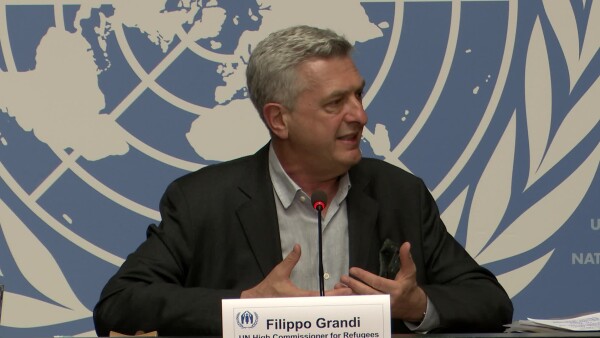
UN High Commissioner for Refugees Filippo Grandi discusses the findings in UNHCR’s flagship annual report, Global Trends in Forced Displacement. The report, which details the figures in the numbers of refugees, asylum-seekers and internally displaced people as of end 2019, will be launched on Thursday, June 18.
TITLE: Record global refugee figures: UNHCR chief reveals 2019 flagship report
FILE NAME: 20200616_e_che_global-trends-press-conference-INT
COUNTRY: Switzerland
LOCATION(S): Geneva
SHOOT DATE(S): 16 June 2020
LANGUAGE(S): English
SOURCE: UNHCR
CREDITS: Boris Weber and Mèlik Benkritly, camera-edit
DURATION: INT – 6:16
RELEASE DATE: UNDER EMBARGO – Releasable on Thursday, 18 June 2020, at 0500 GMT
LEDE-IN: UN High Commissioner for Refugees Filippo Grandi discusses the findings in UNHCR’s flagship annual report, Global Trends in Forced Displacement. The report, which details the figures in the numbers of refugees, asylum-seekers and internally displaced people as of end 2019, will be launched on Thursday, June 18.
SHOTLIST:
On the findings of the 2019 Global Trends in Forced Displacement report:
00:00 CLIP Filippo Grandi, UN High Commissioner for Refugees (man, English): “This almost 80 million figure, the highest that the UNHCR has recorded since these statistics have been systematically collected, is, of course, a reason for great concern. This is, by the way, approximately one per cent of the world's population. We've never reached this very significant percentage.”
00:25 CLIP Filippo Grandi, UN High Commissioner for Refugees (man, English):
“68 per cent of all these people are from five countries, have five nationalities. Only five. Syria, Venezuela, Afghanistan, South Sudan and Myanmar. You know what this means. If crisis in these countries were solved, 68 per cent of the global forced displacement would probably be on its way to being solved.”
On the impact of the COVID-19 pandemic on forcibly displaced populations:
00:55 CLIP Filippo Grandi, UN High Commissioner for Refugees (man, English):
“Other issues of concern related to the pandemic is the closing of the borders. A hundred and sixty-four countries have either closed totally or partially their borders. And in various ways, this has affected, also, the quest for asylum. The impact on livelihoods -- I don't need to tell you, you know, that I've spoken about this a lot -- if we don't have yet a health emergency among refugees, perhaps we certainly have an emergency of livelihoods.”
01:25 CLIP Filippo Grandi, UN High Commissioner for Refugees (man, English):
“Has COVID itself created movement? That is early to say, in my opinion, but I am very worried. And we've said it to a lot of different governments that have asked us this question, the livelihood crisis - I don't know if that term is clear - the poverty, the increased poverty of these populations, in my opinion, coupled with lack of solutions, perpetuation of conflict and, in situations like the Sahel, deterioration of security... In my opinion, there's no doubt that it will increase population movements in the regions, but also beyond, towards Europe, for example.”
02:04 CLIP Filippo Grandi, UN High Commissioner for Refugees (man, English):
“It has slowed down. It has been more complicated than before. But the granting of refuge -- let's put it that way -- has continued in these countries in spite of the coronavirus. Of course, if the situation deteriorates further, it will be an additional burden. So I am worried that this, in the end, may prevent asylum from being fully granted to people that seek it, because, as I said many times call it, has stopped many of the things that we're doing. But certainly it doesn't seem to have stopped wars.”
02:42 Various of cut aways from press conference
06:16 END
Similar Stories

1
1
1
Edited News | UNICEF
A little over one year since a ceasefire agreement was announced between Hamas fighters and Israel, more than 340 children have been reported killed and hundreds more injured, the UN Children’s Fund, UNICEF, said on Friday.

1
1
1
Edited News | UNICEF , IFRC
Six weeks after Nepal’s deadly flooding disaster, communities are still struggling to rebuild their lives, but they will need sustained help as global warming increases the risk of another Himalayan catastrophe, the UN Children’s Fund (UNICEF) said on Friday.

1
1
1
Edited News | WHO
In suspected Russia plague death, testing and monitoring underway – WHO
The death of a lab worker in Russia’s Siberia region has sparked concerns about plague being the cause, the UN World Health Organization (WHO) said on Tuesday, adding that it was following the situation closely.

1
1
Edited News | OHCHR , UNOG
UN Human Rights Chief Volker Türk on Friday provided and oral update to the 63rd session of the Human rights Council on Ukraine.

1
1
1
Edited News | OHCHR , UNOG
UN Human Rights Chief Volker Türk on Friday provided and oral update to the 63rd session of the Human rights Council on the human rights situation in Haiti.

1
1
1
Edited News | WHO
Repeated delays in bringing lifesaving medicines, prosthetics and more from Israel into Gaza risk having devastating consequences on Palestinians who urgently need them in the wartorn enclave, the UN World Health Organization (WHO) said on Friday. “A truck full of non-priority supplies or the right supplies arriving too late, doesn't save lives. That's the question that actually matters," said Dr Reinhilde Van De Weerdt, WHO Representative in the OPT.

1
1
1
Edited News | WHO
DRC: Early access to care and oxygen decisive for Ebola patients’ survival – WHO
In the Democratic Republic of the Congo (DRC), health workers fighting the country’s largest-ever Ebola outbreak are struggling to overcome critical challenges to patient care, the UN World Health Organization (WHO) warned on Tuesday.

1
1
1
Edited News | OCHA , UN
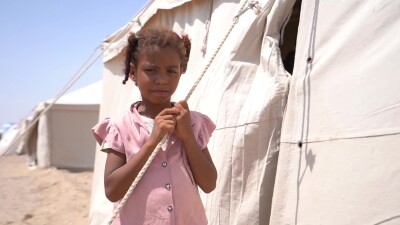
Civilians in Iran are continuing to feel the consequences of months of conflict and military escalation, the UN’s top official in the country has said, as loss of life, damage to civilian infrastructure and mounting economic pressures leave many facing continued uncertainty.
1
1
1
Edited News | WHO , UNICEF
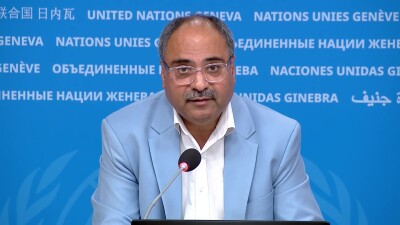
Aid agencies in Yemen highlighted the growing hunger emergency sparked by renewed fighting between Houthi opposition forces and Government troops, after mobile health clinics reported that hundreds of children displaced by the violence are suffering from the most deadly form of malnutrition.
1
1
1
Edited News | UNHCR
Displacement on the rise in Yemen as fighting continues - UNHCR
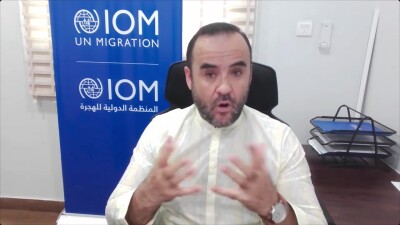
As hostilities worsen in Yemen, more people have been fleeing their homes, further intensifying the humanitarian crisis within the region, the UN Refugee Agency (UNHCR) warned on Tuesday.
1
1
1
Edited News | IOM , OHCHR , UNFPA , UNOG , UNHCR , WHO
Yemen’s humanitarian crisis growing by the hour amid spike in displacement
Yemenis displaced by renewed fighting have described fleeing for their lives amid shelling and gunfire, aid agencies reported on Friday, while highlighting the dramatic increase in humanitarian needs in the country and in Djibouti, where thousands have sought shelter.
1
1
1
Edited News | OHCHR , UNOG
The UN Human Rights Office issued on Friday a report documenting a shocking pattern of sexual violence amid Russia’s full-scale armed attack on Ukraine.