

The United Nations Office at Geneva
Multimedia Newsroom
Edited News | OHCHR , UNOG
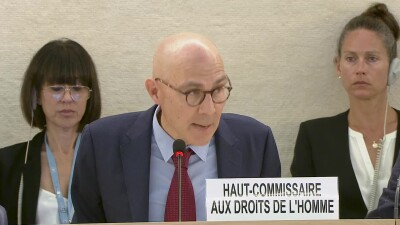
UN Human Rights Volker Türk Global Update speech to the 56th Human Rights Council edit
“Killings and injuries of civilians have become a daily occurrence. Destruction of vital infrastructure a daily occurrence. Devastating and reckless. Children shot at. Hospitals bombed. Heavy artillery launched on entire communities. All along with hateful, divisive, and dehumanising rhetoric,” said Türk, in his Global Update to the UN Human Rights Council in Geneva.
The High Commissioner voiced dismay at the extent to which warring parties have pushed beyond the boundaries of what is acceptable - and legal - on many fronts, with utter contempt for the other, trampling human rights at their core.
“We urgently need to find our way back to peace, in line with the UN Charter and international law,” Türk stressed.
As of the end of May 2024, the gap between humanitarian funding requirements and available resources stands at US $40.8 billion USD. Appeals are funded at an average of 16.1 per cent only, Türk said.
This is in stark contrast with the almost 2.5 trillion USD in global military expenditure in 2023, a 6.8 per cent increase in real terms from 2022, the steepest year-on-year increase since 2009.
“In addition to inflicting unbearable human suffering, war comes with a hefty price tag,” he said, detailing the far-reaching impact of war and conflict on the environment.
“Burning of land, chemical contamination of air, water and soil, destruction of civilian infrastructure, even the risk of nuclear catastrophe. This comes on top of some of the biggest challenges humanity faces today — climate change, biodiversity loss and pollution. And with every passing day, humanity’s window of opportunity closes,” he said.
In his speech, the High Commissioner also highlighted the continuing pushbacks on the rights of women and girls, noting that active resistance to gender equality is a key factor in slowing progress – even reversing gains made – in achieving the Sustainable Development Goals.
“No country is immune from regression in women’s rights. Everyone must be vigilant and steadfast in countering this pushback. And with the same determination, challenge harmful narratives, embrace inclusivity and respect the rights and dignity of everyone, everywhere,” said Türk.
Any form of hate speech is unacceptable, dangerous for social cohesion and a harbinger of worse to come, the High Commissioner said.
“I once again warn warned of the dangers of antisemitism, anti-Muslim bigotry, as well as divisive rhetoric and disinformation that cast migrants and refugees as the scapegoats for wider challenges in society, including socio-economic issues. This has become particularly fashionable among populists and far right extremists in election campaigns in Europe, North America and elsewhere,” he said.
The High Commissioner also flagged the increasingly aggressive verbal attacks, threats and reprisals, and virulent social media campaigns against international institutions and mechanisms, including the United Nations generally, the UN Human Rights Office, Special Procedures mandate holders, the International Court of Justice, and the International Criminal Court.
“This is unacceptable. These institutions were set up and mandated by States precisely to undertake their crucial work — States must facilitate this work and protect it from undue interference and attack. I would like each of us to think hard about how to ensure that the achievements of the multilateral system are not undermined and that we are able to do our job,” he said.
“A strong and effective human rights system is key to effective multilateral cooperation, and to building a better future for people and planet. My Office is ready to play its part.”
ENDS
For more information and media requests, please contact:
In Geneva
Ravina Shamdasani - + 41 22 917 9169 / ravina.shamdasani@un.org or
Liz Throssell - + 41 22 917 9296 / elizabeth.throssell@un.org or
Jeremy Laurence - +41 22 917 9383 / jeremy.laurence@un.org or
Marta Hurtado - + 41 22 917 9466 / marta.hurtadogomez@un.org or
Thameen Al-Kheetan - + 41 76 223 77 62 / thameen.alkheetan@un.org
Tag and share
Twitter @UNHumanRights
Facebook unitednationshumanrights
Instagram @unitednationshumanrights
STORY: UN Human Rights Chief Volker Türk Global Update speech to the 56th Human Rights Council
TRT: 03:12
SOURCE: UNOG/OHCHR
RESTRICTIONS: NONE
LANGUAGE: English/ NATS
ASPECT RATIO: 16:9
DATELINE: 18 June 2024- Geneva, Switzerland
SHOTLIST
1. Exterior: Alley of flags, Palais des Nations
2. Interior: Room 20
3. Interior: Room 20 Volker Türk on Podium
4. Cut Aways: Room 20
5. SOUNDBITE (English) Volker Türk UN High Commissioner for Human Rights: “Killings and injuries of civilians have become a daily occurrence. Destruction of vital infrastructure a daily occurrence. Devastating and reckless. Children shot at. Hospitals bombed. Heavy artillery launched on entire communities. All along with hateful, divisive, and dehumanising rhetoric.”
6. Cut Aways: Room 20
7. SOUNDBITE (English) Volker Türk UN High Commissioner for Human Rights: “We urgently need to find our way back to peace, in line with the UN Charter and international law.”
8. Cut Aways: Room 20
9. SOUNDBITE (English) Volker Türk UN High Commissioner for Human Rights: “In addition to inflicting unbearable human suffering, war comes with a hefty price tag.”
10. Cut Aways: Room 20
11. SOUNDBITE (English) Volker Türk UN High Commissioner for Human Rights: “Burning of land, chemical contamination of air, water and soil, destruction of civilian infrastructure, even the risk of nuclear catastrophe. This comes on top of some of the biggest challenges humanity faces today — climate change, biodiversity loss and pollution. And with every passing day, humanity’s window of opportunity closes.”
12. Cut Aways: Room 20
13. SOUNDBITE (English) Volker Türk UN High Commissioner for Human Rights: “No country is immune from regression in women’s rights. Everyone must be vigilant and steadfast in countering this pushback. And with the same determination, challenge harmful narratives, embrace inclusivity and respect the rights and dignity of everyone, everywhere.”
14. Cut Aways: Room 20
15. SOUNDBITE (English) Volker Türk UN High Commissioner for Human Rights: “I once again warn warned of the dangers of antisemitism, anti-Muslim bigotry, as well as divisive rhetoric and disinformation that cast migrants and refugees as the scapegoats for wider challenges in society, including socio-economic issues. This has become particularly fashionable among populists and far right extremists in election campaigns in Europe, North America and elsewhere.”
16. Cut Aways: Room 20
17. SOUNDBITE (English) Volker Türk UN High Commissioner for Human Rights: “This is unacceptable. These institutions were set up and mandated by States precisely to undertake their crucial work — States must facilitate this work and protect it from undue interference and attack. I would like each of us to think hard about how to ensure that the achievements of the multilateral system are not undermined and that we are able to do our job.”
18. Cut Aways: Room 20
19. SOUNDBITE (English) Volker Türk UN High Commissioner for Human Rights: “A strong and effective human rights system is key to effective multilateral cooperation, and to building a better future for people and planet. My Office is ready to play its part.”
20. Cut Aways: Room 20
Similar Stories

1
1
1
Edited News | UNICEF
A little over one year since a ceasefire agreement was announced between Hamas fighters and Israel, more than 340 children have been reported killed and hundreds more injured, the UN Children’s Fund, UNICEF, said on Friday.

1
1
1
Edited News | UNICEF , IFRC
Six weeks after Nepal’s deadly flooding disaster, communities are still struggling to rebuild their lives, but they will need sustained help as global warming increases the risk of another Himalayan catastrophe, the UN Children’s Fund (UNICEF) said on Friday.

1
1
1
Edited News | WHO
In suspected Russia plague death, testing and monitoring underway – WHO
The death of a lab worker in Russia’s Siberia region has sparked concerns about plague being the cause, the UN World Health Organization (WHO) said on Tuesday, adding that it was following the situation closely.

1
1
Edited News | OHCHR , UNOG
UN Human Rights Chief Volker Türk on Friday provided and oral update to the 63rd session of the Human rights Council on Ukraine.

1
1
1
Edited News | OHCHR , UNOG
UN Human Rights Chief Volker Türk on Friday provided and oral update to the 63rd session of the Human rights Council on the human rights situation in Haiti.

1
1
1
Edited News | WHO
Repeated delays in bringing lifesaving medicines, prosthetics and more from Israel into Gaza risk having devastating consequences on Palestinians who urgently need them in the wartorn enclave, the UN World Health Organization (WHO) said on Friday. “A truck full of non-priority supplies or the right supplies arriving too late, doesn't save lives. That's the question that actually matters," said Dr Reinhilde Van De Weerdt, WHO Representative in the OPT.

1
1
1
Edited News | WHO
DRC: Early access to care and oxygen decisive for Ebola patients’ survival – WHO
In the Democratic Republic of the Congo (DRC), health workers fighting the country’s largest-ever Ebola outbreak are struggling to overcome critical challenges to patient care, the UN World Health Organization (WHO) warned on Tuesday.

1
1
1
Edited News | OCHA , UN
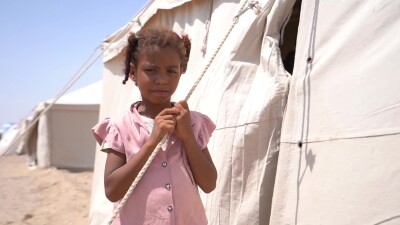
Civilians in Iran are continuing to feel the consequences of months of conflict and military escalation, the UN’s top official in the country has said, as loss of life, damage to civilian infrastructure and mounting economic pressures leave many facing continued uncertainty.
1
1
1
Edited News | WHO , UNICEF
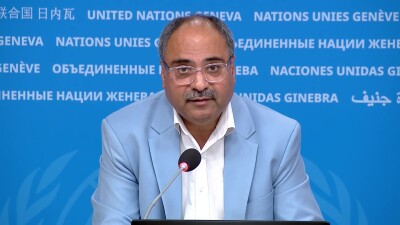
Aid agencies in Yemen highlighted the growing hunger emergency sparked by renewed fighting between Houthi opposition forces and Government troops, after mobile health clinics reported that hundreds of children displaced by the violence are suffering from the most deadly form of malnutrition.
1
1
1
Edited News | UNHCR
Displacement on the rise in Yemen as fighting continues - UNHCR
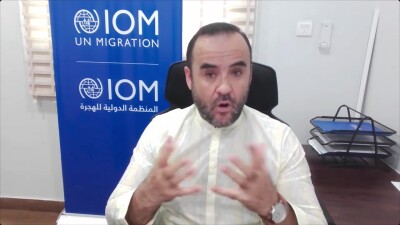
As hostilities worsen in Yemen, more people have been fleeing their homes, further intensifying the humanitarian crisis within the region, the UN Refugee Agency (UNHCR) warned on Tuesday.
1
1
1
Edited News | IOM , OHCHR , UNFPA , UNOG , UNHCR , WHO
Yemen’s humanitarian crisis growing by the hour amid spike in displacement
Yemenis displaced by renewed fighting have described fleeing for their lives amid shelling and gunfire, aid agencies reported on Friday, while highlighting the dramatic increase in humanitarian needs in the country and in Djibouti, where thousands have sought shelter.
1
1
1
Edited News | OHCHR , UNOG
The UN Human Rights Office issued on Friday a report documenting a shocking pattern of sexual violence amid Russia’s full-scale armed attack on Ukraine.