

The United Nations Office at Geneva
Multimedia Newsroom
Ukraine: humanitarian, health needs soar as Kharkiv hostilities intensify
The UN expressed new concerns on Tuesday over a rise in displacement and humanitarian needs in Ukraine’s northeastern Kharkiv region, amid “relentless” Russian air and ground attacks.
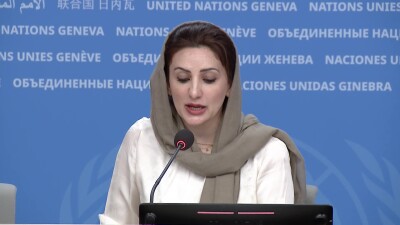
UN refugee agency (UNHCR) spokesperson Shabia Mantoo told the Press in Geneva that in the past week, more than 10,300 people were evacuated from their villages in Kharkiv region’s border areas by Ukrainian authorities with the help of volunteers and humanitarian organizations. She stressed that the majority of the evacuees are “highly vulnerable” people – the elderly, people with low mobility or disabilities – who were not able to flee their homes earlier.
According to UN humanitarian affairs coordination office, OCHA, over 16,000 people are estimated to have fled the most affected localities in the Kharkiv region since 10 May, amid reports that Russian forces have made significant advances in recent days.
Ms. Mantoo expressed concern that conditions in Ukraine’s second largest city, Kharkiv, which already hosts some 200,000 internally displaced people, “could become even more difficult if the ground offensive and relentless aerial attacks continue”.
“This could force many people to leave Kharkiv for safety and survival, seeking protection elsewhere,” she said.
The UNHCR spokesperson highlighted the fact that attacks on energy infrastructure are “particularly critical” in Kharkiv, where the energy supply is already “well below standard capacity” and households suffer from power shortages.
Meanwhile, OCHA reported that the past three days have seen daily attacks in Kharkiv City resulting in “scores of civilian casualties including children”, according to local authorities on Sunday, “as well as an ambulance hit and a paramedic injured when two strikes reportedly impacted the same location in close succession”.
Speaking from Kyiv, UN World Health Organization (WHO) representative in Ukraine Dr. Jarno Habicht said that since the start of Russia’s full-scale invasion in February 2022, “on average, 200 ambulances per year are damaged or destroyed in shelling attacks”.
“That is a tremendous loss, depriving the Ukrainian people of urgent care,” he insisted.
Overall, WHO has recorded more than 1,700 attacks on health in the country since February 2022, Dr. Habicht said.
The UN health agency representative added that some 10 million people in the country likely suffer from mental health conditions, while more than 20,000 amputations have been conducted since the start of Russia’s full-scale invasion – “two areas [which] need support from many humanitarian and development partners, and in the long term”.
While the intensification in hostilities in the Kharkiv region has driven humanitarian needs up “exponentially”, Dr. Habicht also highlighted the need to “think medium term to get ready for the winter to come”.
To ensure Ukraine's health care system can “continue functioning amidst prolonged adversity”, WHO has begun installing heating units in hospitals, including in Chernihiv and Odesa in the coming days and weeks, Dr. Habicht said.
But addressing both immediate and medium-term needs and preparing the winter response has been a challenge due to a drop in humanitarian funding for Ukraine compared to the past two years.
According to OCHA, the UN’s $3.1 billion Humanitarian Needs and Response Plan for the country in 2024 remains only 23 per cent funded. UNHCR’s response in Ukraine and in neighbouring refugee-hosting countries is only 16 per cent funded, which, at the approach of the mid-year mark, is “abysmal”, Ms. Mantoo said.
- Ends -
STORY: Ukraine update: UNHCR – WHO
TRT: 2:09”
SOURCE: UNTV CH
RESTRICTIONS: NONE
LANGUAGE: ENGLISH / NATS
ASPECT RATIO: 16:9
DATELINE: 21 MAY 2024 GENEVA, SWITZERLAND
1. Exterior medium shot: UN flag alley
2. Wide shot: speakers at the podium of the press conference
3. SOUNDBITE (English) – Shabia Mantoo, spokesperson, UN Refugee Agency (UNHCR): “In the past week, more than 10,300 people were evacuated from their villages in Kharkiv region’s border areas by Ukrainian authorities with the help of volunteers and humanitarian organizations. The majority of the evacuees, who had to escape their homes with only a few belongings, are already highly vulnerable and include mainly older people. There are also people with low mobility or disabilities who were not able to flee their homes earlier.”
4. Wide lateral shot: Speakers at podium from behind; journalists in the press room
5. SOUNDBITE (English) – Shabia Mantoo, spokesperson, UN Refugee Agency (UNHCR): “UNHCR is concerned that conditions in Kharkiv – Ukraine’s second largest city, which is already hosting some 200,000 internally displaced people – could become even more difficult if the ground offensive and relentless aerial attacks continue. This could force many people to leave Kharkiv for safety and survival, seeking protection elsewhere.”
6. Wide lateral shot: Speakers at podium from behind; journalists in the press room
7. SOUNDBITE (English) – Dr. Jarno Habicht, UN World Health Organization (WHO) representative in Ukraine: “Since the start of Russian Federation’s full-scale invasion of Ukraine, on average, 200 ambulances per year are damaged or destroyed in shelling attacks. That is a tremendous loss, depriving the Ukrainian people of urgent care.”
8. Wide shot: Journalists in the press room
9. SOUNDBITE (English) – Dr. Jarno Habicht, UN World Health Organization (WHO) representative in Ukraine: “Ten million people are estimated to suffer from some sort of mental health conditions, and with more than 20,000 amputations conducted since Russian Federation’s full-scale invasion in 2022, these are two areas [which] need support from many humanitarian and development partners, and in the long term.”
10. Wide lateral shot: Speaker on screen in the press room; journalists in the press room
11. SOUNDBITE (English) Dr. Jarno Habicht, UN World Health Organization (WHO) representative in Ukraine: “From one hand, we have attacks in Kharkiv, much more difficult situation than before, but at the same time we need to think medium term to get ready for the winter to come.”
12. Close shot: Journalists in the press room
13. Medium shot: Journalists in the press room
14. Wide shot: Journalists, cameraman and people in the gallery of the press room.
Similar Stories

1
1
1
Edited News | UNICEF
A little over one year since a ceasefire agreement was announced between Hamas fighters and Israel, more than 340 children have been reported killed and hundreds more injured, the UN Children’s Fund, UNICEF, said on Friday.

1
1
1
Edited News | UNICEF , IFRC
Six weeks after Nepal’s deadly flooding disaster, communities are still struggling to rebuild their lives, but they will need sustained help as global warming increases the risk of another Himalayan catastrophe, the UN Children’s Fund (UNICEF) said on Friday.

1
1
1
Edited News | WHO
In suspected Russia plague death, testing and monitoring underway – WHO
The death of a lab worker in Russia’s Siberia region has sparked concerns about plague being the cause, the UN World Health Organization (WHO) said on Tuesday, adding that it was following the situation closely.

1
1
Edited News | OHCHR , UNOG
UN Human Rights Chief Volker Türk on Friday provided and oral update to the 63rd session of the Human rights Council on Ukraine.

1
1
1
Edited News | OHCHR , UNOG
UN Human Rights Chief Volker Türk on Friday provided and oral update to the 63rd session of the Human rights Council on the human rights situation in Haiti.

1
1
1
Edited News | WHO
Repeated delays in bringing lifesaving medicines, prosthetics and more from Israel into Gaza risk having devastating consequences on Palestinians who urgently need them in the wartorn enclave, the UN World Health Organization (WHO) said on Friday. “A truck full of non-priority supplies or the right supplies arriving too late, doesn't save lives. That's the question that actually matters," said Dr Reinhilde Van De Weerdt, WHO Representative in the OPT.

1
1
1
Edited News | WHO
DRC: Early access to care and oxygen decisive for Ebola patients’ survival – WHO
In the Democratic Republic of the Congo (DRC), health workers fighting the country’s largest-ever Ebola outbreak are struggling to overcome critical challenges to patient care, the UN World Health Organization (WHO) warned on Tuesday.

1
1
1
Edited News | OCHA , UN
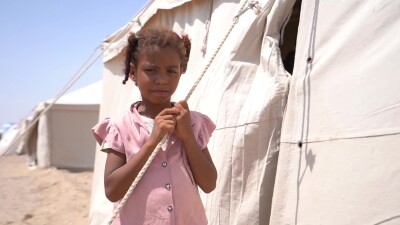
Civilians in Iran are continuing to feel the consequences of months of conflict and military escalation, the UN’s top official in the country has said, as loss of life, damage to civilian infrastructure and mounting economic pressures leave many facing continued uncertainty.
1
1
1
Edited News | WHO , UNICEF
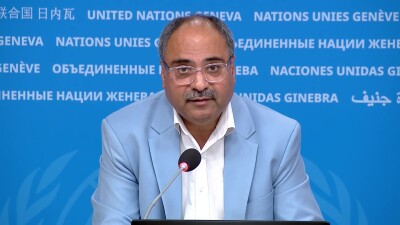
Aid agencies in Yemen highlighted the growing hunger emergency sparked by renewed fighting between Houthi opposition forces and Government troops, after mobile health clinics reported that hundreds of children displaced by the violence are suffering from the most deadly form of malnutrition.
1
1
1
Edited News | UNHCR
Displacement on the rise in Yemen as fighting continues - UNHCR
As hostilities worsen in Yemen, more people have been fleeing their homes, further intensifying the humanitarian crisis within the region, the UN Refugee Agency (UNHCR) warned on Tuesday.
1
1
1
Edited News | IOM , OHCHR , UNFPA , UNOG , UNHCR , WHO
Yemen’s humanitarian crisis growing by the hour amid spike in displacement
Yemenis displaced by renewed fighting have described fleeing for their lives amid shelling and gunfire, aid agencies reported on Friday, while highlighting the dramatic increase in humanitarian needs in the country and in Djibouti, where thousands have sought shelter.
1
1
1
Edited News | OHCHR , UNOG
The UN Human Rights Office issued on Friday a report documenting a shocking pattern of sexual violence amid Russia’s full-scale armed attack on Ukraine.