

The United Nations Office at Geneva
Multimedia Newsroom
Edited News , Press Conferences | OCHA , UNHCR
UN appeals for $4.1 billion in aid for war-torn Sudan and refugee-hosting countries
UN appeals for $4.1 billion in aid for war-torn Sudan and refugee-hosting countries
The United Nations on Wednesday urged countries not to forget millions of people caught up in the conflict in Sudan as it called for $4.1 billion to help stave off famine fears and assist those who fled abroad to bordering States.
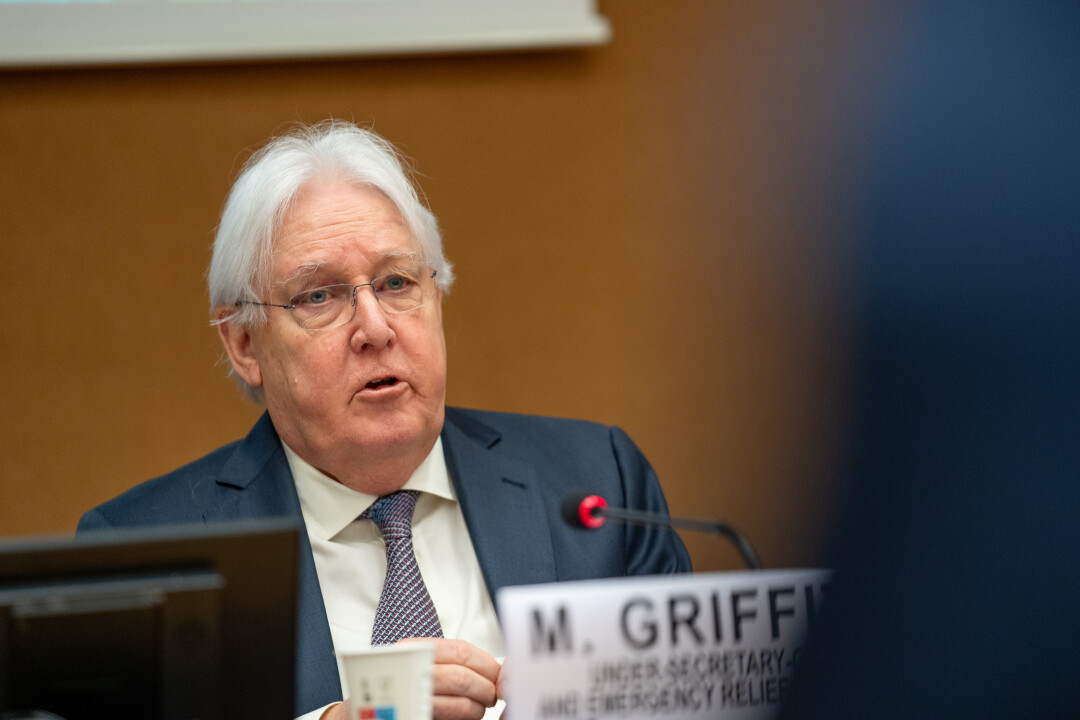
To date, the 10-month war has created one of the world’s “largest displacement and protection crises”, according to UN agencies. “Half of Sudan’s population, 25 million people, needs humanitarian assistance,” said Martin Griffiths, the UN’s emergency relief chief and head of the UN aid coordination office, OCHA.
Speaking to journalists in Geneva, he emphasized that far too many of those in need were children, and that 18 million people were acutely food insecure.
The spread of the conflict between Sudan’s armed forces (SAF) and the paramilitary Rapid Support Forces (RSF) to areas such as Gezira state, the country’s breadbasket, has prompted warnings of famine. “If we start seeing famine in Sudan to add to the violence, displacement and lack of a political horizon, then I think we can all agree we have no humanity in us that would allow this to happen,” Mr. Griffiths said.
Two in three people in Sudan lack access to healthcare and approximately 19 million children are out of school.
To provide humanitarian assistance inside Sudan, OCHA needs $2.7 billion to help 14.7 million people.
For all those who’ve fled the country, the UN refugee agency (UNHCR) requested an additional $1.4 billion to support 2.7 million people displaced in five countries bordering Sudan whose resources are spent.
Last year appeal to provide aid to civilians in Sudan was funded up to 38 per cent.
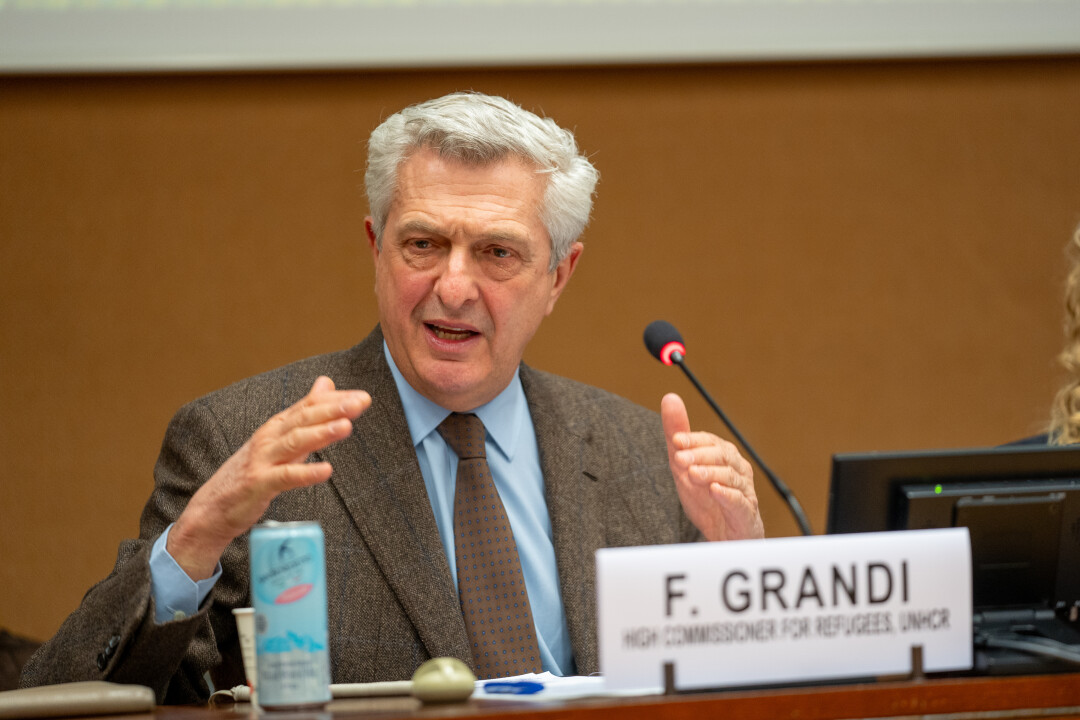
At a press conference in Geneva, UNHCR chief Filippo Grandi described a recent meeting with displaced families in Sudan and Ethiopia and warned of the regional implications of ignoring the crisis, as people who have already fled Sudan now aim for Libya, Tunisia and then Europe. “I have warned literally European countries that if the current neglect of this crisis continues, we will see secondary movements,” Mr. Grandi added.
Sudan’s middle class has been largely impacted by the urban devastation, people that from one day to the other had their lives upended. Although they are eager to go back home and resume their activities, people are becoming more and more wary, the High Commissioner for Refugees said: “When you ask people, ‘Would you go back if there was a ceasefire?’, they think carefully about the answer. ‘We would have to be convinced that there is a real peace and that the militia is not going to come into our house and kick us out again.’ The message that I passed and will continue to pass to the two leaderships (of Sudan) is, ‘You're losing your own people. What's the purpose of fighting if you don't have people to rule?’”
The conflict is estimated to have killed more than 13,000 people and over 10 million people have been displaced. Sudan’s rival militias shared power after longtime ruler Omar al-Bashir was toppled in a popular uprising in 2019. Conflict erupted last April after a power struggle developed between the two military factions amid a faltering transition towards elections and civilian-led government. The fighting has continued to escalate despite international efforts to reach a ceasefire.
Ends
Speakers:
· Martin Griffiths, Under-Secretary-General for Humanitarian Affairs and Emergency Relief Coordinator (OCHA)
· Filippo Grandi, UN High Commissioner for Refugees (UNHCR)
TRT: 2’16”
SOURCE: UNTV CH
LANGUAGE: ENGLISH
ASPECT RATIO: 16:9
DATELINE: 07 February 2024 - GENEVA, SWITZERLAND
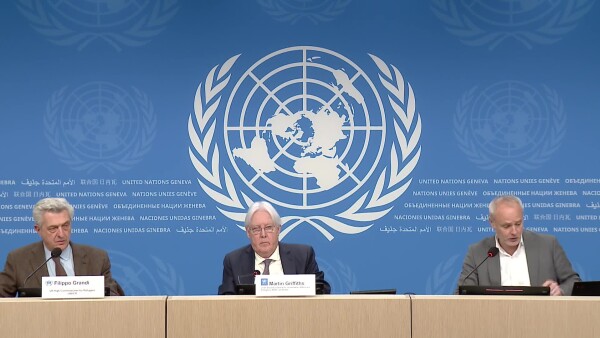
Press conference at UNOG
SHOTLIST
- Exterior medium shot: UN flag alley
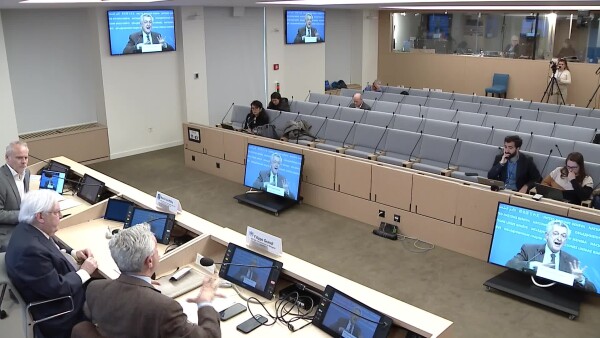
- Wide shot of press conference room with journalists
- SOUNDBITE (English) Martin Griffiths, Under-Secretary-General for Humanitarian Affairs and Emergency Relief Coordinator: “Half of the population of Sudan needs humanitarian assistance, 25 million people, far too many of them children. Eighteen million people are, quote unquote, ‘acutely food insecure’.”
- Wide shot: press room with journalists and photographer
- SOUNDBITE (English) Martin Griffiths, Under-Secretary-General for Humanitarian Affairs and Emergency Relief Coordinator: “If we start seeing famine in Sudan -it won't be the first time we've seen famine in Sudan- to add to this violence and displacement and lack of access and lack of a political horizon, then I think we can all agree we have no humanity in us that would allow this to happen.”
- Wide shot: press room
- SOUNDBITE (English) Filippo Grandi, UN High Commissioner for Refugees: “We are already seeing people fleeing Sudan, especially along certain routes from East Sudan and from Chad itself, where there's many of them towards Libya, Tunisia and then towards Europe. So, I have warned literally European countries in particular, that if the current neglect of this crisis continues, we will see secondary movements.”
- Medium shot: podium with speakers
- SOUNDBITE (English) Filippo Grandi, UN High Commissioner for Refugees: “When you ask people ‘would you go back if there was a cease fire’, they think carefully about the answer, and say ‘we would have to be convinced that there is a real peace and that the militia is not going to come into our house and kick us out again’. So, the message that I passed to the leadership and will continue to pass to the two leaderships is really ‘you're losing your own people. What's the purpose of fighting if you don't have people to rule?’”
- Various shots of the press room
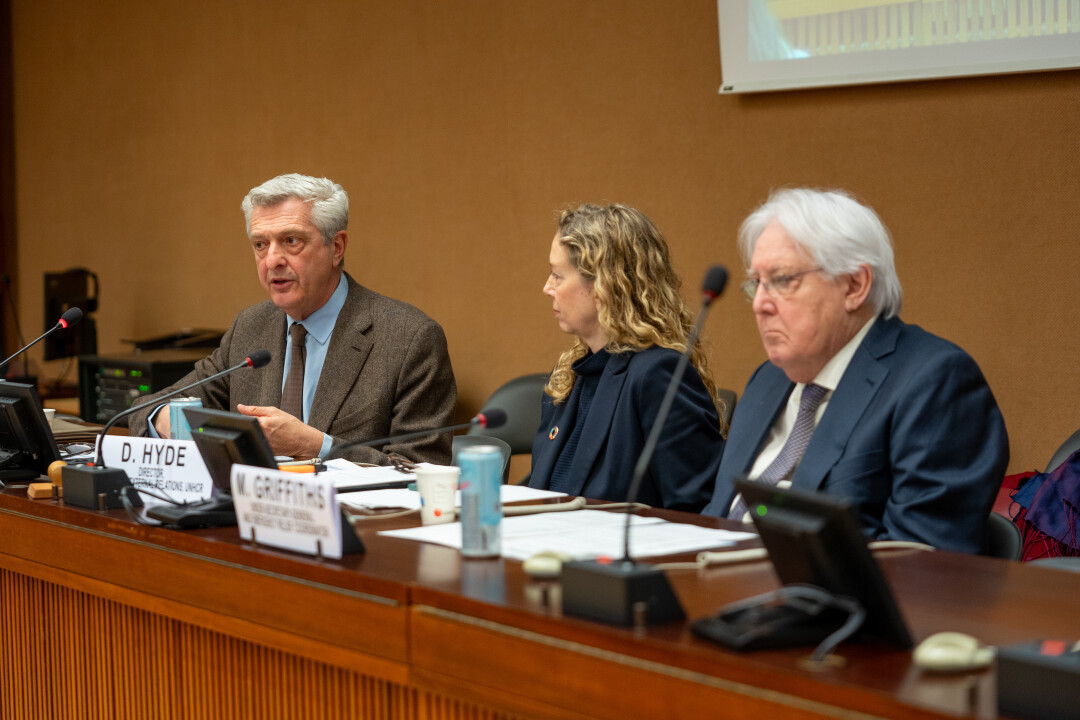
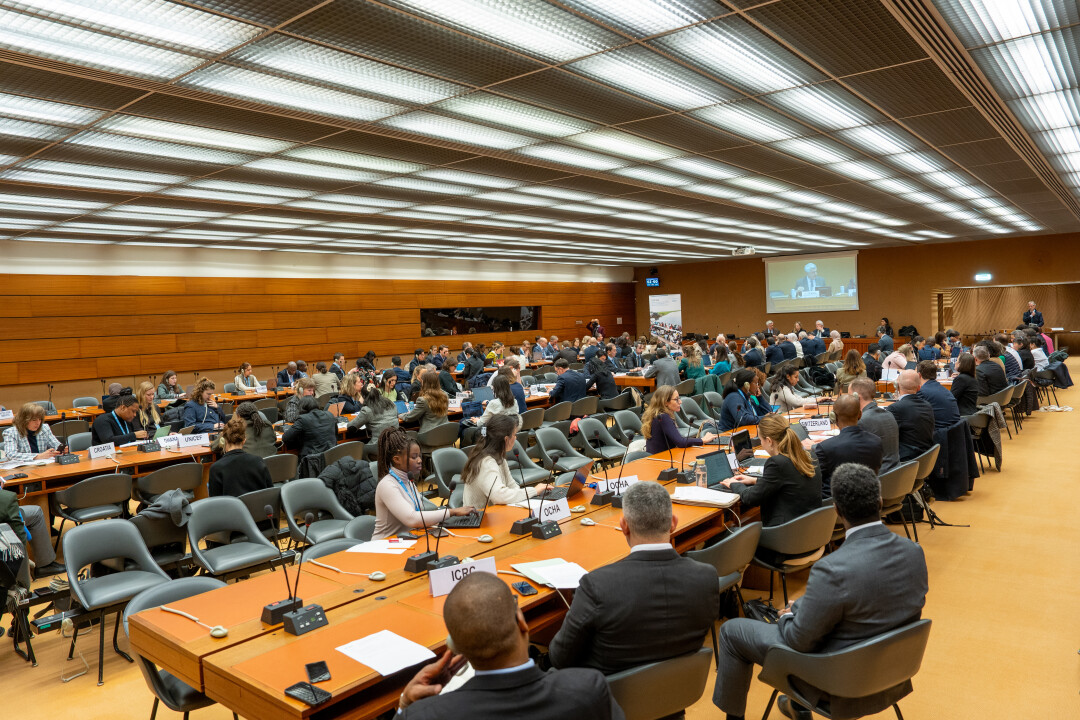
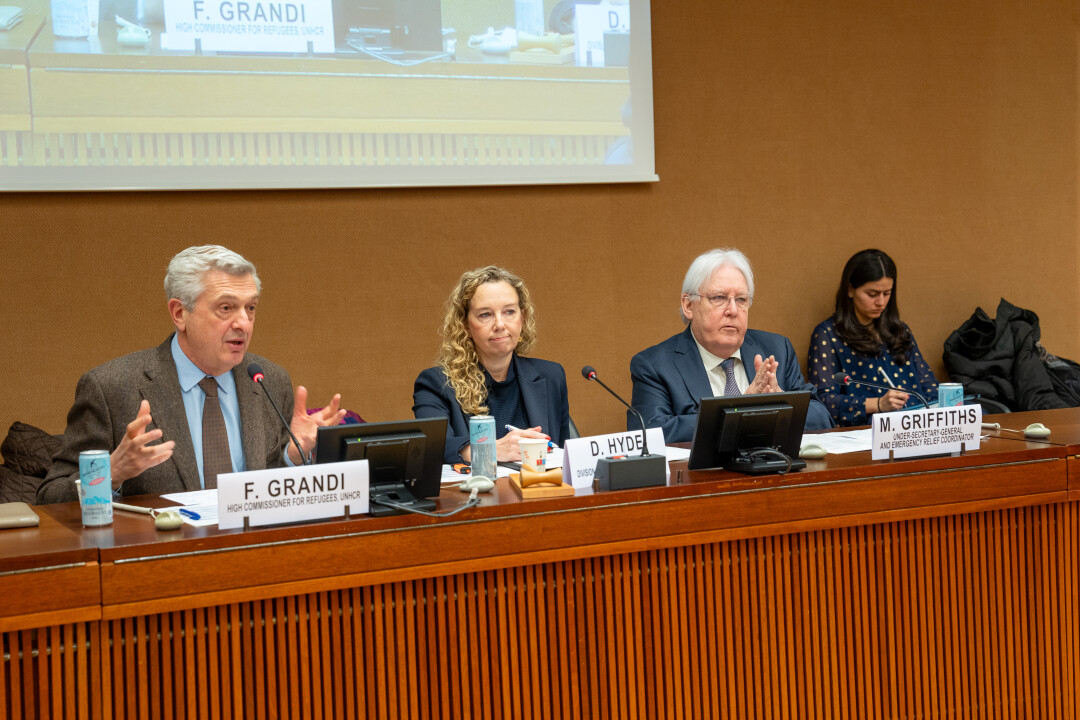
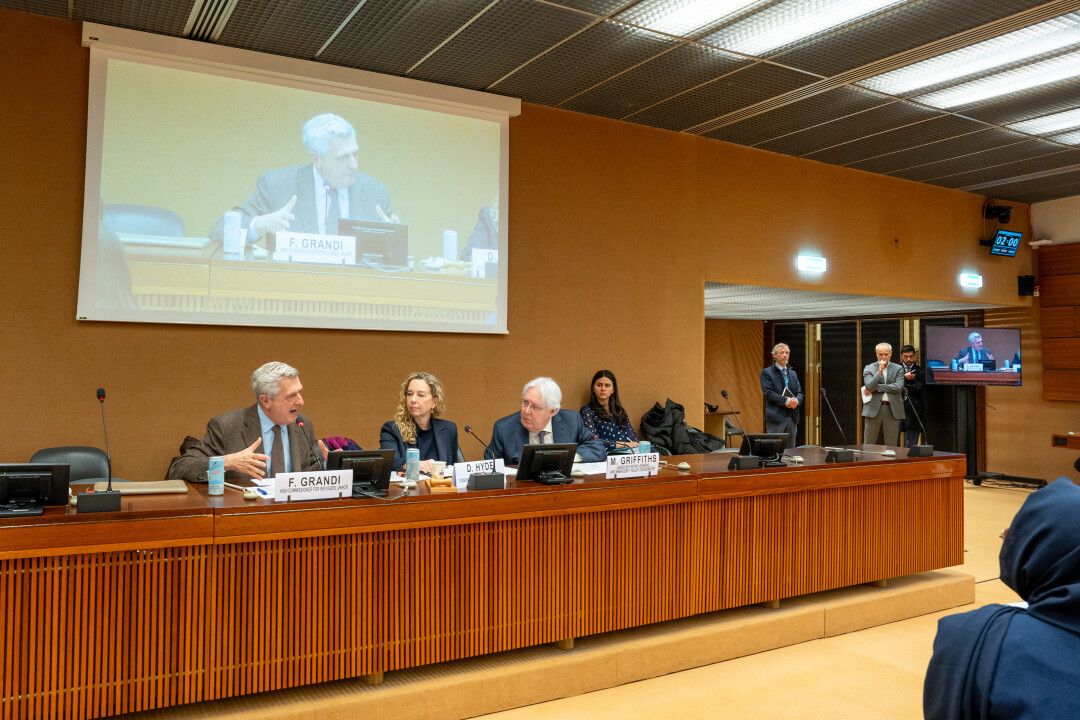
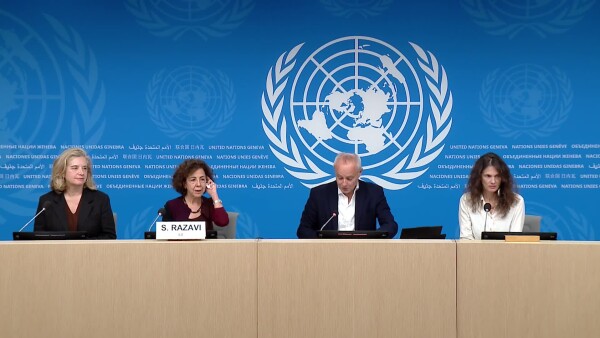
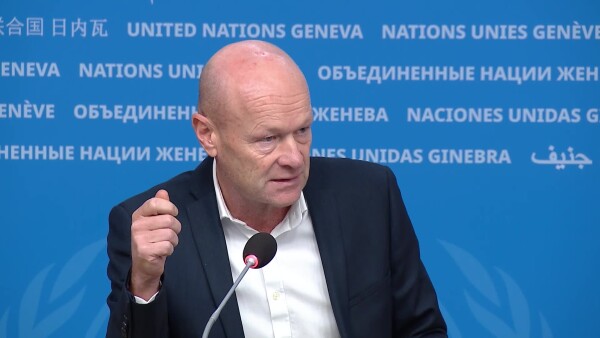
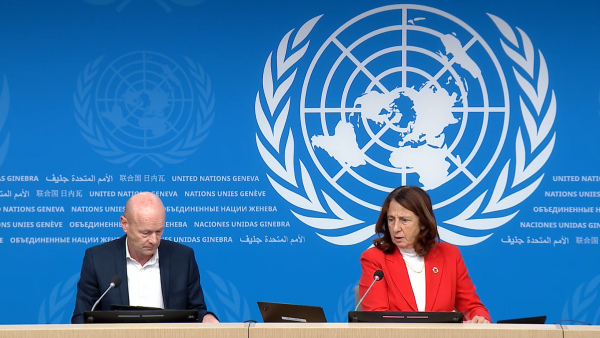
The photos in this story are from the 7 February launch event of the the Sudan Humanitarian Needs and Response Plan and the Regional Refugee Response Plan for 2024 at the Palais des Nations in Geneva, which was followed by the press conference. The event can be viewed here: OCHA-UNHCR Sudan Response Plans Launch on UN Web TV
For more photos and video please, check UN agencies' links below:
- OCHA photos and video B-roll
- UNHCR photos and B-roll
Similar Stories
1
1
1
Press Conferences | WMO , UNHCR , WHO , ILO
WMO: Greenhouse Gas Bulletin; UNHCR: As attacks intensify UNHCR urges support for war ravaged Ukrainians; WHO: Clinical trials in DRC: vaccines and beyond; ILO: New global and regional estimates on domestic work, informality and working conditions
1
1
1
Edited News | OCHA , UNICEF , WFP
Aid agencies warned on Friday of the fast-developing humanitarian emergency inside Taiz City in Yemen, which has been encircled by de facto Houthi forces fighting government troops along the country’s west coast.
1
1
1
Press Conferences | UN WOMEN , WFP , WHO
UN WOMEN: Sudan Women and girls one year after the fall of El Fasher; increasing drone attacks across the country; WFP: DRC - Ebola spreads to eighth DRC province as WFP delivers food, builds treatment centres and keeps supplies moving; WHO - Update on Ebola (Bundibugyo Virus Disease)
1
12
1
1
Press Conferences , Images | UNOG
Closing Press Conference following the Sixth Consultative Meeting on Enhancing Coordination of Peace Initiatives and Efforts in Sudan

2
17
1
2
Edited News , Press Conferences , Images | OCHA , WMO
Two UN agencies teamed up on Wednesday to issue an appeal for immediate assistance to help communities already being impacted by the strongest El Niño on record.

3
16
2
2
Edited News , B-roll , Conferences , Images | UNITED NATIONS , UNOG
Sixth Consultative Meeting on Enhancing Coordination of Peace Initiatives and Efforts for Sudan
1
1
1
Press Conferences | CITES
Wildlife trade and conservation policy discussions at the 81st meeting of the CITES Standing Committee (SC81)

1
1
1
Edited News | UNICEF , WHO , UNHCR
Yemen war continues to force families from homes amid hunger and disease
More than 250,000 people have now fled renewed fighting in Yemen, the UN said on Tuesday, citing particular concern for those sheltering in the southwestern city of Taiz and the wider governorate, where access is “essentially blocked”.
1
1
1
Press Conferences | UNHCR , UNCTAD , WMO , OCHA , UNICEF , WHO
UNHCR Hungary’s 1956 Refugee Crisis: 70 Years On, UNCTAD World Investment Forum 2026, Doha, WMO Greenhouse Gas Bulletin and Climate Update for COP31, OCHA Afghanistan: Malnutrition, Girls’ Education and Recovery, UNICEF Yemen: Child Malnutrition and Unsafe Water in Taiz, WHO Inequalities in Noncommunicable Diseases and Risk Factors
1
1
1
Press Conferences | UNHCR
End of UNHCR's 77th Annual Executive Committee (ExCom) meeting week

1
1
1
Edited News | UNICEF
A little over one year since a ceasefire agreement was announced between Hamas fighters and Israel, more than 340 children have been reported killed and hundreds more injured, the UN Children’s Fund, UNICEF, said on Friday.
1
1
1
Press Conferences | UNICEF , IOM , UNHCR
UN Special Assistant to the Personal Envoy Office (SUDAN): Peace Initiatives and Efforts in Sudan; UNICEF: Dire situation of children in Gaza; IOM: Damaged Homes and Energy Attacks Risk Displacing Ukrainians for this winter; UNHCR: update on EXCOM week