

The United Nations Office at Geneva
Multimedia Newsroom
UN GENEVA PRESS BRIEFING
2 February 2024
Rolando Gómez, Chief of the Press and External Relations Section at the United Nations Information Service in Geneva, chaired a hybrid briefing, which was attended by spokespersons and representatives of the World Health Organization, the United Nations Children’s Fund, the Office for the Coordination of Humanitarian Affairs, the World Food Programme, the Food and Agriculture Organization, and the International Telecommunication Union.
Situation in Gaza
Jonathan Crickx, Chief of Communication in the State of Palestine for the United Nations Children’s Fund (UNICEF), speaking from Jerusalem, stated that UNICEF estimated that at least 17,000 children in the Gaza Strip were either unaccompanied from their parents or relatives, or separated from both parents or former care givers. This corresponded to one percent of the overall displaced population - 1.7 million people.
Mr. Crickx, who had returned from Gaza this week, spoke of having met 12 children, of whom three had lost a parent. Behind each of those statistics was a child coming to terms with this horrible new reality. An 11-year-old Razan, for example, had lost almost all her family members, and her injured leg had to be amputated. She was still in shock, learning to live with a disability in the context where rehabilitation services were not available. In the middle of a conflict, it was common for extended families to take care of children who lost their parents. But currently, due to the sheer lack of food, water or shelter, extended families were distressed and faced challenges to immediately take care of another child as they themselves were struggling to cater for their own children and family.
Palestinian children’s mental health was severely impacted. These children presented symptoms like extremely high levels of persistent anxiety, loss of appetite, they could not sleep, and they had emotional outbursts or panic every time they heard the bombings. UNICEF now estimated that almost all children of Gaza, more than one million, needed mental health and psychosocial support. The only way to have this mental health and psychosocial support delivered at scale was with a ceasefire. That was not possible under the current security and humanitarian conditions. Mr. Crickx stressed that those children did not have anything to do with the conflict, yet they were suffering like no child should ever suffer. Not a single child, whatever the religion, the nationality, the language, the race, no child should ever be exposed to the level of violence seen on 7 October, or to the level of violence that we had witnessed since then.
Dr. Richard Peeperkorn, World Health Organization (WHO) Representative for the occupied Palestinian territory, also speaking from Jerusalem, stated that currently there were over 100,000 Gazans injured, missing, or presumed dead, out of the population of 2.3 million people. Those who were not injured or missing were struggling under the dire circumstances, trying to keep themselves safe, fed, healthy, and warm. Hostilities were increasing in the middle area of the Gaza Strip, which was further crippling access to the existing health facilities. In January, WHO had planned 15 missions to the north of Gaza, eight of which had been denied, informed Dr. Peeperkorn. The lack of sustained access to hospitals for both patients and health workers was very disconcerting. Only thirteen out of the 36 hospitals in Gaza were partially functioning, he said, and of the 73 primary health care centers, only 13 were functional right now. Critically injured or sick patients should be able to be referred in an orderly, safe manner, to Egypt or other countries willing to take them; an estimated 8,000 Gazans were believed to need for referral right now – of these 6,000 were related to war injuries, and 2,000 were connected to chronical illnesses. It was frustrating that only a small fraction of those in need, around 1,200 patients, had been successfully referred through Rafah so far.
High levels of food insecurity and contaminated water created a fertile ground for spread of infectious diseases. There had been over 245,000 recorded cases of respiratory infections, 160,000 cases of diarrhea in children under the age of five, and close to 70,000 cases of scabies and lice, among other diseases. WHO and partners were extremely concerned about malnutrition. Even though food aid was available, and the WFP had sufficient supplies, way too little food was getting into Gaza, and food distribution within Gaza was limited. Gaza used to be relatively self-sufficient with regard to various foodstuffs, but that was all gone now, informed Dr. Peeperkorn. Food production and distribution processes had to be restored as soon as possible, he stressed. Speaking of attacks against healthcare, which were continuing, Dr. Peeperkorn said that the 342 recorded attacks in the Gaza Strip had resulted in 627 fatalities and 783 injuries. 61 health workers were known to be currently detained.
Ahmed Dahir, Head of the World Health Organization (WHO) Sub-Office in Gaza, speaking from Gaza, said that thousands of people were moving to Rafah, many of whom looked visibly thin and weak from the lack of food. People were searching for food and safety, both of which were impossible to find in Gaza. The sick and injured were struggling to find the health care they need. Hostilities around Nasser Medical Complex and European Gaza Hospital were obstructing access for patients and health partners from reaching the hospital to keep them resupplied regularly. Lack of sustained supplies could dismantle the fragile health system, and it was a vital lifeline for keeping them functional.
This week, the WHO had reached Al Nasser Hospital and the Gaza European Hospital, but access to the north of the Gaza Strip remained very restricted. WHO requests to reach several health facilities in the north had been denied. At the Gaza European Hospital, some 22,000 people were sheltering on hospital grounds; medical supplies were insufficient, and the risk of disease spread was increasing. Many health workers were split between taking care of their patients and their own families at the same time; their commitment and courage ought to be saluted. Many of them had been working for three months straight, without a pause. There were four WHO emergency teams helping with surgeries at this hospital. Meanwhile, hostilities around the Al Nasser Hospital were intensifying. Hospital previously had hosted 8,000 IDPs, but now only 2000 IDPs remained because the others had fled for safety. There was only a single ambulance available, and people were having to use donkey carts to bring in the injured. The hospital had 400 patients, supported by 200 medical staff, the majority of whom were volunteers. There was shortage of specialized medical practitioners.
Jens Laerke, for the Office for the Coordination of Humanitarian Affairs (OCHA), expressed deep concern over an escalation of hostilities in Khan Younis, which resulted in an increased number of people looking for safety in Rafah. Rafah had become a pressure cooker of despair, and OCHA was worried of what would happen next. Agencies were struggling to respond under these circumstances, informed Mr. Laerke. The Egyptian and Palestinian Red Crescent societies had established hundreds of tents near Khan Younis, but more was needed. Half of all food distribution needed in Gaza was now in Rafah, which reflected how crowded that area had become.
Answering questions from the media about Israel’s announcement that the next combat theater would be in Rafah, Mr. Laerke, for OCHA, said there was no safe place in Gaza, and further fighting in Rafah would make it even worse. Rafah was so crowded that humanitarian vehicles could barely move. Mr. Laerke said that nobody would be protected in the next wave of fighting. Humanitarians kept saying that the situation could not get any worse, yet it was still getting worse by the day. The spirit of the international humanitarian law had certainly not been respected throughout the ongoing crisis, said Mr. Laerke. Dr. Peeperkorn, for the WHO, added that Rafah should not be attacked because people seeking safety there would have nowhere else to go. He said that he had never seen as many amputees in his life, including children. Most hospitals had effectively become trauma centers, affecting provision of regular primary healthcare and treatment of chronical diseases. Mr. Laerke said that humanitarian reports over the past week, since the International Court of Justice decision, did not indicate any improvement of the situation on the ground. Mr. Crickx, for UNICEF, said that UNICEF with partners was trying to provide mental and psychosocial support to some unaccompanied and separated children, but the sheer number of children in need made proper tracing and comprehensive support impossible. Rolando Gómez, for UNIS, reminded that the Secretary-General had underscored the importance of the vital work of UNRWA going, as the agency was the backbone of all humanitarian work in Gaza
Urgent and safe access needed to feed millions in Sudan
Jens Laerke, for the Office for the Coordination of Humanitarian Affairs (OCHA), informed that on 7 February, two response plans for Sudan would be launched – one for inside Sudan and one for displaced Sudanese in neighbouring countries. The launch, with the UN Humanitarian Coordinator and the High Commissioner for Refugees, would be webcast on UNTV, and details would be provided soon. He informed that more than 13,000 people had been killed and some 25 million urgently needed humanitarian assistance. Over 1.5 million Sudanese had fled abroad to countries whose resources were already stretched.
Leni Kinzli, World Food Programme (WFP) Communications Officer in Sudan, speaking from Nairobi, said that the war in Sudan continued to rage and take an unimaginable toll on civilians. It was even more difficult for the WFP to deliver aid to those who needed it the most. WFP was calling on the warring parties to provide immediate guarantees for an unimpeded access to all zones, including conflict areas, where civilians were stuck and had no access to food. The situation in the country was dire. Almost 18 million people across the country were facing acute food insecurity, stressed Ms. Kinzli. WFP had repeatedly warned about a looming crisis, which could become a catastrophe. The number of the hungry had doubled over the past five years. An estimated 1.7 million people had fled to neighbouring countries, which had already been struggling. WFP was the logistics backbone of the humanitarian response in Sudan; it had established a cross-border corridor from Chad, through which it had thus far supported one million people.
WFP was currently able to deliver food to only 10 percent of the hungriest people in Sudan; the other 90 percent were largely stuck in the conflict zones. Humanitarian convoys had to be allowed to cross frontlines, something which was currently impossible for a plethora of reasons. WFP had food in Sudan, but the lack of humanitarian access and unnecessary hurdles were making most food distributions impossible. Every single of the WFP trucks had to be on the road every single day in order to reach all those people in need. Both parties to this gruesome conflict ought to provide an unimpeded, unobstructed, safe access for humanitarian agencies to people in need.
Responding to questions, Ms. Kinzli said that this conflict should not be forgotten. This conflict had wide-reaching regional implications, and it was the time for the international community to realize the gravity of the crisis and implications. At the moment, 18 million people were facing acute food insecurity, twice as many as a year earlier. Hunger would increase from May on, when the lean season started, and crops became less available. Reports were being received on people dying of starvation, but those reports had to be corroborated. Millions of people could soon slip into the catastrophic levels of hunger, which could be described as famine. Some 3.6 million children under the age of five were suffering from acute malnutrition, informed Ms. Kinzli. The lack of access to the most affected areas made having exact numbers of hungry children impossible.
Rolando Gómez, for the UN Information Service (UNIS), stressed that a humanitarian ceasefire, humanitarian access to people in need, and respect for international humanitarian law were all needed in Sudan.
Food Price Index
Maximo Torero, Chief Economist at the Food and Agriculture Organization (FAO), speaking from Rome, informed that the FAO Food Price Index stood at 118 points in January 2024, down 1.2 points from its revised December level, as decreases in the price indices for cereals and meat more than offset an increase in the sugar price index, while those for dairy and vegetable oils only registered slight adjustments. The index stood 13.7 points below its corresponding value one year earlier.
The Cereal Price Index averaged 120.1 points in January, down 2.7 points from December and 27.4 points from its January 2023 value. Global wheat export prices had declined in January, driven by continued strong competition among exporters and arrival of recently harvested supplies in the southern hemisphere countries. The Vegetable Oil Price Index averaged 122.5 points in January, up marginally by 0.2 points from the previous month, but still 17.9 points below its January 2023 reading. The Dairy Price Index averaged 118.9 points in January, virtually unchanged from its revised December value and standing 25.8 points below its value in the corresponding month a year earlier. The Meat Price Index averaged 109.8 points in January, down 1.5 points from December, marking the seventh consecutive monthly decline and standing 1.3 points below its corresponding value the previous year. Finally, the Sugar Price Index averaged 135.3 points in January, up 1.1 points from December and 18.5 points from its value a year before. The increase in world sugar prices had been mainly driven by concerns over the likely impact of below-average rains in Brazil on sugarcane crops to be harvested from April.
Further details can be found here.
Announcements
David Hirsch, for the International Telecommunication Union (ITU), informed that the ITU had opened media registration for the AI for Good Global Summit 2024, which would take place at the International Conference Center in Geneva (CICG) on 30-31 May, with other events being scheduled, including an AI Governance Day on 29 May. While many details were yet to come, lists of conference speakers, exhibitors and programme events were already available on the AI for Good website. The registration link is at https://aiforgood.itu.int/newsroom/. Industry and the UN system, along with media and other society actors, would all be involved in the Summit.
Rolando Gómez, for the United Nations Information Service, informed that the Committee on the Elimination of Discrimination against Women was reviewing the report of Turkmenistan today.
The Committee on the Rights of the Child would close this afternoon at 5 pm its 95th session and issue its concluding observations on the six countries whose reports had been reviewed during this session: Republic of Congo, Bulgaria, Senegal, Russian Federation, Lithuania, and South Africa.
Finally, Mr. Gómez informed that 4 February would be the International Day of Human Fraternity.
Similar Stories
1
1
1
Press Conferences | IOM , UNDRR
UN stresses importance of household preparedness for disaster risk reduction.
1
1
1
Statements , Press Conferences | OHCHR
1
1
1
Press Conferences | UNHCR , UNICEF , IFRC , OHCHR , UN WOMEN , IOM , OCHA , WHO
UNHCR – ExCom Meeting, UNICEF – Nepal Recovery, IFRC – Flash Floods, WHO – Mental Health, IOM – South Sudan Floods, OCHA – DRC Humanitarian aid, UNHCR – Sahel Displacement, UNICEF – Yemen Update, IOM – Gaza Shelter, UN Women – Gaza Women, OHCHR – Arrests and detentions of Syrians by Israeli force
2
1
2
Press Conferences | UNCTAD
Presentation of the Trade and Developement Report 2026
Embargoed until 9 October 2026 at 11 a.m. (Geneva Time)
UNCTAD: UNCTAD’s flagship report finds that governments increasingly use industrial, trade, financial and technology policies to pursue economic and national security objectives. Market access and the ability to move into higher-value activities now depend more heavily on technology, finance and geopolitics.
1
1
1
Press Conferences | UPU
Release of the State of the Postal Sector Report 2026
1
1
1
Press Conferences | IOM , ITU , UNECE , UNICEF , WHO , WMO
UNICEF: Ebola, DRC - children orphans or separating them from parents and caregivers; IOM: Humanitarian needs in Djibouti amid arrivals from Yemen and increased migrant movements; WHO: Darfur, scale of health needs far exceeds available resources; WMO co-sponsored Global Heat Forum, Bangkok, monthly Global Seasonal Climate Update; UNECE: UN Forum of Mayors; ITU Plenipotentiary Conference 2026; WHO: child and adolescent obesity guidelines and new global roadmap to tackle pregnancy hypertension, a leading cause of maternal mortality
1
1
1
Press Conferences | OCHA , UN WOMEN , UNHCR , WFP , WHO , WTO , UNEP
OCHA – $160M CERF allocation to 12 underfunded crises; UNHCR – 5.8M refugee children remain out of school amid funding cuts; UN Women – Middle East escalation and food security among women/girls; WHO – Gaza supplies and overall situation; WFP – Yemen food insecurity and impact on global hunger ; UNEP - First International Conference of the Global Framework on Chemicals in Geneva | 16-20 November 2026
1
1
1
Press Conferences | UNHCR , WHO
Yemen's health system nears collapse amid conflict, causing rising casualties and medicine shortages.
1
1
1
Press Conferences | HRC
Update by the Expert Mechanism to Advance Racial Justice and Equality in Law Enforcement
1
1
1
Press Conferences | WIPO , WHO , UNICEF , UNHCR , IOM , WFP , FAO
WIPO Global Innovation Index 2026 launch and press conference, WHO Composition of influenza vaccines for the 2027 Southern Hemisphere flu season, UNICEF Yemen hunger and malnutrition; UNHCR Sudan displacement into Chad; IOM Ebola and population movements in DRC; WFP emergency food assistance in Nepal; and FAO food loss and waste.
2
1
2
Press Conferences | UNCTAD
Gaza reconstruction needs reach $71.5 billion as Palestinian economy and public finances face severe strain. Latest UNCTAD report documents the loss of decades of development gains, economic collapse in Gaza and tightening economic constraints in the West Bank.
The report identifies three immediate priorities: transferring withheld Palestinian revenues, safeguarding the banking system and aligning reconstruction support with the documented scale of damage and economic losses.
1
1
1
Press Conferences | HRC
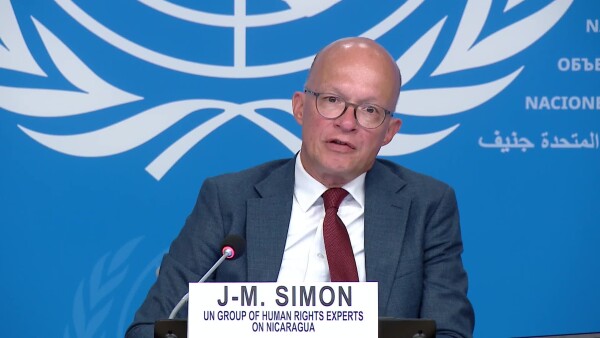
Press conference on the situation of human rights in Nicaragua by the UN Group of Human Rights Experts