

The United Nations Office at Geneva
Multimedia Newsroom
UN GENEVA PRESS BRIEFING
14 July 2026
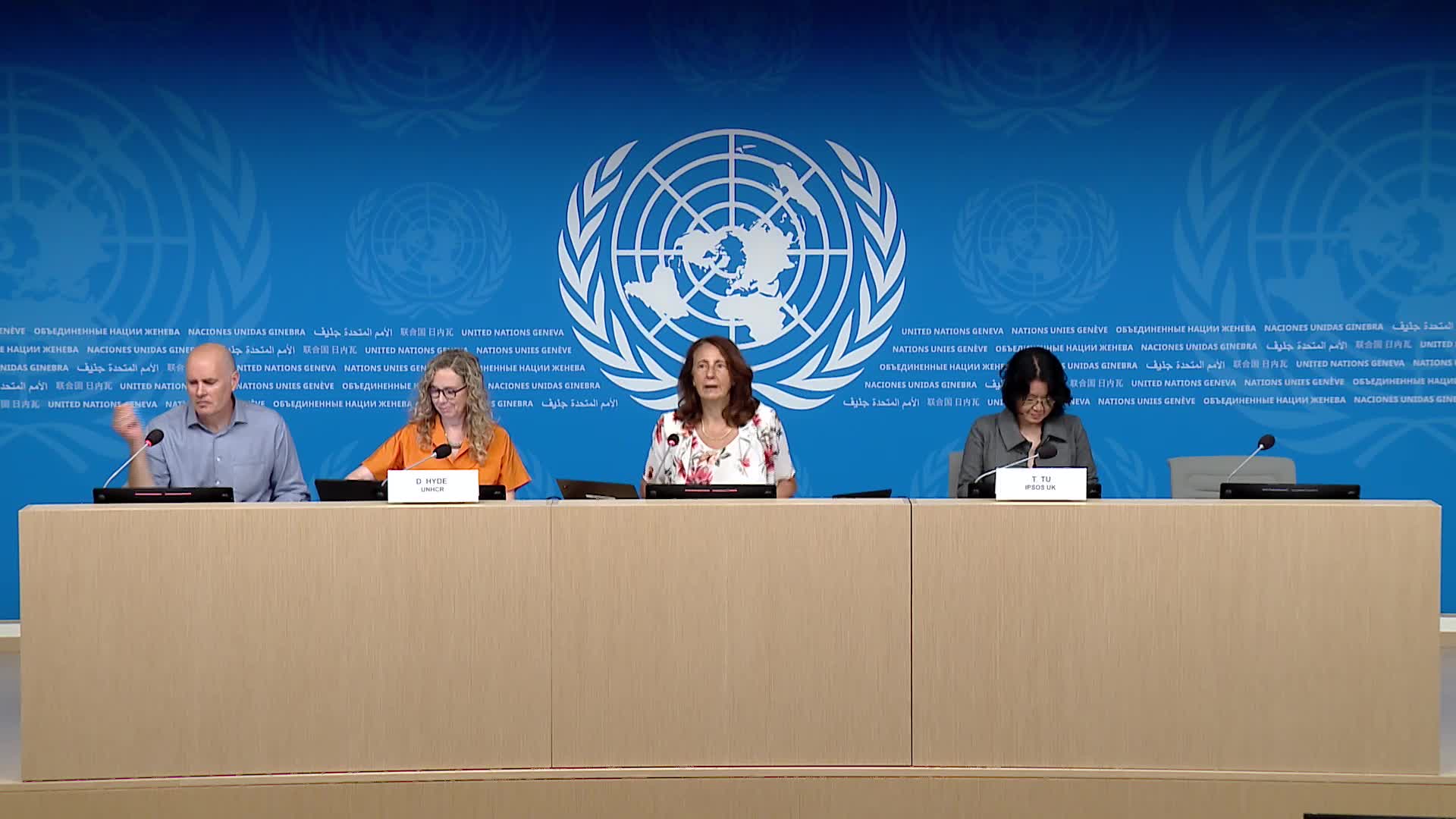
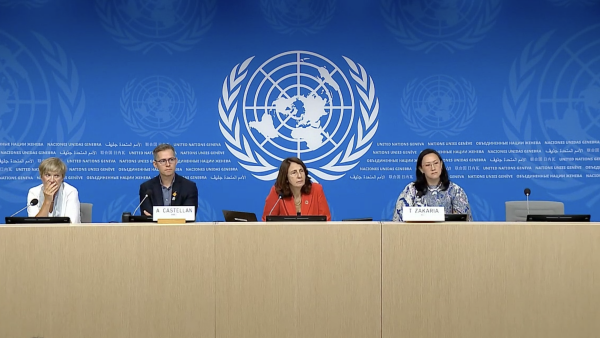
Alessandra Vellucci, Director of the United Nations Information Service (UNIS) in Geneva, chaired the hybrid briefing which was attended by spokespersons and representatives from the United Nations High Commissioner for Refugees and the World Health Organization.
UNHCR-Ipsos: Public support for refugees stable after 75 years of Convention protection
Trinh Tu, Managing Director at Ipsos UK, presented the findings of the joint UNHCR-Ipsos UK annual Global Attitudes to Refugees survey that was implementing since 2017. This year, the survey covered 29 countries and some 21,500 people.
The overall picture was quite stable compared to previous years: 66 percent of respondents supported the principle of offering refuge to people fleeing war or persecution in another country, including in their own country, a figure unchanged from last year. This trend was relatively stable. In 2022, with the Russian invasion of Ukraine, the response had jumped significantly to 78%, before coming down quickly after that, with a return to the long-term trend.
Stability in support for people seeking refuge did not mean that the debate about refugees had settled. Data showed consistently the public's perception that many people fleeing war, persecution and seeking refuge were not all in genuine need of protection. In other words, people supported the principle of providing refuge, while expressing doubts: this year, 61 percent believed that many people seeking protection were not in need of refuge.
Dominique Hyde, UN High Commissioner for Refugees (UNHCR) Director of External Relations, noted that the ssupport remained broadly stable despite political tension, economic pressure, and a very polarized debate that was often fueled by disinformation, misinformation, and hate speech.
The survey showed that public attitude was complex, with differences from one country to another. Many people supported the right to seek safety while also questioning whether asylum systems were fair, efficient, and properly managed. This was an important message for the 75th anniversary of the adoption of the 1951 Convention relating to the Status of Refugees. The challenge was not only to defend the Convention, but also to make sure that its promise worked in practice, with fair and effective asylum systems, timely decisions, and supporting the countries and communities that hosted most of the world's refugees. Responsibility must be shared fairly.
Refugees did not want to be defined by the displacement that they had experienced: they wanted opportunity, not dependency, and the chance to contribute. Protection made that possible.
Answering questions from journalists, Ms. Tu gave examples of results varying according to countries. France and Japan were two countries where the views towards supporting people in need of persecution had changed dramatically since Ipsos measured it, with a significant positive jump between 2019 and 2026.
The survey did not ask specifically about climate, Ms. Tu said in answer to other questions. People saw people trying to flee because of climate change as refugees as well. Previous data showed there was a lot of confusion here: people tended to mix migrants, asylum seekers, and refugees.
The survey, Ms. Tu also noted, showed that the same people held both views: they supported the protection principle, but at the same time, they had concerns. There was a generational difference in this regard: the younger generation was much more supportive of the right to seek refuge and more optimistic about the integration of refugees as well. But they too were not without doubt.
Ms. Hyde said that the results from Ipsos helped informing how UNHCR communicated in the countries concerned and how it worked with governments.
Answering other questions, Ms. Hyde said UNHCR’s budget had continued to see downwards numbers from 2025 and 2024. It expected to receive a little over USD 3 billion in 2026. The big shift was that tightly earmarked funding had gone to over 54 percent of the funding in 2026, from 25 percent in 2024. This funding was earmarked on certain themes and populations, and only a very small portion to countries. In terms of who was contributing, some 2.9 million individuals were now giving directly to UNHCR, Ms. Hyde also noted.
Matthew Saltmarsh, also for UNHCR, emphasized that despite all the misinformation, drilling into the data showed there was not a huge level of hatred against foreigners, refugees, and asylum seekers, and that there was still this groundswell of support for them.
Progress and priorities on Ebola outbreak in DRC
Dr Chikwe Ihekweazu, Executive Director of the Health Emergencies Programme at the World Health Organization (WHO), returning from Bunia in the Democratic Republic of the Congo (DRC), said health services there now had a treatment capacity of close to 800 beds, increasing every week. Lab capacity had gone from one to 14 labs. Contact follow-up rates approached 80%. WHO was carrying out 30 to 40 safe and dignified burials every day. There also had been important progress in research: on 2 July, WHO and partners had started enrolling patients in the clinical trial to find treatments for the Ebola disease caused by Bundibugyo virus, and an important clinical trial to assess the efficacy of post-exposure prophylaxis (PEP) with the antiviral obeldesivir would be announced today.
However, despite the progress made, the outbreak still outpaced the response efforts. As of 11 July, there were close to 2,000 confirmed cases and over 700 deaths across five provinces in the DRC. This was now the third largest Ebola outbreak ever, with the fastest growth in a single month since the outbreak had started. It was alarming that many of the newly reported deaths were people who had died in their communities without ever reaching a health facility and without receiving care.
The strategy must be to detect cases earlier and to bring them into care as soon as possible, to reduce transmission in the community. To do this, facilities must be made accessible, and communities must have confidence in the care provided. One must give confidence to the community so that if they were to come into care, they could trust that they would be cared for, supported and nurtured back into health.
WHO and its partners were supporting the government of the DRC across every aspect of the response, from surveillance, testing, clinical care, IPC, logistics, to community engagement. However, this outbreak required resources that matched the scale of the challenges, and this was a burden the DRC could be allowed to carry on its own. WHO had appealed for USD 115 million to support its response activities, the priorities being improving coordination, surveillance, testing, contact tracing, expanding clinical care, infection prevention and control, as well as accelerating access to new countermeasures, treatments and vaccines, and diagnostic tools. To date, WHO had received 40 percent of the funding, leaving a gap of USD 70 million at a critical time in the response.
Answering a question on the exact toll of the epidemic, Mr. Ihekweazu said that according to modeling, the scale of the outbreak might be at least two to four times the official number of cases. WHO was doing its best to give a certain level of confidence on the data by combining indicators such as the number of deaths, the results of the swabs, and the positivity rates of those that came into care. Every day, the capacity to find cases was improving, but Mr. Ihekweazu stressed there would never be absolute certainty in the context of the Eastern DRC, which was a complicated environment.
Close to 95 percent of all new cases were in the Ituri province, where WHO continued to push. At the same time, WHO was trying to understand the travel routes people took for trade, travel, or care, to map out the location of new cases, Mr. Ihekweazu explained.
Announcements
Christian Lindmeier, for the World Health Organization, said today at 2 p.m., WHO and UNICEF would issue the world's largest and most comprehensive data set on immunization trends for 195 countries on vaccinations against 13 diseases.
The Director-General of WHO would hold a press briefing tomorrow at 4 p.m.
Ms. Vellucci, for the United Nations Information Service, reminded that a statement of the Secretary-General on World Youth Skills Day on 15 July had been shared with the journalists.
TOPICS
- UNHCR Matthew Saltmarsh (PR) with Dominique Hyde, UNHCR’s Director of External Relations (PR) and Trinh Tu, Managing Director, Ipsos UK (PR)
UNHCR-Ipsos: Public support for refugees remains stable after 75 years of Convention protection - WHO Christian Lindmeier (PR) with Dr Chikwe Ihekweazu, Executive Director, Health Emergencies Programme (PR)
Back from Bunia: progress and priorities on Ebola outbreak in DRC
Similar Stories
1
1
1
Statements , Press Conferences | OHCHR
1
1
1
Press Conferences | UNHCR , UNICEF , IFRC , OHCHR , UN WOMEN , IOM , OCHA , WHO
UNHCR – ExCom Meeting, UNICEF – Nepal Recovery, IFRC – Flash Floods, WHO – Mental Health, IOM – South Sudan Floods, OCHA – DRC Humanitarian aid, UNHCR – Sahel Displacement, UNICEF – Yemen Update, IOM – Gaza Shelter, UN Women – Gaza Women, OHCHR – Arrests and detentions of Syrians by Israeli force
2
1
2
Press Conferences | UNCTAD
Presentation of the Trade and Developement Report 2026
Embargoed until 9 October 2026 at 11 a.m. (Geneva Time)
UNCTAD: UNCTAD’s flagship report finds that governments increasingly use industrial, trade, financial and technology policies to pursue economic and national security objectives. Market access and the ability to move into higher-value activities now depend more heavily on technology, finance and geopolitics.
1
1
1
Press Conferences | UPU
Release of the State of the Postal Sector Report 2026
1
1
1
Press Conferences | IOM , ITU , UNECE , UNICEF , WHO , WMO
UNICEF: Ebola, DRC - children orphans or separating them from parents and caregivers; IOM: Humanitarian needs in Djibouti amid arrivals from Yemen and increased migrant movements; WHO: Darfur, scale of health needs far exceeds available resources; WMO co-sponsored Global Heat Forum, Bangkok, monthly Global Seasonal Climate Update; UNECE: UN Forum of Mayors; ITU Plenipotentiary Conference 2026; WHO: child and adolescent obesity guidelines and new global roadmap to tackle pregnancy hypertension, a leading cause of maternal mortality
1
1
1
Press Conferences | OCHA , UN WOMEN , UNHCR , WFP , WHO , WTO , UNEP
OCHA – $160M CERF allocation to 12 underfunded crises; UNHCR – 5.8M refugee children remain out of school amid funding cuts; UN Women – Middle East escalation and food security among women/girls; WHO – Gaza supplies and overall situation; WFP – Yemen food insecurity and impact on global hunger ; UNEP - First International Conference of the Global Framework on Chemicals in Geneva | 16-20 November 2026
1
1
1
Press Conferences | UNHCR , WHO
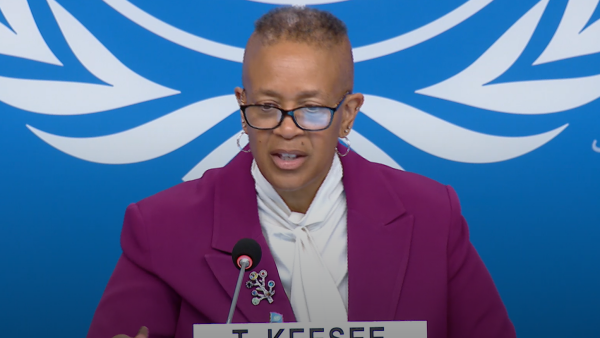
Yemen's health system nears collapse amid conflict, causing rising casualties and medicine shortages.
1
1
1
Press Conferences | HRC
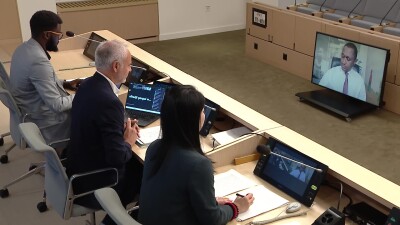
Update by the Expert Mechanism to Advance Racial Justice and Equality in Law Enforcement
1
1
1
Press Conferences | WIPO , WHO , UNICEF , UNHCR , IOM , WFP , FAO
WIPO Global Innovation Index 2026 launch and press conference, WHO Composition of influenza vaccines for the 2027 Southern Hemisphere flu season, UNICEF Yemen hunger and malnutrition; UNHCR Sudan displacement into Chad; IOM Ebola and population movements in DRC; WFP emergency food assistance in Nepal; and FAO food loss and waste.
2
1
2
Press Conferences | UNCTAD
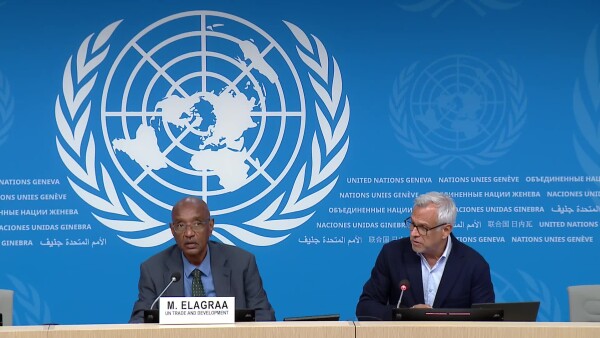
Gaza reconstruction needs reach $71.5 billion as Palestinian economy and public finances face severe strain. Latest UNCTAD report documents the loss of decades of development gains, economic collapse in Gaza and tightening economic constraints in the West Bank.
The report identifies three immediate priorities: transferring withheld Palestinian revenues, safeguarding the banking system and aligning reconstruction support with the documented scale of damage and economic losses.
1
1
1
Press Conferences | HRC
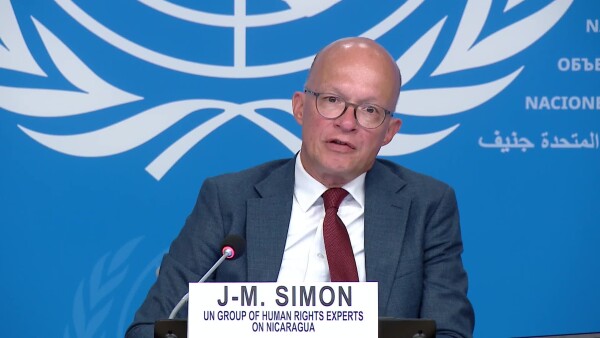
Press conference on the situation of human rights in Nicaragua by the UN Group of Human Rights Experts
1
1
1
Press Conferences | ITU , UNHCR , WHO , WMO
YEMEN - UNHCR: Escalating conflict in Yemen could fuel more displacement, refugee movement
CLIMATE - WHO / WMO: Health and Climate impact of El Niño