

The United Nations Office at Geneva
Multimedia Newsroom
Press Conferences , Edited News | WHO
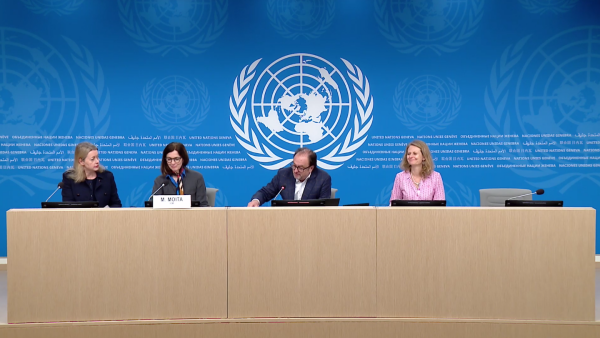
WHO Press Conference: Update on health situation in Gaza - 21 December 2023
Injured patients ‘waiting to die’ in northern Gaza as last hospital shuts down: WHO
There are no functioning hospitals in the north of Gaza and injured patients who need surgery and cannot be moved are “waiting to die”, the UN health agency said on Thursday, in a plea for a ceasefire to allow more aid into the shattered enclave.
The latest grave assessment from the World Health Organization (WHO) came after UN teams reached Al Ahli Arab hospital and Al Shifa hospital on Wednesday, amid reports of intensifying ground operations by Israeli Defense Forces and continuing airstrikes in the Gaza Strip, in response to Hamas’s 7 October terror attacks on southern Israel.
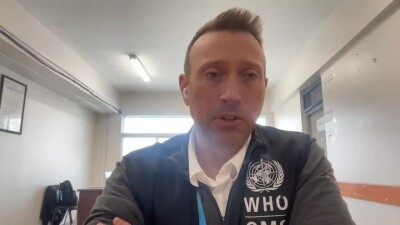
“Patients were crying out in pain, but they were also crying out for us to give them water,” said WHO Emergency Medical Teams coordinator Sean Casey, describing the scene at Al Ahli Arab hospital, where medical staff were struggling to cope with “no food, no fuel, no water”.
“It looks more like a hospice now than a hospital. But a hospice implies a level of care that the doctors and nurses are unable to provide…. It's pretty unbearable to see somebody with casts on multiple limbs, external fixator on multiple limbs, without drinking water and almost no IV fluids available.
“At the moment, it's a place where people are waiting to die unless we are able to move them to a safer location where they can receive care.”
Guterres aid call
Highlighting the need to relieve the deteriorating humanitarian crisis in Gaza, UN Secretary-General António Guterres on Thursday said that “intense fighting, lack of electricity, limited fuel and disrupted telecommunications” had severely restricted the UN’s efforts to provide life-saving aid to people in the enclave.
“Conditions to allow for large-scale humanitarian operations need to be re-established immediately,” the UN chief insisted in a tweet.
Growing hunger
The high-risk mission to northern Gaza involving the WHO, the UN aid coordination office, OCHA, the UN Mine Action Service (UNMAS) and the UN Department of Safety and Security (UNDSS) ensured the delivery of seven pallets of urgently needed medicines, intravenous fluids and supplies for surgery and to treat the wounded, along with equipment to support women giving birth.
Important though the delivery of medical supplies to the north is to provide some relief to patients, much more worrying is the growing and already widespread shortage of food and water.
“We are behind. There is not enough food, every single person I speak to everywhere I go in Gaza is hungry,” Mr. Casey said, speaking to journalists in Geneva. “The time is now. We are dealing with starving people now, adults, children, it's unbearable. Everywhere we go, people are asking us for food even in the hospital, I walked around in the emergency department, somebody with an open bleeding wound, an open fracture; they asked for food. If that's not an indicator of the desperation, I don't know what is.”
Crippling shortages
According to the UN health agency, only nine out of 36 health facilities in Gaza are partially functional; all of them are located in the south.
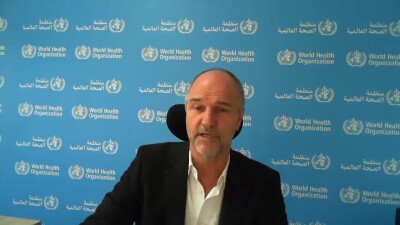
“There are no operating theatres (in the north) anymore due to the lack of fuel, power, medical supplies and health workers, including surgeons and other specialists,” said Dr Richard Peeperkorn, WHO Representative and now acting UN humanitarian coordinator in the Occupied Palestinian Territory, speaking from Jerusalem.
At Al Ahli Arab hospital approximately 10 staff – “all junior doctors and nurses” – have continued to provide basic first aid to some 80 patients now sheltering in a church within the hospital grounds, Dr. Peeperkorn explained. “Some of them are severely injured and have been waiting for surgery for two weeks or have been operated on but are now at risk of post-operation infection due to lack of antibiotics and other drugs. All these patients cannot move and need to be transferred urgently, to have a chance to survive.”
Heavy bombing and clashes
According to the UN aid office OCHA’s latest update on the crisis, “heavy Israeli bombardments from air, land and sea”, continued across Gaza on Wednesday.
The most intense shelling was reported in Beit Lahiya and multiple areas in Gaza city (north), eastern Khan Younis in the south and the eastern and western areas of Rafah city, also in the south.
OCHA also reported “intense ground operations” and continuing clashes between Israeli forces and Palestinian armed groups in northern Gaza, Gaza City, the Middle Area, and Khan Younis, along with the firing of rockets by Palestinian armed groups into Israel.
Latest casualty figures from Gaza’s health authorities from Tuesday shared by OCHA indicated that 19,667 Palestinians have killed in Gaza since 7 October, about 70 per cent are believed to be women and children. More than 52,586 people have been injured, according to the same source, which reported that many more were missing, likely buried under the rubble.
The UN update also noted that two Israeli soldiers were reported killed in Gaza between 19 and 20 December. “Since the start of the ground operations, 134 soldiers have been killed in Gaza, and 740 soldiers have been injured, according to the Israeli military,” OCHA said.
New evacuation order
The update also flagged a 20 December immediate evacuation order from the Israeli military covering about 20 per cent of central and south of Khan Younis city. The area was marked in an online map published on social media. Before the 7 October escalation, the area was home to nearly 111,542 people, according to OCHA, which noted that it also included 32 shelters housing about 141,451 internally displaced persons - the vast majority having been previously displaced from the north.
STORY: Gaza healthcare update – WHO
TRT: 3:09”
SOURCE: UNTV CH
LANGUAGE: ENGLISH
ASPECT RATIO: 16:9
DATELINE: 21 December 2023 - GENEVA, SWITZERLAND
SHOTLIST
- Exterior wide shot: UN building with UN flag, UN Geneva.
- SOUNDBITE (ENGLISH) – Sean Casey, WHO Emergency Medical Teams coordinator: “It's pretty unbearable to see people who are already victims of conflicts who are in what should be a safe place where they should be able to access care, where they're sitting, waiting to die unless something dramatically changes that will allow them to survive. And that required safe movement, it requires a huge uplift of fuel, it requires medicine, medical supplies, human resources. They're starving. They're dying of thirst.”
- Cutaway: Medium shot, UN building with UN flag
- SOUNDBITE (ENGLISH) – Sean Casey, WHO Emergency Medical Teams coordinator: “Patients were crying out in pain, but they were also crying out for us to give them water. It's pretty unbearable to see somebody with casts on multiple limbs, external fixator on multiple limbs, without drinking water and almost no IV fluids available.”
- Cutaway: Medium shot UN entrance at Place des Nations
- SOUNDBITE (ENGLISH) – Dr. Richard Peeperkorn, WHO Representative in the Occupied Palestinian Territory: “Over 20,000 people now have been killed in the hostilities in Gaza. This is actually almost one per cent of the entire population. WHO calls again for a humanitarian ceasefire. This is needed now to reinforce and restock remaining health facilities, deliver medical services needed by thousands of injured people and those needing essential care, and above all, stop the bloodshed and death.”
- Cutaway: Wide shot, Ariana Park at UN Geneva
- SOUNDBITE (ENGLISH) - Sean Casey, WHO Emergency Medical Teams coordinator: “We went through the courtyard where we stepped over a hole from shelling that had happened just a couple of days before, passed a row of bodies that had been wrapped in white, in plastic sheeting,”
- Cutaway: Wide shot, UN flag with ICRC building in background
- SOUNDBITE (ENGLISH) – Sean Casey, WHO Emergency Medical Teams coordinator: “What would be considered unnecessary amputations in the rest of the world where there is capability to save limbs, where there's orthopedic capability, where there is vascular capability, that's not there. There's no surgery happening right now in northern Gaza. And so actually, many of the patients that I saw yesterday will need amputation if and when they're able to access surgical care.”
- Cutaway: Wide shot, UN building
- SOUNDBITE (ENGLISH) – Sean Casey, WHO Emergency Medical Teams coordinator: “It's too late. We’re behind. There is not enough food. Every single person I speak to, everywhere I go in Gaza, is hungry. The time is now. We are dealing with starving people now, adults, children. It's unbearable. Everywhere we go, people are asking even in the hospital, I walk around in the emergency department, somebody with an open bleeding wound, with an open fracture, they ask for food.”
- Cutaway: Wide shot, UN flag alley
Similar Stories

1
1
1
Edited News | OCHA , UNICEF , WFP
Aid agencies warned on Friday of the fast-developing humanitarian emergency inside Taiz City in Yemen, which has been encircled by de facto Houthi forces fighting government troops along the country’s west coast.
1
1
1
Press Conferences | UN WOMEN , WFP , WHO
UN WOMEN: Sudan Women and girls one year after the fall of El Fasher; increasing drone attacks across the country; WFP: DRC - Ebola spreads to eighth DRC province as WFP delivers food, builds treatment centres and keeps supplies moving; WHO - Update on Ebola (Bundibugyo Virus Disease)
1
12
1
1
Press Conferences , Images | UNOG
Closing Press Conference following the Sixth Consultative Meeting on Enhancing Coordination of Peace Initiatives and Efforts in Sudan

2
17
1
2
Edited News , Press Conferences , Images | OCHA , WMO
Two UN agencies teamed up on Wednesday to issue an appeal for immediate assistance to help communities already being impacted by the strongest El Niño on record.

3
16
2
2
Edited News , B-roll , Conferences , Images | UNITED NATIONS , UNOG
Sixth Consultative Meeting on Enhancing Coordination of Peace Initiatives and Efforts for Sudan
1
1
1
Press Conferences | CITES
Wildlife trade and conservation policy discussions at the 81st meeting of the CITES Standing Committee (SC81)

1
1
1
Edited News | UNICEF , WHO , UNHCR
Yemen war continues to force families from homes amid hunger and disease
More than 250,000 people have now fled renewed fighting in Yemen, the UN said on Tuesday, citing particular concern for those sheltering in the southwestern city of Taiz and the wider governorate, where access is “essentially blocked”.
1
1
1
Press Conferences | UNHCR , UNCTAD , WMO , OCHA , UNICEF , WHO
UNHCR Hungary’s 1956 Refugee Crisis: 70 Years On, UNCTAD World Investment Forum 2026, Doha, WMO Greenhouse Gas Bulletin and Climate Update for COP31, OCHA Afghanistan: Malnutrition, Girls’ Education and Recovery, UNICEF Yemen: Child Malnutrition and Unsafe Water in Taiz, WHO Inequalities in Noncommunicable Diseases and Risk Factors
1
1
1
Press Conferences | UNHCR
End of UNHCR's 77th Annual Executive Committee (ExCom) meeting week

1
1
1
Edited News | UNICEF
A little over one year since a ceasefire agreement was announced between Hamas fighters and Israel, more than 340 children have been reported killed and hundreds more injured, the UN Children’s Fund, UNICEF, said on Friday.
1
1
1
Press Conferences | UNICEF , IOM , UNHCR
UN Special Assistant to the Personal Envoy Office (SUDAN): Peace Initiatives and Efforts in Sudan; UNICEF: Dire situation of children in Gaza; IOM: Damaged Homes and Energy Attacks Risk Displacing Ukrainians for this winter; UNHCR: update on EXCOM week
1
1
1
Press Conferences | IOM , UNDRR
UN stresses importance of household preparedness for disaster risk reduction.