

The United Nations Office at Geneva
Multimedia Newsroom
Edited News , Press Conferences
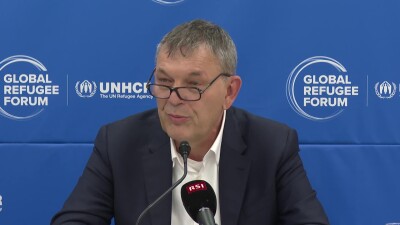
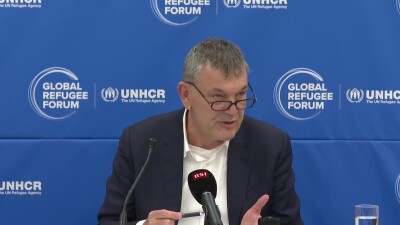
UNRWA Press conference with Mr. Philippe Lazzarini - 14 December 2023
STORYLINE
“This is a make-or-break moment for all of us and our shared humanity,” UNRWA Commissioner-General Lazzarini
Returning from his third visit to Gaza since the war started, the head of the UN agency for Palestinian refugees, Philippe Lazzarini, said on Thursday that “every time I see more misery, grief and sadness”.
Briefing journalists in Geneva 69 days since the Israeli bombardment began in response to the 7 October Hamas terror attacks in southern Israel, Mr. Lazzarini, UNRWA Commissioner-General, said that in in southern Rafah governorate, “basically, the lucky ones are those who have a place inside our premises and especially now that winter has just started. But the others have absolutely nowhere to go, they live in the open, they live in the cold, in the mud and under the rain. Everywhere you look is congested with makeshift shelters, everywhere you go people are desperate, hungry and are terrified.”
From the sidelines of the Global Refugee Forum in Geneva, Mr. Lazzarini explained that he saw people stopping aid trucks, offloading food and eating it immediately.
“This has nothing to do with aid diversion, this is something which has to do with a total despair the people are expressing in the Gaza Strip,” he said. “Hunger is something people in Gaza have never ever known before. But hunger has now emerged over the last few weeks and we meet more and more people who haven’t eaten for one, two or three days.”
With more than one million people looking for shelter there, Mr. Lazzarini said that UNRWA facilities are massively overcrowded.
“What continues to shock me is the ever-increasing level of dehumanization, the lack of empathy and humanity, the fact that people can laugh, cheer and mock and any type of wrongdoing that we observe in this war when in fact, what is happening in Gaza, should outrage anyone, should make us all rethink our values. Think, this is also a make-or-break moment for all of us and for our shared humanity,” he said, in reference to inflammatory social media posts.
Urging the media to help, Mr. Lazzarini said that he was “horrified at the smear campaign that targets Palestinians and those who provide aid to them. And on that, I am asking you to help us to push back against misinformation and inaccuracies...Fact-checking is absolutely key if we want accurate information.”
Mr. Lazzarini reiterated his call for the opening of the Kerem Shalom crossing which handled the daily passage of hundreds of commercial trucks before it was shut on 7 October.
“We are confronted with an unprecedented war, […] a war of all possible superlatives, in terms of destruction, in terms of the number of people killed, in terms of needs, in terms of displacement, and more than ever, countries with a human tradition should continue to express their solidarity, and today the main agency in the Gaza Strip is UNRWA.” He reminded that should UNRWA collapse, “the entire humanitarian system in the Gaza Strip would collapse.”
Mr. Lazzarini concluded his briefing by saying that “in suffering there’s absolutely no competition and I believe that ultimately in this war there will be no winner.” He added that “the longer this war goes on, the largest loss, but beyond that, the deeper the grief. […] There is absolutely no alternative to a proper, genuine political process to end once for all the longest lasting unresolved conflict. 75 years without a solution.”
-ends-
STORY: Gaza situation update – UNRWA
TRT: 04:07”
SOURCE: UNTV CH
LANGUAGE: ENGLISH
ASPECT RATIO: 16:9
DATELINE: 14 December 2023 - GENEVA, SWITZERLAND
SHOTLIST
- Exterior wide shot: Global Refugee Forum at Palexpo in Geneva
- SOUNDBITE (ENGLISH) – Philippe Lazzarini, UNRWA Commissioner-General: ““Basically, the lucky ones are those who have a place inside our premises and especially now that winter has just started. But the others have absolutely nowhere to go, they live in the open, they live in the cold, in the mud and under the rain. Everywhere you look is congested with makeshift shelters, everywhere you go people are desperate, hungry and are terrified.”
- Cutaway: Wide shot, press briefing held at the Global Refugee Forum in Geneva
- SOUNDBITE (ENGLISH) - Philippe Lazzarini, UNRWA Commissioner-General: ““This has nothing to do with aid diversion, this is something which has to do with a total despair the people are expressing in the Gaza Strip. Hunger is something people in Gaza have never ever known before. But hunger has now emerged over the last few weeks and we meet more and more people who haven’t eaten for one, two or three days.”
- Cutaway: Wide shot, press briefing held at the Global Refugee Forum in Geneva
- SOUNDBITE (ENGLISH) – Philippe Lazzarini, UNRWA Commissioner-General: ““What continues to shock me is the ever-increasing level of dehumanization, the lack of empathy and humanity, the fact that people can laugh, cheer and mock and any type of wrongdoing that we observe in this war when in fact, what is happening in Gaza should outrage anyone, should make us all rethink our values. Think, this is also a make-or-break moment for all of us and for our shared humanity”.
- Cutaway: Medium shot, press briefing held at the Global Refugee Forum in Geneva
- SOUNDBITE (ENGLISH) - Philippe Lazzarini, UNRWA Commissioner-General: ““I am horrified at the smear campaign that targets Palestinians and those who provide aid to them. And on that, I am asking you to help us to push back against misinformation and inaccuracies. I know that some of you are constantly doing fact checking. But fact-checking is absolutely key if we want accurate information.
- Cutaway: Medium shot, press briefing held at the Global Refugee Forum in Geneva
- SOUNDBITE (ENGLISH) - Philippe Lazzarini, UNRWA Commissioner-General: ““In suffering there’s absolutely no competition and I believe that ultimately in this war there will be no winner. The longer this war goes on, the largest loss, but beyond that, the deeper the grief. So, I think like many of my colleagues, that there is absolutely no alternative to a proper, genuine political process to end once for all the longest lasting unresolved conflict. 75 years without a solution.”
- Cutaway: Medium shot, press briefing held at the Global Refugee Forum in Geneva
- SOUNDBITE (ENGLISH) - Philippe Lazzarini, UNRWA Commissioner-General: “We are confronted with an unprecedented war, I think it’s a war of all possible superlatives, in terms of destruction, in terms of the number of people killed, in terms of needs, in terms of displacement, and more than ever, countries with a human tradition should continue to express their solidarity , and today the main agency in the Gaza Strip is UNRWA. And would UNRWA collapse, the entire humanitarian system in the Gaza Strip would collapse.”
- Cutaway: Medium shot, press briefing held at the Global Refugee Forum in Geneva
Similar Stories

1
1
1
Edited News | OCHA , UNICEF , WFP
Aid agencies warned on Friday of the fast-developing humanitarian emergency inside Taiz City in Yemen, which has been encircled by de facto Houthi forces fighting government troops along the country’s west coast.
1
1
1
Press Conferences | UN WOMEN , WFP , WHO
UN WOMEN: Sudan Women and girls one year after the fall of El Fasher; increasing drone attacks across the country; WFP: DRC - Ebola spreads to eighth DRC province as WFP delivers food, builds treatment centres and keeps supplies moving; WHO - Update on Ebola (Bundibugyo Virus Disease)
1
12
1
1
Press Conferences , Images | UNOG
Closing Press Conference following the Sixth Consultative Meeting on Enhancing Coordination of Peace Initiatives and Efforts in Sudan

2
17
1
2
Edited News , Press Conferences , Images | OCHA , WMO
Two UN agencies teamed up on Wednesday to issue an appeal for immediate assistance to help communities already being impacted by the strongest El Niño on record.

3
16
2
2
Edited News , B-roll , Conferences , Images | UNITED NATIONS , UNOG
Sixth Consultative Meeting on Enhancing Coordination of Peace Initiatives and Efforts for Sudan
1
1
1
Press Conferences | CITES
Wildlife trade and conservation policy discussions at the 81st meeting of the CITES Standing Committee (SC81)

1
1
1
Edited News | UNICEF , WHO , UNHCR
Yemen war continues to force families from homes amid hunger and disease
More than 250,000 people have now fled renewed fighting in Yemen, the UN said on Tuesday, citing particular concern for those sheltering in the southwestern city of Taiz and the wider governorate, where access is “essentially blocked”.
1
1
1
Press Conferences | UNHCR , UNCTAD , WMO , OCHA , UNICEF , WHO
UNHCR Hungary’s 1956 Refugee Crisis: 70 Years On, UNCTAD World Investment Forum 2026, Doha, WMO Greenhouse Gas Bulletin and Climate Update for COP31, OCHA Afghanistan: Malnutrition, Girls’ Education and Recovery, UNICEF Yemen: Child Malnutrition and Unsafe Water in Taiz, WHO Inequalities in Noncommunicable Diseases and Risk Factors

1
1
1
Press Conferences | UNHCR
End of UNHCR's 77th Annual Executive Committee (ExCom) meeting week

1
1
1
Edited News | UNICEF
A little over one year since a ceasefire agreement was announced between Hamas fighters and Israel, more than 340 children have been reported killed and hundreds more injured, the UN Children’s Fund, UNICEF, said on Friday.

1
1
1
Press Conferences | UNICEF , IOM , UNHCR
UN Special Assistant to the Personal Envoy Office (SUDAN): Peace Initiatives and Efforts in Sudan; UNICEF: Dire situation of children in Gaza; IOM: Damaged Homes and Energy Attacks Risk Displacing Ukrainians for this winter; UNHCR: update on EXCOM week

1
1
1
Press Conferences | IOM , UNDRR
UN stresses importance of household preparedness for disaster risk reduction.