

The United Nations Office at Geneva
Multimedia Newsroom
Gaza hospitals in a state of “utter chaos and a humanitarian disaster zone” - WHO
The UN World Health Organization (WHO) reiterated its calls on Tuesday for the protection of health care and humanitarian assistance in Gaza, following military checkpoint delays and detention of health partners during a mission to transfer critically ill patients from the north to the south and to deliver health supplies.
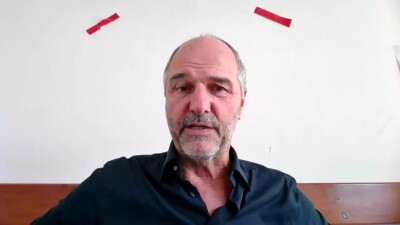
Briefing reporters from Gaza, Dr. Richard Peeperkorn, WHO’s representative in the Occupied Palestinian Territory, said that “the space for humanitarian actors to provide aid within Gaza is incredibly complex and it seems to be shrinking. It is very difficult for us to safely and swiftly move supplies, patients and staff and the needs are enormous to alleviate this catastrophic humanitarian situation which is only growing.”
The Gaza Strip has been transformed within 66 days of fighting, from a “reasonably functioning health system” producing health indicators “on par with neighbouring countries” to a situation where more than two thirds of its 36 hospitals and over 70 per cent of primary health care facilities are out of commission, according to WHO.
Dr. Peeperkorn told the media that on 9 December during a high-risk mission to evacuate patients from the Al-Ahli Hospital in Gaza City to the Nasser Medical Complex in southern Gaza, “on the way north, the UN convoy was inspected at the Wadi Gaza checkpoint and crew members had to leave the vehicles for identification, exposing them to risk.” He added that “two of the PRCS (Palestine Red Crescent Society) staff were detained for over an hour, and we had to wait there, it further delayed the mission. We witnessed that one of the staff was made to kneel at gun point and taken out of sight. Finally, he returned and we could move on as well.”
WHO’s representative stated that on the way back, with the 19 critical patients from Al-Ahli Hospital on board, the convoy was again stopped at the Wadi Gaza checkpoint. PRCS (Palestine Red Crescent Society) staff and most of the patients had to leave the ambulances for security checks, and "critical patients remaining in the ambulance were all searched by armed soldiers".
The WHO staff described the Al-Ahli Hospital as extremely overcrowded, with many displaced people sheltering there, and over 200 patients, while it only has enough resources to support 40 beds. The building has sustained substantive damage because of the hostilities.
“We saw many trauma patients on donkey carts, on horse carts, etcetera, dead people unfortunately, seriously injured people on foot, personal vehicles everywhere, every room in Al-Ahli, not only every ward but every corridor in the courtyard, outside, in the library, even the chapel, is full with patients,” said Dr. Peeperkorn. “We can only describe it as a kind of utter chaos and a humanitarian disaster zone.”
Faced with large numbers of trauma patients inside the hospital, and outside on the street, “the doctors are really forced to prioritize who receives care, who doesn’t, and they are treating many of the serious cases actually straight away in the corner of the corridors or on the floor or even in the chapel,” said Dr. Peeperkorn. “Unfortunately, there is no vascular surgeon, so that’s why the medical specialists are forced to do something like limb amputations as the last resort to save lives.”
Meanwhile WHO spokesperson Christian Lindmeier told reporters in Geneva that according to the Ministry of Health in Gaza, the Kamal Adwan Hospital – also in the north – “is being forcefully evacuated. There are currently 68 patients inside the hospital, 18 intensive care unit patients and including six neonates.”
Close to 50,000 people have been injured in Gaza since 7 October and some 8,000 of them require “urgent and immediate medical intervention”, WHO said.
WHO said that with its partners it remains firmly committed to staying in Gaza and assisting the population. But as hostilities continue to increase across the Strip and aid falls short of needs, the humanitarian support system is on the verge of collapse.
The UN health agency reiterated that obstruction of ambulances and attacks on humanitarian and health workers are unconscionable, insisting that healthcare is protected under international law and must be respected in all circumstances.
-ends-
STORY: Gaza protection of humanitarian space - WHO
TRT: 3:14”
SOURCE: UNTV CH
LANGUAGE: ENGLISH
ASPECT RATIO: 16:9
DATELINE: 12 December 2023 - GENEVA, SWITZERLAND
SHOTLIST
- Exterior wide shot: UN building with UN flag, UN Geneva.
- SOUNDBITE (ENGLISH) – Dr. Richard Peeperkorn, WHO Representative in the occupied Palestinian territory (oPt): “The space for humanitarian actors to provide aid within Gaza is incredibly complex and it seems to be shrinking. It is very difficult for us to safely and swiftly move supplies, patients and staff and the needs are enormous to alleviate this catastrophic humanitarian situation which is only growing.”
- Cutaway: Medium shot, UN flag in front of UN building
- SOUNDBITE (ENGLISH) – Dr. Richard Peeperkorn, WHO Representative in the occupied Palestinian territory (oPt): “On the way north, the UN convoy was inspected at the Wadi Gaza checkpoint and ambulances and crew members had to leave the vehicles for identification, exposing them to risk. Two of the PRCS (Palestine Red Crescent Society) staff were detained for over an hour, and we had to wait there, it further delayed the mission. We witnessed that one of the staff was made to kneel at gunpoint and taken out of sight. Finally, he returned and we could move on as well.”
- Cutaway: Medium shot, outside UN entry at Place des Nations
- SOUNDBITE (ENGLISH) - Dr. Richard Peeperkorn, WHO Representative in the occupied Palestinian territory (oPt): “On the way south, and this is much more serious, again with the patients from Al- Ahli hospital, the convoy was again stopped at the Wadi Gaza checkpoint. PRCS and most of the patients had to leave the ambulances for security checks, and critical patients remaining in the ambulance were all searched by armed soldiers.”
- Cutaway: Wide shot, Ariana Park with sea in background
- SOUNDBITE (ENGLISH) – Christian Lindmeier, WHO spokesperson: “The Ministry of Health is reporting just now that the hospital is being forcefully evacuated. There are currently 68 patients inside the hospital, 18 intensive care unit patients and including six neonates.”
- Cutaway: Wide shot, UN Geneva outside
- SOUNDBITE (ENGLISH) - Dr Richard Peeperkorn, WHO Representative in the occupied Palestinian territory (oPt): “We saw many trauma patients on donkey carts, on horse carts, etcetera, dead people unfortunately, seriously injured people on foot, personal vehicles everywhere, every room in Al-Ahli, not only every ward but every corridor in the courtyard, outside, in the library, even the chapel, is full with patients. We can only describe it as a kind of utter chaos and a humanitarian disaster zone.”
- Cutaway: Wide shot, Ariana Park within the premises of the UN Geneva
- SOUNDBITE (ENGLISH) - Dr Richard Peeperkorn, WHO Representative on the occupied Palestinian territory (oPt): “The doctors are really forced to prioritize who receives care, who doesn’t, and they are treating many of the serious cases actually straight away in the corner of the corridors or on the floor or even in the chapel. As I said, severely short staffed. Unfortunately, there is no vascular surgeon, so that’s why the medical specialists are forced to do something like limb amputations as the last resort to save lives.”
- Cutaway: wide shot, UN Geneva
Similar Stories
1
1
1
Edited News | OCHA , UNICEF , WFP
Aid agencies warned on Friday of the fast-developing humanitarian emergency inside Taiz City in Yemen, which has been encircled by de facto Houthi forces fighting government troops along the country’s west coast.

2
17
1
2
Edited News , Press Conferences , Images | OCHA , WMO
Two UN agencies teamed up on Wednesday to issue an appeal for immediate assistance to help communities already being impacted by the strongest El Niño on record.

3
16
2
2
Edited News , B-roll , Conferences , Images | UNITED NATIONS , UNOG
Sixth Consultative Meeting on Enhancing Coordination of Peace Initiatives and Efforts for Sudan

1
1
1
Edited News | UNICEF , WHO , UNHCR
Yemen war continues to force families from homes amid hunger and disease
More than 250,000 people have now fled renewed fighting in Yemen, the UN said on Tuesday, citing particular concern for those sheltering in the southwestern city of Taiz and the wider governorate, where access is “essentially blocked”.

1
1
1
Edited News | UNICEF
A little over one year since a ceasefire agreement was announced between Hamas fighters and Israel, more than 340 children have been reported killed and hundreds more injured, the UN Children’s Fund, UNICEF, said on Friday.

1
1
1
Edited News | UNICEF , IFRC
Six weeks after Nepal’s deadly flooding disaster, communities are still struggling to rebuild their lives, but they will need sustained help as global warming increases the risk of another Himalayan catastrophe, the UN Children’s Fund (UNICEF) said on Friday.

1
1
1
Edited News | WHO
In suspected Russia plague death, testing and monitoring underway – WHO
The death of a lab worker in Russia’s Siberia region has sparked concerns about plague being the cause, the UN World Health Organization (WHO) said on Tuesday, adding that it was following the situation closely.

1
1
Edited News | OHCHR , UNOG
UN Human Rights Chief Volker Türk on Friday provided and oral update to the 63rd session of the Human rights Council on Ukraine.

1
1
1
Edited News | OHCHR , UNOG
UN Human Rights Chief Volker Türk on Friday provided and oral update to the 63rd session of the Human rights Council on the human rights situation in Haiti.

1
1
1
Edited News | WHO
Repeated delays in bringing lifesaving medicines, prosthetics and more from Israel into Gaza risk having devastating consequences on Palestinians who urgently need them in the wartorn enclave, the UN World Health Organization (WHO) said on Friday. “A truck full of non-priority supplies or the right supplies arriving too late, doesn't save lives. That's the question that actually matters," said Dr Reinhilde Van De Weerdt, WHO Representative in the OPT.

1
1
1
Edited News | WHO
DRC: Early access to care and oxygen decisive for Ebola patients’ survival – WHO
In the Democratic Republic of the Congo (DRC), health workers fighting the country’s largest-ever Ebola outbreak are struggling to overcome critical challenges to patient care, the UN World Health Organization (WHO) warned on Tuesday.

1
1
1
Edited News | OCHA , UN
Civilians in Iran are continuing to feel the consequences of months of conflict and military escalation, the UN’s top official in the country has said, as loss of life, damage to civilian infrastructure and mounting economic pressures leave many facing continued uncertainty.