

The United Nations Office at Geneva
Multimedia Newsroom
Edited News | OCHA , UNITED NATIONS
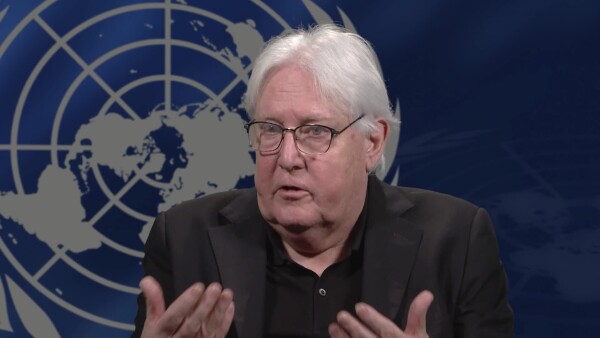
Gaza update - Martin Griffiths, UN emergency relief chief 15 November 2023
Gaza-Israel crisis: Al-Shifa hospital must not be a war zone, insists UN’s emergency relief chief
The UN’s top emergency relief official on Wednesday condemned reported raids on Gaza’s embattled Al-Shifa hospital by the Israeli military, highlighting the need for humanitarian pauses to help deliver lifesaving support to civilians.
Speaking in Geneva five weeks since war erupted in Gaza following Hamas’s attacks in Israel on 7 October that left 1,200 dead and some 240 hostages taken by Hamas fighters, Martin Griffiths underscored growing international concern for the plight of patients in the Gaza City hospital who are too sick to be moved.
"Our concern on the humanitarian side is for the welfare of the patients of that hospital, which is, of course, in great peril at the moment; we have no fuel to run it,” he said.
The UN Emergency Relief Coordinator’s comments followed warnings from the UN World Health Organization (WHO) that the patients at Al-Shifa had needs that were “well beyond basic care”, while images reportedly from the facility showed medics trying to keep newborns warm in swaddling blankets because power for incubators had failed.
In a tweet on Wednesday, WHO Director-General Tedros Adhanom Ghebreyesus wrote that the UN agency had lost touch once more with medical personnel at Al-Shifa and that there was deep concern for the safety of patients.
“The babies have no incubators,” Mr Griffiths said. “Some are dead already. We can't move them out. It's too dangerous. Our concern is for the patients of a hospital that doesn't function. I understand the Israelis’ concern for trying to find the leadership of Hamas, that's not our problem. Our problem is protecting the people of Gaza from what's being visited upon them.”
With the onset of the first winter rains in Gaza making the need for shelter increasingly urgent, the UN official highlighted how this would be reflected in humanitarian aid deliveries from the Rafah border crossing point with Egypt.
The UN humanitarian affairs coordination office OCHA also reported on Wednesday that displaced people staying in makeshift tents outside the shelters in southern Gaza for lack of room are now suffering from the heavy rains and flooding.
But a lack of fuel continues to prevent aid trucks from reaching those most in need. “We need at least a couple of hundred thousand litres to get us moving again. We have had agreements in those negotiations for such a replenishment, but they haven't achieved final approval at the highest levels of the Israeli authorities. So we need that decision made.”
Five weeks since the start of the latest Gaza-Israel conflagration, Mr. Griffiths described the displacement ordeal linked to the Israeli military’s evacuation order for those in the north of the enclave as “a horrific situation in which they have no escape and in which they're being asked to move still in conditions of danger”.
He added: “This is why we've talked about a humanitarian ceasefire. We need to have time in safety for the private sector to operate, to get those trucks in, to let those stocks to be replenished, to let those shops to be opened again for the people of Gaza. That's just as important as our operations, if not more.”
In a message of solidarity and hope from the UN to all those caught up in “this genuinely…global crisis”, Mr. Griffiths insisted that Gazans’ needs were “front and foremost” in the Organization’s thoughts – just as they were among the international community which has seen a push for de-escalation at peace talks in Paris, Riyadh and elsewhere in recent days. “There's a huge amount of political leverage, interest and will to bring this to a conclusion,” he said, before insisting that “our role and our pledge and our message is, we are right there sitting in front of those people on the borders of Gaza in Rafah, ready to go at the right scale if we get the means to do so. We have plans how to do this. We have plans which do not include having people moved into so-called safe zones. We have plans to try to reach people where they are. It is a standard way of operation in a place, in a crisis like this."
-ends-
STORY: Gaza update, Martin Griffiths, UN Emergency Relief Chief
TRT: 2:52”
SOURCE: UNTV CH
LANGUAGE: ENGLISH
ASPECT RATIO: 16:9
DATELINE: 15 November 2023 - GENEVA, SWITZERLAND
SHOTLIST
- SOUNDBITE (ENGLISH) – Martin Griffiths, UN emergency relief chief: “We need to make sure in our truck convoys that we respect the new needs that winter gives us of shelter, of course. I think the problem for the people of Gaza hasn't changed very much since the beginning, in the sense that what they're now seeing is what they expected to see in a horrific way, a horrific situation in which they have no escape and in which they're being asked to move still in conditions of danger.”
- SOUNDBITE (ENGLISH) – Martin Griffiths, UN emergency relief chief: “We need at least a couple of hundred thousand litres to get us moving again. We have had agreements in those negotiations for such a replenishment, but they haven't achieved final approval at the highest levels of the Israeli authorities. So we need that decision made.”
- SOUNDBITE (ENGLISH) – Martin Griffiths, UN emergency relief chief: “This is why we've talked about an a humanitarian ceasefire. We need to have time in safety for the private sector to operate, to get those trucks in, to let those stocks to be replenished, to let those shops to be opened again for the people of Gaza. That's just as important as our operations, if not more.”
- SOUNDBITE (ENGLISH) – Martin Griffiths, UN emergency relief chief: “Our role and our pledge and our message is we are right there sitting in front of those people on the borders of Gaza in Rafah, ready to go at the right scale if we get the means to do so. We have plans how to do this. We have plans which do not include having people moved into so-called safe zones. We have plans to try to reach people where they are. It is a standard way of operation in a place, in a crisis like this."
- SOUNDBITE (ENGLISH) – Martin Griffiths, UN emergency relief chief: “Look, Hamas must not, should not, use a place like a hospital as a shield for their presence. That is as strong a statement under humanitarian law as is the statement that the hospitals should not become a place of - a war zone - of danger. We find these two issues equally important and equally understandable for both sides. Our concern on the humanitarian side is for the welfare of the patients of that hospital, which is, of course, in great peril at the moment; we have no fuel to run it. The babies have no incubators, newly born. Some are dead already. We can't move them out. It's too dangerous. Our concern is for the patients of a hospital that doesn't function. I understand the Israelis’ concern for trying to find the leadership of Hamas, that's not our problem. Our problem is protecting the people of Gaza from what's being visited upon them.”
Similar Stories
1
1
1
Edited News | OCHA , UNICEF , WFP
Aid agencies warned on Friday of the fast-developing humanitarian emergency inside Taiz City in Yemen, which has been encircled by de facto Houthi forces fighting government troops along the country’s west coast.
2
17
1
2
Edited News , Press Conferences , Images | OCHA , WMO
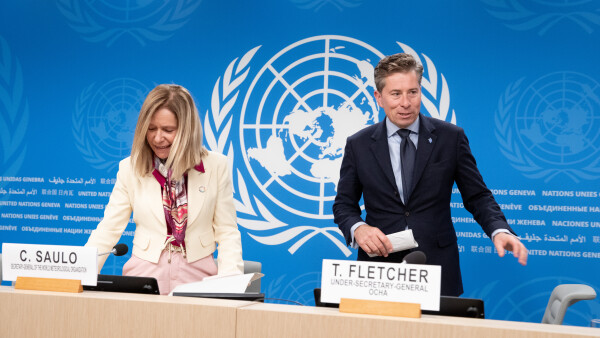
Two UN agencies teamed up on Wednesday to issue an appeal for immediate assistance to help communities already being impacted by the strongest El Niño on record.
3
16
2
2
Edited News , B-roll , Conferences , Images | UNITED NATIONS , UNOG
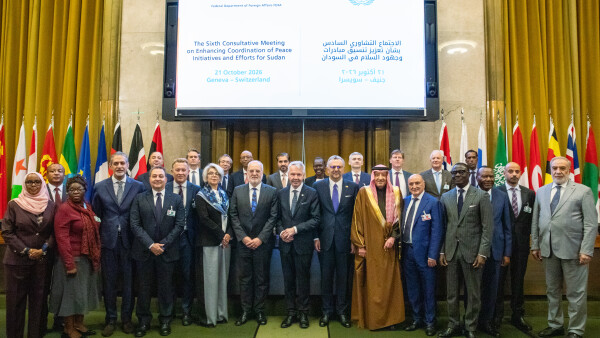
Sixth Consultative Meeting on Enhancing Coordination of Peace Initiatives and Efforts for Sudan
1
1
1
Edited News | UNICEF , WHO , UNHCR
Yemen war continues to force families from homes amid hunger and disease
More than 250,000 people have now fled renewed fighting in Yemen, the UN said on Tuesday, citing particular concern for those sheltering in the southwestern city of Taiz and the wider governorate, where access is “essentially blocked”.
1
1
1
Edited News | UNICEF
A little over one year since a ceasefire agreement was announced between Hamas fighters and Israel, more than 340 children have been reported killed and hundreds more injured, the UN Children’s Fund, UNICEF, said on Friday.
1
1
1
Edited News | UNICEF , IFRC
Six weeks after Nepal’s deadly flooding disaster, communities are still struggling to rebuild their lives, but they will need sustained help as global warming increases the risk of another Himalayan catastrophe, the UN Children’s Fund (UNICEF) said on Friday.

1
1
1
Edited News | WHO
In suspected Russia plague death, testing and monitoring underway – WHO
The death of a lab worker in Russia’s Siberia region has sparked concerns about plague being the cause, the UN World Health Organization (WHO) said on Tuesday, adding that it was following the situation closely.
1
1
Edited News | OHCHR , UNOG
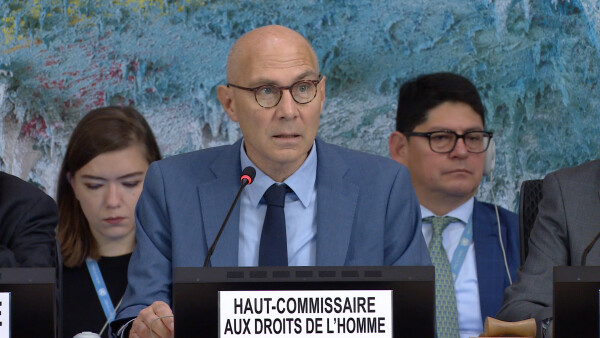
UN Human Rights Chief Volker Türk on Friday provided and oral update to the 63rd session of the Human rights Council on Ukraine.
1
1
1
Edited News | OHCHR , UNOG
UN Human Rights Chief Volker Türk on Friday provided and oral update to the 63rd session of the Human rights Council on the human rights situation in Haiti.
1
1
1
Edited News | WHO
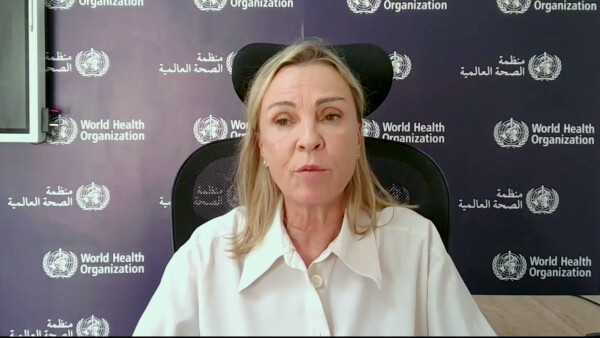
Repeated delays in bringing lifesaving medicines, prosthetics and more from Israel into Gaza risk having devastating consequences on Palestinians who urgently need them in the wartorn enclave, the UN World Health Organization (WHO) said on Friday. “A truck full of non-priority supplies or the right supplies arriving too late, doesn't save lives. That's the question that actually matters," said Dr Reinhilde Van De Weerdt, WHO Representative in the OPT.

1
1
1
Edited News | WHO
DRC: Early access to care and oxygen decisive for Ebola patients’ survival – WHO
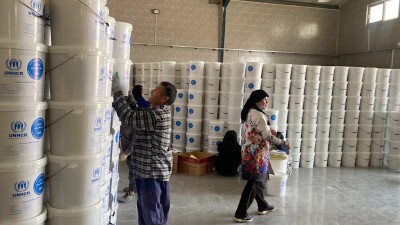
In the Democratic Republic of the Congo (DRC), health workers fighting the country’s largest-ever Ebola outbreak are struggling to overcome critical challenges to patient care, the UN World Health Organization (WHO) warned on Tuesday.
1
1
1
Edited News | OCHA , UN
Civilians in Iran are continuing to feel the consequences of months of conflict and military escalation, the UN’s top official in the country has said, as loss of life, damage to civilian infrastructure and mounting economic pressures leave many facing continued uncertainty.