

The United Nations Office at Geneva
Multimedia Newsroom
Edited News | OHCHR , WFP , WHO
Israel and OPT - Humanitarian situation OHCHR, WFP, WHO 17 October 2023
Gaza: “There is no shortage of supplies, but the opportunity to get them where needed,” says WFP
With military operations showing no signs of abating in Gaza and with the continued siege on food, fuel and water, UN humanitarians kept up their call on Tuesday for urgent and unimpeded access to enable aid delivery to the civilian population to prevent further suffering.
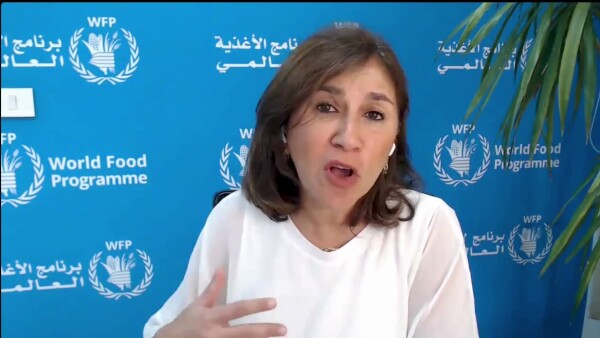
“We call for unimpeded access, safe passage for desperately needed humanitarian supplies to Gaza,” said Abeer Etefa, Senior Communications Officer of the UN World Food Programme (WFP) when briefing reporters at UN Geneva. “We've mobilized over 300 tons of food that are either at or on the way to the Egyptian border in Rafah. That's enough to feed around a quarter million people for one week.”
With the shortage of electricity and goods, only five of the 23 bakeries contracted by WFP to provide fresh bread in shelters, are currently operational. As a result, WFP has been forced to reduce the food ration per person.
The UN agency hopes that within the coming days, the supplies could arrive where they are most needed.
“There is no shortage of supplies”, said Ms. Etefa. “What's missing at the moment is this opportunity to get these supplies to the people who are just a few kilometres away from it and needed desperately and are unable to benefit from it.”
Two planes arrived from Dubai to Al Arish airport carrying ready-to-eat food – 20 metric tons of high energy biscuits and two mobile storage units for warehousing. There are also food supplies on the way to the border procured from regional suppliers - mainly canned food and date bars.
“At the moment, WFP has assisted and reached around - just as of yesterday alone - 220,000 people who are displaced in the UN-designated shelters. And we think, of course, you know, the waves of the displacement is manifesting itself in the number of people in these shelters.”
WFP plans to provide a vital food lifeline to 805,000 people in Gaza and the West Bank who desperately need food, water and essential supplies that are running out fast. Despite immense challenges, WFP has been providing food and cash assistance each day in Palestine for a total of 522,000 Palestinians since the start of the crisis.
According to the UN Office for the Coordination of Humanitarian Affairs (OCHA), the UN’s top aid official Martin Griffiths was due to visit Egypt on Tuesday discuss sending relief supplies to the Gaza Strip through the Rafah border crossing. He also plans to visit Israel.
The UN human rights office (OHCHR) stressed on Tuesday, that “military operations show no sign of abating. The continued siege on Gaza is affecting water supply, food, medicine and other basic needs,” said its spokesperson, Ravina Shamdasani. “There are daily indications of violations of the laws of war and of international human rights law.”
In the latest report from the UN Relief and Works Agency for Palestine Refugees in the Near East (UNRWA) as of 16 October, citing the Palestinian Ministry of Health, 2,670 Palestinians have been killed in Gaza (an average of 267 per day, or 11 every hour) and 9,600 are injured. In Israel, 1,300 people were killed and at least 4,121 were injured.
“We urge the Israeli forces to avoid targeting civilians and civilian objects or conducting area bombardments, indiscriminate or disproportionate attacks, and to take precautions to avoid and in any event, to minimize loss of civilian life, injury to civilians and damage to civilian objects,” said Ms. Shamdasani.
Addressing a question about Hamas militants hiding in civilian houses which are then targeted by the Israeli military, Ms. Shamdasani condemned the “violation of the customary law prohibition to use human shields”.
And regarding the Israeli military’s order for 1.1 million people to relocate away from the northern to the southern part of the Gaza Strip, Ms. Shamdasani insisted that international law “imposes obligations on Israel to ensure their security. It imposes on them the obligation to ensure proper hygiene, health, safety and nutrition. And there appears to have been no attempt by Israel to ensure this for the civilians who are ordered to move.”
Echoing the extremely difficult humanitarian conditions of the displaced people in the Gaza Strip, Dr. Margaret Harris, spokesperson for the UN World Health Organization (WHO), said that around 2,000 patients were still in hospitals in northern Gaza. “These are really, really people who need critical care, who really can't be moved. And also, babies and women have just delivered and people on life support or people on dialysis or needing dialysis. Remember, the north is where most of the hospitals are and most of the more advanced care has been available.”
According to WHO, 20 hospitals are treating more than 2,000 in patients in Gaza City. Four hospitals are no longer functioning.
There is a lack of drinking water and people have started to drink unsafe water. “We're expecting large outbreaks of gastroenterological disease. We also fear large outbreaks of respiratory disease like COVID 19 and influenza. Those are already circulating massively”, said Dr. Harris. “These respiratory diseases, particularly the respiratory diseases among small children, will kill them very quickly. It's not something we can just stand by and witness.”
-ends-
STORY: Israel and OPT - Humanitarian situation OHCHR, WFP, WHO
TRT: 3 min 55s
SOURCE: UNTV CH
RESTRICTIONS: NONE
LANGUAGE: ENGLISH / NATS
ASPECT RATIO: 16:9
DATELINE: 17 October 2023 GENEVA, SWITZERLAND
- Exterior medium shot: UN flag alley, UN Geneva
- Wide shot: speakers at the podium
- SOUNDBITE (English) – Abeer Etefa, Senior Communications Officer of the UN World Food Programme (WFP): “So WFP, we call for unimpeded access, safe passage for desperately needed humanitarian supplies to Gaza. We've mobilized over 300 tons of food that are either at or on the way to the Egyptian border in Rafah. That's enough to feed around a quarter million people for one week.”
- Wide shot, attendees at the press conference
- SOUNDBITE (English) – Abeer Etefa, Senior Communications Officer of the UN World Food Programme (WFP): “There is no shortage of supplies. What's missing at the moment is this opportunity to get these supplies to the people who are just a few kilometers away from it and needed desperately and are unable to benefit from it.”
- Wide shot, press room with attendees
- SOUNDBITE (English) – Abeer Etefa, Senior Communications Officer of the UN World Food Programme (WFP): “At the moment, WFP has assisted and reached around just as of yesterday alone, 220,000 people who are displaced in the UN designated shelters. And we think, of course, you know, the waves of the displacement is manifesting itself in the number of people in these shelters.”
- Wide shot, press room with attendees and speakers at the podium
- SOUNDBITE (English) – Ravina Shamdasani, Spokesperson for the Office of the UN High Commissioner for Human Rights (OHCHR): “Military operations show no sign of abating. The continued siege on Gaza is affecting water supply, food, medicine and other basic needs. And there are daily indications of violations of the laws of war and of international human rights law.”
- Wide shot, speakers at the podium
- SOUNDBITE (English) – Ravina Shamdasani, Spokesperson for the Office of the UN High Commissioner for Human Rights (OHCHR): “We urge the Israeli forces to avoid targeting civilians and civilian objects or conducting area bombardments, indiscriminate or disproportionate attacks, and to take precautions to avoid and in any event, to minimize loss of civilian life, injury to civilians and damage to civilian objects.”
- Medium shot, attendees
- SOUNDBITE (English) – Ravina Shamdasani, Spokesperson for the Office of the UN High Commissioner for Human Rights (OHCHR): “The failure, you know, where armed groups carry out military operations within or in the immediate vicinity of civilian objects with the intent to use the presence of these civilians to prevent their military assets from being attacked. This would constitute a violation of the customary law prohibition to use human shields.”
- Wide shot: attendees at the press conference
- SOUNDBITE (English) – Ravina Shamdasani, Spokesperson for the Office of the UN High Commissioner for Human Rights (OHCHR): “International law requires that any lawful temporary evacuation by Israel as the occupying power of an area that on the basis of the security of the population, it imposes obligations on Israel to ensure their security. It imposes on them the obligation to ensure proper hygiene, health, safety and nutrition. And there appears to have been no attempt by Israel to ensure this for the civilians who are ordered to move.”
- Wide shot: attendees at the press conference
- SOUNDBITE (English) – Margaret Harris, Spokesperson for the World Health Organization (WHO): “So the numbers are an estimate, but it's around 2000 patients who we understand are still in those hospitals. And these are really, really people who need critical care, who really can't be moved. And also, babies and women have just delivered and people on life support or people on dialysis or needing dialysis. Remember, the north is where most of the hospitals are and most of the more advanced care has been available.”
- Close up, UNHCR spokesperson
- SOUNDBITE (English) – Margaret Harris, Spokesperson for the World Health Organization (WHO): “We're expecting large outbreaks of gastroenterological disease. We're also fear large outbreaks of respiratory disease like COVID 19 and influenza. Those are already circulating massively. And these respiratory diseases, particularly the respiratory diseases among small children, will kill them very quickly. It's not something we can just stand by and witness.”
- Close up: Camerawomen writing on cell phone
- Medium shot, attendees with photographer
- Close up: journalist listening
Similar Stories
1
1
1
Edited News | OCHA , UNICEF , WFP
Aid agencies warned on Friday of the fast-developing humanitarian emergency inside Taiz City in Yemen, which has been encircled by de facto Houthi forces fighting government troops along the country’s west coast.

2
17
1
2
Edited News , Press Conferences , Images | OCHA , WMO
Two UN agencies teamed up on Wednesday to issue an appeal for immediate assistance to help communities already being impacted by the strongest El Niño on record.
3
16
2
2
Edited News , B-roll , Conferences , Images | UNITED NATIONS , UNOG
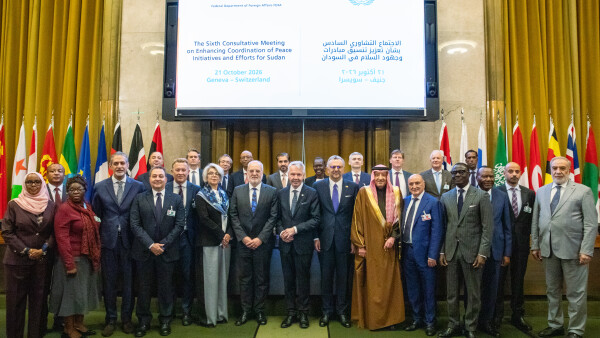
Sixth Consultative Meeting on Enhancing Coordination of Peace Initiatives and Efforts for Sudan
1
1
1
Edited News | UNICEF , WHO , UNHCR
Yemen war continues to force families from homes amid hunger and disease
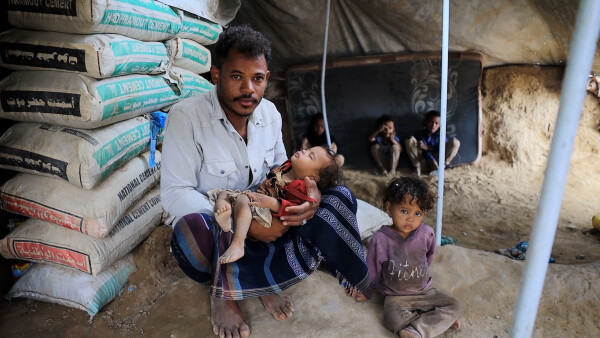
More than 250,000 people have now fled renewed fighting in Yemen, the UN said on Tuesday, citing particular concern for those sheltering in the southwestern city of Taiz and the wider governorate, where access is “essentially blocked”.

1
1
1
Edited News | UNICEF
A little over one year since a ceasefire agreement was announced between Hamas fighters and Israel, more than 340 children have been reported killed and hundreds more injured, the UN Children’s Fund, UNICEF, said on Friday.

1
1
1
Edited News | UNICEF , IFRC
Six weeks after Nepal’s deadly flooding disaster, communities are still struggling to rebuild their lives, but they will need sustained help as global warming increases the risk of another Himalayan catastrophe, the UN Children’s Fund (UNICEF) said on Friday.

1
1
1
Edited News | WHO
In suspected Russia plague death, testing and monitoring underway – WHO
The death of a lab worker in Russia’s Siberia region has sparked concerns about plague being the cause, the UN World Health Organization (WHO) said on Tuesday, adding that it was following the situation closely.

1
1
Edited News | OHCHR , UNOG
UN Human Rights Chief Volker Türk on Friday provided and oral update to the 63rd session of the Human rights Council on Ukraine.

1
1
1
Edited News | OHCHR , UNOG
UN Human Rights Chief Volker Türk on Friday provided and oral update to the 63rd session of the Human rights Council on the human rights situation in Haiti.

1
1
1
Edited News | WHO
Repeated delays in bringing lifesaving medicines, prosthetics and more from Israel into Gaza risk having devastating consequences on Palestinians who urgently need them in the wartorn enclave, the UN World Health Organization (WHO) said on Friday. “A truck full of non-priority supplies or the right supplies arriving too late, doesn't save lives. That's the question that actually matters," said Dr Reinhilde Van De Weerdt, WHO Representative in the OPT.

1
1
1
Edited News | WHO
DRC: Early access to care and oxygen decisive for Ebola patients’ survival – WHO
In the Democratic Republic of the Congo (DRC), health workers fighting the country’s largest-ever Ebola outbreak are struggling to overcome critical challenges to patient care, the UN World Health Organization (WHO) warned on Tuesday.

1
1
1
Edited News | OCHA , UN
Civilians in Iran are continuing to feel the consequences of months of conflict and military escalation, the UN’s top official in the country has said, as loss of life, damage to civilian infrastructure and mounting economic pressures leave many facing continued uncertainty.