

The United Nations Office at Geneva
Multimedia Newsroom
Edited News | HRC , OHCHR , UNITED NATIONS
Ukraine: “Blatant and unabated violations of human rights”, UN deputy rights chief
Ukraine: Russian forces implicated in ‘blatant and unabated violations’, says UN deputy rights chief
The widespread use of torture, arbitrary detention and conflict-related sexual violence continue to be committed in Ukraine more than 18 months since Russia’s full-scale armed attack, the UN deputy rights chief said on Monday.
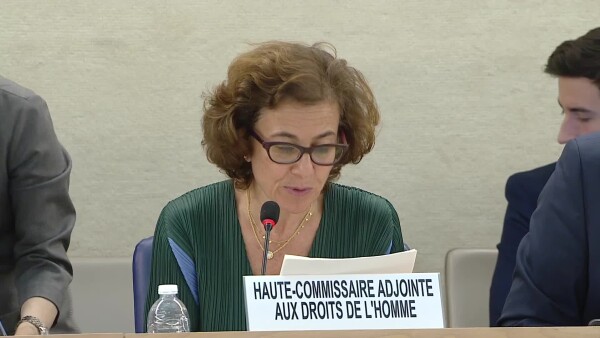
“From 1 February to 31 July 2023, another 4,621 civilians fell victim to this conflict, with 1,028 killed and 3,593 injured,“ said Nada Al-Nashif, presenting the latest report of the Human Rights Monitoring Mission in Ukraine to the Human Rights Council in Geneva.
“Most of these documented casualties occurred in territory controlled by Ukraine. The actual figures are likely higher, as many reports of civilian casualties are still pending corroboration and OHCHR does not have access to the occupied territory of Ukraine and limited access to the areas close to the frontline”.
The report’s findings are the result of 117 field visits, 27 inspections of detention centres, 28 visits to care institutions or shelters, the observation of 23 trial hearings and insight gained from 1,226 interviews with victims, witnesses, relatives and legal representatives.
The report concludes that torture remains a brutal reality for civilians and prisoners of war held by Russian authorities.
“Our March report on the treatment of prisoners of war and persons hors de combat as well as our June report on detention of civilians in the context of the armed attack by the Russian Federation against Ukraine, show that Russian authorities use of torture and ill treatment against both civilians and prisoners of war has been widespread,” said Ms. Al-Nashif.
The testimonies of survivors describe “a cruelty that is difficult to imagine, including terrifying accounts of electric shocks, sexual violence and severe beatings, which in some instances led to broken bones and smashed teeth”.
Previously documented patterns of sexual violence, primarily involving Russian armed forces, law enforcement authorities and penitentiary staff continue to happen, according to Ms Al-Nashif. Between 1 February to 31 July 2023, “OHCHR documented five acts of conflict-related sexual violence by members of Russian armed forces and Russian penitentiary services”, she noted.
In its report, the UN human rights office (OHCHR) also expressed deep concern “that there is no established system to return Ukrainian children who were transferred to other regions in Russian occupied territory or to the Russian Federation”.
Among the children reunited with their family after relatives travelled to the Russian Federation to retrieve them, “some have described experiencing or witnessing psychological or physical violence by educational staff there”, the OHCHR report noted .
The report also deplored that “Russian authorities have taken no discernible steps to ensure accountability for violations committed by their own security forces” It pointed to a new law adopted in June 2023 that effectively grants amnesty to Russian servicepersons for an overly broad range of crimes, reinforcing an atmosphere of impunity.
Devastating long-term effects will also be felt by the collapse of the Black Sea Initiative, emphasized the report, in reference to the UN-brokered plan agreed by Russia, Türkiye and Ukraine, which had allowed millions of tonnes of grain and other foodstuffs to leave Ukraine’s ports. “Following its withdrawal from this lifeline agreement, we have seen an increase in the number of attacks by the Russian Federation that affect infrastructure related to grain export. Some of these attacks also cause damage to surrounding civilian infrastructure and Odessa's historic buildings,” said Ms. Al-Nashif.
Speaking from Ukraine to the Human Rights Council, the country’s First Deputy Minister for Foreign Affairs, Emine Dzhaparova, raised concern about the “arbitrary and incommunicado detention of civilians, the policy of mass conferral of Russian citizenship, harassment and criminal prosecution, forceful conscription to the Russian army remain part and parcel of Russia's control over Ukrainian temporarily occupied territories, including my beloved homeland Crimea.”
The representative of the Permanent Mission of the Russian Federation to the UN in Geneva, Mr. Yaroslav Eremin, said that he “fundamentally disagree(d) with the methodology, content and conclusions to yet another OHCHR report...Instead of acting in line with its mandate and fully describing the deteriorating human rights situation in Ukraine, the OHCHR is continuing to whitewash Kyiv and shifting the blame for the crimes of the Ukrainian authorities on our country.”
-ends-
STORY: HRC OHCHR report on Ukraine
TRT: 3 min 14s
SOURCE: UNTV CH
RESTRICTIONS: NONE
LANGUAGE: ENGLISH / NATS
ASPECT RATIO: 16:9
DATELINE: 9 October 2023 GENEVA, SWITZERLAND
- Exterior medium shot: UN flag alley, UN Geneva
- Wide shot: Human Rights Council room
- SOUNDBITE (English) – Nada Al-Nashif, UN Deputy High Commissioner for Human Rights, (OHCHR): “From the 1st of February to the 31st of July of this year, another 4621 civilians fell victim to this conflict, with 1028 killed, 3593 injured. Most of these documented casualties occurred in territory controlled by Ukraine. The actual figures are likely higher, as many reports of civilian casualties are still pending corroboration, and OHCHR does not have access to the occupied territory of Ukraine and limited access to the areas close to the frontline.”
- Medium shot: Human Rights Council room
- SOUNDBITE (English) – Nada Al-Nashif, UN Deputy High Commissioner for Human Rights, (OHCHR): “Our March report on the treatment of prisoners of war and persons hors de combat as well as our June report on detention of civilians in the context of the armed attack by the Russian Federation against Ukraine, show that Russian authorities use of torture and ill treatment against both civilians and prisoners of war has been widespread.”
- Medium shot: Human Rights Council room
- SOUNDBITE (English) – Nada Al-Nashif, UN Deputy High Commissioner for Human Rights, (OHCHR): “OHCHR documented five acts of conflict[1]related sexual violence by members of Russian armed forces and Russian penitentiary services.”
- Wide shot: Human Rights Council room
- SOUNDBITE (English) – Nada Al-Nashif, UN Deputy High Commissioner for Human Rights, (OHCHR): “OHCHR remains gravely concerned that there is no established system to return Ukrainian children who were transferred to other regions in Russian occupied territory or to the Russian Federation. Among the children who reunited with their family after relatives travelled to the Russian Federation to retrieve them, some have described experiencing or witnessing psychological or physical violence by educational staff there.”
- Wide shot: Human Rights Council room
- SOUNDBITE (English) – Nada Al-Nashif, UN Deputy High Commissioner for Human Rights, (OHCHR): “Following its withdrawal from this lifeline agreement, we have seen an increase in the number of attacks by the Russian Federation that affect infrastructure related to grain export. Some of these attacks also cause damage to surrounding civilian infrastructure and Odessa's historic buildings.”
- Wide shot: Human Rights Council room
- SOUNDBITE (English) – Emine Dzhaparova, First Deputy Minister for Foreign Affairs, Ukraine: “Arbitrary and incommunicado detention of civilians, the policy of mass conferral of Russian citizenship, harassment and criminal prosecution, forceful conscription to the Russian army remain part and parcel of Russia's control over Ukrainian temporarily occupied territories, including my beloved homeland Crimea.”
- Wide shot: Human Rights Council room
- SOUNDBITE (English) – Yaroslav Eremin, Counsellor, Permanent Mission of the Russian Federation to the UN in Geneva: “We fundamentally disagree with the methodology, content and conclusions to yet another OHCHR report. Instead of acting in line with its mandate and fully describing the deteriorating human rights situation in Ukraine, the OHCHR is continuing to whitewash Kiev and shifting the blame for the crimes of the Ukrainian authorities on our country. Such an approach is unacceptable for a UN Secretariat.”
- Medium shot: Human Rights Council room
- Close shot: Human Rights Council room
- Wide shot: Human Rights Council room
- Close shot: Human Rights Council room
- Medium shot: Human Rights Council room
Similar Stories
1
1
1
Edited News | OCHA , UNICEF , WFP
Aid agencies warned on Friday of the fast-developing humanitarian emergency inside Taiz City in Yemen, which has been encircled by de facto Houthi forces fighting government troops along the country’s west coast.

2
17
1
2
Edited News , Press Conferences , Images | OCHA , WMO
Two UN agencies teamed up on Wednesday to issue an appeal for immediate assistance to help communities already being impacted by the strongest El Niño on record.
3
16
2
2
Edited News , B-roll , Conferences , Images | UNITED NATIONS , UNOG
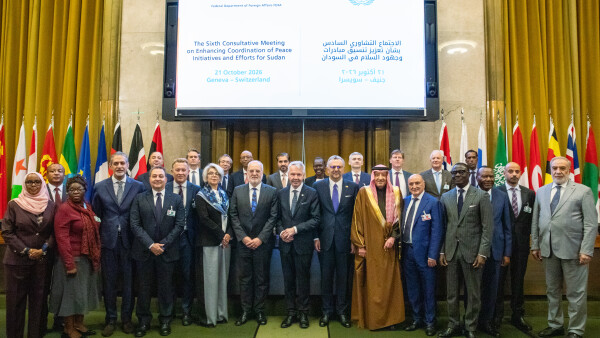
Sixth Consultative Meeting on Enhancing Coordination of Peace Initiatives and Efforts for Sudan

1
1
1
Edited News | UNICEF , WHO , UNHCR
Yemen war continues to force families from homes amid hunger and disease
More than 250,000 people have now fled renewed fighting in Yemen, the UN said on Tuesday, citing particular concern for those sheltering in the southwestern city of Taiz and the wider governorate, where access is “essentially blocked”.

1
1
1
Edited News | UNICEF
A little over one year since a ceasefire agreement was announced between Hamas fighters and Israel, more than 340 children have been reported killed and hundreds more injured, the UN Children’s Fund, UNICEF, said on Friday.

1
1
1
Edited News | UNICEF , IFRC
Six weeks after Nepal’s deadly flooding disaster, communities are still struggling to rebuild their lives, but they will need sustained help as global warming increases the risk of another Himalayan catastrophe, the UN Children’s Fund (UNICEF) said on Friday.

1
1
1
Edited News | WHO
In suspected Russia plague death, testing and monitoring underway – WHO
The death of a lab worker in Russia’s Siberia region has sparked concerns about plague being the cause, the UN World Health Organization (WHO) said on Tuesday, adding that it was following the situation closely.

1
1
Edited News | OHCHR , UNOG
UN Human Rights Chief Volker Türk on Friday provided and oral update to the 63rd session of the Human rights Council on Ukraine.

1
1
1
Edited News | OHCHR , UNOG
UN Human Rights Chief Volker Türk on Friday provided and oral update to the 63rd session of the Human rights Council on the human rights situation in Haiti.

1
1
1
Edited News | WHO
Repeated delays in bringing lifesaving medicines, prosthetics and more from Israel into Gaza risk having devastating consequences on Palestinians who urgently need them in the wartorn enclave, the UN World Health Organization (WHO) said on Friday. “A truck full of non-priority supplies or the right supplies arriving too late, doesn't save lives. That's the question that actually matters," said Dr Reinhilde Van De Weerdt, WHO Representative in the OPT.

1
1
1
Edited News | WHO
DRC: Early access to care and oxygen decisive for Ebola patients’ survival – WHO
In the Democratic Republic of the Congo (DRC), health workers fighting the country’s largest-ever Ebola outbreak are struggling to overcome critical challenges to patient care, the UN World Health Organization (WHO) warned on Tuesday.

1
1
1
Edited News | OCHA , UN
Civilians in Iran are continuing to feel the consequences of months of conflict and military escalation, the UN’s top official in the country has said, as loss of life, damage to civilian infrastructure and mounting economic pressures leave many facing continued uncertainty.