

The United Nations Office at Geneva
Multimedia Newsroom
Humanitarians respond to growing health needs among Karabakh refugees
The humanitarian response to the Karabakh crisis continued apace on Tuesday as UN agencies and partners warned of urgent health needs among the more than 100,000 refugees left the Region for neighbouring Armenia.
Concerns also remain for those unable to leave the Karabakh Region town of Khankendi – known as Stepanakert among Armenians – which the International Committee of the Red Cross (ICRC) said was close to empty. Its priority remains finding those too vulnerable to help themselves.
“The city is now completely deserted. The hospitals, more than one, are not functioning,” said Marco Succi, ICRC Head of Rapid Deployment. “The medical personnel left. The water board authorities left. The director of the morgue, just to tell you, the stakeholders we were working with before have also left. So, this scenario, this scene is quite surreal.”
Mr. Succi confirmed that electricity and water were still available in the city and that the priority was to find those “extremely vulnerable cases, elderly, mentally disabled people, people left without anybody”.
This included an elderly cancer patient, Susanna, who had been found in the last few days in a fourth-floor apartment building “alone and unable to get out of her bed. Neighbours had left her food and water several days beforehand but their supplies were running out. While she waited for help, she had started to lose all hope. After ensuring she was stable, she was evacuated by ambulance into Armenia.”
Among the humanitarian relief destined for the city, the ICRC official reported that some 300 food parcels were expected to arrive on Tuesday from Goris to provide essential commodities to those left behind.
“Many people left their houses and shops open for those who may be in need,” said Mr. Succi, reporting how an elderly lady had cleaned her fridge and house, “leaving the door open to ventilate the house, you know, for the newcomers”.
Echoing the urgency of the situation in neighbouring Armenia, the UN World Health Organization’s Dr Marthe Everard, Special Representative of the WHO Regional Director to Armenia, said that the country’s health system needed to be strengthened to cope with the “massive” influx of refugees.
Speaking to journalists in Geneva via Zoom after returning from the town of Goris, a key point of entry from the Karabakh Region, Dr Everard said that infectious diseases needed to be monitored and treated, while measles vaccination gaps should also be addressed. Mental health and psychosocial support remained “critical”, she insisted.
Additional urgent needs among the new arrivals beside shelter included treatment for chronic diseases such as hypertension, diabetes, heart disease and cancer, the WHO official continued, noting the agency’s commitment to support the “extensive” efforts of the Armenian Government.
“This includes supporting the integration of more than 2,000 nurses and over 2,200 doctors into the Armenian health system,” Dr Everard said. The WHO official also noted that the UN agency had scaled up emergency support to Armenia by providing supplies to help treat more than 200 adults and children who received terrible burns in the fuel depot explosion in Karabakh last week, which also claimed 170 lives.
A specialist burns team had also been deployed as part of WHO Emergency Medical Teams Initiative and arrived in Yerevan over the weekend, Dr Erevard said. “We have issued a wider call for further specialist teams to complement this workforce and to support moving some of these most critical patients to specialized centres abroad.”
For its part, The Red Cross evacuated dozens of people injured in the fuel depot blast and transported the remains of those killed. It remains crucially important to secure the forensic data of all victims, Mr. Succi insisted, “in particular for those who have left people behind, the people who have missing in their families. We should not risk that the human remains are mishandled or misidentified because family members would need …to know the fate of their beloved loved ones.”
ends
Link to Special Representative of the WHO Regional Director to Armenia:
https://photos.euro.who.int/galleries/420/armenia-robb-butler-special-envoy-to-the-regional-
STORY: Humanitarian Emergency Karabakh Region: WHO - ICRC
TRT: 3 min 02s
SOURCE: UNTV CH
RESTRICTIONS: NONE
LANGUAGE: ENGLISH / NATS
ASPECT RATIO: 16:9
DATELINE: 3 October 2023 GENEVA, SWITZERLAND
- Exterior medium shot: UN flag alley, UN Geneva
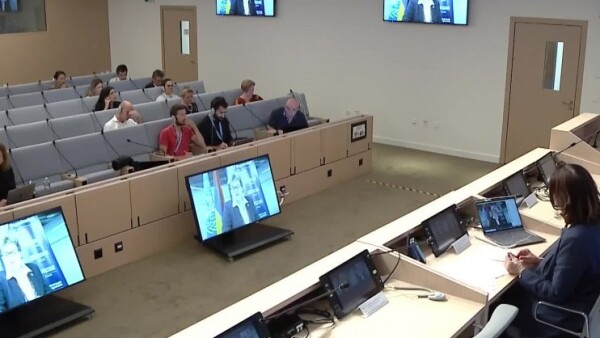
- Wide shot: speaker and attendees at the press conference, screens with speaker
- SOUNDBITE (English) – Dr Marthe Everard, Special Representative of the WHO Regional Director to Armenia: “In the short term, beside shelter, there are urgent health needs for the most vulnerable, including treatment for chronic diseases like hypertension, diabetes, heart disease and cancer.”
- Wide shot: speaker and attendees at the press conference, screens with speaker
- SOUNDBITE (English) – Marco Succi, ICRC Head of Rapid Deployment: “The city is now completely deserted. The hospitals, more than one, are not functioning. The medical personnel left. The water board authorities left. The director of the morgue, just to tell you, the stakeholders we were working with before have also left. So, this scenario, this scene is quite surreal.”
- Medium shot: moderator at the press conference
- SOUNDBITE (English) – Marco Succi, ICRC Head of Rapid Deployment: “Electricity is working still, water is still working, but we cannot assess the quality of the water. So if you ask me about the priority, it is for sure finding those who are in extreme need of medical treatment and extremely vulnerable cases, elderly, mentally disabled people, people left without anybody.”
- Wide shot: speaker and attendees at the press conference, screens with speaker
- SOUNDBITE (English) – Dr Marthe Everard, Special Representative of the WHO Regional Director to Armenia: “Their experts deployed a special care burns team as part of WHO Emergency Medical Teams Initiative and arrived in Yerevan over the weekend. We have issued a wider call for further specialist teams to complement this workforce and to support moving some of these most critical patients to specialized centres abroad.”
- Medium shot: attendees at the press conference
- SOUNDBITE (English) – Marco Succi, ICRC Head of Rapid Deployment: “Today we are receiving 300 food parcels from Goris that we ordered yesterday in order to be able to provide, indeed, essential…commodities to these people.”
- Medium shot: attendee at the press conference, screen with speaker
- SOUNDBITE (English) – Marco Succi, ICRC Head of Rapid Deployment: “Many people left their houses and shops open for those who may be in need, for those remaining. And this is somehow reflecting what I was saying before in the initial statements about the old lady leaving the fridge and leaving the house clean and leaving the door open to ventilate the house, you know, for the newcomers to find the proper house when anybody would come.”
- Wide shot: speaker, attendees and moderators at the press conference, screens with speaker
- Close shot: attendees at the press conference
- Medium shot: attendees at the press conference
Similar Stories

1
1
1
Edited News | UNICEF
A little over one year since a ceasefire agreement was announced between Hamas fighters and Israel, more than 340 children have been reported killed and hundreds more injured, the UN Children’s Fund, UNICEF, said on Friday.

1
1
1
Edited News | UNICEF , IFRC
Six weeks after Nepal’s deadly flooding disaster, communities are still struggling to rebuild their lives, but they will need sustained help as global warming increases the risk of another Himalayan catastrophe, the UN Children’s Fund (UNICEF) said on Friday.

1
1
1
Edited News | WHO
In suspected Russia plague death, testing and monitoring underway – WHO
The death of a lab worker in Russia’s Siberia region has sparked concerns about plague being the cause, the UN World Health Organization (WHO) said on Tuesday, adding that it was following the situation closely.

1
1
Edited News | OHCHR , UNOG
UN Human Rights Chief Volker Türk on Friday provided and oral update to the 63rd session of the Human rights Council on Ukraine.

1
1
1
Edited News | OHCHR , UNOG
UN Human Rights Chief Volker Türk on Friday provided and oral update to the 63rd session of the Human rights Council on the human rights situation in Haiti.

1
1
1
Edited News | WHO
Repeated delays in bringing lifesaving medicines, prosthetics and more from Israel into Gaza risk having devastating consequences on Palestinians who urgently need them in the wartorn enclave, the UN World Health Organization (WHO) said on Friday. “A truck full of non-priority supplies or the right supplies arriving too late, doesn't save lives. That's the question that actually matters," said Dr Reinhilde Van De Weerdt, WHO Representative in the OPT.

1
1
1
Edited News | WHO
DRC: Early access to care and oxygen decisive for Ebola patients’ survival – WHO
In the Democratic Republic of the Congo (DRC), health workers fighting the country’s largest-ever Ebola outbreak are struggling to overcome critical challenges to patient care, the UN World Health Organization (WHO) warned on Tuesday.

1
1
1
Edited News | OCHA , UN
Civilians in Iran are continuing to feel the consequences of months of conflict and military escalation, the UN’s top official in the country has said, as loss of life, damage to civilian infrastructure and mounting economic pressures leave many facing continued uncertainty.
1
1
1
Edited News | WHO , UNICEF
Aid agencies in Yemen highlighted the growing hunger emergency sparked by renewed fighting between Houthi opposition forces and Government troops, after mobile health clinics reported that hundreds of children displaced by the violence are suffering from the most deadly form of malnutrition.
1
1
1
Edited News | UNHCR
Displacement on the rise in Yemen as fighting continues - UNHCR
As hostilities worsen in Yemen, more people have been fleeing their homes, further intensifying the humanitarian crisis within the region, the UN Refugee Agency (UNHCR) warned on Tuesday.
1
1
1
Edited News | IOM , OHCHR , UNFPA , UNOG , UNHCR , WHO
Yemen’s humanitarian crisis growing by the hour amid spike in displacement
Yemenis displaced by renewed fighting have described fleeing for their lives amid shelling and gunfire, aid agencies reported on Friday, while highlighting the dramatic increase in humanitarian needs in the country and in Djibouti, where thousands have sought shelter.
1
1
1
Edited News | OHCHR , UNOG
The UN Human Rights Office issued on Friday a report documenting a shocking pattern of sexual violence amid Russia’s full-scale armed attack on Ukraine.