

The United Nations Office at Geneva
Multimedia Newsroom
Libya floods: Level of destruction is unfathomable, says UN refugee agency
As UN humanitarian responders continue their work in the worst-hit areas of Derna after two dams collapsed upstream of the coastal city of Derna, the magnitude of the disaster continues to unfold, they said on Tuesday.
“The situation on the ground is catastrophic,” said Rana Ksaifi, Assistant Chief of Mission in Libya for the UN Refugee Agency (UNHCR).
“I have been a humanitarian worker for over 19 years, and this is one of the worst disasters that I have witnessed. The level of destruction is unfathomable. I saw houses, schools, buildings, shops submerged, and some were completely destroyed and wiped out. Thousands of individuals have lost everything, not least their loved ones.”
According to the Libyan Red Crescent, over 11,000 people are reported dead so far, with a further 10,100 missing. These figures are expected to increase as clean-up operations get under way and standing water recedes.
Humanitarians remain deeply concerned about the new wave of displacement caused by the floods.
“Approximately 50,000 refugees and asylum seekers are registered with the UNHCR in Libya, including over 1,000 who are living in the areas affected by the floods prior to the floods. Additionally, some 46,000 internally displaced persons were hosted in the eastern parts of Libya before the floods,” said Ms. Ksaifi, speaking from Benghazi to reporters in Geneva.
The needs for healthcare, mental health services and household goods for the homeless, as well as logistical support are enormous.
“The immediate needs, of course, are for safe water, hygiene kits and accommodation, including the reopening of the schools for this academic year so children can have a bit of normality back in their lives,” said Ms. Ksaifi. “Then, of course, we need to help people as they confront the deep psychological scars that this devastating storm has left them in. All of this is going to happen while the cities continue to be rebuilt for years to come.”
The UNHCR official noted that her immediate tasks included taking reception of 53 tonnes of relief items from the agency’s aid hub in the United Arab Emirates, which was due to land in Benghazi.
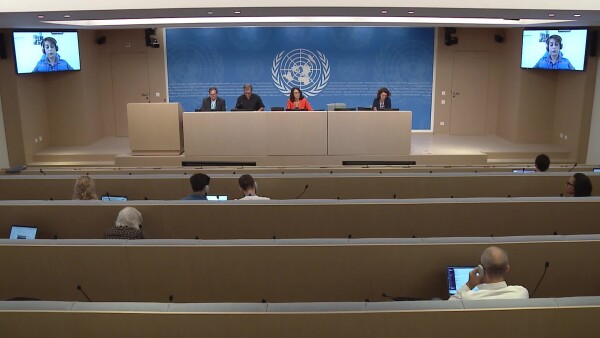
Echoing concern about the sheer scale of the disaster and describing the situation in Derna as “unprecedented humanitarian crisis”, Deputy Resident Representative of the United Nations Development Programme (UNDP) in Libya, Christopher Laker, emphasized that access to the affected areas remained “fairly limited”. For the moment, the authorities have prioritized search and rescue and ultimately recovery of the dead. “Some are still under collapsed buildings. Others are still out at sea,” he told journalists via Zoom.
Mr. Laker added that 97 per cent of some neighbourhoods had been “washed away” after the dams had collapsed. He highlighted the urgent need for maintenance of Libya’s water reservoirs and dams, and said that UNDP teams would be supporting the authorities with infrastructure assessments.
UNDP has decades of crisis experience in the region and around the world to support the removal of debris and rubble, socio-economic assessments and livelihoods support while providing immediate assistance to plan solution to address the longer-term consequences of the crisis.
“While immediate relief is crucial, early recovery is equally vital, and the planning should start now,” Mr. Laker said/ “Our goal is to assist Derna and the affected cities and municipalities in recovery. Debris and rubble removal is essential for creating corridors for the delivery of humanitarian assistance, essential for restoring infrastructure, creating safe living conditions, and enabling the communities to rebuild and recover.”
Reconstruction masterplans exist for Benghazi and Derna, led by the UNDP-partnered Construction Fund for Benghazi and Derna. In the wake of the disaster, UNDP has said that it intends adapt this project to prioritize restoring damaged buildings and roads.
“The UNDP is taking steps to support the Benghazi Donor Construction fund, which has been assigned by the Government in Tripoli to act as the main conduit for assistance to support the recovery and rehabilitation efforts in response to the floods,” Mr. Laker said.
-ends-
STORY: Libya floods: Update humanitarian situation - UNHCR, UNDP
DURATION (TRT): 3’29"
SOURCE: UNTV CH
LANGUAGE: ENGLISH/NATS
ASPECT RATIO: 16/9
DATELINE: 19 September 2023, GENEVA SWITZERLAND
FORMAT: HYBRID PRESS BRIEFING
- Exterior medium shot: UN flag alley, UN Geneva
- Wide shot: speakers and attendees at the press conference, screens with speaker
- SOUNDBITE (English) – Rana G Ksaifi, UNHCR Assistant Chief of Mission in Libya: “The situation on the ground is catastrophic. I have been a humanitarian worker for over 19 years and this is one of the worst disasters that I have witnessed. The level of destruction is unfathomable. I saw houses, schools, buildings, shops submerged and some were completely destroyed and wiped out. Thousands of individuals have lost everything, not least their loved ones.”
- Medium shot: attendees at the press conference, screen with speaker
- SOUNDBITE (English) – Rana G Ksaifi, UNHCR Assistant Chief of Mission in Libya: “Approximately 50,000 refugees and asylum seekers are registered with the UNHCR in Libya, including over a thousand who are living in the areas affected by the floods prior to the floods. Additionally, some 46,000 internally displaced persons were hosted in the eastern parts of Libya before the floods.”
- Medium shot: sound engineer at the press conference
- SOUNDBITE (English) – Rana G Ksaifi, UNHCR Assistant Chief of Mission in Libya: “The immediate needs, of course, are for safe water, hygiene kits and accommodation, including the reopening of the schools for this academic year so children can have a bit of normality back in their lives. Then, of course, we need to help people as they confront the deep psychological scars that this devastating storm has left them in. All of this is going to happen while the cities continue to be rebuilt for years to come. Today, an aircraft carrying 53 metric tons of relief items from UNHCR stockpile in the United Arab Emirates is landing in Benghazi.”
- Wide shot: attendees, cameramen/women and sound engineers at the press conference, screens with speaker
- SOUNDBITE (English) – Christopher Laker, Deputy Resident Representative at UNDP Libya (speaking from Tripoli, Libya): “For now, access to the affected areas remains fairly limited as the authorities are prioritizing search and rescue and ultimately recovery of the dead. Some are still under collapsed buildings. Others are still out at sea.”
- Medium shot: attendees at the press conference
- SOUNDBITE (English) – Christopher Laker, Deputy Resident Representative at UNDP Libya (speaking from Tripoli, Libya): “While immediate relief is crucial, early recovery is equally vital, and the planning should start now. Our goal is to assist Derna and the affected cities and municipalities in recovery. Debris and rubble removal is essential for creating corridors for the delivery of humanitarian assistance, essential for restoring infrastructure, creating safe living conditions, and enabling the communities to rebuild and recover.”
- Medium shot: attendees at the press conference
- SOUNDBITE (English) – Christopher Laker, Deputy Resident Representative at UNDP Libya (speaking from Tripoli, Libya): “The UNDP is taking steps to support the Benghazi Donor Construction fund, which has been assigned by the government in Tripoli to act as the main conduit for assistance to support the recovery and rehabilitation efforts in response to the floods.”
- Close shot: attendees at the press conference
- SOUNDBITE (English) – Christopher Laker, Deputy Resident Representative at UNDP Libya (speaking from Tripoli, Libya): “UNDP is already a partner to this construction fund. We signed an agreement with them in 2022, which allows us to support them in prioritizing investments and for prioritizing interventions that aim at restoring damaged buildings, damaged roads.”
- Wide shot: attendees, photographer, cameramen/women and sound engineers at the press conference, screens with speaker
- Medium shot: attendees at the press conference
- Medium shot: camerawoman and attendees at the press conference, screens with speaker
Similar Stories

1
1
1
Edited News | OCHA , UNICEF , WFP
Aid agencies warned on Friday of the fast-developing humanitarian emergency inside Taiz City in Yemen, which has been encircled by de facto Houthi forces fighting government troops along the country’s west coast.

2
17
1
2
Edited News , Press Conferences , Images | OCHA , WMO
Two UN agencies teamed up on Wednesday to issue an appeal for immediate assistance to help communities already being impacted by the strongest El Niño on record.

3
16
2
2
Edited News , B-roll , Conferences , Images | UNITED NATIONS , UNOG
Sixth Consultative Meeting on Enhancing Coordination of Peace Initiatives and Efforts for Sudan

1
1
1
Edited News | UNICEF , WHO , UNHCR
Yemen war continues to force families from homes amid hunger and disease
More than 250,000 people have now fled renewed fighting in Yemen, the UN said on Tuesday, citing particular concern for those sheltering in the southwestern city of Taiz and the wider governorate, where access is “essentially blocked”.

1
1
1
Edited News | UNICEF
A little over one year since a ceasefire agreement was announced between Hamas fighters and Israel, more than 340 children have been reported killed and hundreds more injured, the UN Children’s Fund, UNICEF, said on Friday.

1
1
1
Edited News | UNICEF , IFRC
Six weeks after Nepal’s deadly flooding disaster, communities are still struggling to rebuild their lives, but they will need sustained help as global warming increases the risk of another Himalayan catastrophe, the UN Children’s Fund (UNICEF) said on Friday.

1
1
1
Edited News | WHO
In suspected Russia plague death, testing and monitoring underway – WHO
The death of a lab worker in Russia’s Siberia region has sparked concerns about plague being the cause, the UN World Health Organization (WHO) said on Tuesday, adding that it was following the situation closely.

1
1
Edited News | OHCHR , UNOG
UN Human Rights Chief Volker Türk on Friday provided and oral update to the 63rd session of the Human rights Council on Ukraine.

1
1
1
Edited News | OHCHR , UNOG
UN Human Rights Chief Volker Türk on Friday provided and oral update to the 63rd session of the Human rights Council on the human rights situation in Haiti.

1
1
1
Edited News | WHO
Repeated delays in bringing lifesaving medicines, prosthetics and more from Israel into Gaza risk having devastating consequences on Palestinians who urgently need them in the wartorn enclave, the UN World Health Organization (WHO) said on Friday. “A truck full of non-priority supplies or the right supplies arriving too late, doesn't save lives. That's the question that actually matters," said Dr Reinhilde Van De Weerdt, WHO Representative in the OPT.

1
1
1
Edited News | WHO
DRC: Early access to care and oxygen decisive for Ebola patients’ survival – WHO
In the Democratic Republic of the Congo (DRC), health workers fighting the country’s largest-ever Ebola outbreak are struggling to overcome critical challenges to patient care, the UN World Health Organization (WHO) warned on Tuesday.

1
1
1
Edited News | OCHA , UN
Civilians in Iran are continuing to feel the consequences of months of conflict and military escalation, the UN’s top official in the country has said, as loss of life, damage to civilian infrastructure and mounting economic pressures leave many facing continued uncertainty.