

The United Nations Office at Geneva
Multimedia Newsroom
Edited News | IOM , WHO
Libya: humanitarian response ramps up as floods of "epic proportions" leave thousands dead, missing
Libya: humanitarian response ramps up as floods of 'epic proportions' leave thousands dead, missing
UN agencies and partners are responding to the disaster unfolding in Libya after extreme rainfall caused devastating flooding and loss of life over the weekend, humanitarians told reporters in Geneva on Tuesday.
An estimated 3,000 people have died and up to 10,000 people have been reported missing in the massive floods triggered by Hurricane Daniel, which overwhelmed the eastern parts of the country on 10 September, the International Federation of Red Cross and Red Crescent Societies (IFRC) said.
“The hurricane Daniel hit the eastern part of Libya two days ago and left behind thousands and thousands of affected populations between death, stranded and lost during the hurricane”, said Tamer Ramadan, Head of IFRC delegation in Libya. “We are responding on the ground through our partners from the Libyan Red Crescent. The teams were deployed immediately once the hurricane hit the affected five cities.”
According to the UN World Meteorological Organization (WMO), two dams unleashed their waters during a heavy storm over the weekend, sweeping entire neighbourhoods in the city of Derna into the sea.
The storm reached a peak in northeastern Libya on Sunday, with strong winds of up to 80 kilometres per hour, interrupting communications and bringing down electricity towers and trees. Torrential rains of up to 240 millimetres caused flash flooding in several cities.
“The humanitarian needs are huge and much more beyond the abilities of the Libyan Red Crescent, and even beyond the abilities of the Government”, stressed Mr Ramadan who was speaking from Tunis via videoconference. “That’s why the Government in the east has issued an international appeal for support.”
Margaret Harris, spokesperson for the UN World Health Organization (WHO) said the flooding was of “epic proportions”.
“There’s not been a storm like this in the region in living memory, so it’s a great shock,” she said.
Dr Harris added that WHO has deployed prepositioned aid supplies to the affected areas. She estimated that torrential rain affected up to 1.8 million people and damaged and even “wiped out” some hospitals.
“The work now is really to get in supplies, sadly some of those supplies are things like body bags, but also trauma kits,” the WHO spokesperson said.
The Libyan Government has announced three days of mourning in all the affected cities, calling them ″disaster areas.″ Emergency responders, government workers and residents were digging through rubble to look for survivors.
“Our second priority is to look at the people who are displaced”, WHO’s Dr Harris said. “There are lots of people who are already living in precarious circumstances. And we have to look at what kind of field hospitals can be set up, and what kind of mobile clinics. So there’s a great deal of work that needs to be done and is being mobilized as I speak.”
Libya has become a key springboard for migrants from over 40 countries heading for Europe, who most likely have also been severely impacted by the floods, the UN migration agency (IOM) warned.
“There are roughly 600,000 migrants in Libya at this time and we are conscious that in some of the affected areas there are migrant populations but at this early stage and [given] the many access issues that we and humanitarian responders are facing, we don’t have a clear picture about how badly they have been affected”, said IOM spokesperson Paul Dillon. “But as part of the general population, you would expect the same impacts that the residents of that area have experienced over the last 24 hours and it will of course impact on the migrants who are living there as well.”
Oil-rich Libya has been in political chaos since long-serving rule Muammar Gaddafi was overthrown and killed in 2011. The country has been effectively split since 2014 between an interim, internationally recognized Government operating from the capital, Tripoli, and another one in the east, with many armed groups also operating on its territory. The two sides signed a ceasefire in 2020, but political rivalries continue.
-ends-
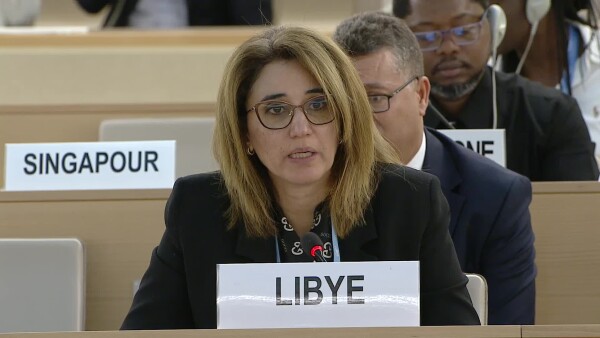
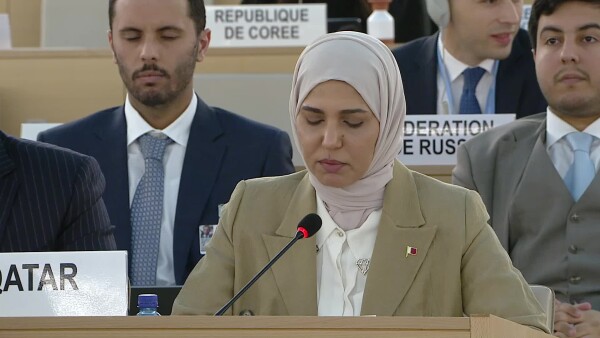
Includes video statements from the Human Rights Council 54th Session, 12 September, by:
- Dr. Lamia Fathi Abusedra, Permanent Representative of Libya to the United Nations Office at Geneva
- Ms. Hend Abdalrahman Al-Muftah, Permanent Representative of Qatar to the United Nations Office at Geneva
STORY: Libya floods
DURATION (TRT): 3:02"
SOURCE: UNTV CH
LANGUAGE: ENGLISH/NATS
ASPECT RATIO: 16/9
DATELINE: 12 September 2023, GENEVA SWITZERLAND
- Exterior medium shot: UN flag alley, UN Geneva
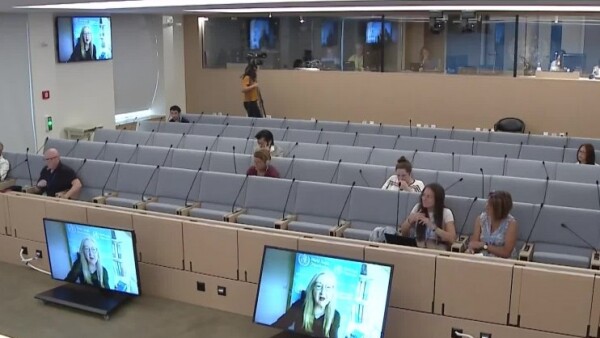
- Wide shot: speakers at podium and attendees at the press conference, screens with speaker
- SOUNDBITE (English) – Margaret Harris, WHO spokesperson: “Epic proportions, there’s not been a storm like this in the region, or so in living memory, so it’s a great shock.”
- Close shot: attendee at the press conference
- SOUNDBITE (English) – Margaret Harris, WHO spokesperson: “Torrential rain to an area affecting at least 1.5 million to 1.8 million people. And it’s also damaged hospitals, it’s wiped out some hospitals, left some partially functioning. So the work now is really to get in supplies, sadly some of those supplies are things like body bags but also trauma kits. We did have supplies that were prepositioned, so they were already been deployed.”
- Wide shot: attendees, cameramen/women and sound engineers at the press conference, screens with speaker
- SOUNDBITE (English) – Margaret Harris, WHO spokesperson: “Our second priority is to look at the people who are displaced. It’s already mentioned that there are lots of people who are already living in precarious circumstances. And we have to look at what kind of field hospitals can be set up, and what kind of mobile clinics. So there’s a great deal of work that needs to be done and is being mobilized as I speak.”
- Wide shot: speakers at podium and attendees at the press conference, screens with speaker
- SOUNDBITE (English) – Tamer Ramadan, Head of IFRC delegation in Libya: “Hurricane Daniel hit the eastern part of Libya two days ago and left behind thousands and thousands of affected population between death, stranded and lost during the hurricane. We are responding on the ground through our partners from the Libyan Red Crescent. The teams were deployed immediately once the hurricane hit the affected five cities.”
- Wide shot: attendees, cameramen/women and sound engineers at the press conference, screens with speaker
- SOUNDBITE (English) – Tamer Ramadan, Tamer Ramadan, Head of IFRC delegation in Libya: “The humanitarian needs are huge and much more beyond the abilities of the Libyan Red Crescent, and even beyond the abilities of the Government. That’s why the Government in the east has issued an international appeal for support.”
- Wide shot: speaker, attendees, cameramen/women and sound engineers at the press conference, screens with speakers
- SOUNDBITE (English) – Paul Dillon, IOM spokesperson: “There are roughly 600,000 migrants in Libya at this time and we’re conscious that in some of the affected areas there are migrant populations but at this early stage and [given] the many access issues that we and humanitarian responders are facing, we don’t have a clear picture about how badly they have been affected. But as part of the general population, you would expect the same impacts that the residents of that area have experienced over the last 24 hours and it will of course impact on the migrants who are living there as well.”
- Medium shot: attendees at the press conference, screen with speaker
- Close shot: attendees at the press conference
- Medium shot: cameramen/women and sound engineers at the press conference
Similar Stories

1
1
1
Edited News | OCHA , UNICEF , WFP
Aid agencies warned on Friday of the fast-developing humanitarian emergency inside Taiz City in Yemen, which has been encircled by de facto Houthi forces fighting government troops along the country’s west coast.

2
17
1
2
Edited News , Press Conferences , Images | OCHA , WMO
Two UN agencies teamed up on Wednesday to issue an appeal for immediate assistance to help communities already being impacted by the strongest El Niño on record.

3
16
2
2
Edited News , B-roll , Conferences , Images | UNITED NATIONS , UNOG
Sixth Consultative Meeting on Enhancing Coordination of Peace Initiatives and Efforts for Sudan

1
1
1
Edited News | UNICEF , WHO , UNHCR
Yemen war continues to force families from homes amid hunger and disease
More than 250,000 people have now fled renewed fighting in Yemen, the UN said on Tuesday, citing particular concern for those sheltering in the southwestern city of Taiz and the wider governorate, where access is “essentially blocked”.

1
1
1
Edited News | UNICEF
A little over one year since a ceasefire agreement was announced between Hamas fighters and Israel, more than 340 children have been reported killed and hundreds more injured, the UN Children’s Fund, UNICEF, said on Friday.

1
1
1
Edited News | UNICEF , IFRC
Six weeks after Nepal’s deadly flooding disaster, communities are still struggling to rebuild their lives, but they will need sustained help as global warming increases the risk of another Himalayan catastrophe, the UN Children’s Fund (UNICEF) said on Friday.

1
1
1
Edited News | WHO
In suspected Russia plague death, testing and monitoring underway – WHO
The death of a lab worker in Russia’s Siberia region has sparked concerns about plague being the cause, the UN World Health Organization (WHO) said on Tuesday, adding that it was following the situation closely.

1
1
Edited News | OHCHR , UNOG
UN Human Rights Chief Volker Türk on Friday provided and oral update to the 63rd session of the Human rights Council on Ukraine.

1
1
1
Edited News | OHCHR , UNOG
UN Human Rights Chief Volker Türk on Friday provided and oral update to the 63rd session of the Human rights Council on the human rights situation in Haiti.

1
1
1
Edited News | WHO
Repeated delays in bringing lifesaving medicines, prosthetics and more from Israel into Gaza risk having devastating consequences on Palestinians who urgently need them in the wartorn enclave, the UN World Health Organization (WHO) said on Friday. “A truck full of non-priority supplies or the right supplies arriving too late, doesn't save lives. That's the question that actually matters," said Dr Reinhilde Van De Weerdt, WHO Representative in the OPT.

1
1
1
Edited News | WHO
DRC: Early access to care and oxygen decisive for Ebola patients’ survival – WHO
In the Democratic Republic of the Congo (DRC), health workers fighting the country’s largest-ever Ebola outbreak are struggling to overcome critical challenges to patient care, the UN World Health Organization (WHO) warned on Tuesday.

1
1
1
Edited News | OCHA , UN
Civilians in Iran are continuing to feel the consequences of months of conflict and military escalation, the UN’s top official in the country has said, as loss of life, damage to civilian infrastructure and mounting economic pressures leave many facing continued uncertainty.