

The United Nations Office at Geneva
Multimedia Newsroom
Concern for Libya's civilians mounts as fighting continues even in face of pandemic and calls for global ceasefire
As many of the world's conflict areas have developed ceasefires in the face of the COVID-19 pandemic, Libya is standing out as an exception, with ongoing heavy fighting across the country in the last week.
Concerns for the civilian population -- both those displaced by fighting and those in confinement -- are being raised by the United Nations, as a renewed military push by the UN-recognised Government of National Accord (GNA) took place last week to take six key coastal towns and push back the forces of the opposition Libyan National Army (LNA). At the same time the LNA have been shelling the capital, Tripoli, home to the country’s main institutions, including the oil company and central bank.
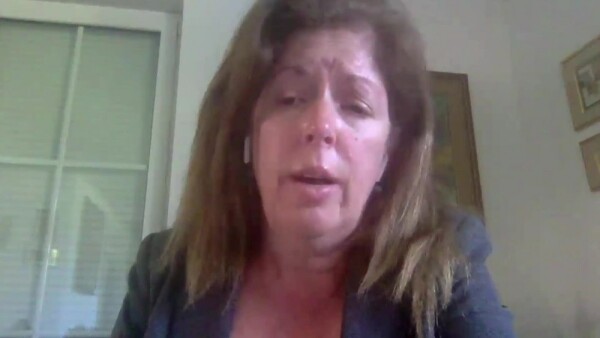
"There have been two truces, ceasefires, which both parties to the conflict have putatively signed-up to," Ms. Williams told reporters in Geneva by videoconference, speaking from Germany. "One go them of course was the January 12th truce that was called for by the Presidents of Russia and Turkey. Since January 12th and to this day, we've had over 850 violations of that truce. And we have a number of violations of the truce that was subsequently agreed to by the parties in responding to the calls for a truce - a humanitarian truce - for the COVID."
" So, you know, it's a truce in name only," Ms. Williams added. "You can't really call it a truce, you can't really call it a ceasefire. We've had 70 violations just in the last week."
Some areas of the conflict are causing particular worry, according to the UN representative. "We have concerning reports coming out of Surman and Subratha about retribution: acts of revenge, burning of houses," Ms. Williams said in
reference to two of the coastal towns." And we also have obviously the reports on the prison break, and the release of potentially some very alarming figures, people who have been involved in human trafficking, fuel smuggling and other violent crimes."
Ms. Williams told journalists that the situation for people who are impacted by the fighting while under coronavirus lockdown is getting worse; some of the worst shelling is in the southern suburbs of Tripoli, but it is also being felt downtown, she said.
Although the new coronavirus has interrupted UN-led talks between the warring sides, Ms Williams insisted that there was “ongoing contact” with all those engaged in all discussions.
Ms. Williams said that she herself also been “in direct contact” with both LNA leader General Haftar and Libya's Prime Minister Fayez al-Sarraj to “urge them to substantively respond” to the draft ceasefire proposal tabled by the UN Support Mission in Libya at the close of the second round of recent military talks in Geneva.
Asked about recent reports from Libya's Minister of the Interior, who said that mercenaries fighting on the side of the LNA had carried out a chemical attack Government forces in Tripoli's southern suburbs, Ms. Williams said that matter may be referred to the Organisation for the Prohibition of Chemical Weapons (OPCW) in The Hague.
"Libya is a signatory to the OPCW, they can certainly go that way in terms of seeking assistance," Ms. Williams said. "We've also referred this to the Panel of Experts, who will be looking into it," she added, in reference to the UN panel of experts set up by the Security Council to monitor sanctions against Libya. "It's a very, very concerning report," she said.
1. Wide shot: exterior, Place des Nations, Geneva, with broken chair sculpture and UN Geneva in background.
3. Medium shot: from outside UN Geneva with flag alley beyond fence.
4. SOUNDBITE (EN) - Stephanie Turco Williams, Acting Special Representative and Head of the United Nations Support Mission in Libya (UNSMIL): "We have concerning reports coming out of Surman and Subratha about retribution: acts of revenge, burning of houses, And we also have obviously the reports on the prison break, and the release of potentially some very alarming figures, people who have been involved in human trafficking, fuel smuggling and other violent crimes."
5. Medium Shot: UN Geneva flag alley, flags and UN building in background, with UN logo and lettering visible.
6. SOUNDBITE (EN) - Stephanie Turco Williams, Acting Special Representative and Head of the United Nations Support Mission in Libya (UNSMIL): "Libya is a signatory to the OPCW, they can certainly go that way in terms of seeking assistance. We've also referred this to the Panel of Experts, who will be looking into it. It's a very, very concerning report."
7. Wide shot: UN Geneva, main entrance
Similar Stories
1
1
1
Edited News | OCHA , UNICEF , WFP
Aid agencies warned on Friday of the fast-developing humanitarian emergency inside Taiz City in Yemen, which has been encircled by de facto Houthi forces fighting government troops along the country’s west coast.

2
17
1
2
Edited News , Press Conferences , Images | OCHA , WMO
Two UN agencies teamed up on Wednesday to issue an appeal for immediate assistance to help communities already being impacted by the strongest El Niño on record.
3
16
2
2
Edited News , B-roll , Conferences , Images | UNITED NATIONS , UNOG
Sixth Consultative Meeting on Enhancing Coordination of Peace Initiatives and Efforts for Sudan
1
1
1
Edited News | UNICEF , WHO , UNHCR
Yemen war continues to force families from homes amid hunger and disease
More than 250,000 people have now fled renewed fighting in Yemen, the UN said on Tuesday, citing particular concern for those sheltering in the southwestern city of Taiz and the wider governorate, where access is “essentially blocked”.

1
1
1
Edited News | UNICEF
A little over one year since a ceasefire agreement was announced between Hamas fighters and Israel, more than 340 children have been reported killed and hundreds more injured, the UN Children’s Fund, UNICEF, said on Friday.

1
1
1
Edited News | UNICEF , IFRC
Six weeks after Nepal’s deadly flooding disaster, communities are still struggling to rebuild their lives, but they will need sustained help as global warming increases the risk of another Himalayan catastrophe, the UN Children’s Fund (UNICEF) said on Friday.

1
1
1
Edited News | WHO
In suspected Russia plague death, testing and monitoring underway – WHO
The death of a lab worker in Russia’s Siberia region has sparked concerns about plague being the cause, the UN World Health Organization (WHO) said on Tuesday, adding that it was following the situation closely.

1
1
Edited News | OHCHR , UNOG
UN Human Rights Chief Volker Türk on Friday provided and oral update to the 63rd session of the Human rights Council on Ukraine.

1
1
1
Edited News | OHCHR , UNOG
UN Human Rights Chief Volker Türk on Friday provided and oral update to the 63rd session of the Human rights Council on the human rights situation in Haiti.

1
1
1
Edited News | WHO
Repeated delays in bringing lifesaving medicines, prosthetics and more from Israel into Gaza risk having devastating consequences on Palestinians who urgently need them in the wartorn enclave, the UN World Health Organization (WHO) said on Friday. “A truck full of non-priority supplies or the right supplies arriving too late, doesn't save lives. That's the question that actually matters," said Dr Reinhilde Van De Weerdt, WHO Representative in the OPT.

1
1
1
Edited News | WHO
DRC: Early access to care and oxygen decisive for Ebola patients’ survival – WHO
In the Democratic Republic of the Congo (DRC), health workers fighting the country’s largest-ever Ebola outbreak are struggling to overcome critical challenges to patient care, the UN World Health Organization (WHO) warned on Tuesday.

1
1
1
Edited News | OCHA , UN
Civilians in Iran are continuing to feel the consequences of months of conflict and military escalation, the UN’s top official in the country has said, as loss of life, damage to civilian infrastructure and mounting economic pressures leave many facing continued uncertainty.