

The United Nations Office at Geneva
Multimedia Newsroom
Alarming large-scale arrests and detentions since the onset of the protests in Iran, says new UN report
A record number of executions in 2022, arrests of thousands of children and numerous allegations of torture and ill-treatment of individuals by security forces feature in a new report released on Wednesday by the UN Secretary-General on the human rights situation in Iran.
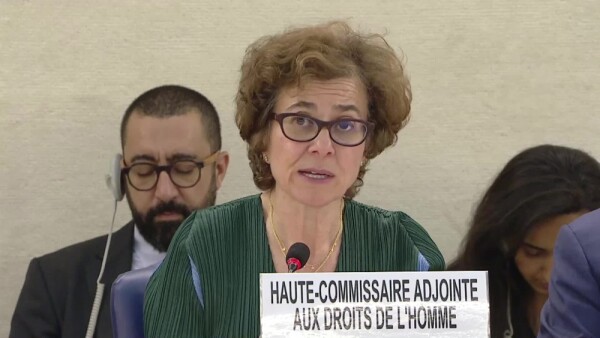
“The overall human rights situation in the Islamic Republic of Iran has markedly deteriorated against the backdrop of continuously worsening socio-economic conditions, aggravated by sanctions and the lingering impact of the COVID-19 pandemic,” said Nada Al-Nashif, UN Deputy High Commissioner for Human Rights, presenting the report to the Human Rights Council in Geneva.
The report focuses on developments since the onset of nationwide protests following the death of 22-year-old Jina Mahsa Amini on 16 September 2022, three days after she fell into a coma and died in police custody, following her arrest by Iran’s so-called Morality Police.
The report notes with serious concern the high number of death penalty sentences and executions during the reporting period.
“In 2022, 582 people were executed”, noted the Deputy High Commissioner. “That is a 75 per cent increase compared to 2021 during which 333 people were reportedly executed. There were three children among those executed in 2022. Of the total number of executions, 256 were for drug-related offences.”
According to Ms. Al-Nashif, this marks the highest rate of drug-related executions in the country since 2017.
Thousands of children are estimated to have been among those arrested during the protests, while at least 44 children, including 10 girls, were reportedly killed by security forces using lethal force. The highest number of deaths was reported in the Sistan and Baluchistan Province, where at least 10 children were killed.
“There have been numerous allegations of torture and ill-treatment of individuals by security forces during arrest and interrogation to extract forced confessions as well as allegations of sexual and gender-based violence committed against women, men and children, especially in detention,” said Ms. Al-Nashif. “Prison conditions including denial of medical care, dire sanitary conditions, contaminated drinking water and overcrowding, remain of concern.”
Since the onset of protests, respect for the rights to freedom has significantly deteriorated, the Human Rights Council heard. State policy was also found to have become more stringent in enforcing mandatory veiling and imposing harsher penalties on women and girls who fail to respect the ruling.
“On 15 August 2022, the President signed a decree which includes the introduction of face-recognition technology to track and punish unveiled women or those who actively question compulsory veiling”, said the Deputy UN Human Rights chief. “At the legislative level, new draft provisions to the Penal Code are being considered in parliament to expand the scope of offenses for non-compliance, allowing imprisonment, flogging and other punishments.”
The report also noted Iran’s failure to protect the physical and mental well-being of female students and attacks on their right to education. “As of 2 March of this year, more than 1,000 students, the majority of whom are girls, had reportedly been affected by suspected poisoning in 91 schools in 20 provinces. The authorities provided conflicting accounts of these incidents,” noted Ms Al-Nashif.
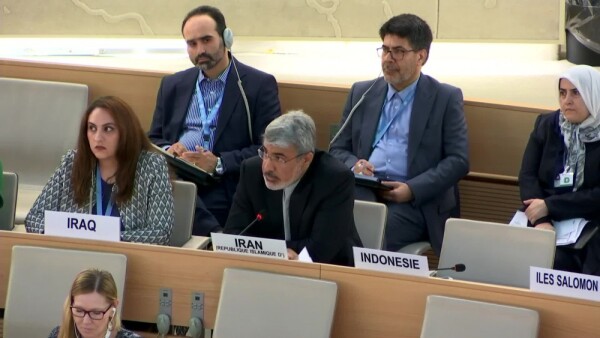
Ali Bahreini, Ambassador and Permanent Representative of The Islamic Republic of Iran to the UN in Geneva, rejected the report as inaccurate.
-ends-
SHOTLIST
- Medium shot, UN Palais with flags
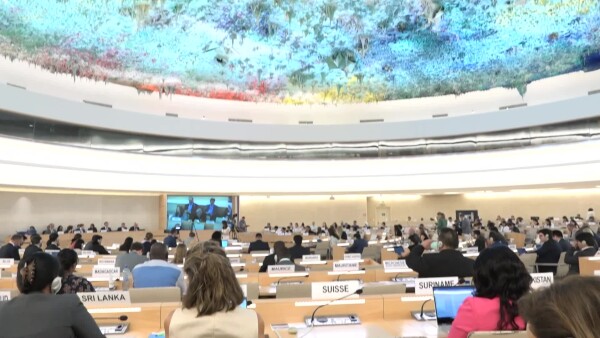
- Wide shot and pan down from ceiling of the UN Human Rights Council
- SOUNDBITE (English) – Nada Al-Nashif, UN Deputy High Commissioner for Human Rights: “The overall human rights situation in the Islamic Republic of Iran has markedly deteriorated against the backdrop of continuously worsening socio-economic conditions, aggravated by sanctions and the lingering impact of the COVID-19 pandemic.”
- Wide shot, photographer taking pictures in the Human Rights Council room
- SOUNDBITE (English) – Nada Al-Nashif, UN Deputy High Commissioner for Human Rights: “In 2022, 582 people were executed, that is a 75 per cent increase compared to 2021 during which 333 people were reportedly executed. There were three children among those executed in 2022. Of the total number of executions, 256 were for drug-related offences.”
- Medium shot, delegates from diverse member states
- SOUNDBITE (English) - Nada Al-Nashif, UN Deputy High Commissioner for Human Rights: “There have been numerous allegations of torture and ill-treatment of individuals by security forces during arrest and interrogation to extract forced confessions as well as allegations of sexual and gender-based violence committed against women, men and children, especially in detention. As previously reported, prison conditions including denial of medical care, dire sanitary conditions, contaminated drinking water and overcrowding, remain of concern.”
- Medium shot, photographer and camerawoman at the Human Rights Room
- SOUNDBITE (English) - Nada Al-Nashif, UN Deputy High Commissioner for Human Rights: “On 15 August 2022, the President signed a decree which includes the introduction of face-recognition technology to track and punish unveiled women or those who actively question compulsory veiling. At the legislative level, new draft provisions to the Penal Code are being considered in parliament to expand the scope of offenses for non-compliance, allowing imprisonment, flogging, and other punishments.”
- Medium shot, delegates in Human Rights Room from behind with screen of speakers
- SOUNDBITE (English) – Nada Al-Nashif, UN Deputy High Commissioner for Human Rights: “The report also notes with grave concern that as of 2 March of this year, more than 1,000 students, the majority of whom are girls, had reportedly been affected by suspected poisoning in 91 schools in 20 provinces. The authorities provided conflicting accounts of these incidents. »
- Medium shot, panel with speakers
- SOUNDBITE (English) - Ali Bahreini, Ambassador and Permanent Representative of The Islamic Republic of Iran to the UN in Geneva: “The report should not represent a clumsy, inappropriate and inaccurate collection, including allegations received from newspapers and unreliable and irrelevant websites or sources known for spreading false and biased news or based on fake news published by terrorist and hostile organisations.”
- Close up, photographer
- Medium shot, delegates in Human Rights Room
- Medium shot, delegates in Human Rights Room
Similar Stories

1
1
1
Edited News | UNICEF
A little over one year since a ceasefire agreement was announced between Hamas fighters and Israel, more than 340 children have been reported killed and hundreds more injured, the UN Children’s Fund, UNICEF, said on Friday.

1
1
1
Edited News | UNICEF , IFRC
Six weeks after Nepal’s deadly flooding disaster, communities are still struggling to rebuild their lives, but they will need sustained help as global warming increases the risk of another Himalayan catastrophe, the UN Children’s Fund (UNICEF) said on Friday.
1
1
1
Statements , Press Conferences | OHCHR

1
1
1
Edited News | WHO
In suspected Russia plague death, testing and monitoring underway – WHO
The death of a lab worker in Russia’s Siberia region has sparked concerns about plague being the cause, the UN World Health Organization (WHO) said on Tuesday, adding that it was following the situation closely.

1
1
Edited News | OHCHR , UNOG
UN Human Rights Chief Volker Türk on Friday provided and oral update to the 63rd session of the Human rights Council on Ukraine.
2
1
2
Statements , Conferences | HRC , OHCHR
Interactive dialogue with the High Commissioner for Human Rights, Volker Türk on the oral update on Ukraine.

1
1
1
Edited News | OHCHR , UNOG
UN Human Rights Chief Volker Türk on Friday provided and oral update to the 63rd session of the Human rights Council on the human rights situation in Haiti.

1
1
1
Edited News | WHO
Repeated delays in bringing lifesaving medicines, prosthetics and more from Israel into Gaza risk having devastating consequences on Palestinians who urgently need them in the wartorn enclave, the UN World Health Organization (WHO) said on Friday. “A truck full of non-priority supplies or the right supplies arriving too late, doesn't save lives. That's the question that actually matters," said Dr Reinhilde Van De Weerdt, WHO Representative in the OPT.

1
1
1
Edited News | WHO
DRC: Early access to care and oxygen decisive for Ebola patients’ survival – WHO
In the Democratic Republic of the Congo (DRC), health workers fighting the country’s largest-ever Ebola outbreak are struggling to overcome critical challenges to patient care, the UN World Health Organization (WHO) warned on Tuesday.

1
1
1
Edited News | OCHA , UN
Civilians in Iran are continuing to feel the consequences of months of conflict and military escalation, the UN’s top official in the country has said, as loss of life, damage to civilian infrastructure and mounting economic pressures leave many facing continued uncertainty.
1
1
1
Edited News | WHO , UNICEF
Aid agencies in Yemen highlighted the growing hunger emergency sparked by renewed fighting between Houthi opposition forces and Government troops, after mobile health clinics reported that hundreds of children displaced by the violence are suffering from the most deadly form of malnutrition.