

The United Nations Office at Geneva
Multimedia Newsroom
Cyclone Mocha: urgent funding needed in Myanmar and Bangladesh as hunger, diseases loom
As a clearer picture emerges of the trail of destruction left by Cyclone Mocha in Myanmar and Bangladesh, humanitarians have continued to strive to bring life-saving assistance and call for urgent funding.
In Myanmar, the UN appealed on Tuesday for $333 million to assist 1.6 million of the most vulnerable people, many of whom have lost their homes as the cyclone hit the west of the country over a week ago.
The UN’s top aid official in the country, Ramanathan Balakrishnan, told reporters in Geneva that the disaster had left hundreds of thousands without a roof over their heads as the monsoon looms.
Among the priorities is providing people with safe shelter and preventing the outbreak and spread of water-borne diseases.
With coastal winds recorded at up to 250 kilometres per hour making landfall off the Bay of Bengal on 14 May, Mocha brought flooding and landslides to an area that is home to hundreds of thousands of people already displaced by the protracted conflict in Myanmar, many of them the Rohingya minority of Rakhine state.
The UN appeal requests an “urgent injection” of funds to support those in the highest impact zone across Rakhine, Chin, Magway, Sagaing and Kachin states.
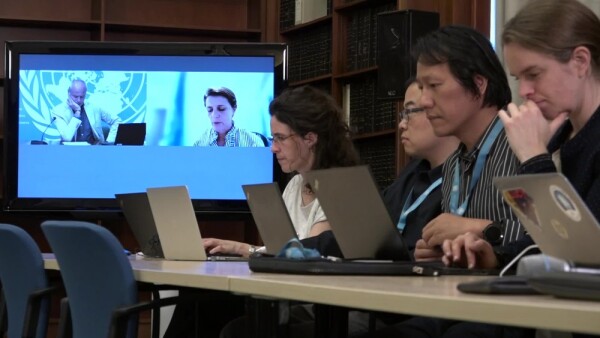
Speaking via Zoom from Yangon, Mr. Balakrishnan, who is the UN Resident and Humanitarian Coordinator for Myanmar, said that the 1.6 million people identified for support under the new funding appeal include “people who have lost their homes, people who lack access to health services and clean water, people who are food insecure or malnourished, displaced people in camps, stateless people, women, children and people with disabilities”.
“Those affected are facing a long, miserable monsoon season if we cannot mobilize resources in time,” he warned.
Mr. Balakrishnan also gave reporters a glimpse of the experience of internally displaced people, or IDPs, in the capital of Myanmar’s Rakhine State, Sittwe. He recounted that an IDP from a camp in Sittwe told his colleagues that his shelter was destroyed while his family took refuge at an evacuation site at the height of the storm.
“Those who stayed had faced a horrible experience as the camp was submerged in water from the storm surge,” the UN aid official said, before insisting on the need for medical care, clean water and food, as well as support to rebuild shelters.
Hundreds of humanitarian personnel are on the ground in Rakhine state, already providing food aid, shelter, water and hygiene items “wherever they have access”, while mobile health teams have been supporting people on the ground, Mr. Balakrishnan said, with plans for additional urgent aid distribution in the most affected areas.
In neighbouring Bangladesh, the UN is appealing for $42 million to support the cyclone response, including $36 million for Rohingya refugees living in camps in the affected areas. Gwyn Lewis, UN Resident Coordinator in Bangladesh speaking from Dhaka via Zoom, told reporters that more than 400,000 people in the country were impacted and 40,000 Rohingya refugees living in camps saw their homes – most often temporary bamboo structures – destroyed or damaged.
Ms. Lewis stressed that the cyclone came on the heels of food ration cuts for refugees and a devastating fire in March, in which 16,000 had lost their homes. Adding to the refugees’ hardship, she said that lack of funding is forcing the UN to cut their food rations for a second time as of 1 June. “This means that the Rohingya refugees will receive only 67 per cent of the needed food rations, so one million people will only be getting about two-thirds of the needed food,” she added.
Thankfully, the Government of Bangladesh acted quickly upon the cyclone warnings, Ms. Lewis said, and evacuated some 700,000 people from Mocha’s path, which helped save countless lives. She expressed hope that new funding will allow to rebuild the homes of the Rohingya refugees living in camps in Bangladesh with more weather-resistant materials and improve resilience.
STORY: Cyclone Mocha Appeal - OCHA
TRT: 2’31”
SOURCE: UNTV CH
LANGUAGE: ENGLISH, NATS
ASPECT RATIO: 16:9
RELEASE DATE: 23 May 2023
FORMAT: HYBRID PRESS BRIEFING
DATELINE: GENEVA, SWITZERLAND
SHOTLIST
- Exterior wide shot: UN flag alley UN Geneva.
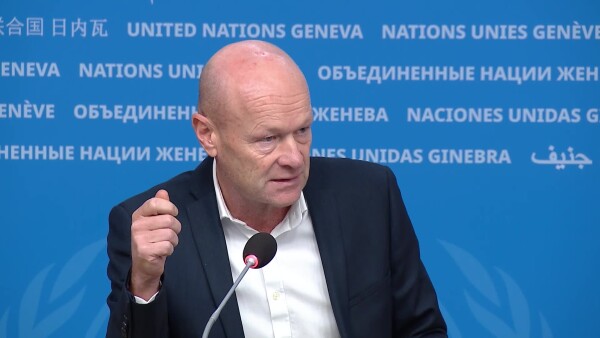
- Cutaway: wide shot, speaker behind podium at the press conference, UN Geneva.
- SOUNDBITE (ENGLISH) Ramanathan Balakrishnan, UN Resident and Humanitarian Coordinator a.i. for Myanmar: “The disaster has left hundreds of thousands of already vulnerable communities without a roof over their heads as the monsoon looms. The humanitarian community is now in a race against time to provide people with safe shelter in all affected communities and prevent the outbreak and spread of water-borne diseases.”
- Cutaway: medium shot, screen showing speakers; journalists in the foreground at the press conference, UN Geneva.
- SOUNDBITE (ENGLISH) Ramanathan Balakrishnan, UN Resident and Humanitarian Coordinator a.i. for Myanmar: “The 1.6 million people identified for support under this appeal include people who have lost their homes, people who lack access to health services and clean water, people who are food insecure or malnourished, displaced people in camps, stateless people, women, children and people with disabilities. Those affected are facing a long, miserable monsoon season if we cannot mobilize resources in time.”
- Cutaway: close shot, journalists at the press conference, UN Geneva.
- SOUNDBITE (ENGLISH) Ramanathan Balakrishnan, UN Resident and Humanitarian Coordinator a.i. for Myanmar: “One internally displaced person from the Sittwe camp told our colleagues in Rakhine that his shelter was destroyed while his family took refuge at an evacuation site at the height of the storm. He reported that those who stayed had faced a horrible experience as the camp was submerged in water from the storm surge. He told us that the IDPs need medical care, clean water and food, as well as support to rebuild their shelters.”
- Cutaway: medium lateral shot, journalists at the press conference, UN Geneva.
- SOUNDBITE (ENGLISH) Gwyn Lewis, UN Resident Coordinator in Bangladesh: “More than 400,000 Bangladeshis were impacted by the cyclone and the homes of 40,000 refugees were completely destroyed or damaged.”
- Cutaway: close lateral shot, journalists at the press conference, UN Geneva.
- SOUNDBITE (ENGLISH) Gwyn Lewis, UN Resident Coordinator in Bangladesh: “Cyclone Mocha comes at the heels of food ration cuts and a devastating fire in March, where 16,000 refugees lost their homes. Due to funding shortages, we are going to be forced to cut food rations for a second time as of 1 June. This means that the Rohingya refugees will receive only 67 per cent of the needed food rations, so 1 million people will only be getting about two thirds of the needed food.”
- Various cutaways of journalists and speakers in the press conference room.
Similar Stories
1
1
1
Edited News | OCHA , UNICEF , WFP
Aid agencies warned on Friday of the fast-developing humanitarian emergency inside Taiz City in Yemen, which has been encircled by de facto Houthi forces fighting government troops along the country’s west coast.

2
17
1
2
Edited News , Press Conferences , Images | OCHA , WMO
Two UN agencies teamed up on Wednesday to issue an appeal for immediate assistance to help communities already being impacted by the strongest El Niño on record.

3
16
2
2
Edited News , B-roll , Conferences , Images | UNITED NATIONS , UNOG
Sixth Consultative Meeting on Enhancing Coordination of Peace Initiatives and Efforts for Sudan

1
1
1
Edited News | UNICEF , WHO , UNHCR
Yemen war continues to force families from homes amid hunger and disease
More than 250,000 people have now fled renewed fighting in Yemen, the UN said on Tuesday, citing particular concern for those sheltering in the southwestern city of Taiz and the wider governorate, where access is “essentially blocked”.

1
1
1
Edited News | UNICEF
A little over one year since a ceasefire agreement was announced between Hamas fighters and Israel, more than 340 children have been reported killed and hundreds more injured, the UN Children’s Fund, UNICEF, said on Friday.

1
1
1
Edited News | UNICEF , IFRC
Six weeks after Nepal’s deadly flooding disaster, communities are still struggling to rebuild their lives, but they will need sustained help as global warming increases the risk of another Himalayan catastrophe, the UN Children’s Fund (UNICEF) said on Friday.

1
1
1
Edited News | WHO
In suspected Russia plague death, testing and monitoring underway – WHO
The death of a lab worker in Russia’s Siberia region has sparked concerns about plague being the cause, the UN World Health Organization (WHO) said on Tuesday, adding that it was following the situation closely.

1
1
Edited News | OHCHR , UNOG
UN Human Rights Chief Volker Türk on Friday provided and oral update to the 63rd session of the Human rights Council on Ukraine.

1
1
1
Edited News | OHCHR , UNOG
UN Human Rights Chief Volker Türk on Friday provided and oral update to the 63rd session of the Human rights Council on the human rights situation in Haiti.

1
1
1
Edited News | WHO
Repeated delays in bringing lifesaving medicines, prosthetics and more from Israel into Gaza risk having devastating consequences on Palestinians who urgently need them in the wartorn enclave, the UN World Health Organization (WHO) said on Friday. “A truck full of non-priority supplies or the right supplies arriving too late, doesn't save lives. That's the question that actually matters," said Dr Reinhilde Van De Weerdt, WHO Representative in the OPT.

1
1
1
Edited News | WHO
DRC: Early access to care and oxygen decisive for Ebola patients’ survival – WHO
In the Democratic Republic of the Congo (DRC), health workers fighting the country’s largest-ever Ebola outbreak are struggling to overcome critical challenges to patient care, the UN World Health Organization (WHO) warned on Tuesday.

1
1
1
Edited News | OCHA , UN
Civilians in Iran are continuing to feel the consequences of months of conflict and military escalation, the UN’s top official in the country has said, as loss of life, damage to civilian infrastructure and mounting economic pressures leave many facing continued uncertainty.