

The United Nations Office at Geneva
Multimedia Newsroom
Edited News | UNHCR , WFP , WHO
Bi-Weekly Press Briefing: Update Earthquakes Syria And Türkiye WFP - UNHCR - WHO
As another United Nations aid convoy crossed Friday into war-torn Syria’s opposition held northwest from Türkiye to bring urgently needed relief items to people severely suffering from a 7,8 magnitude earthquake on early Monday which has killed some 22,000 people in Türkiye and Syria, UN humanitarian agencies urgently call for the opening of new border crossings between Türkiye and Syria.
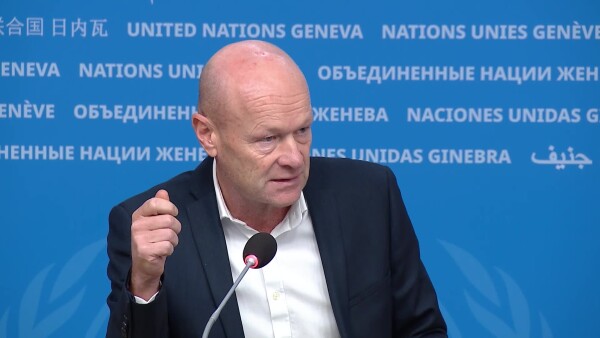
“Northwest Syria where 90 % of the population depends on humanitarian assistance is a big concern. We have reached the people there, but we need to replenish our stocks”, said Corinna Fleischer, Regional Director in the Middle East, Northern Africa and Eastern Europe of the World Food Programme (WFP) when talking to journalists at the United Nations in Geneva. “We are running out of stocks, and we need access to bring new stocks in. The border crossing is open now, but we need to get new border crossings opened because the roads are damaged, and we need to be able to come from different sites into northwest Syria”.
The aid delivery mechanism from Turkey into opposition-held areas of the Syrian Arab Republic through the Bab al-Hawa crossing is the only way UN assistance can reach civilians without passing through areas controlled by Syrian government forces.
“Right now, Bab al-Hawa is open, and we are calling for Bab al-Salameh to be reopened”, said Ms. Fleischer. “That was part of the Security Council Resolution crossing points that used to be open and has been closed. This one, we are calling on all parties to reopen it and I think discussions are ongoing”.
In the first four days since deadly earthquakes struck the region forcing tens of thousands into the freezing outside temperatures, WFP has delivered urgently needed food assistance to 150,000 people in Syria and Türkiye.
In Northwest Syria, around 23, 850 affected people received through WFP partners ready-to-eat food rations that last for one week.
In Türkiye, WFP is providing a total of 73, 000 refugees and peopled displaced by the earthquake with family food baskets.
“Today we will start soup kitchens through the municipalities who will cook for the Turkish population, and we are planning 200,000 soup kitchens in the municipalities”, said Ms. Fleischer.
Today’s convoy to northwestern Syria consisted of 14 trucks containing non-food items such as humanitarian kits, solar lamps, blankets, and other assistance, told Paul Dillon, spokesperson of the International Organization for Migration (IOM). The aid “will be sufficient for about 1,100 families in the quake-hit areas in Idlib” province in the country’s northwest.
The UN Refugee Agency (UNHCR) has been distributing since day one relief items to all those impacted by the quake, but mainly also to the most vulnerable such as the elderly, people with disabilities and children.
“We are focusing very much as UNHCR on shelter and relief items, whether that means ensuring that collective centers that displaced persons have gone to are sort of adequate in terms of facilities, tents, plastic sheeting, and of course, I mentioned earlier, the thermal blankets, the sleeping mats, winter clothing and so on”, said Sivanka Dhanapala, UNCHR Representative in Syria.
“The first couple of weeks we are looking at life-saving activity, adaptation of the collective centres that I was talking about earlier, tents and the non-food items”, he said, adding that “then we look of course, when we look at 8,12 weeks, we look at supporting livelihoods and basic services in affected areas whether that means life sustaining shelter support, provision/installation of emergency shelter kits and this kind of thing really trying to undertake minor repairs in the damaged housing”.
Emphasizing the race against time to save lives and to ensure health access so that people survive, the World Health Organization (WHO) has been supporting the earthquake response in Syria and Türkiye with immediate dispatch of life-saving medicines and supplies.
“From the first day of the earthquake as WHO we released pre-positioned medical and surgical supplies in the Syrian Arab Republic to 16 hospitals treating survivors of the earthquake in the northwest of the country”, said Catharina Boehme, WHO’s Chef de Cabinet. “Yesterday, 9th February, one flight arrived in Türkiye carrying medical and surgical trauma supplies from our logistic hub in Dubai”.
Another flight will arrive today in Syria and a third flight is being panned and expected to arrive in the Syrian Arab Republic on Sunday. In total, these 110 metric tons of life-saving supplies will be used to treat and care for 400,000 people.
With hundreds of clinics damaged, WHO will not only provide urgent response but also primary and obstetric services.
“We do indeed have the trauma specialists, so people who can deal with multiple fractures, crush injuries, know how to deal with the complications and can bring in their expertise and also their specialist equipment”, said Margaret Harris, WHO’s spokesperson.
WHO has released USD 3 million from the Contingency Fund for Emergencies for the response in both countries.
-ends-
STORY: Update Earthquakes in Türkiye and Syria – WFP, UNHCR, WHO
TRT: 4 min 04
SOURCE: UNTV CH
RESTRICTIONS: NONE
LANGUAGE: ENGLISH/NATS
ASPECT RATIO: 16:9
DATELINE: 10 February 2023 GENEVA, SWITZERLAND
SHOTLIST
- Wide shot, UN Geneva flag alley.
- Wide shot, press briefing room with UN Special Envoy for Syria and journalists.
- SOUNDBITE (ENGLISH) – Corinna Fleischer, WFP Regional Director in the Middle East, Northern Africa and Eastern Europe: “Northwest Syria, where 90 % of the population depends on humanitarian assistance is a big concern. We have reached the people there, but we need to replenish our stocks. We are running out of stocks, and we need access to bring new stocks in. The border crossing is open now, but we need to get new border crossings opened because the roads are damaged, and we need to be able to come from different sites into northwest Syria”.
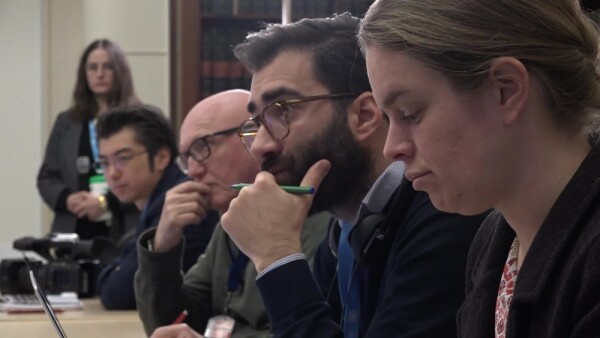
- Medium shot, journalists sitting in front of their laptops
- SOUNDBITE (ENGLISH) – Corinna Fleischer, WFP Regional Director in the Middle East, Northern Africa and Eastern Europe: “Today we will start soup kitchens through the municipalities who will cook for the Turkish population, and we are planning 200,000 soup kitchens in the municipalities”.
- Close up, writing with pens
- SOUNDBITE (ENGLISH) - Corinna Fleischer, WFP Regional Director in the Middle East, Northern Africa and Eastern Europe: “Right now, Bab al-hawa is open, and we are calling for Bab al-Salameh to be reopened. That was part of the Security Council Resolution crossing points that used to be open and has been closed. This one, we are calling on all parties to reopen it and I think discussions are ongoing”.
- Wide shot, journalists in press briefing room with moderator and speaker at the podium
- SOUNDBITE (ENGLISH) – Sivanka Dhanapala, UNCHR Representative in Syria: “We are focusing very much as UNHCR on shelter and relief items, whether that means you know ensuring that collective centers that displaced persons have gone to are sort of adequate in terms of facilities, tents, plastic sheeting, and of course, I mentioned earlier, the thermal blankets, the sleeping mats, winter clothing and so on”.
- Medium shot, UN spokesperson and UNHCR spokesperson at the podium with screen behind
- SOUNDBITE (ENGLISH) – Sivanka Dhanapala, UNCHR Representative in Syria: “The first couple of weeks we are looking at life-saving activity, you know, adaptation of the collective centres that I was talking about earlier, tents and the non-food items. Then we look of course, when we look at 8,12 weeks, we look at supporting livelihoods and basic services in affected areas whether that means life sustaining shelter support, provision/installation of emergency shelter kits and this kind of thing really trying to undertake minor repairs in the damaged housing”.
- Medium shot, journalists typing
- SOUNDBITE (ENGLISH) – Sivanka Dhanapala, UNCHR Representative in Syria: “The negotiations just sent convoys across the line are, of course, continuing. I think I mentioned that. But in the meeting this morning, my understanding is that normally has a government agreed to this as an emergency measure, but we are trying to also push for a blanket agreement from the government side for such crossline movements”.
- Wide shot, press briefing room with presenters at the podium, journalists and screens
- SOUNDBITE (ENGLISH) – Catharina Boehme, Chef de Cabinet, World Health Organization (WHO): “From the first day of the earthquake as WHO we released pre-positioned medical and surgical supplies in the Syrian Arab Republic to 16 hospitals treating survivors of the earthquake in the northwest of the country. Yesterday, 9th February, one flight arrived in Türkiye carrying medical and surgical trauma supplies from our logistic hub in Dubai”.
- Close up, journalist
- SOUNDBITE (ENGLISH) – Margaret Harris, spokesperson for the World Health Organization (WHO): “We do indeed have the trauma specialists, so people who can deal with multiple fractures, crush injuries, know how to deal with the complications and can bring in their expertise and also their specialist equipment”.
- Medium shot, journalist looking at this laptop
- Medium shot, journalist and cameraman
- Medium shot, journalists listening
Similar Stories
1
1
1
Edited News | OCHA , UNICEF , WFP
Aid agencies warned on Friday of the fast-developing humanitarian emergency inside Taiz City in Yemen, which has been encircled by de facto Houthi forces fighting government troops along the country’s west coast.

2
17
1
2
Edited News , Press Conferences , Images | OCHA , WMO
Two UN agencies teamed up on Wednesday to issue an appeal for immediate assistance to help communities already being impacted by the strongest El Niño on record.
3
16
2
2
Edited News , B-roll , Conferences , Images | UNITED NATIONS , UNOG
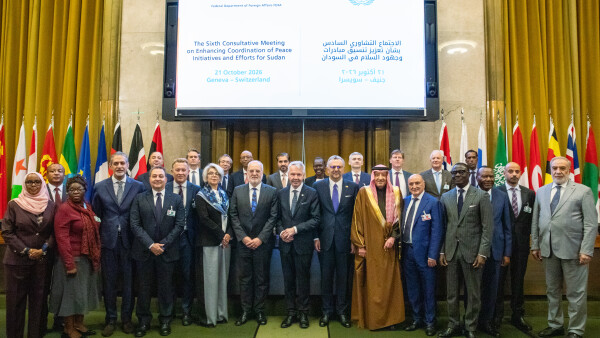
Sixth Consultative Meeting on Enhancing Coordination of Peace Initiatives and Efforts for Sudan
1
1
1
Edited News | UNICEF , WHO , UNHCR
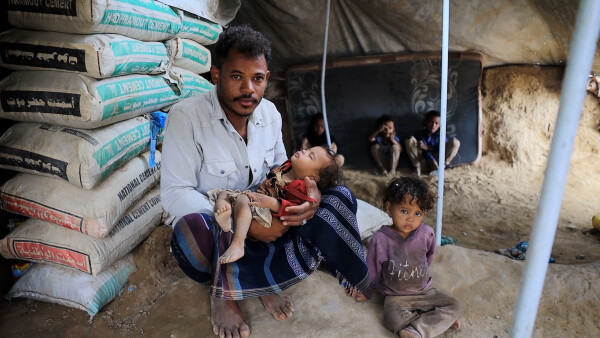
Yemen war continues to force families from homes amid hunger and disease
More than 250,000 people have now fled renewed fighting in Yemen, the UN said on Tuesday, citing particular concern for those sheltering in the southwestern city of Taiz and the wider governorate, where access is “essentially blocked”.

1
1
1
Edited News | UNICEF
A little over one year since a ceasefire agreement was announced between Hamas fighters and Israel, more than 340 children have been reported killed and hundreds more injured, the UN Children’s Fund, UNICEF, said on Friday.

1
1
1
Edited News | UNICEF , IFRC
Six weeks after Nepal’s deadly flooding disaster, communities are still struggling to rebuild their lives, but they will need sustained help as global warming increases the risk of another Himalayan catastrophe, the UN Children’s Fund (UNICEF) said on Friday.

1
1
1
Edited News | WHO
In suspected Russia plague death, testing and monitoring underway – WHO
The death of a lab worker in Russia’s Siberia region has sparked concerns about plague being the cause, the UN World Health Organization (WHO) said on Tuesday, adding that it was following the situation closely.

1
1
Edited News | OHCHR , UNOG
UN Human Rights Chief Volker Türk on Friday provided and oral update to the 63rd session of the Human rights Council on Ukraine.

1
1
1
Edited News | OHCHR , UNOG
UN Human Rights Chief Volker Türk on Friday provided and oral update to the 63rd session of the Human rights Council on the human rights situation in Haiti.

1
1
1
Edited News | WHO
Repeated delays in bringing lifesaving medicines, prosthetics and more from Israel into Gaza risk having devastating consequences on Palestinians who urgently need them in the wartorn enclave, the UN World Health Organization (WHO) said on Friday. “A truck full of non-priority supplies or the right supplies arriving too late, doesn't save lives. That's the question that actually matters," said Dr Reinhilde Van De Weerdt, WHO Representative in the OPT.

1
1
1
Edited News | WHO
DRC: Early access to care and oxygen decisive for Ebola patients’ survival – WHO
In the Democratic Republic of the Congo (DRC), health workers fighting the country’s largest-ever Ebola outbreak are struggling to overcome critical challenges to patient care, the UN World Health Organization (WHO) warned on Tuesday.

1
1
1
Edited News | OCHA , UN
Civilians in Iran are continuing to feel the consequences of months of conflict and military escalation, the UN’s top official in the country has said, as loss of life, damage to civilian infrastructure and mounting economic pressures leave many facing continued uncertainty.