

The United Nations Office at Geneva
Multimedia Newsroom
Edited News | UNITED NATIONS , UNOG
UN Special Envoy On Syria Pedersen - Earthquakes In Türkiye And Syria
As a United Nations aid convoy reached Syria on Thursday for the first time since devastating earthquakes cut off supply lines from Türkiye three days ago, UN Special Envoy for Syria, Geir Pedersen, called for assurances that there would be no political obstacles to delivering the much-needed assistance inside Syria.
“We need to do everything to make sure that there are no impediments whatsoever to delay lifesaving support that is needed in Syria,” he said. “I have been discussing this in particular with the representatives from the United States and from the European Union and they assured me that they will do whatever they can to make sure that there are no impediments to assistance coming to Syria to help in this operation.”
Mr. Pedersen’s appeal followed a meeting of a Humanitarian Taskforce for Syria which was created in 2017 and that the Special Envoy chairs to facilitate aid deliveries to the war-torn country. “I was struck by the unity in the meeting we had today by all the different Member States that participated,” Mr. Pedersen said. He added that “when it comes to cross border (aid deliveries), as you know, we had a problem because the roads leading to the border crossing have been destroyed.”
Rescuers have continued to pull more people alive from the rubble, but the chances of finding trapped survivors are diminishing fast, 72 hours after the initial 7.8 magnitude quake close struck to Gaziantep, Türkiye, followed by another 7.5 magnitude earthquake several hours later.
The combined, confirmed, death toll in Syria and Türkiye is now more than 17.000 people. With more victims expected, the UN Syria Envoy asked for “access and resources irrespective of borders and boundaries as people need more of absolutely everything”.
He added: “The number of casualties continues to rise as we are speaking in both countries and there are still too many people who are under the rubble in the freezing cold. The earthquake struck as the humanitarian crisis in northwest Syria was already worsening, with needs at their highest level since the conflict began.”
Almost 12 years into Syria’s devastating civil war, the country faces massive economic hardship and one of the world’s largest displacement crises with the majority of the population in need of humanitarian aid. Prior to the earthquake, and based on assessments, the UN calculated that more than four million people in northwest Syria depended on cross-border aid alone.
Syria is divided into areas under the control of the Syrian government, opposition forces and other armed groups. Government and opposition areas have been hit particularly hard by the earthquake.
“We need support to go into the northwest, we need support to go into the government-controlled areas that have been particularly hit, Aleppo and Hama …and we know that some support is already coming in to the airports in Aleppo and also to Damascus,” Mr. Pedersen said.
In all affected parts of Syria, humanitarians report an urgent need for logistic, skilled rescue teams and temporary shelters. The UN is helping to mobilize emergency teams and relief operations, and many countries have rushed to offer support.
-ends-
STORY: UN Special Envoy on Syria Geir Pedersen – Earthquakes in Türkiye and Syria
TRT: 1 min 56
SOURCE: UNTV CH
RESTRICTIONS: NONE
LANGUAGE: ENGLISH/NATS
ASPECT RATIO: 16:9
DATELINE: 9 February 2023 GENEVA, SWITZERLAND
SHOTLIST
- Medium shot, UN Geneva flag alley.
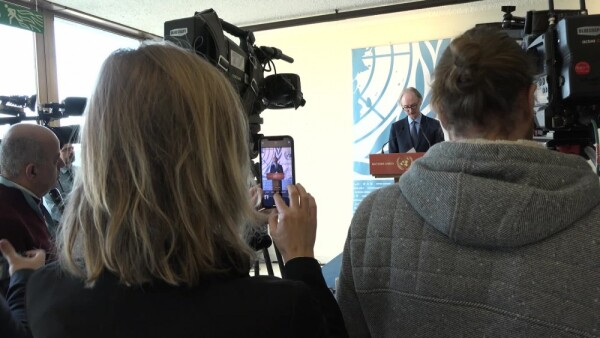
- Wide shot, press stakeout with UN Special Envoy for Syria and journalists.
- SOUNDBITE (ENGLISH) – UN Special Envoy for Syria, Geir Pedersen: “I was struck by the unity in the meeting we had today by all the different member states that participated. When it comes to cross border, as you know, we had a problem because the roads leading to the border crossing have been destroyed."
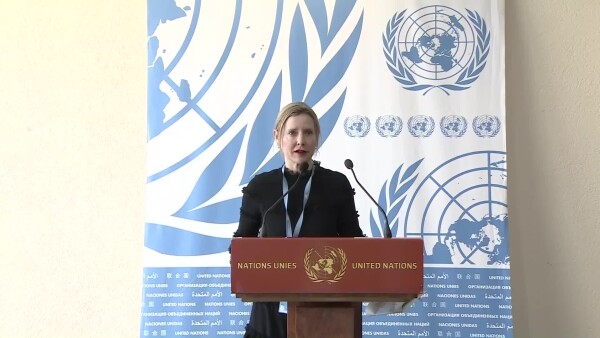
- Wide shot, Geir Pedersen at the stakeout
- SOUNDBITE (ENGLISH) – UN Special Envoy for Syria, Geir Pedersen: “The number of casualties continues to rise as we are speaking in both countries and there are still too many people who are under the rubbles in the freezing cold. The earthquake struck as the humanitarian crisis in northwest Syria was already worsening, with needs at their highest level since the conflict began”.
- Medium shot, camera people behind their cameras and journalists listening
- SOUNDBITE (ENGLISH) - UN Special Envoy for Syria, Geir Pedersen: “We need support to go into the north west, we need support to go into the government controlled areas that have been particularly hit, Aleppo and Hama was mentioned, and we know that some support is already coming in to the airports in Aleppo and also to Damascus.”
- Medium shot, journalists listening
- SOUNDBITE (ENGLISH) - UN Special Envoy for Syria, Geir Pedersen: “We need to do everything to make sure that there are no impediments whatsoever to delay life-saving support that is needed in Syria. And I have been discussing this in particular with the representatives from the United States and from the European Union. And they assured me that they will do whatever they can to make sure that there are no impediments to assistance coming to Syria to help in this operation.”
- Wide shot, journalists from behind taking a photo with cell phone of Geir Pedersen
- Wide shot, press stakeout with UN Special Envoy for Syria and journalists.
- Medium shot, journalists listening
Similar Stories

2
17
1
2
Edited News , Press Conferences | OCHA , WMO
Two UN agencies teamed up on Wednesday to issue an appeal for immediate assistance to help communities already being impacted by the strongest El Niño on record.

3
16
2
2
B-roll , Conferences , Edited News | UNITED NATIONS , UNOG
Sixth Consultative Meeting on Enhancing Coordination of Peace Initiatives and Efforts for Sudan

1
1
1
Edited News | UNICEF , WHO , UNHCR
Yemen war continues to force families from homes amid hunger and disease
More than 250,000 people have now fled renewed fighting in Yemen, the UN said on Tuesday, citing particular concern for those sheltering in the southwestern city of Taiz and the wider governorate, where access is “essentially blocked”.

1
1
1
Edited News | UNICEF
A little over one year since a ceasefire agreement was announced between Hamas fighters and Israel, more than 340 children have been reported killed and hundreds more injured, the UN Children’s Fund, UNICEF, said on Friday.

1
1
1
Edited News | UNICEF , IFRC
Six weeks after Nepal’s deadly flooding disaster, communities are still struggling to rebuild their lives, but they will need sustained help as global warming increases the risk of another Himalayan catastrophe, the UN Children’s Fund (UNICEF) said on Friday.

1
1
1
Edited News | WHO
In suspected Russia plague death, testing and monitoring underway – WHO
The death of a lab worker in Russia’s Siberia region has sparked concerns about plague being the cause, the UN World Health Organization (WHO) said on Tuesday, adding that it was following the situation closely.

1
1
Edited News | OHCHR , UNOG
UN Human Rights Chief Volker Türk on Friday provided and oral update to the 63rd session of the Human rights Council on Ukraine.

1
1
1
Edited News | OHCHR , UNOG
UN Human Rights Chief Volker Türk on Friday provided and oral update to the 63rd session of the Human rights Council on the human rights situation in Haiti.

1
1
1
Edited News | WHO
Repeated delays in bringing lifesaving medicines, prosthetics and more from Israel into Gaza risk having devastating consequences on Palestinians who urgently need them in the wartorn enclave, the UN World Health Organization (WHO) said on Friday. “A truck full of non-priority supplies or the right supplies arriving too late, doesn't save lives. That's the question that actually matters," said Dr Reinhilde Van De Weerdt, WHO Representative in the OPT.

1
1
1
Edited News | WHO
DRC: Early access to care and oxygen decisive for Ebola patients’ survival – WHO
In the Democratic Republic of the Congo (DRC), health workers fighting the country’s largest-ever Ebola outbreak are struggling to overcome critical challenges to patient care, the UN World Health Organization (WHO) warned on Tuesday.

1
1
1
Edited News | OCHA , UN
Civilians in Iran are continuing to feel the consequences of months of conflict and military escalation, the UN’s top official in the country has said, as loss of life, damage to civilian infrastructure and mounting economic pressures leave many facing continued uncertainty.
1
1
1
Edited News | WHO , UNICEF
Aid agencies in Yemen highlighted the growing hunger emergency sparked by renewed fighting between Houthi opposition forces and Government troops, after mobile health clinics reported that hundreds of children displaced by the violence are suffering from the most deadly form of malnutrition.