

The United Nations Office at Geneva
Multimedia Newsroom
People with disabilities face a risk of dying up to 20 years earlier than compared to others in the society. This is the result of a new report launched today by the World Health Organization (WHO) ahead of International Day of Persons with Disabilities (3 Dec.).
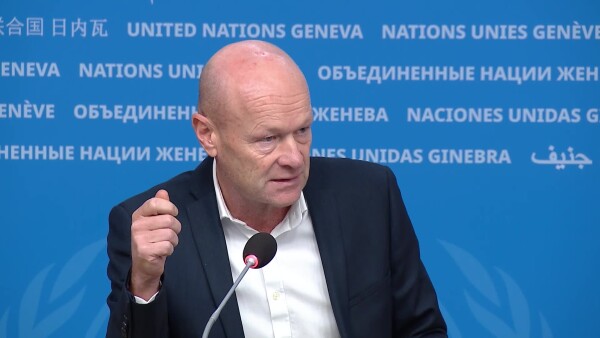
“Many persons with disabilities die earlier, some up to 20 years earlier, and more are at risk- double the risk - of developing a range of health conditions compared to the general population,” said Darryl Barrett, WHO’s Technical Lead for Sensory Functions, Disability and Rehabilitation when talking at a news briefing at the United Nations in Geneva.
The « Global report on health equity for person with disabilities” demonstrates while some progress has been made in recent years, systemic and persistent health inequities still persists and many persons with disabilities face an increased risk of developing chronic conditions and higher risks of premature death.
“It's a significant reason for these early deaths because of poor quality health services”, noted Mr. Barrett. “There's also a higher incidence of diseases such as tuberculosis, diabetes, stroke, sexually transmitted infections, and cardiovascular problems among persons with disabilities.”
Many of the differences in health outcomes cannot be explained by the underlying health condition or impairment, so WHO, but by avoidable, unfair and unjust factors such as inaccessible public health interventions or little consideration given to persons with disabilities during health emergencies planning.
“This report also has new global prevalence estimates for significant disability, and that it is at about 16% of the population, or at today's rate, 1.3 billion persons with significant disability", noted Mr. Barrett. "So that equates to about one in six of us.”
The report recommends 40 actions for governments to take at their health sector from addressing physical infrastructure to training of health workers.
“The attitude and competency of health workers, for example, can be quite negative and have an impact on the health outcomes of persons with disabilities”, said Mr. Barrett.
The report stresses the need for urgent action to address the inequities within the health systems.
“When governments are looking at training their health workforce, it's important that they include disability as part of that training and education so that the workforce is confident and competent to be able to deal with what it needs to deal with”, emphasized WHO’s Darryl Barrett.“Now, we recognize that many countries with low resources have particular challenges, and this is important because the report also shows that 80% of persons with disability globally live in low- and middle-income settings.”
The report shows that investing in a disability-inclusive health sector is cost-effective. WHO calculates that governments could expect a return of about USD 10 for every USD 1 invested on disability-inclusive noncommunicable disease prevention and care.
-ends-
STORY: Health Equity for Disabled Persons - WHO
TRT: 1 min 58s
SOURCE: UNTV CH
RESTRICTIONS: NONE
LANGUAGE: ENGLISH/NATS
ASPECT RATIO: 16:9
DATELINE: 02 December 2022 GENEVA, SWITZERLAND
- Medium shot, UN Geneva flag alley.
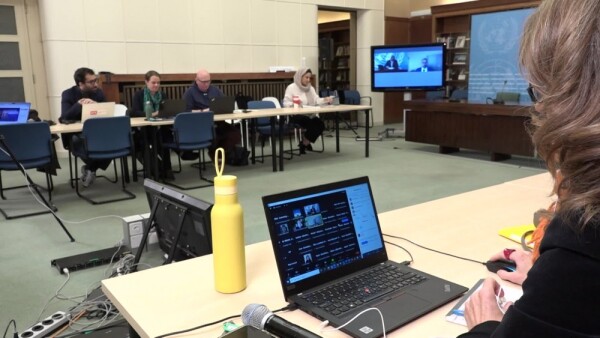
- Wide shot, press room with spokesperson and panel of speakers on screens.
- SOUNDBITE (ENGLISH) - Darryl Barrett, Technical Lead for Sensory Functions, Disability and Rehabilitation (WHO): “Many persons with disabilities die earlier, some up to 20 years earlier, and more are at risk- double the risk - of developing a range of health conditions compared to the general population.”
- Close-up shot, computer screen showing attendants.
- SOUNDBITE (ENGLISH) - Darryl Barrett, Technical Lead for Sensory Functions, Disability and Rehabilitation (WHO): “It's a significant reason for these early deaths are because of poor quality health services. There's also a higher incidence of diseases such as tuberculosis, diabetes, stroke, sexually transmitted infections, and cardiovascular problems among persons with disabilities.”
- Medium shot, journalists taking notes.
- SOUNDBITE (ENGLISH) - Darryl Barrett, Technical Lead for Sensory Functions, Disability and Rehabilitation (WHO): “This report also has new global prevalence estimates for significant disability, and that it is at about 16% of the population, or at today's rate, 1.3 billion persons with significant disability. So that equates to about one in six of us.”
- Medium shot, cameraman adjusting camera.
- SOUNDBITE (ENGLISH) - Darryl Barrett, Technical Lead for Sensory Functions, Disability and Rehabilitation (WHO): “The attitude and competency of health workers, for example, can be quite negative and have an impact on the health outcomes of persons with disabilities.”
- Close-up shot, hands of journalist taking notes.
- SOUNDBITE (ENGLISH) - Darryl Barrett, Technical Lead for Sensory Functions, Disability and Rehabilitation (WHO): “When governments are looking at training their health workforce, it's important that they include disability as part of that training and education so that the workforce is confident and competent to be able to deal with what it needs to deal with. Now, we recognize that many countries with low resources have particular challenges, and this is important because the report also shows that 80% of persons with disability globally live in low- and middle-income settings.”
- Medium shot, pressroom with journalists.
- Close-up, journalist listening.
- Close-up, journalist listening.
Similar Stories
1
1
1
Edited News | OCHA , UNICEF , WFP
Aid agencies warned on Friday of the fast-developing humanitarian emergency inside Taiz City in Yemen, which has been encircled by de facto Houthi forces fighting government troops along the country’s west coast.

2
17
1
2
Edited News , Press Conferences , Images | OCHA , WMO
Two UN agencies teamed up on Wednesday to issue an appeal for immediate assistance to help communities already being impacted by the strongest El Niño on record.

3
16
2
2
Edited News , B-roll , Conferences , Images | UNITED NATIONS , UNOG
Sixth Consultative Meeting on Enhancing Coordination of Peace Initiatives and Efforts for Sudan

1
1
1
Edited News | UNICEF , WHO , UNHCR
Yemen war continues to force families from homes amid hunger and disease
More than 250,000 people have now fled renewed fighting in Yemen, the UN said on Tuesday, citing particular concern for those sheltering in the southwestern city of Taiz and the wider governorate, where access is “essentially blocked”.

1
1
1
Edited News | UNICEF
A little over one year since a ceasefire agreement was announced between Hamas fighters and Israel, more than 340 children have been reported killed and hundreds more injured, the UN Children’s Fund, UNICEF, said on Friday.

1
1
1
Edited News | UNICEF , IFRC
Six weeks after Nepal’s deadly flooding disaster, communities are still struggling to rebuild their lives, but they will need sustained help as global warming increases the risk of another Himalayan catastrophe, the UN Children’s Fund (UNICEF) said on Friday.

1
1
1
Edited News | WHO
In suspected Russia plague death, testing and monitoring underway – WHO
The death of a lab worker in Russia’s Siberia region has sparked concerns about plague being the cause, the UN World Health Organization (WHO) said on Tuesday, adding that it was following the situation closely.

1
1
Edited News | OHCHR , UNOG
UN Human Rights Chief Volker Türk on Friday provided and oral update to the 63rd session of the Human rights Council on Ukraine.

1
1
1
Edited News | OHCHR , UNOG
UN Human Rights Chief Volker Türk on Friday provided and oral update to the 63rd session of the Human rights Council on the human rights situation in Haiti.

1
1
1
Edited News | WHO
Repeated delays in bringing lifesaving medicines, prosthetics and more from Israel into Gaza risk having devastating consequences on Palestinians who urgently need them in the wartorn enclave, the UN World Health Organization (WHO) said on Friday. “A truck full of non-priority supplies or the right supplies arriving too late, doesn't save lives. That's the question that actually matters," said Dr Reinhilde Van De Weerdt, WHO Representative in the OPT.

1
1
1
Edited News | WHO
DRC: Early access to care and oxygen decisive for Ebola patients’ survival – WHO
In the Democratic Republic of the Congo (DRC), health workers fighting the country’s largest-ever Ebola outbreak are struggling to overcome critical challenges to patient care, the UN World Health Organization (WHO) warned on Tuesday.

1
1
1
Edited News | OCHA , UN
Civilians in Iran are continuing to feel the consequences of months of conflict and military escalation, the UN’s top official in the country has said, as loss of life, damage to civilian infrastructure and mounting economic pressures leave many facing continued uncertainty.