

The United Nations Office at Geneva
Multimedia Newsroom
PRESS BRIEFING BY THE UNITED NATIONS INFORMATION SERVICE
14 October 2022
Rising food and fuel prices have led to growing civil unrest in Haiti
Isheeta Sumra for the World Food Programme (WFP), said that unrelenting series of crises has trapped vulnerable Haitians in a cycle of desperation. Rising food and fuel prices have led to civil unrest bringing economic activities to a standstill. Deterioration was seen in hunger as shown in the new report launched this morning. WFP will be issuing a press release together with the Food and Agriculture Organization on the deteriorating hunger situation.
Jean-Martin Bauer, Country Director in Haiti for the World Food Programme, said that Haiti was facing humanitarian catastrophe. Rising food and fuel prices had led to growing civil unrest. Fresh data illustrated worrying trends in food insecurity. The Integrated Food Security Phase Classification (IPC) report issued today showed the severity and extent of food insecurity, which was getting much worse. According to the report, 4,7 million people were facing acute food insecurity and 1,8 million were facing emergency levels of food insecurity. Six months ago, numbers were lower: there was an increase of 200,000 people in acute food insecurity and of half a million people in emergency levels of food insecurity. A key point of the report was that for the first time in Haiti, and first time in Americas were people in IPC 5, the worst level of food insecurity, in particular 19,000 people in the Cité Soleil neighborhood in Port-au-Prince.
Inflation amounting to 30 percent was the worst in 20 years. Food inflation was particularly bad. The price of the food basket in August was 63 percent more than a year before. The fuel shortages were impacting everything. The price of one gallon last week was 49 dollars. Due to gang violence, more than 20,000 people were displaced in Port-au-Prince. Since September, the country has been in Peyi Lòk, a form of lockdown: people could not go to work or access markets. There was a slowdown in social services provision. Some hospitals closed due to lack of fuel. Cholera outbreak started few weeks ago. The situation had gone from bad in March 2022 to worse in October 2022. The number of people in IPC 5 was aggravated in rural areas by drought, impacting food production. Haitian population was suffering from high food prices resulting in civil unrest that has paralyzed the country and was affecting the most vulnerable.
More information can be found in IPC analysis.
James Elder, for the United Nations Children’s Fund, said that 100,000 children under the age of 5 were suffering from malnutrition, which was affecting their especially vulnerable weak immune systems. Children were 3 times more likely to die if they contract cholera. This was pretty much a death sentence for these children.
Alessandra Vellucci, for the United Nations Information Service, recalled that the UN Secretary-General had launched an appeal four days ago asking UN Member States to answer the call of the Haitian authorities to help them with the security situation on the ground, also because it had a devastating impact on the ability of humanitarians to carry out their work.
Margaret Harris, for the World Health Organization (WHO) said that as of today, according to the data of the Haitian Ministry of Health, there were 357 suspected cholera cases, 35 confirmed cases and 21 confirmed deaths. However, it was probable that the number of cases would be much higher.
In responding to questions, Jean-Martin Bauer, clarified that 5 per cent of the population in Cité Soleil were classified as being in IPC 5, which meant catastrophe at individual level. Famine had not been declared, but urgent action was needed also for the 1,8 million people in IPC 4. People had to reduce the number of meals and the quality of food, with no protein of fresh vegetables. The situation in Cité Soleil was a warning that it could soon get much worse. Over a month ago, barricades were put up to prevent travel within the city. Civil unrest followed because the doubling of fuel prices. About 20,000 people were displaced in Port-au-Prince. Cité Soleil also had a problem with water. Before the lockdown, the World Food Programme had been able to access Cité Soleil, but currently they were not able to provide essential assistance to the inhabitants.
Somalia
In responding to questions, Isheeta Sumra for the World Food Programme (WFP) said that famine was imminent in Somalia. She had no figures on the number of people in Integrated Food Security Phase Classification (IPC) 5 but would revert to journalists with these. Famine had not been officially declared yet, but the situation was dire, and the international community could not wait for a declaration of famine to react.
Ukraine
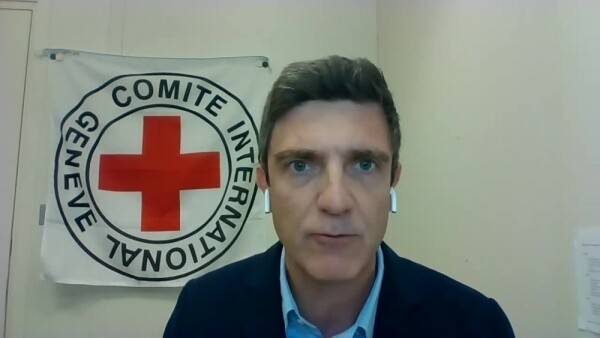
Ewan Watson, for the International Committee of the Red Cross (ICRC), provided an update on the situation of prisoners of war in the Ukrainian-Russian conflict. Frustration was shared concerning a lack of access to prisoners of war. Since February, the ICRC had worked on access to prisons in order to keep the families of prisoners of war informed. Teams were able to visits hundreds of prisoners of war but there were thousands they were not able to visit. Mr. Watson stressed that the Third Geneva Convention obligated war parties to grant immediate access to the ICRC to prisoners, wherever they were held. Teams had been on the ground, waiting for four months to get permission to visit the Olenivka penal facility. In addition to being granted access by high-level authorities, this required practical arrangements on the ground to materialize. The ICRC’s mission could only be achieved through coordinated efforts with the parties to the conflict.
Responding to questions, Mr. Watson said they were not able to visit all prisoners of war. He could not talk about detention conditions because it was part of the confidential, bilateral relations with the parties. There was not enough access, and he reiterated the need for regular access to both sides. He could not convey enough the urgency of this call, as it was needed for both sides. There was no news concerning prisoners of war in Olenivka penal facility, they had been trying to visit them for months. Teams needed to have basic safety and security conditions in order to visit facilities. Mr. Watson reiterated that hundreds of prisoners of war were visited on both sides, but they did not have access to thousands more – he could not provide more precise figures. He was not able to provide information on concrete parts of the country where ICRC teams were not able to go, but he stressed that the issue was not geographical location but obtaining safe conditions to go across the country. ICRC teams today were on the ground, on the frontlines, throughout the country, but they needed basic security.
WHO Update
Margaret Harris, for the World Health Organization (WHO), announced that the World Health Summit was starting on Sunday, 16 October, in Berlin with a large number of events. She also said that the Joint Action Plan on One Health would be released next week. After COVID-19, everyone understood how important it was to work to prevent the spillover of infections from wild animals affecting human health. Ms. Harris invited Mr. Branca to share information about the plan.
Dr. Franceso Branca, Director of Nutrition and Food Safety of the World Health Organization (WHO), informed that WHO, the Food and Agriculture Organization (FAO) the World Organization of Animal Health and the United Nations Environment Programme (UNEP) had been working jointly to develop the “Joint Action Plan One Health” that would address the spillover of human activities on animals and the environment. It was a five-year plan to chart the implementation of this One Health approach. It was an integrated, unifying approach to the sustainable, balanced and optimized health of people, animals and the ecosystem. It was necessary to mobilize different sectors, and for communities to respond to multiple threats to the ecosystem. This included minimizing spillovers from animals to humans, but also working upstream on having healthy food and water, and taking action on climate change and sustainable development. The Joint Action Plan explained it, including which actors would be involved.
There would be a designated session on the Joint Action Plan One Health during the World Health Summit. One Health was at the heart of discussions on pandemics, and had been debated at the G20 meeting. The Plan was important to indicate what prevention could be, so that the risks on human health and the environment could be reduced.
In responding to questions, Mr. Branca acknowledged that early detection was an essential part of One Health. They were, however, two challenges. The first was that sectoral cooperation and communication were not always functioning, not just in emergencies but in general. The other challenge was that of a functioning integrated system, where data would circulate between different sectors.
Announcements
Alessandra Vellucci, speaking for the United Nations Information Service (UNIS), reminded that on 3-4 November the UN Office in Geneva would host the UN International Media Seminar on Peace in the Middle East. This was an annual seminar organized by the United Nations Department of Global Communications bringing together journalists, media experts, think tanks, diplomats, members of academia and member states to discuss media related issues and trends connected to the Israeli-Palestinian conflict, including promoting peaceful settlement. There would be 3 panel discussions: “Honoring the legacy of Shireen Abu Akleh: Protecting journalists covering the conflict;” “Forgotten stories in the Israeli-Palestinian conflict: How political news eclipses coverage of economic challenges;” and “Young journalists: Opportunities and challenges.”. Melissa Fleming Under-Secretary-General for Global Communications and Tatiana Valovaya, Director-General of the UN Office, would be opening the seminar together with Ambassador Wolfgang Amadeus Brülhart, the Swiss Special Envoy for the Middle East and North Africa.
More information on seminar can be found here.
Ms Vellucci informed that the Committee on the Elimination of Discrimination against Women was reviewing today the report of Belgium.
The Human Rights Committee was concluding this morning the review of the report of Japan that started yesterday.
The Committee on Economic, Social and Cultural Rights would conclude today its 72nd session after reviewing the situation in El Salvador, Mongolia, Italy, Guatemala, Tajikistan, and Luxembourg.
Ms Vellucci also informed that on Tuesday, 18 October at 2 p.m. there would be a press conference by the World Health Organization (WHO) to launch the “Global Status Report on Physical Activity”. Speakers would be Dr. Fiona Bull, Head of the Physical Activity Unit, WHO Department of Health Promotion, and Dr. Juana Willumsen, Technical Officer in the same Unit.
On Wednesday, 19 October at 11 a.m there would be the launch of the 2022 Flagship Report of the United Nations Research Institute for Social Development (UNRISD), titled: “Crises of Inequality: Shifting Power for a New Eco-Social Contract”. Speakers will be Paul Ladd, Director of the Institute, Katja Hujo, Senior Research Coordinator, and Maggie Carter, Senior Research Analyst, also with UNRISD.
Alessandra Vellucci read an announcement on behalf of the International Telecommunication Union (ITU), which informed that the ITU’s Plenipotentiary Conference (PP-22) was closing in Bucharest, Romania today. The meeting of their highest governing body concluded after selecting ITU’s new senior management team and having reached consensus on actions to ensure that digital technology reaches and benefits people across the world. More details on the conference could be found here and there was also a webcast of conference sessions. For questions about ITU’s Plenipotentiary Conference, David Hirsch at pressinfo@itu.int could be contacted.
Alessandra Vellucci recalled that tomorrow, the international community would celebrate the International Day of Rural Women, this year under the subject “Building Rural Women's Resilience in the Wake of COVID-19”. The Secretary-General’s message on the occasion had been distributed.
Ms. Vellucci said that on 16 October the international community would commemorate the 2022 World Food Day under the theme “Leave no one behind, better production, better nutrition, a better environment, and a better life”. In his message, the UN Secretary-General said that that this anniversary came at a challenging moment for global food security as the number of people affected by hunger had more than doubled over the past three years; but there was hope, as the Secretary-General said that we could reverse the trend if we all acted together.
The Geneva office of the Food and Agriculture Organization (FAO) was organising a series of events to celebrate World Food Day under the hashtag #WorldFoodDay2022. Participants were invited to an exhibition at Cornavin train station that was continuing until 6 pm on Friday 14 October. A video message would be displayed in e-board panels in all main train stations across Switzerland. The President of the Swiss Confederation Ignazio Cassis would issue a statement. On 16 October, there would be a global ceremony organized in the United Nations Headquarters and in the evening, the Jet d’eau would turn blue, putting Geneva at the heart of the World Food Day celebrations. More information could be found on the FAO website .
On 17 October, we would be celebrating the International Day for the Eradication of Poverty, and the statement of the Secretary-General had also been sent. On this occasion, journalists were kindly invited to a special session of Cine ONU at the Cinérama Empire on Tuesday 18 October at 6:30 pm. The movie “Little Big Steve” would be screened; it was the true story of a 6-year-old boy, Steve Arodi, that lived in a slum in Nairobi, went to school against his family’s advice and grew up to be psychologist. He went back to the slum and opened a school to help poor and abused children. Steve Arodi had made the trip from Nairobi to be at the projection, together with the movie director and Olivier De Schutter, Special Rapporteur on Extreme Poverty and Human Rights. The discussion would be moderated by Rhéal LeBlanc from the United Nations Information Service.
Similar Stories
1
1
1
Press Conferences | WMO , UNHCR , WHO , ILO
WMO: Greenhouse Gas Bulletin; UNHCR: As attacks intensify UNHCR urges support for war ravaged Ukrainians; WHO: Clinical trials in DRC: vaccines and beyond; ILO: New global and regional estimates on domestic work, informality and working conditions
1
1
1
Press Conferences | UN WOMEN , WFP , WHO
UN WOMEN: Sudan Women and girls one year after the fall of El Fasher; increasing drone attacks across the country; WFP: DRC - Ebola spreads to eighth DRC province as WFP delivers food, builds treatment centres and keeps supplies moving; WHO - Update on Ebola (Bundibugyo Virus Disease)
1
12
1
1
Press Conferences , Images | UNOG
Closing Press Conference following the Sixth Consultative Meeting on Enhancing Coordination of Peace Initiatives and Efforts in Sudan

2
17
1
2
Edited News , Press Conferences , Images | OCHA , WMO
Two UN agencies teamed up on Wednesday to issue an appeal for immediate assistance to help communities already being impacted by the strongest El Niño on record.
1
1
1
Press Conferences | CITES
Wildlife trade and conservation policy discussions at the 81st meeting of the CITES Standing Committee (SC81)
1
1
1
Press Conferences | UNHCR , UNCTAD , WMO , OCHA , UNICEF , WHO
UNHCR Hungary’s 1956 Refugee Crisis: 70 Years On, UNCTAD World Investment Forum 2026, Doha, WMO Greenhouse Gas Bulletin and Climate Update for COP31, OCHA Afghanistan: Malnutrition, Girls’ Education and Recovery, UNICEF Yemen: Child Malnutrition and Unsafe Water in Taiz, WHO Inequalities in Noncommunicable Diseases and Risk Factors

1
1
1
Press Conferences | UNHCR
End of UNHCR's 77th Annual Executive Committee (ExCom) meeting week

1
1
1
Press Conferences | UNICEF , IOM , UNHCR
UN Special Assistant to the Personal Envoy Office (SUDAN): Peace Initiatives and Efforts in Sudan; UNICEF: Dire situation of children in Gaza; IOM: Damaged Homes and Energy Attacks Risk Displacing Ukrainians for this winter; UNHCR: update on EXCOM week

1
1
1
Press Conferences | IOM , UNDRR
UN stresses importance of household preparedness for disaster risk reduction.

1
1
1
Statements , Press Conferences | OHCHR
1
1
1
Press Conferences | UNHCR , UNICEF , IFRC , OHCHR , UN WOMEN , IOM , OCHA , WHO
UNHCR – ExCom Meeting, UNICEF – Nepal Recovery, IFRC – Flash Floods, WHO – Mental Health, IOM – South Sudan Floods, OCHA – DRC Humanitarian aid, UNHCR – Sahel Displacement, UNICEF – Yemen Update, IOM – Gaza Shelter, UN Women – Gaza Women, OHCHR – Arrests and detentions of Syrians by Israeli force
2
1
2
Press Conferences | UNCTAD
Presentation of the Trade and Developement Report 2026
Embargoed until 9 October 2026 at 11 a.m. (Geneva Time)
UNCTAD: UNCTAD’s flagship report finds that governments increasingly use industrial, trade, financial and technology policies to pursue economic and national security objectives. Market access and the ability to move into higher-value activities now depend more heavily on technology, finance and geopolitics.