

The United Nations Office at Geneva
Multimedia Newsroom
Press Conferences | UNCTAD
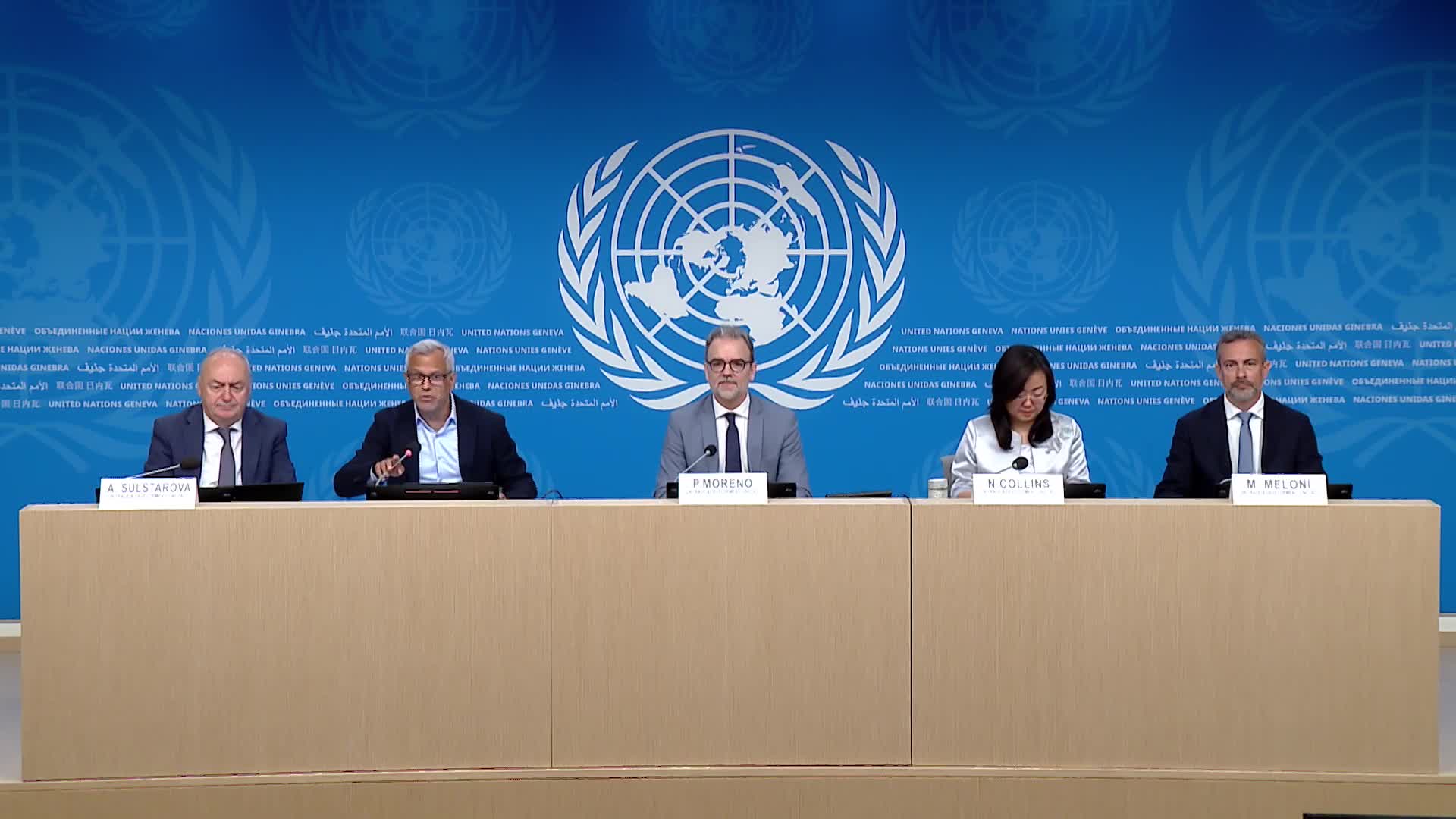
UNCTAD - Press conference: Launch of the World Investment Report 07 JUL 2026
STORYLINE
Global investment is up, but growth is increasingly concentrated in a narrow group of economies and sectors. Broadening its development impact remains the central challenge, according to World Investment Report 2026: International Investment in a Turbulent, released by UN Trade and Development (UNCTAD) on 7th July 2026.
The recovery remains fragile. Growth is concentrated in a small number of economies and in capital- and technology-intensive sectors.
Governments are responding with more selective policies. Incentives increasingly target clean energy, digital infrastructure, advanced manufacturing and critical minerals. Screening and conditions on foreign firms are also expanding.
Investment patterns are reshaping global production. Greenfield investment in strategic sectors is rising, while investment in manufacturing outside them is declining. The shift favours economies with strong infrastructure, skilled workers, supplier networks and access to major markets.
Most developing countries can't match the subsidy programmes of major economies. They need realistic entry points, stronger foundations and regional cooperation to compete and increase investment's development impact.
Governments increasingly want foreign investment on strategic and conditional terms. The challenge is to attract it while preserving policy space, legal certainty and sustainable development.
Investment is booming in strategic sectors like artificial intelligence, semiconductors and critical minerals. But the gains are concentrated, leaving out many developing countries.
Full report: https://unctad.org/wir2026
Production Date: 07 July 2026
Creator: UNCTAD / UNTV CH
Subject Topical: Global investment, Trade, Development
Geographic Subject: GLOBAL
Website: https://unctad.org/wir2026
STORY: UNCTAD / World Investment Report 2026
TRT: 02:10
SOURCE: UNCTAD / UNTV CH
LANGUAGE: ENGLISH / NATS
DATELINE: 07 JULY 2026, GENEVA, SWITZERLAND
WEBSITE: https://unctad.org/wir2026
SHOTLIST
1. Wide shot, Palais des Nations
2. Various shots, briefing room
3. SOUNDBITE (English) Pedro Manuel Moreno, Acting Secretary-General UN Trade and development (UNCTAD): “The central question, then, is not how much investment crosses borders. The question is where it goes, what it builds and who it benefits. A higher FDI number is welcome, but it doesn't automatically mean stronger development impacts.”
4. Close shot, journalist in the briefing room
5. SOUNDBITE (English) Pedro Manuel Moreno, Acting Secretary-General UN Trade and development (UNCTAD): “Headline investment can be concentrated in a few economies, sectors or large projects. But what matters here for development is whether investment strengthens the real economy. That means new productive assets, stronger domestic firms, better jobs, supplier linkages, technology transfer and access to regional and global value chains.”
6. Wide shot, briefing room
7. SOUNDBITE (English) Pedro Manuel Moreno, Acting Secretary-General UN Trade and development (UNCTAD): A growing share of global investments is moving into sectors linked to future growth and technological competition. And these include AI, infrastructure, semiconductors, critical minerals, energy transition technologies.”
8. Wide shot, briefing room
9. SOUNDBITE (English) Pedro Manuel Moreno, Acting Secretary-General UN Trade and development (UNCTAD): “Developing countries do not need to compete everywhere. They need realistic entry points into the investment landscape of the future.”
10.Mid shot, journalists in the press room
11. SOUNDBITE (English) Pedro Manuel Moreno, Acting Secretary-General UN Trade and development (UNCTAD): “This is not simply about attracting more investment. It is about attracting investment that supports development, resilience and domestic value creation for developing countries. International cooperation, investment partnerships and risk sharing mechanisms can help create conditions that individual countries cannot build alone. That role is to help countries understand these changes and turn investment trends into development choices.”
12. Various shots, press room
Publication of the World Investment Report 2026
Speakers:
- Pedro Manuel Moreno – UNCTAD Acting Secretary General
- Nan Li Collins – UNCTAD Director for Investment and Enterprise
Similar Stories

1
1
1
Statements , Press Conferences | OHCHR

1
1
1
Press Conferences | UNHCR , UNICEF , IFRC , OHCHR , UN WOMEN , IOM , OCHA , WHO
UNHCR – ExCom Meeting, UNICEF – Nepal Recovery, IFRC – Flash Floods, WHO – Mental Health, IOM – South Sudan Floods, OCHA – DRC Humanitarian aid, UNHCR – Sahel Displacement, UNICEF – Yemen Update, IOM – Gaza Shelter, UN Women – Gaza Women, OHCHR – Arrests and detentions of Syrians by Israeli force

2
1
2
Press Conferences | UNCTAD
Presentation of the Trade and Developement Report 2026
Embargoed until 9 October 2026 at 11 a.m. (Geneva Time)
UNCTAD: UNCTAD’s flagship report finds that governments increasingly use industrial, trade, financial and technology policies to pursue economic and national security objectives. Market access and the ability to move into higher-value activities now depend more heavily on technology, finance and geopolitics.
1
1
1
Press Conferences | UPU
Release of the State of the Postal Sector Report 2026
1
1
1
Press Conferences | IOM , ITU , UNECE , UNICEF , WHO , WMO
UNICEF: Ebola, DRC - children orphans or separating them from parents and caregivers; IOM: Humanitarian needs in Djibouti amid arrivals from Yemen and increased migrant movements; WHO: Darfur, scale of health needs far exceeds available resources; WMO co-sponsored Global Heat Forum, Bangkok, monthly Global Seasonal Climate Update; UNECE: UN Forum of Mayors; ITU Plenipotentiary Conference 2026; WHO: child and adolescent obesity guidelines and new global roadmap to tackle pregnancy hypertension, a leading cause of maternal mortality
1
1
1
Press Conferences | OCHA , UN WOMEN , UNHCR , WFP , WHO , WTO , UNEP
OCHA – $160M CERF allocation to 12 underfunded crises; UNHCR – 5.8M refugee children remain out of school amid funding cuts; UN Women – Middle East escalation and food security among women/girls; WHO – Gaza supplies and overall situation; WFP – Yemen food insecurity and impact on global hunger ; UNEP - First International Conference of the Global Framework on Chemicals in Geneva | 16-20 November 2026
1
1
1
Press Conferences | UNHCR , WHO
Yemen's health system nears collapse amid conflict, causing rising casualties and medicine shortages.
1
1
1
Press Conferences | HRC
Update by the Expert Mechanism to Advance Racial Justice and Equality in Law Enforcement
1
1
1
Press Conferences | WIPO , WHO , UNICEF , UNHCR , IOM , WFP , FAO
WIPO Global Innovation Index 2026 launch and press conference, WHO Composition of influenza vaccines for the 2027 Southern Hemisphere flu season, UNICEF Yemen hunger and malnutrition; UNHCR Sudan displacement into Chad; IOM Ebola and population movements in DRC; WFP emergency food assistance in Nepal; and FAO food loss and waste.
2
1
2
Press Conferences | UNCTAD
Gaza reconstruction needs reach $71.5 billion as Palestinian economy and public finances face severe strain. Latest UNCTAD report documents the loss of decades of development gains, economic collapse in Gaza and tightening economic constraints in the West Bank.
The report identifies three immediate priorities: transferring withheld Palestinian revenues, safeguarding the banking system and aligning reconstruction support with the documented scale of damage and economic losses.
1
1
1
Press Conferences | HRC
Press conference on the situation of human rights in Nicaragua by the UN Group of Human Rights Experts
1
1
1
Press Conferences | ITU , UNHCR , WHO , WMO
YEMEN - UNHCR: Escalating conflict in Yemen could fuel more displacement, refugee movement
CLIMATE - WHO / WMO: Health and Climate impact of El Niño