

The United Nations Office at Geneva
Multimedia Newsroom
Press Conferences | UNCTAD
CNUCED - Conférence de presse : lancement du Rapport sur l'investissement dans le monde 07 juillet 2026
RÉCIT
L'investissement mondial est en hausse, mais la croissance se concentre de plus en plus dans un groupe restreint d'économies et de secteurs. Élargir son impact sur le développement reste le défi central, selon le Rapport sur l'investissement dans le monde 2026 : Investissement international dans une période turbulente, publié par la Conférence des Nations Unies sur le commerce et le développement (CNUCED) le 7ème juillet 2026.
La reprise reste fragile. La croissance est concentrée dans un petit nombre d'économies et dans des secteurs intensifs en capital et en technologie.
Les gouvernements réagissent avec des politiques plus sélectives. Les incitations visent de plus en plus les énergies propres, les infrastructures numériques, la fabrication avancée et les minéraux critiques. Le filtrage et les conditions imposées aux entreprises étrangères s'étendent également.
Les modèles d'investissement redessinent la production mondiale. L'investissement en création d'entreprises dans les secteurs stratégiques augmente, tandis que l'investissement dans la fabrication en dehors de ces secteurs diminue. Ce changement favorise les économies disposant d'infrastructures solides, de travailleurs qualifiés, de réseaux de fournisseurs et d'accès aux grands marchés.
La plupart des pays en développement ne peuvent pas égaler les programmes de subventions des grandes économies. Ils ont besoin de points d'entrée réalistes, de bases plus solides et de coopération régionale pour rivaliser et accroître l'impact du développement de l'investissement.
Les gouvernements souhaitent de plus en plus des investissements étrangers sur des termes stratégiques et conditionnels. Le défi est de les attirer tout en préservant l'espace politique, la sécurité juridique et le développement durable.
L'investissement est en plein essor dans des secteurs stratégiques comme l'intelligence artificielle, les semi-conducteurs et les minéraux critiques. Mais les bénéfices sont concentrés, laissant de côté de nombreux pays en développement.
Rapport complet : https://unctad.org/wir2026
Date de Production: 07 juillet 2026
Créateur: CNUCED / UNTV CH
Sujet Thématique: Investissement mondial, Commerce, Développement
Sujet Géographique: MONDIAL
Site Web: https://unctad.org/wir2026
HISTOIRE : CNUCED / Rapport sur l'investissement dans le monde 2026
TRT : 02:10
SOURCE : CNUCED / UNTV CH
LANGUE : ANGLAIS / SONS NATURELS
DATE : 07 JUILLET 2026, GENÈVE, SUISSE
SITE WEB : https://unctad.org/wir2026
LISTE DES PLANS
1. Plan large, Palais des Nations
2. Divers plans, salle de briefing
3. EXTRAIT SONORE (Anglais) Pedro Manuel Moreno, Secrétaire général par intérim du commerce et du développement des Nations Unies (CNUCED) : « La question centrale, alors, n'est pas combien d'investissements traversent les frontières. La question est où ils vont, ce qu'ils construisent et à qui ils profitent. Un chiffre plus élevé d'IDE est bienvenu, mais cela ne signifie pas automatiquement des impacts de développement plus forts. »
4. Plan rapproché, journaliste dans la salle de briefing
5. EXTRAIT SONORE (Anglais) Pedro Manuel Moreno, Secrétaire général par intérim du commerce et du développement des Nations Unies (CNUCED) : « Les investissements phares peuvent être concentrés dans quelques économies, secteurs ou grands projets. Mais ce qui importe ici pour le développement, c'est de savoir si l'investissement renforce l'économie réelle. Cela signifie de nouveaux actifs productifs, des entreprises nationales plus fortes, de meilleurs emplois, des liens avec les fournisseurs, le transfert de technologie et l'accès aux chaînes de valeur régionales et mondiales. »
6. Plan large, salle de briefing
7. EXTRAIT SONORE (Anglais) Pedro Manuel Moreno, Secrétaire général par intérim du commerce et du développement des Nations Unies (CNUCED) : « Une part croissante des investissements mondiaux se dirige vers des secteurs liés à la croissance future et à la concurrence technologique. Et ceux-ci incluent l'IA, les infrastructures, les semi-conducteurs, les minéraux critiques, les technologies de transition énergétique. »
8. Plan large, salle de briefing
9. EXTRAIT SONORE (Anglais) Pedro Manuel Moreno, Secrétaire général par intérim du commerce et du développement des Nations Unies (CNUCED) : « Les pays en développement n'ont pas besoin de rivaliser partout. Ils ont besoin de points d'entrée réalistes dans le paysage d'investissement de l'avenir. »
10. Plan moyen, journalistes dans la salle de presse
11. EXTRAIT SONORE (Anglais) Pedro Manuel Moreno, Secrétaire général par intérim du commerce et du développement des Nations Unies (CNUCED) : « Il ne s'agit pas simplement d'attirer plus d'investissements. Il s'agit d'attirer des investissements qui soutiennent le développement, la résilience et la création de valeur nationale pour les pays en développement. La coopération internationale, les partenariats d'investissement et les mécanismes de partage des risques peuvent aider à créer des conditions que les pays individuels ne peuvent pas construire seuls. Ce rôle est d'aider les pays à comprendre ces changements et à transformer les tendances d'investissement en choix de développement. »
12. Divers plans, salle de presse
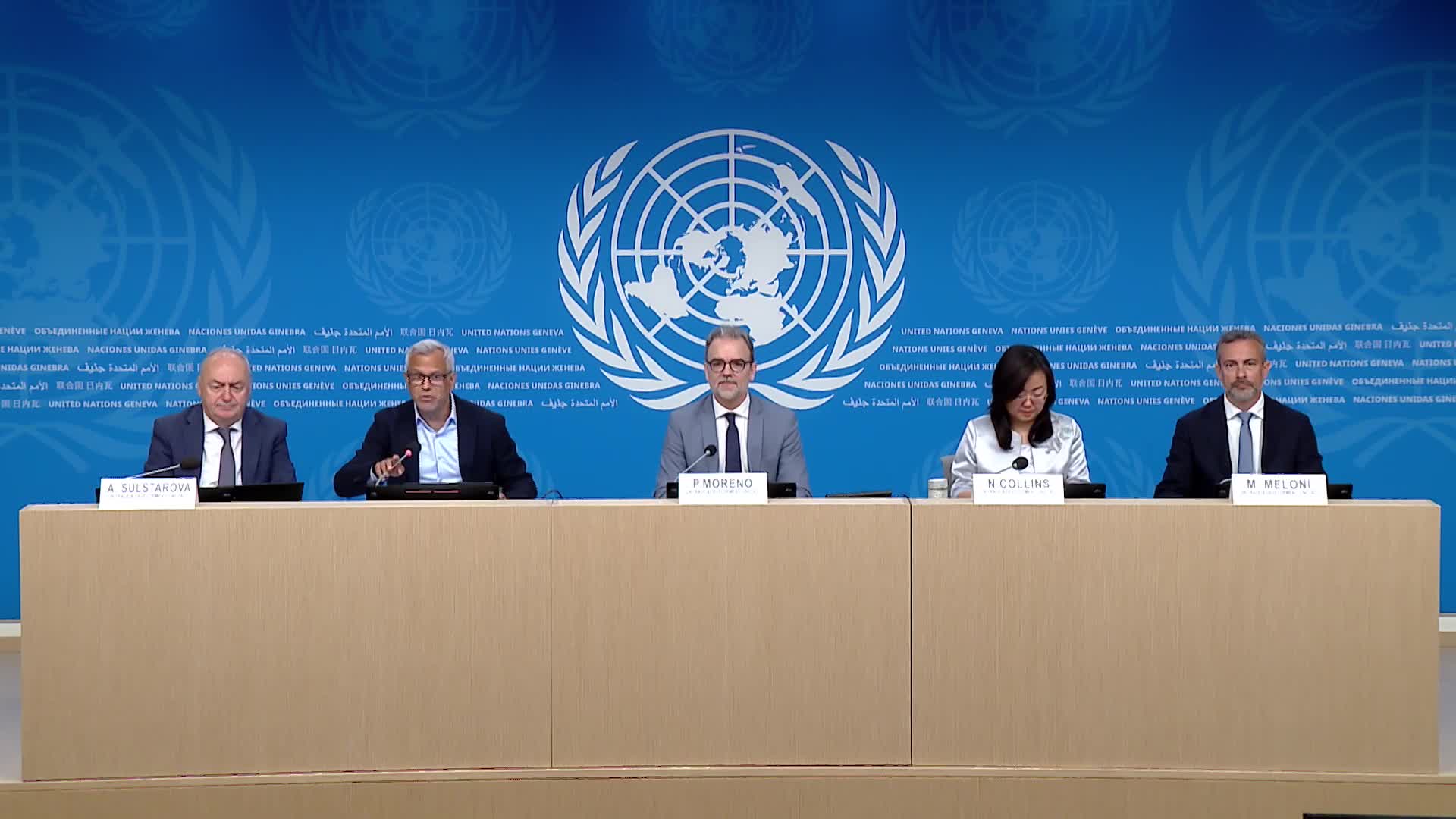
Publication du Rapport sur l'investissement dans le monde 2026
Orateurs :
- Pedro Manuel Moreno – Secrétaire général par intérim de la CNUCED
- Nan Li Collins – Directrice de l'investissement et de l'entreprise à la CNUCED
Similar Stories
1
1
1
Press Conferences | UNHCR
End of UNHCR's 77th Annual Executive Committee (ExCom) meeting week
1
1
1
Press Conferences | UNICEF , IOM , UNHCR
UN Special Assistant to the Personal Envoy Office (SUDAN): Peace Initiatives and Efforts in Sudan; UNICEF: Dire situation of children in Gaza; IOM: Damaged Homes and Energy Attacks Risk Displacing Ukrainians for this winter; UNHCR: update on EXCOM week
1
1
1
Press Conferences | IOM , UNDRR
UN stresses importance of household preparedness for disaster risk reduction.
1
1
1
Statements , Press Conferences | OHCHR
1
1
1
Press Conferences | UNHCR , UNICEF , IFRC , OHCHR , UN WOMEN , IOM , OCHA , WHO
UNHCR – ExCom Meeting, UNICEF – Nepal Recovery, IFRC – Flash Floods, WHO – Mental Health, IOM – South Sudan Floods, OCHA – DRC Humanitarian aid, UNHCR – Sahel Displacement, UNICEF – Yemen Update, IOM – Gaza Shelter, UN Women – Gaza Women, OHCHR – Arrests and detentions of Syrians by Israeli force
2
1
2
Press Conferences | UNCTAD
Presentation of the Trade and Developement Report 2026
Embargoed until 9 October 2026 at 11 a.m. (Geneva Time)
UNCTAD: UNCTAD’s flagship report finds that governments increasingly use industrial, trade, financial and technology policies to pursue economic and national security objectives. Market access and the ability to move into higher-value activities now depend more heavily on technology, finance and geopolitics.
1
1
1
Press Conferences | UPU
Release of the State of the Postal Sector Report 2026
1
1
1
Press Conferences | IOM , ITU , UNECE , UNICEF , WHO , WMO
UNICEF: Ebola, DRC - children orphans or separating them from parents and caregivers; IOM: Humanitarian needs in Djibouti amid arrivals from Yemen and increased migrant movements; WHO: Darfur, scale of health needs far exceeds available resources; WMO co-sponsored Global Heat Forum, Bangkok, monthly Global Seasonal Climate Update; UNECE: UN Forum of Mayors; ITU Plenipotentiary Conference 2026; WHO: child and adolescent obesity guidelines and new global roadmap to tackle pregnancy hypertension, a leading cause of maternal mortality
1
1
1
Press Conferences | OCHA , UN WOMEN , UNHCR , WFP , WHO , WTO , UNEP
OCHA – $160M CERF allocation to 12 underfunded crises; UNHCR – 5.8M refugee children remain out of school amid funding cuts; UN Women – Middle East escalation and food security among women/girls; WHO – Gaza supplies and overall situation; WFP – Yemen food insecurity and impact on global hunger ; UNEP - First International Conference of the Global Framework on Chemicals in Geneva | 16-20 November 2026
1
1
1
Press Conferences | UNHCR , WHO
Yemen's health system nears collapse amid conflict, causing rising casualties and medicine shortages.
1
1
1
Press Conferences | HRC
Update by the Expert Mechanism to Advance Racial Justice and Equality in Law Enforcement
1
1
1
Press Conferences | WIPO , WHO , UNICEF , UNHCR , IOM , WFP , FAO
WIPO Global Innovation Index 2026 launch and press conference, WHO Composition of influenza vaccines for the 2027 Southern Hemisphere flu season, UNICEF Yemen hunger and malnutrition; UNHCR Sudan displacement into Chad; IOM Ebola and population movements in DRC; WFP emergency food assistance in Nepal; and FAO food loss and waste.