

The United Nations Office at Geneva
Multimedia Newsroom
UN GENEVA PRESS BRIEFING
3 July 2026
UNHCR warns Lake Chad Basin at critical tipping point
Andrew Wyllie, United Nations High Commissioner for Refugees (UNHCR) Deputy Director for the West and Central Africa Bureau, speaking from Madrid, Spain, said UNCHR were concerned about the deterioration of the situation in the Lake Chad Basin. Since 2024, the situation had been deteriorating from a security perspective, worsening in January this year. There had been an increase in violence and attacks by armed groups against civilians, criminality and climate shocks which were causing people to move, either across borders or internally, and sometimes multiple times. There were around 3.5 million forcibly displaced people across the broader Lake Chad region, around 323,000 who were refugees. It was estimated there had been around 77,000 new refugees since the beginning of the year and over 8.2 million people needed humanitarian protection. UNHCR were focussed on ensuring people were protected and had access to identity documents. The violence was disproportionately affecting women, girls and children, with one in five households in the region reporting they did not feel safe.
Across the region around 50 percent of children were out of school, exposing them to multiple different kinds of protection risks. In Chad’s Lac Province more than 75 percent of children were out of school. The crisis was expanding beyond its typical epicentre. Mr. Wyllie had visited Benin where Nigerians were arriving, fleeing the violence caused by armed groups. There had also been significant movements from northern Niger into Nigeria. Communities and governments were stepping up which was positive, but services were strained under the weight of the new arrivals. UNHCR had identified USD 29 million worth of needs in a document, which outlined exactly what was required.
The full briefing notes are available here.
Responding to questions from the media, Mr. Wyllie said the document looked at northern Cameroon, western Chad, Niger, northern Nigeria and Benin, with the numbers varying between countries. Women, girls and children were the most at risk. UNHCR were seeing single female households fleeing with their children, with stories from women arriving in Benin who had witnessed their husbands being murdered in front of them. The activities needed to focus on these particularly vulnerable groups.
The 3.5 million people forcibly displaced across the region were a combination of refugees and internally displaced persons. There were people going in all directions, as the violence was widespread, with attacks and kidnappings taking place in neighbouring countries. It was a fluid situation driven by the unpredictability of the violence. Many different armed groups were perpetrating these acts, making it difficult to pinpoint who was responsible. It was still not clear what was happening with the funds obtained, for an example ransoms from kidnapping. Nigerians interviewed by UNHCR had said that perpetrators were not from the area.
Eujin Byun, for the United Nations High Commissioner for Refugees (UNHCR), said the media would receive a document with the briefing note which had a map breaking down the regional dynamic of the internally displaced population and refugees
Rising Displacement in Sudan's Kordofan Region and the Risks in El Obeid
Zoe Brennan, for the International Organization for Migration (IOM), said in just three months, the number of newly displaced people across Kordofan had risen by nearly two-thirds. More than 100 displacement-triggering incidents had been recorded in less than nine months, averaging one major incident every two to three days. The pace at which the crisis was unfolding should concern everyone.
Mohamed Refaat, International Organization for Migration (IOM) Chief of Mission Sudan, speaking from Port Sudan, said what had been seen in El Fasher was evidence of a higher trend being seen in Sudan; there was concern that El Obeid could become the next El Fasher. It was estimated that more than 500,000 people were stranded in the city, but IOM could not access them. They had heard these people had no access to water and electricity and wanted a way out but could not. They had been stranded for months now, with attacks against civilian infrastructure regularly occurring. Sudan was the second most deadly environment for humanitarian workers. If action was not taken now, there would be a repeat of what happened in El Fasher. IOM’s resources were completely depleted.
Mr. Refaat said the systematic reduction in humanitarian aid, while increasing spending in defense, was not going to help towards a better future; what was needed was a clear investment in peace. When a population was displaced, their primary requests were shelters and food items, for survival. The shelter cluster in Sudan was one of the most depleted resources. It was hoped this message could reach all member states to enable much needed life saving support to be provided.
Eujin Byun, for the United Nations High Commissioner for Refugees (UNHCR), said a tragic incident had occurred on July 1 where a UNHCR truck carrying fifty metric tonnes of relief items was reportedly hit by drone Tendelti in White Nile state. The driver survived unharmed, but the entire consignment was destroyed, including blankets, kitchen sets, sleeping mats and solar lamps destined for vulnerable communities. This was the second such incident this year, in which a UNHCR truck was hit in Sudan, reflecting a deeply worrying trend of attacks affecting civilians. UNHCR strongly condemned attacks on civilians and humanitarian aid and called for safe and secure humanitarian access across Sudan.
Earthquakes in Venezuela
Dr. Ciro Ugarte, Pan American Health Organization (PAHO)/World Health Organization (WHO) Health Emergencies Director, speaking from Washington, D.C., said the health systems in Venezuela were under severe pressure, with facilities operating beyond capacity.
Eight facilities had been directly assessed by PAHO and all required immediate support. Most reported connectivity loss, lack of backup power supply, overflow and waste accumulation and limited ambulance capacity, as well as supply shortages, growing surgical waitlists and high bio-safety risks. The Hospital Vargas from the Social Security Institute of Venezuela was the critical priority. 96 patients were in an eight-bed ward, the morgue was overwhelmed, the blood bank was low, and many ventilators were not operational due to generation failure. Another hospital had reduced from 108 to 35 beds. Two emergency medical teams had been deployed, from the United States and Lithuania.
PAHO had delivered 6.2 tonnes of medical supplies to Venezuela, including a four-tonne delivery on July 1 to meet the needs of 10,000 patients for three months. There was an increased risk of outbreaks of vaccine-preventable disease, particularly for those living in shelters, including measles, and waterborne diseases, exacerbated by displacement and inadequate sanitary and hygiene conditions. There was also an urgent need for mental health and psychological support for families, health care workers and first responders.
PAHO/WHO had launched a USD 24 million appeal to support the first six months of recovery, in the areas hardest hit by the earthquakes. PAHO was working with the Venezuelan Government and other UN agencies to ensure a well-coordinated approach and to save the greatest number of lives.
Responding to questions from the media, Dr. Ugarte said the assessment of risks were ongoing. Vaccination coverage in Venezuela, particularly for measles had already been low, meaning chances for cases were already high. The water quality was also a concern; it needed to be ensured that the quality of water provided to those in large shelters was of high quality. WHO had concluded that targeted vaccination campaigns in the most affected areas was the correct approach.
Dr. Ugarte said he did not have exact figures on Venezuela’s vaccination coverage. At least 1,500 beds in the affected areas had been lost due to the damage to health facilities. The risk assessment and responses were ongoing. The lack of healthcare workers on the ground was a major issue, meaning a lack of personnel to complete proper assessments. It was hoped there would be a bigger picture in the next few days, but current assessments showed most of the health facilities had lost connectivity, patient referral and tracking.
Christian Lindmeier, for the World Health Organization (WHO), said WHO had produced a situation report on the earthquakes in Venezuela.
Global Status Report on Cancer
Additionally, Mr. Lindmeier said there would be an embargoed WHO press conference on Monday July 6, where key findings from the upcoming Global Status Report on Cancer for 2026. The embargoed material was available already and could be obtained from the WHO media team.
El Niño Update
Clare Nullis, for the World Meteorological Organization (WMO), said it was the first week of July, traditionally the hottest month of the year, but in June there had already been record-breaking temperatures in many parts of Europe, with Germany recording a new national temperature record of 41.7°C on 28 June. In WMO’s new Global Seasonal Climate Update issued today, a rapid development into a strong El Niño event was confirmed during July–September 2026. El Niño was expected to continue strengthening during the Northern Hemisphere autumn. The WMO community had launched an unprecedented mobilization to coordinate activities across the United Nations and support governments, humanitarian organizations and climate-sensitive sectors.
Alvaro Silva, World Meteorological Organization (WMO) scientist, said El Niño conditions had emerged in the equatorial Pacific, and forecast models indicated a rapid-developing, strong event over the coming months. A strong El Niño increased the likelihood of extreme weather and climate impacts worldwide. While it was a natural phenomenon, it was now occurring alongside long-term human-induced climate change, increasing the potential for significant impacts. Seasonal forecasts were intended to support preparedness and early action across sectors, particularly humanitarian response. Expected impacts included drier-than-normal conditions in parts of Central America, the Caribbean, northern South America, South Asia, Indonesia and Southeast Asia, and wetter conditions in East Africa. These effects were expected to continue through the end of the year and into 2027.
El Niño was also likely to contribute to higher global temperatures. Although there was still time to prepare, the window for early action was narrowing in some regions, making planning important for sectors such as agriculture, energy and humanitarian operations. Since 2022, WMO had provided more than 700 forecasting products to support UN and humanitarian agencies. During El Niño, this support was strengthened to help partners prepare for an increased risk of extreme weather over the coming months.
Responding to questions from the media, Mr. Silva said a strong El Niño was coming in recent months, which would strengthen further as the year went on. Attention should be focussed on climate factors in the next three to six months and into 2027, which reflected other climate drivers. Typically, with El Niño there tended to be a decrease in hurricanes in the Atlantic and an increase in the Pacific. It took just one hurricane impacting a vulnerable community to lead to significant damages. It was important to always monitor the information available at WMO centres, as these extremes could lead to significant damages.
Ms. Nullis said El Niño had forecasted a below average season in terms of hurricane numbers, but it took just one land-falling hurricane to turn back years of development.
Responding to an additional question, Mr. Silva said forecast models showed that more confidence that strong El Niño conditions were developing in the equatorial Pacific.
State of the Climate in Southwest Pacific report
Clare Nullis, for the World Meteorological Organization (WMO), said on Tuesday the WMO would be releasing the State of the Climate in the Southwest pacific report for 2025, with information sent under embargo this weekend.
New WHO colleague
Dr. Søren Brostrøm, Director (a.i.) Department of Communications at the World Health Organization (WHO), said as of this week he was the Acting Director of Communications at WHO, having previously served in Geneva for three years.
Announcements
Rolando Gómez, Chief of the Press and External Relations Section, United Nations Information Service (UNIS) at Geneva, said this morning the Human Rights Council was holding an urgent debate on the human rights situation in and around El Obeid, North Kordofan, in the context of the ongoing conflict in the Sudan. The Council would then move onto dialogue on the situation in Ukraine. The Secretary-General had condemned the recent drone attacks on Kiev in a statement issued yesterday.
Yesterday the Secretary-General appointed Edward Chaiban of Lebanon as Deputy Executive Director, Programme, United Nations Children’s Funds. A statement had been issued to the media.
On 7 July at 9:30 a.m. (embargo 7 July, 10:30 a.m. Geneva Time), the UN Trade and Development (UNCTAD) would hold a press conference on the Publication of the World Investment Report 2026, with Pedro Manuel Moreno, UNCTAD Acting Secretary General.
Next week, the Secretary-General would take part in the Global Artificial Intelligence dialogue, on 6 and 7 July. This event, along with the World Summit on Information Society and the AI for Good meetings were all taking place at Palexpo next week. Media were required to register if they wanted to attend. Around 4,000 participants were currently registered to attend, with all details in the media advisories. Annalena Baerbock, President of the United Nations General Assembly, would also be attending and she had issued a statement yesterday which was shared with the media.
Finally, Mr. Gómez said the Scientific Panel on Artificial Intelligence report had released their report on Wednesday and the co-chairs would be presenting the report formally to inform the dialogue.
Eujin Byun, for the United Nations High Commissioner for Refugees (UNHCR), said a press release would be sent next week which highlighted how UNHCR were using responsible AI to support humanitarian work. UNHCR’s head of innovation would attend the summit and would be available for interviews.
David Hirsch, for the International Telecommunication Union (ITU), said next week was Geneva Digital Week and all three of the events discussed were interconnected, focussing on international cooperation and looking at the practical impact of how AI could do good for humanity. This technology was moving, and new technologies were being explored every year. It was important for the media to see what the UN system was doing to ensure that technologies were working for humanity. Badges were available now and the media were encouraged to collect them ahead of the dialogue.
Mr. Gómez said the statement of the Secretary-General would be shared with the media once received
Responding to questions from the media, Mr. Gómez said there was nothing official in the Secretary-General’s agenda for Sunday; he would be at Palexpo early on Monday morning. In the afternoon he would relocate to the Palais where he would deliver a statement with the International Law Commission. This would be webcast and transmitted afterwards. It was not open to the media. The speakers for the stakeout, which would take place at Palexpo just outside the plenary hall, would be announced as soon as they were confirmed. There was also a media centre which could be accessed with a badge.
Mr. Hirsch said the lobby directly across from the Palais des Nations would be used to access the event.
Mr. Gómez expressed his condolences on the passing of Ambassador Gustavo Gallón of Colombia earlier this week. He described Ambassador Gallón as a genuine defender of human rights who had made a significant contribution to the advancement of human rights in Colombia and said that his death represented a great loss.
***
TOPICS
- WHO - Christian Lindmeier with Dr Ciro Ugarte, PAHO/WHO Health Emergencies Director (From Washington, D.C.): Earthquakes in Venezuela
- El Niño has developed and is rapidly strengthening, with major likely impacts around the world. WMO is stepping up its support to the UN humanitarian system.
- State of the Climate in South West Pacific report released next Tuesday.
Similar Stories
1
1
1
Press Conferences | IOM , ITU , UNECE , UNICEF , WHO , WMO
UNICEF: Ebola, DRC - children orphans or separating them from parents and caregivers; IOM: Humanitarian needs in Djibouti amid arrivals from Yemen and increased migrant movements; WHO: Darfur, scale of health needs far exceeds available resources; WMO co-sponsored Global Heat Forum, Bangkok, monthly Global Seasonal Climate Update; UNECE: UN Forum of Mayors; ITU Plenipotentiary Conference 2026; WHO: child and adolescent obesity guidelines and new global roadmap to tackle pregnancy hypertension, a leading cause of maternal mortality
1
1
1
Press Conferences | OCHA , UN WOMEN , UNHCR , WFP , WHO , WTO , UNEP
OCHA – $160M CERF allocation to 12 underfunded crises; UNHCR – 5.8M refugee children remain out of school amid funding cuts; UN Women – Middle East escalation and food security among women/girls; WHO – Gaza supplies and overall situation; WFP – Yemen food insecurity and impact on global hunger ; UNEP - First International Conference of the Global Framework on Chemicals in Geneva | 16-20 November 2026
1
1
1
Press Conferences | UNHCR , WHO
Yemen's health system nears collapse amid conflict, causing rising casualties and medicine shortages.
1
1
1
Press Conferences | HRC
Update by the Expert Mechanism to Advance Racial Justice and Equality in Law Enforcement
1
1
1
Press Conferences | WIPO , WHO , UNICEF , UNHCR , IOM , WFP , FAO
WIPO Global Innovation Index 2026 launch and press conference, WHO Composition of influenza vaccines for the 2027 Southern Hemisphere flu season, UNICEF Yemen hunger and malnutrition; UNHCR Sudan displacement into Chad; IOM Ebola and population movements in DRC; WFP emergency food assistance in Nepal; and FAO food loss and waste.
2
1
2
Press Conferences | UNCTAD
Gaza reconstruction needs reach $71.5 billion as Palestinian economy and public finances face severe strain. Latest UNCTAD report documents the loss of decades of development gains, economic collapse in Gaza and tightening economic constraints in the West Bank.
The report identifies three immediate priorities: transferring withheld Palestinian revenues, safeguarding the banking system and aligning reconstruction support with the documented scale of damage and economic losses.
1
1
1
Press Conferences | HRC
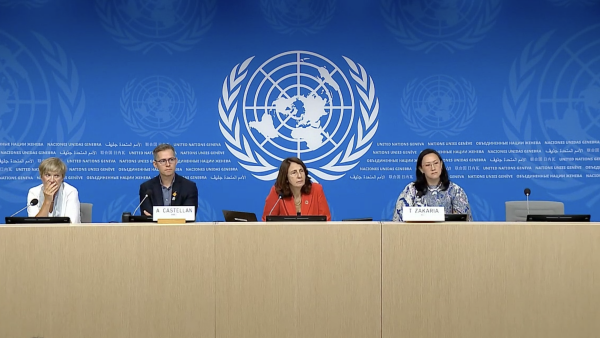
Press conference on the situation of human rights in Nicaragua by the UN Group of Human Rights Experts
1
1
1
Press Conferences | ITU , UNHCR , WHO , WMO
YEMEN - UNHCR: Escalating conflict in Yemen could fuel more displacement, refugee movement
CLIMATE - WHO / WMO: Health and Climate impact of El Niño
1
1
1
Press Conferences | HRC , OHCHR
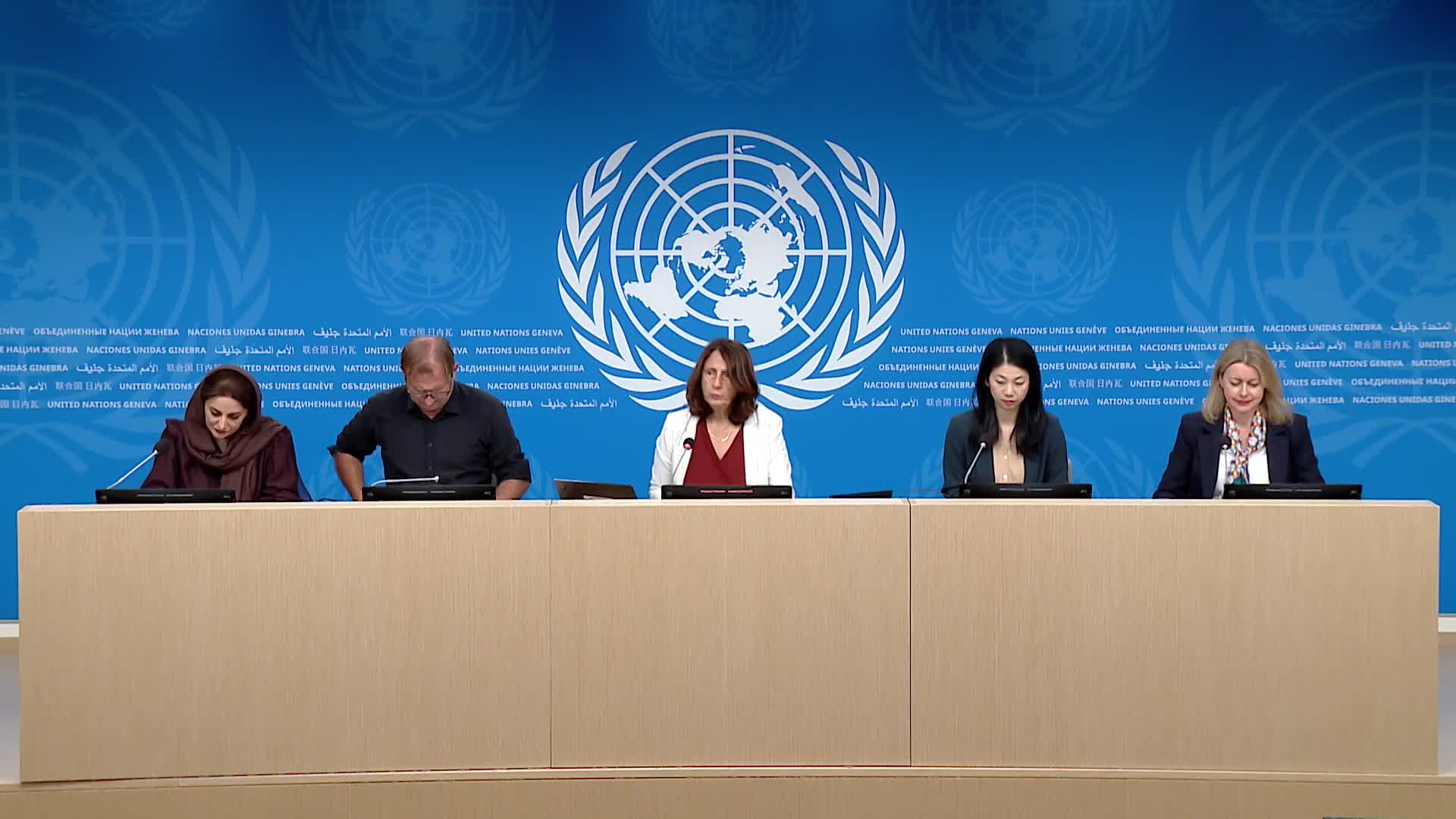
Mariana Katzarova discusses human rights in Russia as a UN Special Rapporteur.
1
1
1
Press Conferences | IOM , OHCHR , UN WOMEN , UNFPA , UNHCR , UNOPS , WHO
UN Geneva briefing: Yemen crisis worsens, urgent aid needed across multiple sectors.
1
1
1
Press Conferences | HRC
Press conference on the latest report of the Independent International Fact-Finding Mission on the Bolivarian Republic of Venezuela to the UN Human Rights Council
1
1
1
Press Conferences | OHCHR
Victims Still Waiting: A Global Briefing on Transitional Justice Around the World