

The United Nations Office at Geneva
Multimedia Newsroom
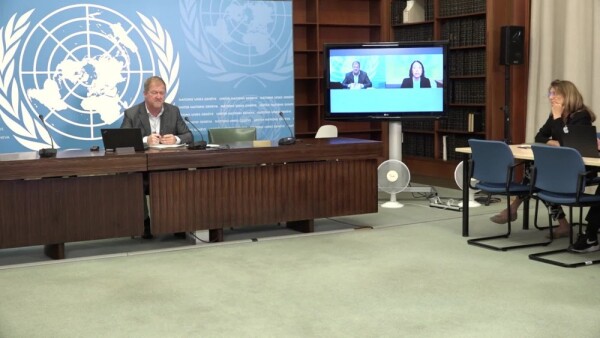
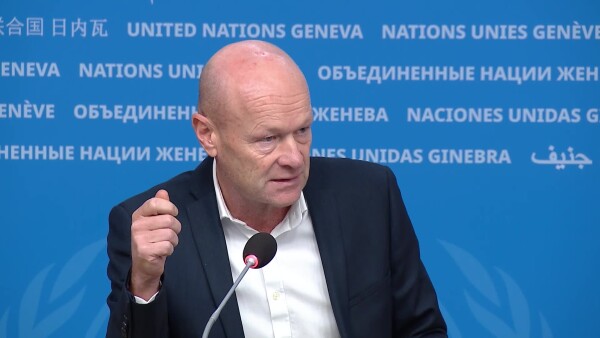
The head of the UN Human rights Monitoring Mission in Ukraine, Matilda Bogner, today gave an update on human rights concerns to the Geneva press briefing. Speaking via Zoom from Odesa, Bogner noted that every day she and her hearing from victims who have suffered human human rights violations in the context of the armed conflict, which escalated following the armed attack of the Russian Federation.
With regard to prisoners of war, Bogner said the Mission had documented a range of violations. The Mission has been granted unimpeded access to places of internment and detention in territory controlled by the Government of Ukraine. However, the Russian Federation has not provided access to prisoners of war held on its territory or in territory under its occupation, including areas controlled by its armed forces and affiliated armed groups.
Bogner said they were also following the cases of several pregnant prisoners of war interned in places controlled by Russian armed forces and affiliated armed groups.
“We urge the Russian Federation, as the detaining power, to consider the immediate release of these women on humanitarian grounds,” said Bogner.
“In Government-controlled territory, we have also documented cases of torture and ill-treatment of prisoners of war, usually upon capture, during initial interrogations or transportation to camps for internment,” she added.
While Crimea, occupied by the Russian Federation since 2014, has received less attention in recent months, Bogner said they had seen a significant deterioration in the situation there.
“This includes restrictions on the exercise of fundamental freedoms, torture and ill-treatment, enforced disappearances and arbitrary arrests, and violations of the right to a fair trial, as well as lack of accountability for such human rights violations. We are concerned that patterns of human rights violations documented in Crimea since 2014 may be repeated in territory newly occupied by the Russian Federation across Ukraine,” she explained.
In Crimea, the Russian Federation continues to clamp down on freedom of expression by applying vague and ill-defined legislation, penalizing real or perceived criticism of the Russian Federation or its armed forces. Since March, Bogner said they had documented the prosecution of 89 individuals in Crimea for what was termed “public actions directed at discrediting the armed forces of the Russian Federation”.
“Teachers in Crimea who refused to endorse the so-called – and I quote - “special military operation” face retaliation and sanctions. Human rights defenders have been arrested and prosecuted for their work, and defence lawyers intimidated,” she said.
The Mission has also documented arbitrary arrests and torture of individuals apprehended in the Russian-occupied Kherson region and transferred to Crimea.
“In addition, men who cross the administrative boundary line from mainland Ukraine to Crimea are subjected to so-called ‘filtration’ by the Russian Federal Security Service at checkpoints. According to credible reports received by our Mission, this exposes them to the risk of enforced disappearance, arbitrary arrest, torture and ill-treatment,” said Bogner.
“Crimean Tatars continue to face intimidation and harassment, police raids and house searches, and prosecution under terrorism and extremism-related offences in proceedings, which often fall short of human rights standards. Furthermore, Crimean Tatar detainees continue to be deported to remote areas of the Russian Federation to serve their sentences,” she added.
The UN Human Rights Monitoring Mission in Ukraine will continue to document and report the facts on the ground and the voices of victims. This was an essential part of seeking to prevent further violations and to hold those accountable for the violations already committed, Bogner said. More of the Mission’s findings on the impact of the armed attack by the Russian Federation on human rights in Ukraine will be included in the next report due to be issued on 27 September.
SHOTLIST:
TRT: 3:58
SOURCE: OHCHR
RESTRICTIONS: NONE
LANGUAGE: English/NATS
ASPECT RATIO: 16:9
DATELINE: 09.09. 2022 GENEVA, SWITZERLAND
- SOUNDBITE (English)— Matilda Bogner, Head of Human Rights Monitioring Mission in Ukraine : “ This is all the more worrying since we have documented that prisoners of war in the power of the Russian Federation and held by the Russian Federation’s armed forces or by affiliated armed groups have suffered torture and ill-treatment, and in some places of detention lack adequate food, water, healthcare and sanitation. We received information about a dire health situation in the penal colony in Olenivka, where many Ukrainian prisoners of war reportedly have been suffering from infectious diseases, including hepatitis A and tuberculosis. We have also documented many cases where Ukrainian prisoners of war have not been allowed to contact their relatives to tell them of their capture, their location and their health condition. This leaves families of captured soldiers desperate for information, deprived of their right to know what has happened to their loved ones. ”
- Wide shot podium
- SOUNDBITE (English)— Matilda Bogner, Head of Human Rights Monitioring Mission in Ukraine : “ We have also been following the cases of several pregnant prisoners of war interned in places controlled by Russian armed forces and affiliated armed groups. We urge the Russian Federation, as the detaining power, to consider the immediate release of these women on humanitarian grounds.”
- Close up camera
- SOUNDBITE (English)— Matilda Bogner, Head of Human Rights Monitioring Mission in Ukraine : “In Government-controlled territory, we have also documented cases of torture and ill-treatment of prisoners of war, usually upon capture, during initial interrogations or transportation to camps for internment. Our Mission has been able to visit a Ukrainian prisoner of war camp. We note, however, that most prisoners of war continue to be held in penitentiary facilities, violating the rule that prisoners of war shall not be interned in close confinement.”
- Wide shot cameras and camera operator
- SOUNDBITE (English)— Matilda Bogner, Head of Human Rights Monitioring Mission in Ukraine : “ This includes restrictions on the exercise of fundamental freedoms, torture and ill-treatment, enforced disappearances and arbitrary arrests, and violations of the right to a fair trial, as well as lack of accountability for such human rights violations. We are concerned that patterns of human rights violations documented in Crimea since 2014 may be repeated in territory newly occupied by the Russian Federation across Ukraine.”
- Wide shot podium
- SOUNDBITE (English)— Matilda Bogner, Head of Human Rights Monitioring Mission in Ukraine : “Teachers in Crimea who refused to endorse the so-called – and I quote - “special military operation” face retaliation and sanctions. Human rights defenders have been arrested and prosecuted for their work, and defence lawyers intimidated. “
- Medium shot journalists
- SOUNDBITE (English)— Matilda Bogner, Head of Human Rights Monitioring Mission in Ukraine : “In addition, men who cross the administrative boundary line from mainland Ukraine to Crimea are subjected to so-called ‘filtration’ by the Russian Federal Security Service at checkpoints. According to credible reports received by our Mission, this exposes them to the risk of enforced disappearance, arbitrary arrest, torture and ill-treatment. “
- Journalists
- SOUNDBITE (English)— Matilda Bogner, Head of Human Rights Monitioring Mission in Ukraine : “Crimean Tatars continue to face intimidation and harassment, police raids and house searches, and prosecution under terrorism and extremism-related offences in proceedings, which often fall short of human rights standards. Furthermore, Crimean Tatar detainees continue to be deported to remote areas of the Russian Federation to serve their sentences. “
- Various cutaways
Similar Stories
1
1
1
Edited News | OCHA , UNICEF , WFP
Aid agencies warned on Friday of the fast-developing humanitarian emergency inside Taiz City in Yemen, which has been encircled by de facto Houthi forces fighting government troops along the country’s west coast.

2
17
1
2
Edited News , Press Conferences , Images | OCHA , WMO
Two UN agencies teamed up on Wednesday to issue an appeal for immediate assistance to help communities already being impacted by the strongest El Niño on record.

3
16
2
2
Edited News , B-roll , Conferences , Images | UNITED NATIONS , UNOG
Sixth Consultative Meeting on Enhancing Coordination of Peace Initiatives and Efforts for Sudan

1
1
1
Edited News | UNICEF , WHO , UNHCR
Yemen war continues to force families from homes amid hunger and disease
More than 250,000 people have now fled renewed fighting in Yemen, the UN said on Tuesday, citing particular concern for those sheltering in the southwestern city of Taiz and the wider governorate, where access is “essentially blocked”.

1
1
1
Edited News | UNICEF
A little over one year since a ceasefire agreement was announced between Hamas fighters and Israel, more than 340 children have been reported killed and hundreds more injured, the UN Children’s Fund, UNICEF, said on Friday.

1
1
1
Edited News | UNICEF , IFRC
Six weeks after Nepal’s deadly flooding disaster, communities are still struggling to rebuild their lives, but they will need sustained help as global warming increases the risk of another Himalayan catastrophe, the UN Children’s Fund (UNICEF) said on Friday.

1
1
1
Edited News | WHO
In suspected Russia plague death, testing and monitoring underway – WHO
The death of a lab worker in Russia’s Siberia region has sparked concerns about plague being the cause, the UN World Health Organization (WHO) said on Tuesday, adding that it was following the situation closely.

1
1
Edited News | OHCHR , UNOG
UN Human Rights Chief Volker Türk on Friday provided and oral update to the 63rd session of the Human rights Council on Ukraine.

1
1
1
Edited News | OHCHR , UNOG
UN Human Rights Chief Volker Türk on Friday provided and oral update to the 63rd session of the Human rights Council on the human rights situation in Haiti.

1
1
1
Edited News | WHO
Repeated delays in bringing lifesaving medicines, prosthetics and more from Israel into Gaza risk having devastating consequences on Palestinians who urgently need them in the wartorn enclave, the UN World Health Organization (WHO) said on Friday. “A truck full of non-priority supplies or the right supplies arriving too late, doesn't save lives. That's the question that actually matters," said Dr Reinhilde Van De Weerdt, WHO Representative in the OPT.

1
1
1
Edited News | WHO
DRC: Early access to care and oxygen decisive for Ebola patients’ survival – WHO
In the Democratic Republic of the Congo (DRC), health workers fighting the country’s largest-ever Ebola outbreak are struggling to overcome critical challenges to patient care, the UN World Health Organization (WHO) warned on Tuesday.

1
1
1
Edited News | OCHA , UN
Civilians in Iran are continuing to feel the consequences of months of conflict and military escalation, the UN’s top official in the country has said, as loss of life, damage to civilian infrastructure and mounting economic pressures leave many facing continued uncertainty.