

The United Nations Office at Geneva
Multimedia Newsroom
The World Health Organization (WHO) and UNICEF today sounded the alarm as new data revealed that global vaccination coverage in 2021 is the lowest in a generation leaving around 25 million children without lifesaving immunization as the effects of the COVID-19 pandemic continued to disrupt health care globally.
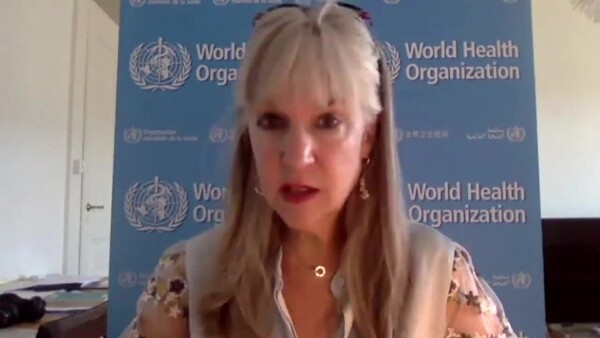
“This is the largest sustained decline in childhood vaccination in approximately 30 years and the proportion of children who received the third dose of vaccines that contains diphtheria, tetanus and pertussis - which is against whooping cough - this is our marker for immunization coverage both within and across countries”, said Dr Kate O’BRIEN, WHO Director of Immunization, Vaccines and Biologicals today at a press briefing at the United Nations in Geneva.
This is the second year in a row with backsliding vaccination. WHO had hoped 2021 would be a recovery year as 101 countries still have net loss compared to 2021.
“In 2021 there were 25 million children who missed out on one or more doses of their DTP containing vaccines, through routine immunization services”, said WHO’s Director of Immunization, Vaccines and Biologicals. “This threatens increased outbreaks, deaths and for some who survived the illnesses that they otherwise would not have gotten, livelong consequences”.
WHO stressed that planning and tackling COVID-19 should go hand-in-hand with vaccinating for deadly diseases like measles, HPV, pneumonia and diarrhea.
“The pandemic is not over, we need to both sustain and maintain momentum on COVID-19 population through vaccination”. said Dr Kate O’BRIEN. “But it also means that we have to ensure vaccination for measles and HPV and pneumonia and diarrhea gets back on track urgently. That means catching up millions of children who have missed their vaccines in 2020 and 2021”. Dr. Brian also added that “it also means recovering immunization programs and sustaining that trajectory of essential immunization”.
At the moment, countries are off-track to achieve the global targets that require reaching every child with life-saving vaccine by 2030.
“The alarm is that we are witnessing the largest continued drop in vaccination in a generation”, said Ephrem Tekle LEMANGO, UNICEF Associate Director, Health Immunization speaking via zoom from New York. “At UNICEF we are deeply concerned about what this backsliding means for children, especially in those children who live in lower- and middle-income countries, even that it comes with dire consequences”.
According to UNICEF, inadequate coverage levels have resulted in avoidable outbreaks of measles and polio. Malawi and Mozambique reported outbreaks of wild polio after more than three decades. Somalia, Yemen, Nigeria, Afghanistan and Ethiopia have witnessed large measles outbreaks in the past year. UNICEF is deeply concerned that if countries don’t catch-up vaccinations, more outbreaks will occur.
“Unfortunately, not only did we not see a recovery, we - in fact - lost even more ground and we are already seeing the consequences of this”, said UNICEF’s Mr. Lemango. “Inadequate coverage levels have resulted in avoidable outbreaks of diseases such as measles and polio in the past 12-month period”,
A growing immunization gap combined with other factors such as severe acute malnutrition creates the condition for a child survival crisis.
“The other factor we must consider is the disproportionate impact of this immunity gap in countries with other risk factors such as fragilities, conflict, and above all now the current level of malnutrition that we are seeing as a result of the global food crisis, in particularly the drought affecting several countries in different regions”, said UNICEF’s Associate Director on Health Immunisation. He added that “a malnourished child has a weakened immune system, missed vaccinations can mean common childhood illnesses quickly become lethal”.
But the pandemic has also shown a source of hope. “Despite the difficulties, it’s clear from our collective lived experience the last 2 years that when political will, communities support, and funding - adequate funding - converge together, we can ensure that vaccination reach billions, in fact in the most hard to reach communities as well”, said Ephrem Tekle LEMANGO”.
Mr. Lemango stressed that “we have an opportunity in this moment to ensure that COVID-19 response helps boost immunization affects and does not further hinder them". He added that "most COVID-19 vaccination and routine immunization for children can nurture each other and can synergize each other”.
-ends-
SHOTLIST
- Wide shot, UN Geneva flag alley.
- Wide shot, Press room, UN Geneva.
- SOUNDBITE (ENGLISH): Dr Kate O’BRIEN, WHO Director of Immunization, Vaccines and Biologicals (Zoom from Geneva): “This is the largest sustained decline in childhood vaccination in approximately 30 years and the proportion of children who received the third dose of vaccines that contains diphtheria, tetanus and pertussis - which is against whooping cough - this is our marker for immunization coverage both within and across countries”.
- Wide shot, speakers on podium with large screen behind of speakers
- SOUNDBITE (ENGLISH): Dr Kate O’BRIEN, WHO Director of Immunization, Vaccines and Biologicals (Zoom from Geneva): “In 2021 there were 25 million children who missed out on one or more doses of their DTP containing vaccines, through routine immunization services. This threatens increased outbreaks, deaths and for some who survived the illnesses that they otherwise would not have gotten, livelong consequences”.
- Medium shot, journalists in room and screen with speakers behind
- SOUNDBITE (ENGLISH): Dr Kate O’BRIEN, WHO Director of Immunization, Vaccines and Biologicals (Zoom from Geneva): “The pandemic is not over, we need to both sustain and maintain momentum on COVID-19 population through vaccination. But it also means that we have to ensure vaccination for measles and HPV and pneumonia and diarrhea gets back on track urgently. That means catching up millions of children who have missed their vaccines in 2020 and 2021. It also means recovering immunization programs and sustaining that trajectory of essential immunization”.
- Medium shot, journalist in foreground with laptops and speakers at the podium in the background
- SOUNDBITE (ENGLISH): Ephrem Tekle LEMANGO, UNICEF Associate Director, Health Immunisation (Zoom from New York): “The alarm is that we are witnessing the largest continued drop in vaccination in a generation. At UNICEF we are deeply concerned about what this backsliding means for children, especially in those children who live in lower- and middle-income countries, even that it comes with dire consequences”.
- Medium shot, cameraman filming
- SOUNDBITE (ENGLISH): Ephrem Tekle LEMANGO, UNICEF Associate Director, Health Immunisation (Zoom from New York): “Unfortunately not only did we not see a recovery, we - in fact - lost even more ground and we are already seeing the consequences of this. Inadequate coverage levels have resulted in avoidable outbreaks of diseases such as measles and polio in the past 12-month period”.
- Close up, screen with speakers
- SOUNDBITE (ENGLISH): Ephrem Tekle LEMANGO, UNICEF Associate Director, Health Immunisation (Zoom from New York): “The other factor we must consider is the disproportionate impact of this immunity gap in countries with other risk factors such as fragilities, conflict, and above all now the current level of malnutrition that we are seeing as a result of the global food crisis, in particularly the drought affecting several countries in different regions. Because a malnourished child has a weakened immune system, missed vaccinations can mean common childhood illnesses quickly become lethal”.
- Close up, hands typing
- SOUNDBITE (ENGLISH): Ephrem Tekle LEMANGO, UNICEF Associate Director, Health Immunisation (Zoom from New York): “Despite the difficulties, it’s clear from our collective lived experience the last 2 years that when political will, communities support, and funding, adequate funding, converge together, we can ensure that vaccination reach billions, in fact in the most hard to reach communities as well. Here we have an opportunity in this moment to ensure that COVID-19 response helps boost immunization affects and does not further hinder them. Most COVID-19 vaccination and routine immunisation for children can nurture each other and can synergize each other”.
- Wide shot, journalists typing in laptop in foreground and podium with speakers in the background.
- Medium shot, journalist in front of two laptops
- Close up, mobile phone
- Medium shot, journalist taking notes
- Close up, 2 laptop screens with speaker and podium in background
- Medium shot, cameraman filming with speaker at podium
- Medium shot, journalists with laptops
- Medium shot, journalist writing
- Medium shot, journalist taking notes with pen
- Close up, microphone holding in hand
Similar Stories

2
17
1
2
Edited News , Press Conferences | OCHA , WMO
Two UN agencies teamed up on Wednesday to issue an appeal for immediate assistance to help communities already being impacted by the strongest El Niño on record.

3
16
2
2
B-roll , Conferences , Edited News | UNITED NATIONS , UNOG
Sixth Consultative Meeting on Enhancing Coordination of Peace Initiatives and Efforts for Sudan

1
1
1
Edited News | UNICEF , WHO , UNHCR
Yemen war continues to force families from homes amid hunger and disease
More than 250,000 people have now fled renewed fighting in Yemen, the UN said on Tuesday, citing particular concern for those sheltering in the southwestern city of Taiz and the wider governorate, where access is “essentially blocked”.

1
1
1
Edited News | UNICEF
A little over one year since a ceasefire agreement was announced between Hamas fighters and Israel, more than 340 children have been reported killed and hundreds more injured, the UN Children’s Fund, UNICEF, said on Friday.

1
1
1
Edited News | UNICEF , IFRC
Six weeks after Nepal’s deadly flooding disaster, communities are still struggling to rebuild their lives, but they will need sustained help as global warming increases the risk of another Himalayan catastrophe, the UN Children’s Fund (UNICEF) said on Friday.

1
1
1
Edited News | WHO
In suspected Russia plague death, testing and monitoring underway – WHO
The death of a lab worker in Russia’s Siberia region has sparked concerns about plague being the cause, the UN World Health Organization (WHO) said on Tuesday, adding that it was following the situation closely.

1
1
Edited News | OHCHR , UNOG
UN Human Rights Chief Volker Türk on Friday provided and oral update to the 63rd session of the Human rights Council on Ukraine.

1
1
1
Edited News | OHCHR , UNOG
UN Human Rights Chief Volker Türk on Friday provided and oral update to the 63rd session of the Human rights Council on the human rights situation in Haiti.

1
1
1
Edited News | WHO
Repeated delays in bringing lifesaving medicines, prosthetics and more from Israel into Gaza risk having devastating consequences on Palestinians who urgently need them in the wartorn enclave, the UN World Health Organization (WHO) said on Friday. “A truck full of non-priority supplies or the right supplies arriving too late, doesn't save lives. That's the question that actually matters," said Dr Reinhilde Van De Weerdt, WHO Representative in the OPT.

1
1
1
Edited News | WHO
DRC: Early access to care and oxygen decisive for Ebola patients’ survival – WHO
In the Democratic Republic of the Congo (DRC), health workers fighting the country’s largest-ever Ebola outbreak are struggling to overcome critical challenges to patient care, the UN World Health Organization (WHO) warned on Tuesday.

1
1
1
Edited News | OCHA , UN
Civilians in Iran are continuing to feel the consequences of months of conflict and military escalation, the UN’s top official in the country has said, as loss of life, damage to civilian infrastructure and mounting economic pressures leave many facing continued uncertainty.
1
1
1
Edited News | WHO , UNICEF
Aid agencies in Yemen highlighted the growing hunger emergency sparked by renewed fighting between Houthi opposition forces and Government troops, after mobile health clinics reported that hundreds of children displaced by the violence are suffering from the most deadly form of malnutrition.