

The United Nations Office at Geneva
Multimedia Newsroom
STORYLINE
Gang violence in Port-au-Prince threatens more than a million food-insecure Haitians
Surging and deadly gang violence in the Haitian capital has contributed to runaway food insecurity for at least a million people there, the UN World Food Programme (WFP) said on Tuesday.
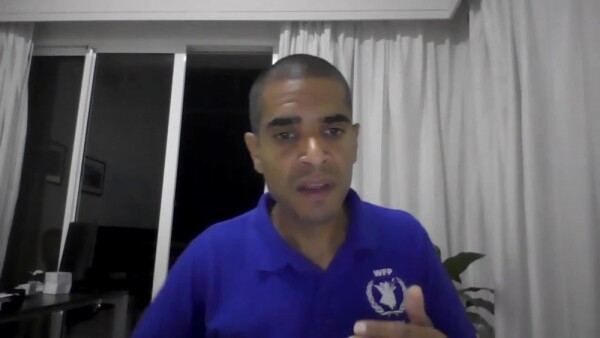
“The situation is spiralling out of control already,” said Jean-Martin Bauer, WFP Haiti Country Director. “Large parts of Port-au-Prince are controlled by gangs; the data we have show that the situation over the past 90 days has gotten worse and already based on what is a very vulnerable place, we already had one million people in this city who were acutely food insecure.”
Speaking via Zoom from Port-au-Prince, Mr. Bauer explained that between 150 and 200 gangs operate there, and that things were getting “worse by the day” for Haitians.
“Since Friday there’s been fighting downtown in the port area, in Cité Soleil, and yesterday in La Saline, places that are very close to the port and also close to where hundreds of thousands of very poor people live.”
These included a heavily pregnant woman who had to shelter on the floor of her home for an entire day, for fear of being caught in the crossfire during a prolonged gunfight, the WFP official explained. The next day, just as she was able to leave her house, someone set fire to it. She later gave birth and now lives in a centre for displaced people.
According to two local youth-focused organizations, 13 per cent of the children surveyed in one troubled neighbourhood in Port-au-Prince, had been in contact with members of armed gangs who tried to recruit them.
“The context is gang violence, people are not able to work, people are not able to sell their produce and at the same time food prices are increasing,” Mr. Bauer said. “And Haiti is an import-dependent country so really at the forefront of what’s going on” – a reference to the fact that the Caribbean island imports 70 per cent of its food needs, and as elsewhere, has suffered from the global food and fuel crisis that has been exacerbated by Russia’s invasion of Ukraine, on 24 February.
“Inflation here runs, has been running at 26 per cent,” the WFP official said. “Food inflation has been 52 per cent, this is according to the Haitian government and the analysis of the food basket they do here.”
To continue to ensure that the vulnerable Haitians receive assistance outside the capital, WFP has had to resort to using sea routes, rather than target-prone lorries.
“WFP set up a maritime service to bypass the gangs that are around Port-au-Prince, so what we do is we send the trucks to the port, they board a WFP-chartered ferry and that vessel goes either to the south or to the north, to ensure that humanitarian aid continues reaching all Haitians, no matter where they are.”
ends
STORY: Haiti Alert – WFP
TRT: 2 mins 36s
SOURCE: UNTV CH
RESTRICTIONS: NONE
LANGUAGE: ENGLISH/NATS
ASPECT RATIO: 16:9
DATELINE: 12 July 2022, GENEVA, SWITZERLAND
SHOTLIST
- Medium shot, UN Geneva flag alley.
- Wide shot, Press conference room, podium moderator, large TV screens to either side showing broadcast image and external UN WFP speaker.
- SOUNDBITE (ENGLISH): Jean-Martin Bauer (Zoom from Port-au-Prince), WFP Haiti Country Director: “The situation is spiralling out of control already; large parts of Port-au-Prince are controlled by gangs; the data we have show that the situation over the past 90 days has gotten worse and already based on what is a very vulnerable place, we already had one million people in this city who were acutely food insecure.”
- Medium shot, journalist wearing facemask, typing on laptop, journalist to rear and TV lighting panel.
- SOUNDBITE (ENGLISH): Jean-Martin Bauer (Zoom from Port-au-Prince), WFP Haiti Country Director: “The situation’s getting worse by the day. Since Friday there’s been fighting downtown in the port area, in Cité Soleil, and yesterday in La Saline, places that are very close to the port and also close to where hundreds of thousands of very poor people live.”
- Medium shot, journalists, masked, typing on laptop or listening.
- SOUNDBITE (ENGLISH): Jean-Martin Bauer (Zoom from Port-au-Prince), WFP Haiti Country Director: “Remember, you’ve got 150 to 200 gangs in Haiti, that’s had an impact on food insecurity and it’s continuing and it’s getting worse.”
- Close-up, hands typing on laptops.
- SOUNDBITE (ENGLISH): Jean-Martin Bauer (Zoom from Port-au-Prince), WFP Haiti Country Director: “The context is gang violence, people are not able to work, people are not able to sell their produce and at the same time food prices are increasing, so there’s a few phenomena that compound each other. And Haiti is an import-dependent country, so really at the forefront of what’s going on.”
- Medium shot, TV camera lens out of focus in foreground, large TV screen to rear featuring speakers.
- SOUNDBITE (ENGLISH): Jean-Martin Bauer (Zoom from Port-au-Prince), WFP Haiti Country Director: “Inflation here runs - has been running at 26 per cent - food inflation has been 52 per cent, this is according to the Haitian government and the analysis of the food basket they do here.”
- Medium shot, journalists, masked, checking mobile phone and laptop.
- SOUNDBITE (ENGLISH): Jean-Martin Bauer (Zoom from Port-au-Prince), WFP Haiti Country Director: “WFP set up a maritime service to bypass the gangs that are around Port-au-Prince, so what we do is we send the trucks to the port, they board a WFP-chartered ferry and that vessel goes either to the south or to the north, to ensure that humanitarian aid continues reaching all Haitians, no matter where they are.”
- Medium shot, journalist, masked, in foreground, large TV screen with WFP speaker to rear.
- Close-up, hands typing on laptop.
- Medium shot, journalists, masked.
Similar Stories

1
1
1
Edited News | UNICEF
A little over one year since a ceasefire agreement was announced between Hamas fighters and Israel, more than 340 children have been reported killed and hundreds more injured, the UN Children’s Fund, UNICEF, said on Friday.

1
1
1
Edited News | UNICEF , IFRC
Six weeks after Nepal’s deadly flooding disaster, communities are still struggling to rebuild their lives, but they will need sustained help as global warming increases the risk of another Himalayan catastrophe, the UN Children’s Fund (UNICEF) said on Friday.

1
1
1
Edited News | WHO
In suspected Russia plague death, testing and monitoring underway – WHO
The death of a lab worker in Russia’s Siberia region has sparked concerns about plague being the cause, the UN World Health Organization (WHO) said on Tuesday, adding that it was following the situation closely.

1
1
Edited News | OHCHR , UNOG
UN Human Rights Chief Volker Türk on Friday provided and oral update to the 63rd session of the Human rights Council on Ukraine.

1
1
1
Edited News | OHCHR , UNOG
UN Human Rights Chief Volker Türk on Friday provided and oral update to the 63rd session of the Human rights Council on the human rights situation in Haiti.

1
1
1
Edited News | WHO
Repeated delays in bringing lifesaving medicines, prosthetics and more from Israel into Gaza risk having devastating consequences on Palestinians who urgently need them in the wartorn enclave, the UN World Health Organization (WHO) said on Friday. “A truck full of non-priority supplies or the right supplies arriving too late, doesn't save lives. That's the question that actually matters," said Dr Reinhilde Van De Weerdt, WHO Representative in the OPT.

1
1
1
Edited News | WHO
DRC: Early access to care and oxygen decisive for Ebola patients’ survival – WHO
In the Democratic Republic of the Congo (DRC), health workers fighting the country’s largest-ever Ebola outbreak are struggling to overcome critical challenges to patient care, the UN World Health Organization (WHO) warned on Tuesday.

1
1
1
Edited News | OCHA , UN
Civilians in Iran are continuing to feel the consequences of months of conflict and military escalation, the UN’s top official in the country has said, as loss of life, damage to civilian infrastructure and mounting economic pressures leave many facing continued uncertainty.
1
1
1
Edited News | WHO , UNICEF
Aid agencies in Yemen highlighted the growing hunger emergency sparked by renewed fighting between Houthi opposition forces and Government troops, after mobile health clinics reported that hundreds of children displaced by the violence are suffering from the most deadly form of malnutrition.
1
1
1
Edited News | UNHCR
Displacement on the rise in Yemen as fighting continues - UNHCR
As hostilities worsen in Yemen, more people have been fleeing their homes, further intensifying the humanitarian crisis within the region, the UN Refugee Agency (UNHCR) warned on Tuesday.
1
1
1
Edited News | IOM , OHCHR , UNFPA , UNOG , UNHCR , WHO
Yemen’s humanitarian crisis growing by the hour amid spike in displacement
Yemenis displaced by renewed fighting have described fleeing for their lives amid shelling and gunfire, aid agencies reported on Friday, while highlighting the dramatic increase in humanitarian needs in the country and in Djibouti, where thousands have sought shelter.
1
1
1
Edited News | OHCHR , UNOG
The UN Human Rights Office issued on Friday a report documenting a shocking pattern of sexual violence amid Russia’s full-scale armed attack on Ukraine.