

The United Nations Office at Geneva
Multimedia Newsroom
Edited News | OHCHR , UNITED NATIONS
International Commission of Human Rights Experts on Ethiopia 30 June 2022
Violations and abuses of international human rights, international humanitarian law and refugee law still appear to be perpetrated with impunity by various parties to the conflict in Ethiopia. This is one of the key findings of the first report presented today by the International Commission of Human Rights Experts on Ethiopia to the Human Rights Council in Geneva.
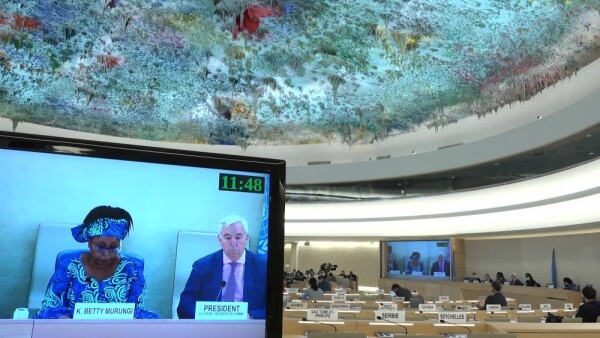
“The Commission is alarmed that violations and abuses of international human rights, humanitarian and refugee law - the subject matter of our inquiry – appear still to be perpetrated with impunity even now by various parties to the conflict”, said Ms. Kaari Betty Murungi, the Commissions chairperson.
The Commission, established in December 2021, is mandated to conduct investigations to establish the facts and the circumstances surrounding alleged violations and abuses of International Human Rights Law, International Humanitarian Law and International Refugee Law committed by all parties to the conflict in Ethiopia since November 2020.
“This spread of violence, the dire humanitarian crisis made worse by lack of access in some areas by the civilian population to humanitarian assistance including medical and food aid, obstruction of aid workers and persistent drought, exacerbates the suffering of millions of people in Ethiopia and in the region”, said Ms. Kaari Betty Murungi. She added that “the Commission emphasizes the responsibility of the Government of Ethiopia to bring to an end such violations on its territory and, bring those responsible to justice”.
Since the outbreak of armed conflict in November 2020 in Ethiopia’s northern Tigray region, Ethiopian national forces, Eritrean troops, Amhara forces and other militias on one side, and forces loyal to the Tigray people’s Liberation Front (TPFL), have forced hundreds of thousands of Tigrayans to leave their homes through threats and intimidation in a brutal ethnic cleansing campaign. The violence escalated and began to affect neighboring regions Afar and Amhara, with Afar providing the only channel of access for aid into Tigray.
Warring parties are accused to have carried out widespread human rights violations, including massacres, gender-based violence, extra judicial killings, forced displacements, violence against refugee camps and internally displaced persons.
In March 24, 2022, the Ethiopian government declared a humanitarian truce, an agreement that sought to allow much-needed access to aid for citizens in the region.
In its reply to the Commission's report Zenebe Kebebe Korcho, Permanent Representative of Ethiopia to the UN Geneva, said that “the country is now turning a page. The Government of Ethiopia has decided to seek a peaceful end to the conflict. An inclusive national dialogue is launched to address political problems across the country. The government has taken numerous confidence building measures”.
The Commission which was appointed in March 2022 is also mandated to provide guidance on transitional justice including accountability, national reconciliation, healing and make recommendations to the Government of Ethiopia on these measures.
According to ambassador Zenebe Kebebe Korcho “Ethiopia has also taken measures to ensure accountability for alleged serious human rights violations. The Government of Ethiopia facilitated the United Nation Office of the High Commissioner for Human Rights and the Ethiopian Human Rights Commission to conduct a joint investigation within the context of the conflict in the Tigray region.”
At a press stakeout following the presentation at the Human Rights Council the Commission’s chair reminded that “at a time when the international community is faced with numerous simultaneous conflicts, the world must not turn away from the situation in Ethiopia”. Furthermore, Ms. Murungi said that “the on-going spread of violence, fuelled by hate speech and incitement to ethnic-based and gender-based violence, are early warning indicators of further atrocity crimes against innocent civilians, especially women and children who are more vulnerable.”
The Commission is extremely alarmed by ongoing atrocities against civilians.
“Just over a week ago, the Commission received reports of killings of between 200 and 300 civilians in an alleged massacre in Western Oromia, which we are investigating”, said Kaari Betty Murungi.
The Commission is currently engaging with the Government of Ethiopia with regard to modalities of engagement including access to sites of violations for its investigations and to survivors, victims and witnesses.
“With respect to investigations, we have assembled our team in Entebbe, Uganda, and the investigations have begun – albeit remotely”, the Commission’s chairperson said. “We have had meetings with the victims and first-hand witnesses, we have analysed submissions that have been made”.
- ends-
- Exterior shot, wide shot Palais des Nations on a sunny day
- Wide shot, Human Rights Room
- SOUNDBITE (English) - Kaari Betty Murungi, Chairperson of International Commission of Human Rights Expert on Ethiopia: “The Commission is alarmed that violations and abuses of international human rights, humanitarian and refugee law - the subject matter of our inquiry – appear still to be perpetrated with impunity even now by various parties to the conflict”.
- Wide shot, Human Rights Room with screen in foreground
- SOUNDBITE (English) - Kaari Betty Murungi, Chairperson of International Commission of Human Rights Expert on Ethiopia: “This spread of violence, the dire humanitarian crisis made worse by lack of access in some areas by the civilian population to humanitarian assistance including medical and food aid, obstruction of aid workers and persistent drought, exacerbates the suffering of millions of people in Ethiopia and in the region”.
- Wide shot, Human Rights Room with podium with speakers
- Close up, journalists listening
- SOUNDBITE (English) - Kaari Betty Murungi, Chairperson of International Commission of Human Rights Expert on Ethiopia: “The Commission emphasizes the responsibility of the Government of Ethiopia to bring to an end such violations on its territory and, bring those responsible to justice”.
- Close up, Kaari Betty Murungi filmed from behind
- SOUNDBITE (English) - Zenebe Kebebe Korcho, Permanent Representative of Ethiopia to the UN Geneva: “The country is now turning a page. The Government of Ethiopia has decided to seek a peaceful end to the conflict. An inclusive national dialogue is launched to address political problems across the country. The government has taken numerous confidence building measures”.
- Wide shot, speakers at podium with screen next to them
- SOUNDBITE (English) - Zenebe Kebebe Korcho, Permanent Representative of Ethiopia to the UN Geneva: “Ethiopia has also taken measures to ensure accountability for alleged serious human rights violations. The Government of Ethiopia facilitated the United Nation Office of the High Commissioner for Human Rights and the Ethiopian Human Rights Commission to conduct a joint investigation within the context of the conflict in the Tigray region.”
- Medium shot, Zenebe Kebebe Korcho
- SOUNDBITE (English) - Kaari Betty Murungi, Chairperson of International Commission of Human Rights Expert on Ethiopia: “At a time when the international community is faced with numerous simultaneous conflicts, the world must not turn away from the situation in Ethiopia. The on-going spread of violence, fuelled by hate speech and incitement to ethnic-based and gender-based violence, are early warning indicators of further atrocity crimes against innocent civilians, especially women and children who are more vulnerable.”
- Wide shot, stakeout at the UN in Geneva
- SOUNDBITE (English) - Kaari Betty Murungi, Chairperson of International Commission of Human Rights Expert on Ethiopia: “Just over a week ago, the Commission received reports of killings of between 200 and 300 civilians in an alleged massacre in Western Oromia, which we are investigating.”
- Medium shot, journalists listening and filming the stakeout
- SOUNDBITE (English) - Kaari Betty Murungi, Chairperson of International Commission of Human Rights Expert on Ethiopia: “With respect to investigations, we have assembled our team in Entebbe, Uganda, and the investigations have begun – albeit remotely. We have had meetings with the victims and first-hand witnesses, we have analysed submissions that have been made”.
- Close up, delegate
- Medium shot, journalists filmed from behind at stakeout
- Wide shot, ceiling of Human Rights Room
- Wide shot, Human Rights Room, ceiling with delegates and speakers at podium on screen
Similar Stories

1
1
1
Edited News | OCHA , UNICEF , WFP
Aid agencies warned on Friday of the fast-developing humanitarian emergency inside Taiz City in Yemen, which has been encircled by de facto Houthi forces fighting government troops along the country’s west coast.

2
17
1
2
Edited News , Press Conferences , Images | OCHA , WMO
Two UN agencies teamed up on Wednesday to issue an appeal for immediate assistance to help communities already being impacted by the strongest El Niño on record.

3
16
2
2
Edited News , B-roll , Conferences , Images | UNITED NATIONS , UNOG
Sixth Consultative Meeting on Enhancing Coordination of Peace Initiatives and Efforts for Sudan

1
1
1
Edited News | UNICEF , WHO , UNHCR
Yemen war continues to force families from homes amid hunger and disease
More than 250,000 people have now fled renewed fighting in Yemen, the UN said on Tuesday, citing particular concern for those sheltering in the southwestern city of Taiz and the wider governorate, where access is “essentially blocked”.

1
1
1
Edited News | UNICEF
A little over one year since a ceasefire agreement was announced between Hamas fighters and Israel, more than 340 children have been reported killed and hundreds more injured, the UN Children’s Fund, UNICEF, said on Friday.

1
1
1
Edited News | UNICEF , IFRC
Six weeks after Nepal’s deadly flooding disaster, communities are still struggling to rebuild their lives, but they will need sustained help as global warming increases the risk of another Himalayan catastrophe, the UN Children’s Fund (UNICEF) said on Friday.

1
1
1
Edited News | WHO
In suspected Russia plague death, testing and monitoring underway – WHO
The death of a lab worker in Russia’s Siberia region has sparked concerns about plague being the cause, the UN World Health Organization (WHO) said on Tuesday, adding that it was following the situation closely.

1
1
Edited News | OHCHR , UNOG
UN Human Rights Chief Volker Türk on Friday provided and oral update to the 63rd session of the Human rights Council on Ukraine.

1
1
1
Edited News | OHCHR , UNOG
UN Human Rights Chief Volker Türk on Friday provided and oral update to the 63rd session of the Human rights Council on the human rights situation in Haiti.

1
1
1
Edited News | WHO
Repeated delays in bringing lifesaving medicines, prosthetics and more from Israel into Gaza risk having devastating consequences on Palestinians who urgently need them in the wartorn enclave, the UN World Health Organization (WHO) said on Friday. “A truck full of non-priority supplies or the right supplies arriving too late, doesn't save lives. That's the question that actually matters," said Dr Reinhilde Van De Weerdt, WHO Representative in the OPT.

1
1
1
Edited News | WHO
DRC: Early access to care and oxygen decisive for Ebola patients’ survival – WHO
In the Democratic Republic of the Congo (DRC), health workers fighting the country’s largest-ever Ebola outbreak are struggling to overcome critical challenges to patient care, the UN World Health Organization (WHO) warned on Tuesday.

1
1
1
Edited News | OCHA , UN
Civilians in Iran are continuing to feel the consequences of months of conflict and military escalation, the UN’s top official in the country has said, as loss of life, damage to civilian infrastructure and mounting economic pressures leave many facing continued uncertainty.