

The United Nations Office at Geneva
Multimedia Newsroom
UN Human Rights Office estimates more than 306,000 civilians were killed over 10 years in Syria conflict.
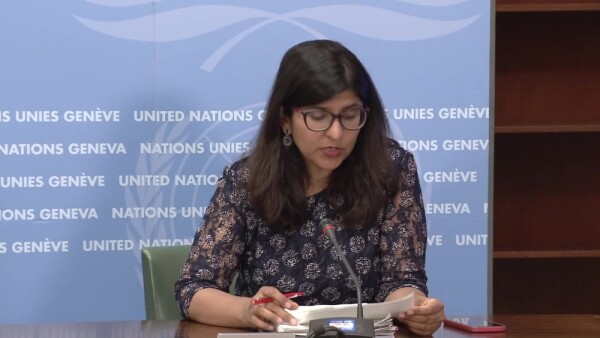
“The UN Human Rights Office today published a report that, following rigorous assessment and statistical analysis of available data on civilian casualties, estimates that 306,887 civilians were killed between 1 March 2011 and 31 March 2021 in Syria due to the conflict. This is the highest estimate yet of conflict-related civilian deaths in Syria,” UN Human rights spokesperson Ravina Shamdasani told a press briefing in Geneva.
“The report, mandated by the UN Human Rights Council, referred to 143,350 civilian deaths that have been individually documented by various sources with detailed information, including at least their full name, date and location of death. In addition, statistical estimation techniques of imputation and multiple systems estimation were used to connect the dots where there were missing elements of information. Using these techniques, a further 163,537 civilian deaths were estimated to have occurred, bringing the total estimated civilian death toll to 306,887,” she said.
“ The UN Human Rights High Commissioner Michelle Bachelet has said, that the conflict-related casualty figures in this report are not simply a set of abstract numbers, civilians would have had a profound, reverberating impact on the family and community to which they belonged,” Shamdasani said, quoting the UN High Commissioner for Human Rights Michelle Bachelet said.
The work of civil society organizations and the UN in monitoring and documenting conflict-related deaths is key in helping these families and communities establish the truth, seek accountability and pursue effective remedies. This analysis will also give a clearer sense of the severity and scale of the conflict.
“And let me be clear: these are the people killed as a direct result of war operations. This does not include the many, many more civilians who died due to the loss of access to healthcare, to food, to clean water and other essential human rights ,” Shamdasani stressed.
The report also contains disaggregated data for the documented deaths, including by age, gender, year, governorate, actors allegedly responsible and the cause of death by weapon type. “The estimate of 306,887 means that on average, every single day, for the past 10 years, 83 civilians suffered violent deaths due to the conflict,’ she said.
“The report notes that, the extent of civilian casualties in the last 10 years represents a staggering 1.5 per cent of the total population of the Syrian Arab Republic at the beginning of the conflict, raising serious concerns as to the failure of the parties to the conflict to respect international humanitarian law norms on the protection of civilians.”
This statistical work builds on previous efforts to assess direct conflict-related deaths. In 2013 and 2014, the UN Human Rights Office commissioned three statistical analyses of documented killings in Syria, but this effort was discontinued as the situation in the country grew more complex and dangerous, affecting the Office’s capacity to maintain the required quality and verification standards. In 2019, the Office resumed information-gathering and analysis on casualties, including on Syria, in its global reporting on the UN Sustainable Development Goals indicator on conflict-related deaths (SDG indicator 16.1.2).
The report sets out the challenges in recording casualties during a conflict, beyond the immediate risk to civil society actors who try to access the sites of incidents where attacks have taken place.
“Where civil society actors undertake casualty recording, efforts…can put the recorders themselves at risk. They also face multiple challenges in their documentation efforts, including the collapse of their usual networks of information as people are on the move, displaced or in areas where there is a general information shutdown; the limited, or lack of, access to mobile data, Internet and electricity to collect and transmit information; limitations on their movements; and surveillance,” Shamdasani stated.
Despite these challenges, there has been consistent and systematic work in documenting casualties on the ground for more than a decade now. The data used for the report rely on the courageous work of such individuals and groups.
To produce the report, the Office used eight sources of information pertaining to different periods across the 10 years covered. These include: the Damascus Center for Human Rights Studies; the Center for Statistics and Research–Syria; the Syrian Network for Human Rights; the Syrian Observatory for Human Rights; the Violations Documentation Center; Syria Shuhada records; Government records; and records of the UN Human Rights Office itself.
“The work done by casualty recorders in documenting individually verifiable information on each casualty is critical. The process is victim-centred, placing individuals, their families and communities at the centre by ensuring that those killed are not forgotten, and that information is available for accountability-related processes and to access a range of human rights,” said Shamdasani.
“Unless and until the conflict ends, there is a continued risk of civilian deaths. It is therefore critical that all States, the United Nations and civil society use all available means to end the conflict and support a transition to peace,” she stressed.
For more information and media requests, please contact For more information and media requests, please contact: Ravina Shamdasani - + 41 22 917 9169 / ravina.shamdasani@un.org or Liz Throssell + 41 22 917 9296 / elizabeth.throssell@un.org
Tag and share - Twitter: @UNHumanRights and Facebook: unitednationshumanrights
- Exterior shot: Palais des Nations – alley of the flags
- Wide shot: Press conference room
- SOUNDBITE (English)—Ravina Shamdasani, spokesperson UN High Commissioner for Human Rights: “The UN Human Rights Office today published a report that, following rigorous assessment and statistical analysis of available data on civilian casualties, estimates that 306,887 civilians were killed between 1 March 2011 and 31 March 2021 in Syria due to the conflict. This is the highest estimate yet of conflict-related civilian deaths in Syria.”
- Cut away: wide shot briefing room
- SOUNDBITE (English)—Ravina Shamdasani, spokesperson UN High Commissioner for Human Rights: “The report, mandated by the UN Human Rights Council, referred to 143,350 civilian deaths that have been individually documented by various sources with detailed information, including at least their full name, date and location of death. In addition, statistical estimation techniques of imputation and multiple systems estimation were used to connect the dots where there were missing elements of information. Using these techniques, a further 163,537 civilian deaths were estimated to have occurred, bringing the total estimated civilian death toll to 306,887.”
- Cut away: wide shot briefing room
- SOUNDBITE (English)—Ravina Shamdasani, spokesperson UN High Commissioner for Human Rights: “The UN High Commissioner for Human Rights, Michelle Bachelet, has said that the conflict-related casualty figures in this report are not simply a set of abstract numbers, but represent individual human beings. The impact of the killing of each of these 306,887 civilians would have had a profound, reverberating impact on the family and community to which they belonged.”
- Cut away: participant briefing room
- SOUNDBITE (English)—Ravina Shamdasani, spokesperson UN High Commissioner for Human Rights: “And let me be clear: these are the people killed as a direct result of war operations. This does not include the many, many more civilians who died due to the loss of access to healthcare, to food, to clean water and other essential human rights.”
- Cut away: participants briefing room
- SOUNDBITE (English)—Ravina Shamdasani, spokesperson UN High Commissioner for Human Rights: “The estimate of 306,887 means that on average, every single day, for the past 10 years, 83 civilians suffered violent deaths due to the conflict.”
- Cut away: Podium
- SOUNDBITE (English)—Ravina Shamdasani, spokesperson UN High Commissioner for Human Rights: “The report notes that, “the extent of civilian casualties in the last 10 years represents a staggering 1.5 per cent of the total population of the Syrian Arab Republic at the beginning of the conflict, raising serious concerns as to the failure of the parties to the conflict to respect international humanitarian law norms on the protection of civilians.”
- Cut away: participants briefing room
- SOUNDBITE (English)—Ravina Shamdasani, spokesperson UN High Commissioner for Human Rights: “Where civil society actors undertake casualty recording, efforts…can put the recorders themselves at risk. They also face multiple challenges in their documentation efforts, including the collapse of their usual networks of information as people are on the move, displaced or in areas where there is a general information shutdown; the limited, or lack of, access to mobile data, Internet and electricity to collect and transmit information; limitations on their movements; and surveillance.”
- Cut away: wide shot briefing room
- SOUNDBITE (English)—Ravina Shamdasani, spokesperson UN High Commissioner for Human Rights: “The work done by casualty recorders in documenting individually verifiable information on each casualty is critical. The process is victim-centred, placing individuals, their families and communities at the centre by ensuring that those killed are not forgotten, and that information is available for accountability-related processes and to access a range of human rights.”
- Cut away: participant briefing room
- SOUNDBITE (English)—Ravina Shamdasani, spokesperson UN High Commissioner for Human Rights: “Unless and until the conflict ends, there is a continued risk of civilian deaths. It is therefore critical that all States, the United Nations and civil society use all available means to end the conflict and support a transition to peace.”
Similar Stories

1
1
1
Edited News | UNICEF , WHO , UNHCR
Yemen war continues to force families from homes amid hunger and disease
More than 250,000 people have now fled renewed fighting in Yemen, the UN said on Tuesday, citing particular concern for those sheltering in the southwestern city of Taiz and the wider governorate, where access is “essentially blocked”.

1
1
1
Edited News | UNICEF
A little over one year since a ceasefire agreement was announced between Hamas fighters and Israel, more than 340 children have been reported killed and hundreds more injured, the UN Children’s Fund, UNICEF, said on Friday.

1
1
1
Edited News | UNICEF , IFRC
Six weeks after Nepal’s deadly flooding disaster, communities are still struggling to rebuild their lives, but they will need sustained help as global warming increases the risk of another Himalayan catastrophe, the UN Children’s Fund (UNICEF) said on Friday.

1
1
1
Edited News | WHO
In suspected Russia plague death, testing and monitoring underway – WHO
The death of a lab worker in Russia’s Siberia region has sparked concerns about plague being the cause, the UN World Health Organization (WHO) said on Tuesday, adding that it was following the situation closely.

1
1
Edited News | OHCHR , UNOG
UN Human Rights Chief Volker Türk on Friday provided and oral update to the 63rd session of the Human rights Council on Ukraine.

1
1
1
Edited News | OHCHR , UNOG
UN Human Rights Chief Volker Türk on Friday provided and oral update to the 63rd session of the Human rights Council on the human rights situation in Haiti.

1
1
1
Edited News | WHO
Repeated delays in bringing lifesaving medicines, prosthetics and more from Israel into Gaza risk having devastating consequences on Palestinians who urgently need them in the wartorn enclave, the UN World Health Organization (WHO) said on Friday. “A truck full of non-priority supplies or the right supplies arriving too late, doesn't save lives. That's the question that actually matters," said Dr Reinhilde Van De Weerdt, WHO Representative in the OPT.

1
1
1
Edited News | WHO
DRC: Early access to care and oxygen decisive for Ebola patients’ survival – WHO
In the Democratic Republic of the Congo (DRC), health workers fighting the country’s largest-ever Ebola outbreak are struggling to overcome critical challenges to patient care, the UN World Health Organization (WHO) warned on Tuesday.

1
1
1
Edited News | OCHA , UN
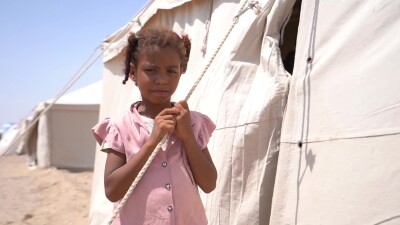
Civilians in Iran are continuing to feel the consequences of months of conflict and military escalation, the UN’s top official in the country has said, as loss of life, damage to civilian infrastructure and mounting economic pressures leave many facing continued uncertainty.
1
1
1
Edited News | WHO , UNICEF
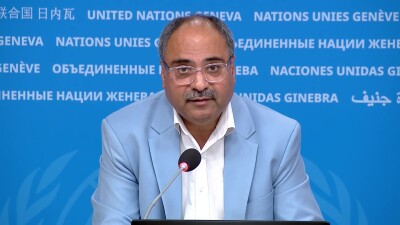
Aid agencies in Yemen highlighted the growing hunger emergency sparked by renewed fighting between Houthi opposition forces and Government troops, after mobile health clinics reported that hundreds of children displaced by the violence are suffering from the most deadly form of malnutrition.
1
1
1
Edited News | UNHCR
Displacement on the rise in Yemen as fighting continues - UNHCR
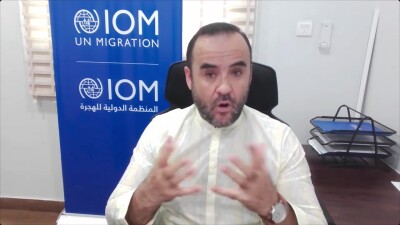
As hostilities worsen in Yemen, more people have been fleeing their homes, further intensifying the humanitarian crisis within the region, the UN Refugee Agency (UNHCR) warned on Tuesday.
1
1
1
Edited News | IOM , OHCHR , UNFPA , UNOG , UNHCR , WHO
Yemen’s humanitarian crisis growing by the hour amid spike in displacement
Yemenis displaced by renewed fighting have described fleeing for their lives amid shelling and gunfire, aid agencies reported on Friday, while highlighting the dramatic increase in humanitarian needs in the country and in Djibouti, where thousands have sought shelter.