

The United Nations Office at Geneva
Multimedia Newsroom
Scientific evidence shows that overexposure to UV radiation is the major cause of skin cancer. To help people to know when UV radiation is at its highest and to protect themselves adequately, the World Health Organization (WHO), the International Labour Organization (ILO), the World Meteorological Organization (WMO) and the United Nations Environment Programme (UNEP) launched today the SunSmart Global UV App.
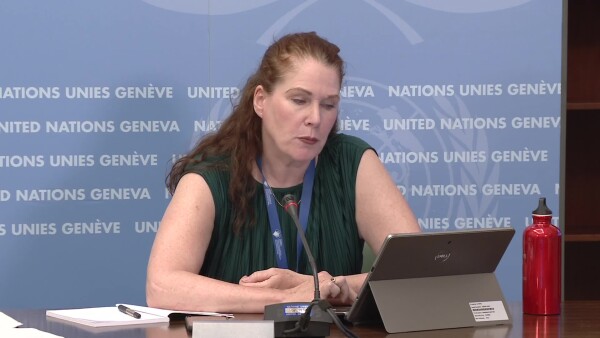
“The SunSmart Global UV App provides five-day UV and weather forecasts at searchable locations”, said Carla Drysdale, spokesperson for the World Health Organization (WHO). While speaking today at a briefing at the United Nations in Geneva, Ms. Drysdale added that “it highlights time slots when sun protection is required and aims to help people around the world to know when to use sun protection, in an effort to reduce the global burden of skin cancer and UV-related eye damage”.
Developed by Australia’s Cancer Council Victoria and the Australian Radiation Protection and Nuclear Safety Agency, the app is based on the UV Index, which indicates the level of solar UV radiation at the earth’s surface. The UV Index uses a scale of 1 (or Low) to 11 and higher (or Extreme). The higher the index value the greater the potential for damage to the skin and eyes and the less time it takes for harm to occur.
“Globally, it’s estimated that over 1,5 million cases of skin cancer, that’s melanoma and non-melanoma combined, were diagnosed globally in 2020”, Ms. Drysdale said. “During the same period, more than 120, 000 people across the world lost their lives to this highly preventable disease”.
Much of UV-related illness and death can be avoided through a set of simple prevention measures such as limit time in the midday sun, seek shade when UV rays are most intense and wear protective clothing, hats and sunglasses as well as the use of sunscreen.
According to WMO’s spokesperson Clare Nullis “it’s now the period of the year when UV radiation is at its maximum in Europe, in the northern hemisphere”. She added “this is because of the position of the sun in the sky. There are other factors that do influence the amount of UV, which is the ground, clouds, the ozone layers, etc. etc. So, all of these elements are being added into this app which has been launched”.
The SunSmart Global UV app is available free of charge at both the Apple App and Google Play stores. It provides personalized options so that users can take actions to protect prolonged excessive UV exposure, a major cause of skin cancer and other UV relate diseases.
-ends-
- Exterior medium shot, Palais des Nations flag alley, nations’ flags moving gently in the wind, a sunny day
- Wide shot, press briefing room with speakers seated at podium
- SOUNDBITE (English) — Carla Drysdale, spokesperson for the World Health Organization (WHO): “The SunSmart Global UV App and it provides five-day UV and weather forecasts at searchable locations. It highlights time slots when sun protection is required and aims to help people around the world to know when to use sun protection, in an effort to reduce the global burden of skin cancer and UV-related eye damage”.
- Medium shot, journalists in the press briefing room
- SOUNDBITE (English) — Carla Drysdale, spokesperson for the World Health Organization (WHO): “Globally, it’s estimated that over 1,5 million cases of skin cancer, that’s melanoma and non-melanoma combined, were diagnosed globally in 2020. During the same period, more than 120, 000 people across the world lost their lives to this highly preventable disease”.
- Close up, cameramen with cameras
- SOUNDBITE (English) — Clare Nullis, spokesperson for WMO: “Now is the period of the year when UV radiation is at its maximum in Europe, in the northern hemisphere. This is because of the position of the sun in the sky. There are other factors that do influence the amount of UV, which is the ground, clouds, the ozone layers, etc. etc. So, all of these elements are being added into this App which has been launched”.
- Close-up, journalist in foreground, others in background
- Medium shot, journalist listening
- Close-up, fingers tapping on the laptop
Similar Stories

1
1
1
Edited News | OCHA , UNICEF , WFP
Aid agencies warned on Friday of the fast-developing humanitarian emergency inside Taiz City in Yemen, which has been encircled by de facto Houthi forces fighting government troops along the country’s west coast.

2
17
1
2
Edited News , Press Conferences , Images | OCHA , WMO
Two UN agencies teamed up on Wednesday to issue an appeal for immediate assistance to help communities already being impacted by the strongest El Niño on record.

3
16
2
2
Edited News , B-roll , Conferences , Images | UNITED NATIONS , UNOG
Sixth Consultative Meeting on Enhancing Coordination of Peace Initiatives and Efforts for Sudan

1
1
1
Edited News | UNICEF , WHO , UNHCR
Yemen war continues to force families from homes amid hunger and disease
More than 250,000 people have now fled renewed fighting in Yemen, the UN said on Tuesday, citing particular concern for those sheltering in the southwestern city of Taiz and the wider governorate, where access is “essentially blocked”.

1
1
1
Edited News | UNICEF
A little over one year since a ceasefire agreement was announced between Hamas fighters and Israel, more than 340 children have been reported killed and hundreds more injured, the UN Children’s Fund, UNICEF, said on Friday.

1
1
1
Edited News | UNICEF , IFRC
Six weeks after Nepal’s deadly flooding disaster, communities are still struggling to rebuild their lives, but they will need sustained help as global warming increases the risk of another Himalayan catastrophe, the UN Children’s Fund (UNICEF) said on Friday.

1
1
1
Edited News | WHO
In suspected Russia plague death, testing and monitoring underway – WHO
The death of a lab worker in Russia’s Siberia region has sparked concerns about plague being the cause, the UN World Health Organization (WHO) said on Tuesday, adding that it was following the situation closely.

1
1
Edited News | OHCHR , UNOG
UN Human Rights Chief Volker Türk on Friday provided and oral update to the 63rd session of the Human rights Council on Ukraine.

1
1
1
Edited News | OHCHR , UNOG
UN Human Rights Chief Volker Türk on Friday provided and oral update to the 63rd session of the Human rights Council on the human rights situation in Haiti.

1
1
1
Edited News | WHO
Repeated delays in bringing lifesaving medicines, prosthetics and more from Israel into Gaza risk having devastating consequences on Palestinians who urgently need them in the wartorn enclave, the UN World Health Organization (WHO) said on Friday. “A truck full of non-priority supplies or the right supplies arriving too late, doesn't save lives. That's the question that actually matters," said Dr Reinhilde Van De Weerdt, WHO Representative in the OPT.

1
1
1
Edited News | WHO
DRC: Early access to care and oxygen decisive for Ebola patients’ survival – WHO
In the Democratic Republic of the Congo (DRC), health workers fighting the country’s largest-ever Ebola outbreak are struggling to overcome critical challenges to patient care, the UN World Health Organization (WHO) warned on Tuesday.

1
1
1
Edited News | OCHA , UN
Civilians in Iran are continuing to feel the consequences of months of conflict and military escalation, the UN’s top official in the country has said, as loss of life, damage to civilian infrastructure and mounting economic pressures leave many facing continued uncertainty.