

The United Nations Office at Geneva
Multimedia Newsroom
“Since we last gathered, the war in Ukraine continues to destroy the lives of many, causing havoc and destruction. The horrors inflicted on the civilian population will leave their indelible mark, including on generations to come. Its social, economic and political ramifications ripple across the region and globally, with no end in sight.”
“A global food, fuel and finance crisis now risks plunging millions into food insecurity and poverty. 1.2 billion people live in countries that are severely exposed and vulnerable to all three dimensions of finance, food, and energy, simultaneously.”
“According to the UN Global Crisis and Response Group the combination of higher food and energy prices, growing inflation, export restrictions, and tightening financial conditions will be devastating, in particular on the most vulnerable.”
“We need to invest in addressing the conditions that provoke these crises. I urge us, at precisely this moment of grave and profound threat, to pursue the path we had committed to in the wake of the COVID-19 pandemic.”
“We gathered in multilateral fora, in high level debates and donor meetings and spoke of global solutions and of putting people at the centre of our efforts. We committed ourselves to learning the lessons of the pandemic, and to recover better.”
The UN High Commissioner highlighted four areas of intervention that she hopes can give some direction in the face of the current crises.
“First, we need to tackle inequality and discrimination. We live in a world of staggering inequality, with one study estimating that global inequalities are about as great today as they were in the early 20th century.”
“The World Bank had projected 198 million more people living in extreme poverty during 2022 due to COVID-19. Global food prices alone are now estimated to add a further 65 million more people to that total. While people across all income groups experienced losses during the pandemic, the poorest 20 percent experienced the steepest decline in incomes. And the poorest 40 percent haven’t started to recover their income losses.”
“And as the climate crisis continues to worsen for us all, it is again the poorest and most vulnerable who are bearing the harshest brunt. People’s capacity to withstand yet another crisis is shrinking even further.”
“Second, national budgets should integrate human rights. If national budgets integrate States’ human rights obligations and are designed and implemented through a human rights-based approach, they can be a powerful lever for SDG progress. If they allocate sufficient resources to cover at least minimum essential levels of economic and social rights, we can deliver better development results.”
“Increasing national spending in social sectors, with a focus on accessibility, affordability, and quality of services and non-discrimination, particularly in the current context, will strengthen countries’ capacity to withstand shocks.”
“In this regard, my office is assisting countries to analyse their budgets, mobilise resources and create more fiscal space through a human rights lens. “
“Third, greater international cooperation and solidarity – including for debt relief - is needed now. Without a significant boost in financial resources, we will not be able to achieve the SDGs. The financing gap to achieve the SDGs has widened by over 70 per cent to an annual amount of $4.3 trillion. This gap requires countries to mobilise public and private resources both domestically and internationally. Yet, spiralling debt and uncertain prospects of economic outlook – which will be further exacerbated in the current context - are holding many developing countries back. In 2022, it is estimated that these countries will require $311 billion to service public external debt, amounting to 13.6 per cent of government revenues.
“Strengthening fiscal systems can certainly help raise additional domestic resources in all countries.”
“And finally – civic space. I wish to conclude on what I think is the most crucial – and valuable – element of building resilience in times of crisis. These are times for greater – not less - transparency and broader space for civic engagement and participation if we are serious about our commitments to build transformative and greener societies. A vibrant civic space is a lever of a stable, secure society. Yet, we continue documenting attacks against defenders and journalists, off-line and online, worldwide.”
“We cannot separate progress on economic goals, such as reducing poverty, from the rights of those who are the intended beneficiaries of those developments – including the right of those people to be heard.”
For more information and media requests, please contact for more information and media requests, please contact: For more information and media requests, please contact for more information and media requests, please contact: Ravina Shamdasani - + 41 22 917 9169 / ravina.shamdasani@un.org or or Marta Hurtado - + 41 22 917 9466 / marta.hurtadogomez@un.org
Tag and share - Twitter: @UNHumanRights and Facebook: unitednationshumanrights
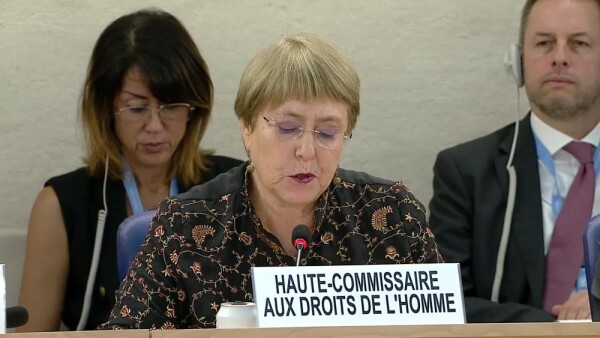
- Wide shot: exterior alley of flags at Palais des Nations
- Wide shot: Room 20
- SOUNDBITE (English)—Michelle Bachelet for UN High Commissioner for Human Rights (OHCHR): “Since we last gathered, the war in Ukraine continues to destroy the lives of many, causing havoc and destruction. The horrors inflicted on the civilian population will leave their indelible mark, including on generations to come. Its social, economic and political ramifications ripple across the region and globally, with no end in sight.”
- Wide shot: Room 20
- SOUNDBITE (English)—Michelle Bachelet for UN High Commissioner for Human Rights (OHCHR): “A global food, fuel and finance crisis now risks plunging millions into food insecurity and poverty. 1.2 billion people live in countries that are severely exposed and vulnerable to all three dimensions of finance, food, and energy, simultaneously.”
- Cut away: room 20 participants
- SOUNDBITE (English)—Michelle Bachelet for UN High Commissioner for Human Rights (OHCHR): “According to the UN Global Crisis and Response Group the combination of higher food and energy prices, growing inflation, export restrictions, and tightening financial conditions will be devastating, in particular on the most vulnerable.”
- Cut away: cameraman podium
- SOUNDBITE (English)—Michelle Bachelet for UN High Commissioner for Human Rights (OHCHR): “We need to invest in addressing the conditions that provoke these crises. I urge us, at precisely this moment of grave and profound threat, to pursue the path we had committed to in the wake of the COVID-19 pandemic.”
- Cut away: podium
- SOUNDBITE (English)—Michelle Bachelet for UN High Commissioner for Human Rights (OHCHR): “We gathered in multilateral fora, in high level debates and donor meetings and spoke of global solutions and of putting people at the centre of our efforts. We committed ourselves to learning the lessons of the pandemic, and to recover better.”
- Cut away: room 20 participants
- SOUNDBITE (English)—Michelle Bachelet for UN High Commissioner for Human Rights (OHCHR): “First, we need to tackle inequality and discrimination. We live in a world of staggering inequality, with one study estimating that global inequalities are about as great today as they were in the early 20th century.”
- Cut away: room 20
- SOUNDBITE (English)—Michelle Bachelet for UN High Commissioner for Human Rights (OHCHR): “The World Bank had projected 198 million more people living in extreme poverty during 2022 due to COVID-19. Global food prices alone are now estimated to add a further 65 million more people to that total. While people across all income groups experienced losses during the pandemic, the poorest 20 percent experienced the steepest decline in incomes. And the poorest 40 percent haven’t started to recover their income losses.”
- Cut away: room 20 participants
- SOUNDBITE (English)—Michelle Bachelet for UN High Commissioner for Human Rights (OHCHR): “And as the climate crisis continues to worsen for us all, it is again the poorest and most vulnerable who are bearing the harshest brunt. People’s capacity to withstand yet another crisis is shrinking even further.”
- Cut away: room 20 participants
- SOUNDBITE (English)—Michelle Bachelet for UN High Commissioner for Human Rights (OHCHR): “Second, national budgets should integrate human rights. If national budgets integrate States’ human rights obligations and are designed and implemented through a human rights-based approach, they can be a powerful lever for SDG progress. If they allocate sufficient resources to cover at least minimum essential levels of economic and social rights, we can deliver better development results.”
- Cut away: room 20
- SOUNDBITE (English)—Michelle Bachelet for UN High Commissioner for Human Rights (OHCHR): “Increasing national spending in social sectors, with a focus on accessibility, affordability, and quality of services and non-discrimination, particularly in the current context, will strengthen countries’ capacity to withstand shocks.”
- Cut away: room 20 participants
- SOUNDBITE (English)—Michelle Bachelet for UN High Commissioner for Human Rights (OHCHR): “In this regard, my office is assisting countries to analyse their budgets, mobilise resources and create more fiscal space through a human rights lens. “
- Cut away: podium
- SOUNDBITE (English)—Michelle Bachelet for UN High Commissioner for Human Rights (OHCHR): “Third, greater international cooperation and solidarity – including for debt relief - is needed now. Without a significant boost in financial resources, we will not be able to achieve the SDGs. The financing gap to achieve the SDGs has widened by over 70 per cent to an annual amount of $4.3 trillion. This gap requires countries to mobilise public and private resources both domestically and internationally. Yet, spiralling debt and uncertain prospects of economic outlook – which will be further exacerbated in the current context - are holding many developing countries back. In 2022, it is estimated that these countries will require $311 billion to service public external debt, amounting to 13.6 per cent of government revenues.
- Cut away: room 20
- SOUNDBITE (English)—Michelle Bachelet for UN High Commissioner for Human Rights (OHCHR): “Strengthening fiscal systems can certainly help raise additional domestic resources in all countries.”
- SOUNDBITE (English)—Michelle Bachelet for UN High Commissioner for Human Rights (OHCHR): “And finally – civic space. I wish to conclude on what I think is the most crucial – and valuable – element of building resilience in times of crisis. These are times for greater – not less - transparency and broader space for civic engagement and participation if we are serious about our commitments to build transformative and greener societies. A vibrant civic space is a lever of a stable, secure society. Yet, we continue documenting attacks against defenders and journalists, off-line and online, worldwide.”
- Cut away: room 20 participants
- SOUNDBITE (English)—Michelle Bachelet for UN High Commissioner for Human Rights (OHCHR): “We cannot separate progress on economic goals, such as reducing poverty, from the rights of those who are the intended beneficiaries of those developments – including the right of those people to be heard.”
Similar Stories
1
1
1
Edited News , B-roll , Conferences | UNITED NATIONS , UNOG
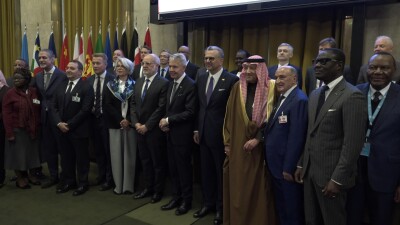
Arrivals, roundtable and family photo-op at the 6th Consultative Meeting on Enhancing Coordination of Peace Initiatives and Efforts in Sudan
2
16
2
2
B-roll , Conferences , Edited News | UNITED NATIONS , UNOG
Sixth Consultative Meeting on Enhancing Coordination of Peace Initiatives and Efforts for Sudan

1
1
1
Edited News | UNICEF , WHO , UNHCR
Yemen war continues to force families from homes amid hunger and disease
More than 250,000 people have now fled renewed fighting in Yemen, the UN said on Tuesday, citing particular concern for those sheltering in the southwestern city of Taiz and the wider governorate, where access is “essentially blocked”.

1
1
1
Edited News | UNICEF
A little over one year since a ceasefire agreement was announced between Hamas fighters and Israel, more than 340 children have been reported killed and hundreds more injured, the UN Children’s Fund, UNICEF, said on Friday.

1
1
1
Edited News | UNICEF , IFRC
Six weeks after Nepal’s deadly flooding disaster, communities are still struggling to rebuild their lives, but they will need sustained help as global warming increases the risk of another Himalayan catastrophe, the UN Children’s Fund (UNICEF) said on Friday.

1
1
1
Edited News | WHO
In suspected Russia plague death, testing and monitoring underway – WHO
The death of a lab worker in Russia’s Siberia region has sparked concerns about plague being the cause, the UN World Health Organization (WHO) said on Tuesday, adding that it was following the situation closely.

1
1
Edited News | OHCHR , UNOG
UN Human Rights Chief Volker Türk on Friday provided and oral update to the 63rd session of the Human rights Council on Ukraine.

1
1
1
Edited News | OHCHR , UNOG
UN Human Rights Chief Volker Türk on Friday provided and oral update to the 63rd session of the Human rights Council on the human rights situation in Haiti.

1
1
1
Edited News | WHO
Repeated delays in bringing lifesaving medicines, prosthetics and more from Israel into Gaza risk having devastating consequences on Palestinians who urgently need them in the wartorn enclave, the UN World Health Organization (WHO) said on Friday. “A truck full of non-priority supplies or the right supplies arriving too late, doesn't save lives. That's the question that actually matters," said Dr Reinhilde Van De Weerdt, WHO Representative in the OPT.

1
1
1
Edited News | WHO
DRC: Early access to care and oxygen decisive for Ebola patients’ survival – WHO
In the Democratic Republic of the Congo (DRC), health workers fighting the country’s largest-ever Ebola outbreak are struggling to overcome critical challenges to patient care, the UN World Health Organization (WHO) warned on Tuesday.

1
1
1
Edited News | OCHA , UN
Civilians in Iran are continuing to feel the consequences of months of conflict and military escalation, the UN’s top official in the country has said, as loss of life, damage to civilian infrastructure and mounting economic pressures leave many facing continued uncertainty.
1
1
1
Edited News | WHO , UNICEF
Aid agencies in Yemen highlighted the growing hunger emergency sparked by renewed fighting between Houthi opposition forces and Government troops, after mobile health clinics reported that hundreds of children displaced by the violence are suffering from the most deadly form of malnutrition.