

The United Nations Office at Geneva
Multimedia Newsroom
Tobacco lays waste to the environment, besides killing 8 million people a year – UN health agency
Tobacco not only kills over eight million people a year, but its consumption also has a devastating impact on the environment.
That’s the message on World No Tobacco Day, marked on 31 May, from the UN health agency which warned that tobacco products are linked to deforestation and biodiversity loss. “The tobacco industry is one of the world’s worst polluters, causing deforestation, water waste, air pollution, and littered beaches, parks and city sidewalks,” said Dr. Ruediger Krech, Director of Health Promotion at the World Health Organization (WHO).
To put it into perspective, Dr. Krech explained that “the trees cut down to make way for tobacco growing make up five per cent of global deforestation. An area roughly half the size of Cap Verde disappears every year.” That is a total of 600 million trees chopped down, with 84 million tons of carbon dioxide released into the air, and 22 billion tons of water -that’s about 9 million Olympic-sized swimming pools- used globally to make cigarettes according to WHO.
Make tobacco industry accountable
Cigarettes and e-cigarettes are the primary contributors to the build-up of plastic pollution. Non-biodegradable cigarette butts are the most discarded waste item worldwide and the second-highest form of plastic pollution. With no evidence that filters have any proven health benefits, WHO is calling on policymakers to ban cigarette filters and to make the industry more accountable for the damage it is causing.
“WHO urges countries to create legislation enforcing the tobacco industry to be responsible for cleaning up their deadly tobacco products and paying for damaging the environment. This would spare $240 million for German taxpayers every year, $760 million for Indian taxpayers, and $2.6 billion for Chinese,” Doctor Krech explained.
He added: “Governments should immediately stop subsidizing tobacco growth. Annually, this deadly industry is subsidized with $500 billion which is also taxpayers’ money”.
Countries like France and Spain and cities like San Francisco, in the US have taken a stand. Following the “polluter pays” principle, they have successfully implemented “extended producer responsibility legislation” which makes the tobacco industry responsible for clearing up the pollution it creates. WHO has urged countries and cities to follow this example, while also supporting tobacco farmers to switch to sustainable crops, implement strong tobacco taxes and offer support services to help people quit smoking.
Ends
- Exterior wide shot: UN flag alley UN Geneva.
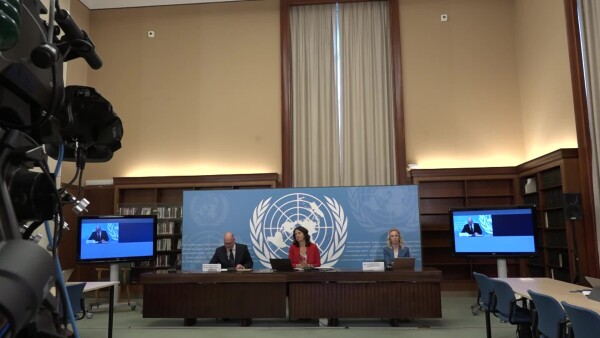
- Cutaway: Wide shot, Press room, UN Geneva.
- SOUNDBITE (ENGLISH) Dr Ruediger Krech, Director of Health Promotion (WHO): “The tobacco industry is one of the world’s worst polluters, causing deforestation, water waste, air pollution, and littered beaches, parks and city sidewalks.”
- Cutaway: medium shot, journalists listening.
- SOUNDBITE (ENGLISH) Dr Ruediger Krech, Director of Health Promotion (WHO): “The trees cut down to make way for tobacco growing make up five per cent of global deforestation. An area roughly half the size of Cap Verde disappears every year.”
- Cutaway: medium shot, journalists listening.
- SOUNDBITE (ENGLISH) Dr Ruediger Krech, Director of Health Promotion (WHO): “WHO urges countries to create legislation enforcing the tobacco industry to be responsible for cleaning up their deadly tobacco products and paying for damaging the environment. This would spare $240 million for German taxpayers every year, ($)760 (million) for Indian taxpayers, and ($) 2.6 billion for Chinese.”
- Cutaway: wide shot, journalists.
- SOUNDBITE (ENGLISH) Dr Ruediger Krech, Director of Health Promotion (WHO): “Governments should immediately stop subsidizing tobacco growth. Annually, this deadly industry is subsidized with $500 billion which is also taxpayers’ money”.
- Various: medium shot, press conference room, speakers at podium, journalists.
Similar Stories

1
1
1
Edited News | UNICEF
A little over one year since a ceasefire agreement was announced between Hamas fighters and Israel, more than 340 children have been reported killed and hundreds more injured, the UN Children’s Fund, UNICEF, said on Friday.

1
1
1
Edited News | UNICEF , IFRC
Six weeks after Nepal’s deadly flooding disaster, communities are still struggling to rebuild their lives, but they will need sustained help as global warming increases the risk of another Himalayan catastrophe, the UN Children’s Fund (UNICEF) said on Friday.

1
1
1
Edited News | WHO
In suspected Russia plague death, testing and monitoring underway – WHO
The death of a lab worker in Russia’s Siberia region has sparked concerns about plague being the cause, the UN World Health Organization (WHO) said on Tuesday, adding that it was following the situation closely.

1
1
Edited News | OHCHR , UNOG
UN Human Rights Chief Volker Türk on Friday provided and oral update to the 63rd session of the Human rights Council on Ukraine.

1
1
1
Edited News | OHCHR , UNOG
UN Human Rights Chief Volker Türk on Friday provided and oral update to the 63rd session of the Human rights Council on the human rights situation in Haiti.

1
1
1
Edited News | WHO
Repeated delays in bringing lifesaving medicines, prosthetics and more from Israel into Gaza risk having devastating consequences on Palestinians who urgently need them in the wartorn enclave, the UN World Health Organization (WHO) said on Friday. “A truck full of non-priority supplies or the right supplies arriving too late, doesn't save lives. That's the question that actually matters," said Dr Reinhilde Van De Weerdt, WHO Representative in the OPT.

1
1
1
Edited News | WHO
DRC: Early access to care and oxygen decisive for Ebola patients’ survival – WHO
In the Democratic Republic of the Congo (DRC), health workers fighting the country’s largest-ever Ebola outbreak are struggling to overcome critical challenges to patient care, the UN World Health Organization (WHO) warned on Tuesday.

1
1
1
Edited News | OCHA , UN
Civilians in Iran are continuing to feel the consequences of months of conflict and military escalation, the UN’s top official in the country has said, as loss of life, damage to civilian infrastructure and mounting economic pressures leave many facing continued uncertainty.
1
1
1
Edited News | WHO , UNICEF
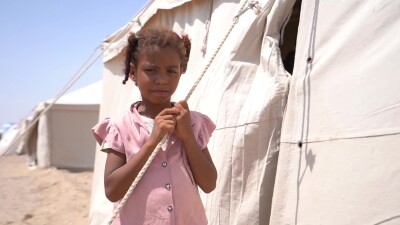
Aid agencies in Yemen highlighted the growing hunger emergency sparked by renewed fighting between Houthi opposition forces and Government troops, after mobile health clinics reported that hundreds of children displaced by the violence are suffering from the most deadly form of malnutrition.
1
1
1
Edited News | UNHCR
Displacement on the rise in Yemen as fighting continues - UNHCR
As hostilities worsen in Yemen, more people have been fleeing their homes, further intensifying the humanitarian crisis within the region, the UN Refugee Agency (UNHCR) warned on Tuesday.
1
1
1
Edited News | IOM , OHCHR , UNFPA , UNOG , UNHCR , WHO
Yemen’s humanitarian crisis growing by the hour amid spike in displacement
Yemenis displaced by renewed fighting have described fleeing for their lives amid shelling and gunfire, aid agencies reported on Friday, while highlighting the dramatic increase in humanitarian needs in the country and in Djibouti, where thousands have sought shelter.
1
1
1
Edited News | OHCHR , UNOG
The UN Human Rights Office issued on Friday a report documenting a shocking pattern of sexual violence amid Russia’s full-scale armed attack on Ukraine.