

The United Nations Office at Geneva
Multimedia Newsroom
STORYLINE
Famine alert for Somalia and South Sudan
The threat of famine is very real in Somalia and South Sudan and urgent action is needed now to avoid a catastrophe, UN humanitarians warned on Tuesday.
The alert from the World Food Programme (WFP) and Food and Agriculture Organization (FAO) followed the latest food security assessments which showed that six million people in Somalia will face acute food insecurity in the coming months, unless the rains come.
That is almost double the number at the start of the year, said Lara Fossi, WFP Deputy Country Director in Somalia, who noted that Somalia last endured famine in 2011 and only narrowly avoided it in 2016-2017, thanks to prompt humanitarian intervention.
“This is a heads-up that this assessment is showing that we are already identifying six areas in Somalia that are at risk of famine, that are at risk of going down that route of 2011 if we don't act now,” she said.
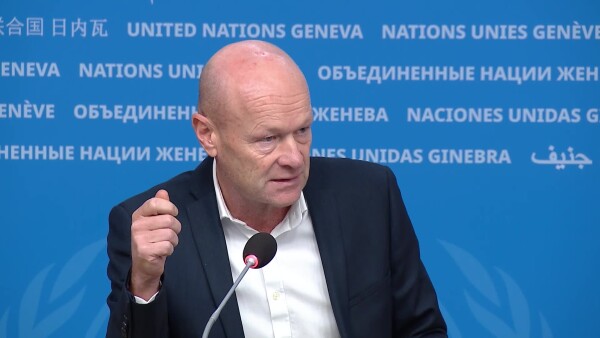
The situation is equally devastating in South Sudan, where “two-thirds of the country will likely face hunger between May and July of this year,” said Meshack Malo, FAO Representative in South Sudan, speaking via Zoom from Juba. “In terms of actual numbers, that means this is about 7.74 million people; this is the highest number ever recorded.”
Famine was declared in two counties of South Sudan in 2017, although prompt international assistance prevented the situation from deteriorating further.
Citing the latest IPC data on food insecurity across South Sudan, Mr. Malo noted that 1.34 million children are “malnourished severely. And over 600,000 pregnant and lactating women are malnourished this year”.
The drivers of chronic food insecurity in South Sudan include the civil war that started in 2013 and ended in 2020. It caused widespread destruction, death and displacement, leaving two million people internally displaced and another 2.3 million as refugees in neighbouring countries. Some of the worst flooding in generations has also driven displacement and pushed local communities to breaking point, reducing crop production and dependence on imports which have undermined people’s ability to secure sufficient nutritious food all year round.
Back in Somalia, the devastating effects of successive failed rains have already pushed people to leave their homes in search of food and work.
“There are dozens of camps for the internally displaced people which have grown exponentially in the last few months,” said WFP’s Ms. Fossi, speaking via Zoom from Mogadishu. “Thousands of households are pouring into them from the areas hardest-hit by the drought. They are desperately seeking assistance and when you visit some of these camps, you can see the lines of the new arrivals coming in and many of these people are women and children, and frankly, it's impossible to see them and not be shocked by the visible signs of destitution and life-threatening malnutrition.”
The WFP officer warned that the agency is now “taking from the hungry to feed the starving” as it struggles to scale up its emergency response to 2.5 million people in Somalia – “a next to impossible feat, considering our relief funding gap of $149 million”.
She added: “The latest data shows how rapidly things are getting worse, with six million people now facing acute food insecurity in the coming months. This is almost double the number at the start of the year. It's almost 40 per cent of the population and there is a real risk of famine in some areas if the current rainy season fails.”
ends
TRT: 2 mins 53s
SOURCE: UNTV CH
RESTRICTIONS: NONE
LANGUAGE: ENGLISH
ASPECT RATIO: 16:9
DATELINE: 12 April 2022 GENEVA, SWITZERLAND
SHOTLIST
- Exterior medium wide shot, flag alley, UN Geneva.
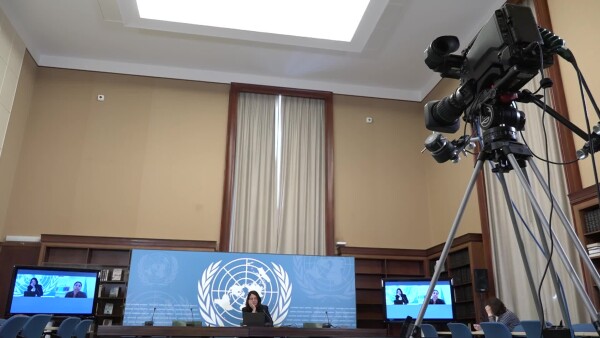
- Wide shot, TV camera and tripod in foreground, podium speaker and TV screens on both sides to rear, UN Geneva Press room.
- SOUNDBITE (ENGLISH): Lara Fossi (Zoom from Mogadishu), Deputy Country Director for WFP in Somalia: “This is a heads-up that this assessment is showing that we are already identifying six areas in Somalia that are at risk of famine, that are at risk of going down that route of 2011 if we don't act now.”
- Close-up, TV screen showing speakers.
- SOUNDBITE (ENGLISH): Meshack Malo (Zoom from Juba), FAO Representative in South Sudan: “Two-thirds of the country will likely face hunger between May and July of this year. In terms of actual numbers, that means this is about 7.74 million people; this is the highest number ever recorded.”
- Close-up, showing shoulder and back of masked participant in foreground, another participant and TV screen displaying podium speaker to rear.
- SOUNDBITE (ENGLISH): Lara Fossi (Zoom from Mogadishu), Deputy Country Director for WFP in Somalia: “There are dozens of camps for the internally displaced people which have grown exponentially in the last few months. Thousands of households are pouring into them from the areas hardest-hit by the drought. They are desperately seeking assistance and when you visit some of these camps, you can see the lines of the new arrivals coming in and many of these people are women and children, and frankly, it's impossible to see them and not be shocked by the visible signs of destitution and life-threatening malnutrition.”
- Medium shot, masked participant checking his phone.
- SOUNDBITE (ENGLISH): Lara Fossi (Zoom from Mogadishu), Deputy Country Director for WFP in Somalia: “The latest data shows how rapidly things are getting worse, with six million people now facing acute food insecurity in the coming months. This is almost double the number at the start of the year. It's almost 40 per cent of the population and there is a real risk of famine in some areas if the current rainy season fails.”
- Close-up, TV screen displaying speakers.
- SOUNDBITE (ENGLISH): Meshack Malo (Zoom from Juba), FAO Representative in South Sudan: “Of the 7.74 million people, an estimated 87,000 people will face catastrophe (that is IPC Phase 5). This is a level of acute food insecurity, which is normally characterized by extreme hunger in the face of limited or no coping options.”
- Close-up, fingers typing on laptop.
- SOUNDBITE (ENGLISH): Meshack Malo (Zoom from Juba), FAO Representative in South Sudan: “In South Sudan, 1.34 million children are malnourished severely. And over 600,000 pregnant and lactating women are malnourished this year, from these results.”
- Medium shot, masked participants following the presser in foreground, TV screen displaying the speakers to rear.
- Medium shot, masked participants following the presser in foreground, TV camera with tripod to rear.
- Close-up, masked participant looking at laptop screen in foreground, TV camera with tripod and studio flashlight to rear.
Similar Stories
1
1
1
Edited News | OCHA , UNICEF , WFP
Aid agencies warned on Friday of the fast-developing humanitarian emergency inside Taiz City in Yemen, which has been encircled by de facto Houthi forces fighting government troops along the country’s west coast.

2
17
1
2
Edited News , Press Conferences , Images | OCHA , WMO
Two UN agencies teamed up on Wednesday to issue an appeal for immediate assistance to help communities already being impacted by the strongest El Niño on record.
3
16
2
2
Edited News , B-roll , Conferences , Images | UNITED NATIONS , UNOG
Sixth Consultative Meeting on Enhancing Coordination of Peace Initiatives and Efforts for Sudan

1
1
1
Edited News | UNICEF , WHO , UNHCR
Yemen war continues to force families from homes amid hunger and disease
More than 250,000 people have now fled renewed fighting in Yemen, the UN said on Tuesday, citing particular concern for those sheltering in the southwestern city of Taiz and the wider governorate, where access is “essentially blocked”.

1
1
1
Edited News | UNICEF
A little over one year since a ceasefire agreement was announced between Hamas fighters and Israel, more than 340 children have been reported killed and hundreds more injured, the UN Children’s Fund, UNICEF, said on Friday.

1
1
1
Edited News | UNICEF , IFRC
Six weeks after Nepal’s deadly flooding disaster, communities are still struggling to rebuild their lives, but they will need sustained help as global warming increases the risk of another Himalayan catastrophe, the UN Children’s Fund (UNICEF) said on Friday.

1
1
1
Edited News | WHO
In suspected Russia plague death, testing and monitoring underway – WHO
The death of a lab worker in Russia’s Siberia region has sparked concerns about plague being the cause, the UN World Health Organization (WHO) said on Tuesday, adding that it was following the situation closely.

1
1
Edited News | OHCHR , UNOG
UN Human Rights Chief Volker Türk on Friday provided and oral update to the 63rd session of the Human rights Council on Ukraine.

1
1
1
Edited News | OHCHR , UNOG
UN Human Rights Chief Volker Türk on Friday provided and oral update to the 63rd session of the Human rights Council on the human rights situation in Haiti.

1
1
1
Edited News | WHO
Repeated delays in bringing lifesaving medicines, prosthetics and more from Israel into Gaza risk having devastating consequences on Palestinians who urgently need them in the wartorn enclave, the UN World Health Organization (WHO) said on Friday. “A truck full of non-priority supplies or the right supplies arriving too late, doesn't save lives. That's the question that actually matters," said Dr Reinhilde Van De Weerdt, WHO Representative in the OPT.

1
1
1
Edited News | WHO
DRC: Early access to care and oxygen decisive for Ebola patients’ survival – WHO
In the Democratic Republic of the Congo (DRC), health workers fighting the country’s largest-ever Ebola outbreak are struggling to overcome critical challenges to patient care, the UN World Health Organization (WHO) warned on Tuesday.

1
1
1
Edited News | OCHA , UN
Civilians in Iran are continuing to feel the consequences of months of conflict and military escalation, the UN’s top official in the country has said, as loss of life, damage to civilian infrastructure and mounting economic pressures leave many facing continued uncertainty.