

The United Nations Office at Geneva
Multimedia Newsroom
Edited News , Press Conferences | UNOG , UNITED NATIONS
UN Commission Of Inquiry - Syria Presser
Fears resurgent over Syria escalation amid rise in violence and deepening humanitarian crisis
Top UN-appointed rights investigators on Wednesday urged renewed efforts for a political solution to Syria’s devastating war, which has been marked by an uptick of violence and a deepening humanitarian crisis in recent months.
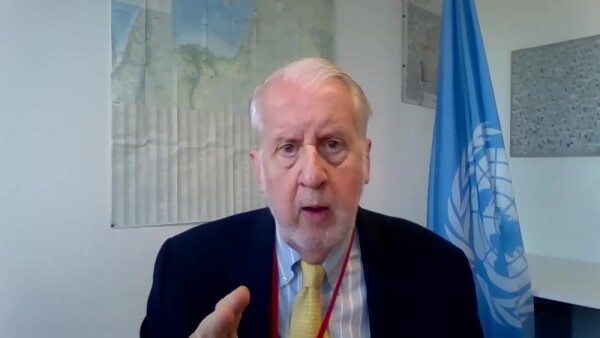
Presenting the latest UN Human Rights Council-mandated report on the conflict at a virtual press conference in Geneva, Paulo Pinheiro, Chair of the Independent International Commission of Inquiry on the Syrian Arab Republic, described the “devastating” impact on communities:
“Hundreds of thousands have been killed, more than half of the pre-war population – somewhere in the order of 22 million - have been displaced. More than 100,000 are missing or forcibly disappeared. Syria’s cities and infrastructure have been destroyed. Today the poverty rate in Syria is an unprecedented 90 percent; 14.6 million people in Syria depend on humanitarian aid.”
In Syria’s northwest, many Syrians displaced by the conflict “are still living in flimsy tents, stuck in snow, rain, mud,” Mr. Pinheiro continued, before insisting that “some actors seem to spend more energy on preventing aid to get to them rather than facilitating it”.
Although parts of Syria are no longer subject to active fighting, communities remain caught between warring parties and exploited by armed actors, Mr. Pinheiro said.
He added: “Make no mistake that violence against civilians continues across the country, from bombardment in the northwest, north and northeast, to targeted killings, unlawful detention and torture…These are the abysses faced by the Syrian people.”
According to the report, covering the period July to December 2021, there were increased bombardments in the northwest of the country and skirmishes between the Turkish-backed Syrian National Army (SNA) and the Syrian Democratic Forces in the northeast. The Commission documented “grave violations of fundamental human rights and international humanitarian law by parties to the conflict, including war crimes and ongoing patterns of crimes against humanity. In Idlib and western Aleppo in the northwest, residential areas were also shelled indiscriminately from the ground by pro-government forces.”
Previous reports by the Commission of Inquiry have warned about a worsening humanitarian situation across Syria because of fighting and insecurity, but Russia’s invasion of Ukraine on 24 February has heightened concerns that critical wheat imports may now be affected, said Commissioner Hanny Megally: “We’re already seeing inflation at 140 per cent at the beginning of this year (and) it’s gone up. We’re seeing the State already beginning to ration. We’re seeing the prices of commodities, basic commodities and fuel going up. As Paulo said, most of Syria’s imported wheat is coming from Ukraine or Russia, so we are very concerned that the war in Ukraine will have a bad impact on Syria.”
With Syria “teetering on collapse”, the Commissioners urged a review of sanctions imposed on Syria on a country-by-country basis.
“Sanctions …should facilitate humanitarian assistance (but) this is not really working very well,” said Mr. Megally, who warned that many countries were so fearful of breaching the embargoes that they were practising “overcompliance”, leaving Syrian communities short of essential commodities.
Findings from the latest report from the Commission of Inquiry include 14 attacks “by Syrian and Russian forces in northwest Syria”, Mr. Pinheiro said. “Over these past few months, scores of children were killed, including on their way to school; and the last functional medical centre in Jabal al Zawiya was rendered inoperable.”
Longstanding concerns also remain over the detention in Al Hol camp of tens of thousands of women and children, believed to be the families of former ISIL fighters, in Syria’s northeast.
“The conditions in Al Hol are absolutely appalling, and the number of children and other numbers of mostly women who are detained-cum-interned there,” said Commissioner Lynn Welchman of the notorious camp complex in Syria’s northeast. “It’s a dreadful situation, humanitarian-wise and security-wise. And it’s one of the things that we are most concerned about in terms of what’s happened…In some cases, it could at least be addressed by third nations who are able to take back their nationals with their children.”
The Commission of Inquiry has repeatedly called for UN Member States to repatriate nationals who went to participate in the Syrian conflict.
“The camp residents are under constant risk of being injured, killed, or trafficked. More than 90 murders and 40 attempted murders have occurred in Al Hol alone in the past year,” said Mr. Pinheiro. “We are repeating our call for Member States to bring home their women and children from the camps.”
ends
STORY: Syria – UN Commission of Inquiry Update
TRT: 3 min 19s
SOURCE: UNTV CH
RESTRICTIONS: NONE
LANGUAGE: ENGLISH/NATS
ASPECT RATIO: 16:9
DATELINE: 9 MARCH 2022 GENEVA, SWITZERLAND
SHOTLIST
- Wide shot, UN Geneva flag alley, a sunny day.
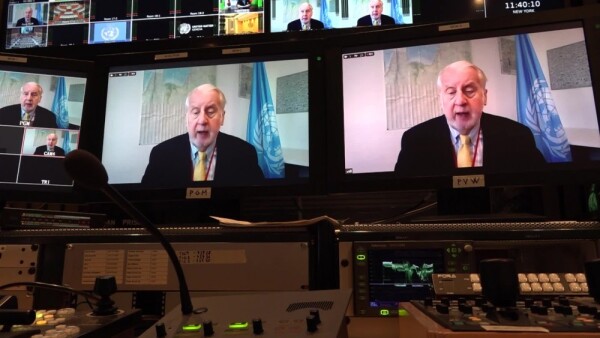
- Wide shot, UNTV studio, multiscreen set-up and technician walking across room.
- SOUNDBITE (EN): Paulo Pinheiro, Chair, Independent International Commission of Inquiry on the Syrian Arab Republic: “Just look at the situation today for Syrians who have lived through a devastating 10 years of conflict: hundreds of thousands have been killed, more than half of the pre-war population – somewhere in the order of 22 million - have been displaced.”
- Medium shot, UNTV studio showing Commission of Inquiry virtual press conference on multiple screens.
- SOUNDBITE (English) — Hanny Megally, Commissioner, Independent International Commission of Inquiry on the Syrian Arab Republic: “We’re already seeing inflation at 140 per cent at the beginning of this year, it’s gone up. We’re seeing the State already beginning to ration. We’re seeing the prices of commodities, basic commodities and fuel going up. As Paulo said, most of Syria’s imported wheat is coming from Ukraine or Russia, so we are very concerned that the war in Ukraine will have a bad impact on Syria.”
- Medium shot, UNTV studio, screens showing Commission of Inquiry virtual press conference.
- SOUNDBITE (EN): Paulo Pinheiro, Chair, Independent International Commission of Inquiry on the Syrian Arab Republic: “In the 14 attacks by Syrian and Russian forces that we detailed in the northwest - you may see in annex IV of the present report - over these past few months, scores of children were killed, including on their way to school; and the last functional medical centre in Jabal al Zawiya was rendered inoperable.”
- Medium shot, UNTV studio, screens showing Commission of Inquiry virtual press conference.
- SOUNDBITE (EN): Paulo Pinheiro, Chair, Independent International Commission of Inquiry on the Syrian Arab Republic: “Many Syrian IDPs in the northwest as we have mentioned are still living in flimsy tents, stuck in snow, rain, mud; and yet, some actors seem to spend more energy on preventing aid to get to them rather than facilitating it.”
- Medium shot, UNTV studio, multiscreen set-up showing Commission of Inquiry virtual press conference and sound levels on meters.
- SOUNDBITE (EN): Lynn Welchman, Commissioner, Independent International Commission of Inquiry on the Syrian Arab Republic: “The conditions in Al Hol are absolutely appalling, and the number of children and other numbers of mostly women who are detained-cum-interned there. It’s a dreadful situation, humanitarian-wise and security-wise. And it’s one of the things that we are most concerned about in terms of what’s happened…In some cases, it could at least be addressed by third nations who are able to take back their nationals with their children.”
- Close-up, UNTV studio, sound meters rising and falling.
- SOUNDBITE (English) — Paulo Pinheiro, Chair, Independent International Commission of Inquiry on the Syrian Arab Republic: “The camp residents are under constant risk of being injured, killed, or trafficked. More than 90 murders and 40 attempted murders have occurred in Al Hol alone in the past year. We are repeating our call for Member States to bring home their women and children from the camps.”
- Close-up, UNTV studio oscilloscope.
- Wide shot, UNTV studio, technician and multiple screens showing virtual press conference.
- Medium shot, UNTV studio screens showing virtual press conference.
Similar Stories

1
1
1
Edited News | UNICEF , IFRC
Six weeks after Nepal’s deadly flooding disaster, communities are still struggling to rebuild their lives, but they will need sustained help as global warming increases the risk of another Himalayan catastrophe, the UN Children’s Fund (UNICEF) said on Friday.

1
1
1
Statements , Press Conferences | OHCHR

1
1
1
Press Conferences | UNHCR , UNICEF , IFRC , OHCHR , UN WOMEN , IOM , OCHA , WHO
UNHCR – ExCom Meeting, UNICEF – Nepal Recovery, IFRC – Flash Floods, WHO – Mental Health, IOM – South Sudan Floods, OCHA – DRC Humanitarian aid, UNHCR – Sahel Displacement, UNICEF – Yemen Update, IOM – Gaza Shelter, UN Women – Gaza Women, OHCHR – Arrests and detentions of Syrians by Israeli force

2
1
2
Press Conferences | UNCTAD
Presentation of the Trade and Developement Report 2026
Embargoed until 9 October 2026 at 11 a.m. (Geneva Time)
UNCTAD: UNCTAD’s flagship report finds that governments increasingly use industrial, trade, financial and technology policies to pursue economic and national security objectives. Market access and the ability to move into higher-value activities now depend more heavily on technology, finance and geopolitics.

1
1
1
Press Conferences | UPU
Release of the State of the Postal Sector Report 2026

1
1
1
Edited News | WHO
In suspected Russia plague death, testing and monitoring underway – WHO
The death of a lab worker in Russia’s Siberia region has sparked concerns about plague being the cause, the UN World Health Organization (WHO) said on Tuesday, adding that it was following the situation closely.
1
1
1
Press Conferences | IOM , ITU , UNECE , UNICEF , WHO , WMO
UNICEF: Ebola, DRC - children orphans or separating them from parents and caregivers; IOM: Humanitarian needs in Djibouti amid arrivals from Yemen and increased migrant movements; WHO: Darfur, scale of health needs far exceeds available resources; WMO co-sponsored Global Heat Forum, Bangkok, monthly Global Seasonal Climate Update; UNECE: UN Forum of Mayors; ITU Plenipotentiary Conference 2026; WHO: child and adolescent obesity guidelines and new global roadmap to tackle pregnancy hypertension, a leading cause of maternal mortality

1
1
Edited News | OHCHR , UNOG
UN Human Rights Chief Volker Türk on Friday provided and oral update to the 63rd session of the Human rights Council on Ukraine.

1
1
1
Edited News | OHCHR , UNOG
UN Human Rights Chief Volker Türk on Friday provided and oral update to the 63rd session of the Human rights Council on the human rights situation in Haiti.

1
1
1
Edited News | WHO
Repeated delays in bringing lifesaving medicines, prosthetics and more from Israel into Gaza risk having devastating consequences on Palestinians who urgently need them in the wartorn enclave, the UN World Health Organization (WHO) said on Friday. “A truck full of non-priority supplies or the right supplies arriving too late, doesn't save lives. That's the question that actually matters," said Dr Reinhilde Van De Weerdt, WHO Representative in the OPT.
1
1
1
Press Conferences | OCHA , UN WOMEN , UNHCR , WFP , WHO , WTO , UNEP
OCHA – $160M CERF allocation to 12 underfunded crises; UNHCR – 5.8M refugee children remain out of school amid funding cuts; UN Women – Middle East escalation and food security among women/girls; WHO – Gaza supplies and overall situation; WFP – Yemen food insecurity and impact on global hunger ; UNEP - First International Conference of the Global Framework on Chemicals in Geneva | 16-20 November 2026

1
1
1
Edited News | WHO
DRC: Early access to care and oxygen decisive for Ebola patients’ survival – WHO
In the Democratic Republic of the Congo (DRC), health workers fighting the country’s largest-ever Ebola outbreak are struggling to overcome critical challenges to patient care, the UN World Health Organization (WHO) warned on Tuesday.