

The United Nations Office at Geneva
Multimedia Newsroom
Children and their families living in Ethiopia's lowland regions of Afar, Oromia, The Southern Nations, Nationalities, and Peoples’ and Somali regions struggle to survive from a severe drought which is drying up water wells, killing livestock and crops and pushing hundreds of thousands of children and their families to the brink. Due to three consecutive failed rainy seasons, the country requires urgent humanitarian assistance.
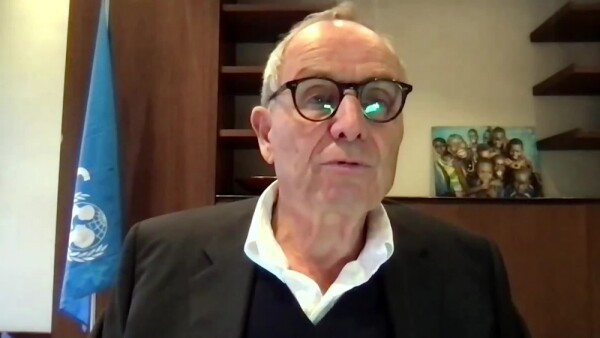
Speaking today at a news briefing at the United Nations in Geneva, UNICEF's Representative in Ethiopia, Gianfranco Rotigliano, said that “it is a drought that is affecting almost seven million people on their livelihood, on food security”. He added that “it is something which is already pretty advanced and bad, but that could worsen dramatically if the next rainy season which is due in April, after mid-April, would not come the way it should come.”
Most severely impacted regions are the lowland areas of southern and eastern Oromia and Somalis regions where around 225,000 malnourished children and over 100,000 pregannt and breastfeeding women need urgent nutrition support.
“There is a need to improve the status of the health centers, the nutritional centers where the severely acute, malnourished children can be admitted and treated correctly. And all of that is something that should be done within the next 2, 3 weeks”, said Mr. Rotigliano.
UNICEF is appealing for US$ 31 million to provide lifesaving support to more than 2 million in Afar, Somali, SNNPR and Oromia regions.
There is a significant lack of clean water and the food security is deteriorating rapidly leading to an increase in malnutrition cases.
UNICEF’s Ethiopia representative said that “the rate of acute malnutrition is already at 20%, which is well above the rate that we have in global emergencies, which is estimated to 15%.”
UNICEF, in close coordination with the local authorities, is providing life-saving assistance, including the rehabilitation of boreholes and water schemes, emergency water trucking, treatment of severely malnourished children.
“We have animals dying at an impressive rate which is increasing every month”, reported Mr. Rotigliano. “A death of an animal means lack of food for children, for families, lack of money, of course, so to buy food, lack of milk. And that is definitely something which is already happening”.
UNICEF is witnessing also major displacement out of affected areas; children are also missing out an education due to the drought.
According to UNICEF’s Ethiopia representative, “the population is moving already from the lowlands to the highlands, displacing themselves, leaving behind the small children that could not travel with relatives and coming up with children that are 11 or 12 and above that dropped out of school. So, we estimate already more than 155,000 children out of school.”
It is also projected that in 2022, an estimated 850,000 children will be severely malnourished across the four regions due to multiple causes namely conflict, drought, and economic downturn.
“We are having hundreds of thousands of children severely malnourished, so with acute severe malnutrition these are already numbers that are extremely worrisome, and we expect, of course, the mortality rate to increase”, said UNICEF’s Ethiopia representative.
-ends-
- Exterior wide shot, United Nations Palace of Nations, Geneva, UN flags flying.
- Wide shot and pan, press room UN Geneva.
- SOUNDBITE (English): Gianfranco Rotigliano, UNICEF Representative in Ethiopia: “It is a drought that is affecting almost seven million people on their livelihood, on food security. And it is something which is already pretty advanced and bad, but that could worsen dramatically if the next rainy season which is due in April, after mid-April, would not come the way it should come.”
- Medium shot, TV screen with speakers next to podium.
- SOUNDBITE (English): Gianfranco Rotigliano, UNICEF Representative in Ethiopia: “There is a need to improve the status of the health centers, the nutritional centers where the severely acute, malnourished children can be admitted and treated correctly. And all of that is something that should be done within the next 2, 3 weeks.”
- Medium shot, participants listening with TV screen to rear.
- SOUNDBITE (English): Gianfranco Rotigliano, UNICEF Representative in Ethiopia: “The rate of acute malnutrition is already at 20%, which is well above the rate that we have in global emergencies, which is estimated to 15%.”
- Medium shot, masked participants listening.
- SOUNDBITE (English): Gianfranco Rotigliano, UNICEF Representative in Ethiopia: “We have animals dying at an impressive rate which is increasing every month. And a death of an animal means lack of food for children, for families, lack of money, of course, so to buy food, lack of milk. And that is definitely something which is already happening.”
- Medium shot, back of a journalist with cameraman standing behind the camera.
- SOUNDBITE (English): Gianfranco Rotigliano, UNICEF Representative in Ethiopia: “The population is moving already from the lowlands to the highlands, displacing themselves, leaving behind the small children that could not travel with relatives and coming up with children that are 11 or 12 and above that dropped off school. So, we estimate already more than 155,000 children out of school.”
- Medium shot, masked participants listening.
- SOUNDBITE (English): Gianfranco Rotigliano, UNICEF Representative in Ethiopia: “We are having hundreds of thousands of children severely malnourished, so with acute severe malnutrition these are already numbers that are extremely worrisome, and we expect, of course, the mortality rate to increase.”
- Medium shot, participants listening and taking notes.
Similar Stories

1
1
1
Edited News | OCHA , UNICEF , WFP
Aid agencies warned on Friday of the fast-developing humanitarian emergency inside Taiz City in Yemen, which has been encircled by de facto Houthi forces fighting government troops along the country’s west coast.

2
17
1
2
Edited News , Press Conferences , Images | OCHA , WMO
Two UN agencies teamed up on Wednesday to issue an appeal for immediate assistance to help communities already being impacted by the strongest El Niño on record.

3
16
2
2
Edited News , B-roll , Conferences , Images | UNITED NATIONS , UNOG
Sixth Consultative Meeting on Enhancing Coordination of Peace Initiatives and Efforts for Sudan

1
1
1
Edited News | UNICEF , WHO , UNHCR
Yemen war continues to force families from homes amid hunger and disease
More than 250,000 people have now fled renewed fighting in Yemen, the UN said on Tuesday, citing particular concern for those sheltering in the southwestern city of Taiz and the wider governorate, where access is “essentially blocked”.

1
1
1
Edited News | UNICEF
A little over one year since a ceasefire agreement was announced between Hamas fighters and Israel, more than 340 children have been reported killed and hundreds more injured, the UN Children’s Fund, UNICEF, said on Friday.

1
1
1
Edited News | UNICEF , IFRC
Six weeks after Nepal’s deadly flooding disaster, communities are still struggling to rebuild their lives, but they will need sustained help as global warming increases the risk of another Himalayan catastrophe, the UN Children’s Fund (UNICEF) said on Friday.

1
1
1
Edited News | WHO
In suspected Russia plague death, testing and monitoring underway – WHO
The death of a lab worker in Russia’s Siberia region has sparked concerns about plague being the cause, the UN World Health Organization (WHO) said on Tuesday, adding that it was following the situation closely.

1
1
Edited News | OHCHR , UNOG
UN Human Rights Chief Volker Türk on Friday provided and oral update to the 63rd session of the Human rights Council on Ukraine.

1
1
1
Edited News | OHCHR , UNOG
UN Human Rights Chief Volker Türk on Friday provided and oral update to the 63rd session of the Human rights Council on the human rights situation in Haiti.

1
1
1
Edited News | WHO
Repeated delays in bringing lifesaving medicines, prosthetics and more from Israel into Gaza risk having devastating consequences on Palestinians who urgently need them in the wartorn enclave, the UN World Health Organization (WHO) said on Friday. “A truck full of non-priority supplies or the right supplies arriving too late, doesn't save lives. That's the question that actually matters," said Dr Reinhilde Van De Weerdt, WHO Representative in the OPT.

1
1
1
Edited News | WHO
DRC: Early access to care and oxygen decisive for Ebola patients’ survival – WHO
In the Democratic Republic of the Congo (DRC), health workers fighting the country’s largest-ever Ebola outbreak are struggling to overcome critical challenges to patient care, the UN World Health Organization (WHO) warned on Tuesday.

1
1
1
Edited News | OCHA , UN
Civilians in Iran are continuing to feel the consequences of months of conflict and military escalation, the UN’s top official in the country has said, as loss of life, damage to civilian infrastructure and mounting economic pressures leave many facing continued uncertainty.