

The United Nations Office at Geneva
Multimedia Newsroom
Edited News | OHCHR , UNOG , UNITED NATIONS
UNOG Bi-Weekly Press Briefing: Burkina Faso- Military Takeover - OHCHR
Soldiers in Burkina Faso ousted President Roch Marc Christian Kaboré yesterday, Monday 24 January, dissolving the government and suspending the country’s constitution. UN Human Rights High Commissioner Michelle Bachelet “deplores the military takeover and calls for immediate release of President Kaboré, elected in peaceful election in 2020,” her spokesperson said a press briefing in Geneva on Tuesday.
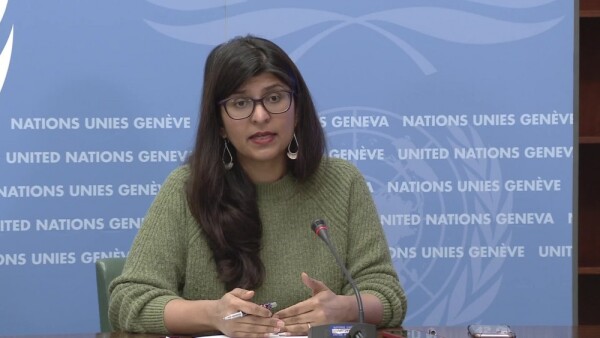
“We call on the military to immediately release the President and other high-level officials who have been detained,” said Ravina Shamdasani, a spokesperson the Office of the High Commissioner for Human Rights (OHCHR).
The ousting of President Kaboré was made on state television by an army officer, who blamed the deteriorating security situation for the military takeover. “We urge a swift return to constitutional order,” Ms. Shamdasani added.
This latest coup in West Africa comes amid a “multifaceted crisis”, according to OHCHR – a crisis that ranges from “climate change that affects the ability of herders and pastoralists to carry out their daily work and conflicts erupt as a result of it, to violent extremist groups attacks on local population, as well as the deteriorating humanitarian situation”.
OHCHR estimates that three million people are food insecure in the country. Those factors “generate a lot of frustration” among the population, Ms. Shamdasani said, adding that the High Commissioner believes that “the way to manage this frustration and to find a way out of this conflict is through dialogue, through the meaningful participation of people from all sectors of the society. The military coup is certainly not the solution”.
The High Commissioner view echoed the statement by UN Secretary General Antonio Guterres yesterday, in which he condemned “any attempt to take over a government by the force of arms.”
- Exterior wide shot, United Nations Palace of Nations, Geneva. UN flags flying.
- Wide shot of press room UN Geneva.
- SOUNDBITE (English): Ravina Shamdasani, Spokesperson of UN human rights office, OHCHR: “The High Commissioner deeply deplores the military takeover of power in Burkina Faso yesterday. During her visit to Burkina Faso last November, she had stressed the importance of preserving the hard won democratic and human rights gains made in the country, noting in particular the peaceful legislative and presidential elections that had been held in 2020. We call on the military to immediately release the President and other high-level officials who have been detained. We urge a swift return to constitutional order.”
- Cutaway, Medium shot of podium behind the camera
- SOUNDBITE (English): Ravina Shamdasani, Spokesperson of UN human rights office, OHCHR: We do not have personal contact at the moment with the coup leaders, but as I said, what we saw in the country was, of course, a multifaceted crisis.”
- Cutaway, Medium shot of cameraman
- SOUNDBITE (English): Ravina Shamdasani, Spokesperson of UN human rights office, OHCHR: “We stress that military takeover is not the solution, really there needs to be a meaningful dialog, with the participation of people from across the spectrum to be able to air their grievances peacefully and to be able to resolve the situation together. And we are urging that the President is immediately released”.
- Cutaway, Close shot of hand and pen taking notes on notepad.
- SOUNDBITE (English): Ravina Shamdasani, Spokesperson of UN human rights office, OHCHR: “There was, in fact, a dialog that had been initiated and there was a process of social reconciliation. And we met with the minister who was in charge of that, and he was bringing together different actors, so it's not too late. We are still calling for a restoration of civilian rule. We're calling for the release of the President and other high-level officials who have been detained.”
- Medium shot, masked participants listening
- Cutaway, Close shot of hands typing on keyboard
- Medium lateral shot of podium with Ravina Shamdasani
Similar Stories

1
1
1
Edited News | OCHA , UNICEF , WFP
Aid agencies warned on Friday of the fast-developing humanitarian emergency inside Taiz City in Yemen, which has been encircled by de facto Houthi forces fighting government troops along the country’s west coast.

2
17
1
2
Edited News , Press Conferences , Images | OCHA , WMO
Two UN agencies teamed up on Wednesday to issue an appeal for immediate assistance to help communities already being impacted by the strongest El Niño on record.

3
16
2
2
Edited News , B-roll , Conferences , Images | UNITED NATIONS , UNOG
Sixth Consultative Meeting on Enhancing Coordination of Peace Initiatives and Efforts for Sudan

1
1
1
Edited News | UNICEF , WHO , UNHCR
Yemen war continues to force families from homes amid hunger and disease
More than 250,000 people have now fled renewed fighting in Yemen, the UN said on Tuesday, citing particular concern for those sheltering in the southwestern city of Taiz and the wider governorate, where access is “essentially blocked”.

1
1
1
Edited News | UNICEF
A little over one year since a ceasefire agreement was announced between Hamas fighters and Israel, more than 340 children have been reported killed and hundreds more injured, the UN Children’s Fund, UNICEF, said on Friday.

1
1
1
Edited News | UNICEF , IFRC
Six weeks after Nepal’s deadly flooding disaster, communities are still struggling to rebuild their lives, but they will need sustained help as global warming increases the risk of another Himalayan catastrophe, the UN Children’s Fund (UNICEF) said on Friday.

1
1
1
Edited News | WHO
In suspected Russia plague death, testing and monitoring underway – WHO
The death of a lab worker in Russia’s Siberia region has sparked concerns about plague being the cause, the UN World Health Organization (WHO) said on Tuesday, adding that it was following the situation closely.

1
1
Edited News | OHCHR , UNOG
UN Human Rights Chief Volker Türk on Friday provided and oral update to the 63rd session of the Human rights Council on Ukraine.

1
1
1
Edited News | OHCHR , UNOG
UN Human Rights Chief Volker Türk on Friday provided and oral update to the 63rd session of the Human rights Council on the human rights situation in Haiti.

1
1
1
Edited News | WHO
Repeated delays in bringing lifesaving medicines, prosthetics and more from Israel into Gaza risk having devastating consequences on Palestinians who urgently need them in the wartorn enclave, the UN World Health Organization (WHO) said on Friday. “A truck full of non-priority supplies or the right supplies arriving too late, doesn't save lives. That's the question that actually matters," said Dr Reinhilde Van De Weerdt, WHO Representative in the OPT.

1
1
1
Edited News | WHO
DRC: Early access to care and oxygen decisive for Ebola patients’ survival – WHO
In the Democratic Republic of the Congo (DRC), health workers fighting the country’s largest-ever Ebola outbreak are struggling to overcome critical challenges to patient care, the UN World Health Organization (WHO) warned on Tuesday.

1
1
1
Edited News | OCHA , UN
Civilians in Iran are continuing to feel the consequences of months of conflict and military escalation, the UN’s top official in the country has said, as loss of life, damage to civilian infrastructure and mounting economic pressures leave many facing continued uncertainty.