

The United Nations Office at Geneva
Multimedia Newsroom
Edited News | UNHCR
UNOG Bi-Weekly Press Briefing Tigray- Eritrea Refugees’ Plight 21 January 2022
Tigray: Eritrean refugees ‘scared and struggling to eat’ amid aid obstacles
For the first time in three weeks, aid teams have reached refugee camps in Ethiopia’s Tigray region, only to find the Eritreans living there “scared and struggling to get enough to eat”, the UN Refugee Agency, UNHCR, said on Friday.
More than 25,000 refugees live in in Mai Aini and Adi Harush refugee camps in Tigray, where UNHCR has urged all parties to the conflict to guarantee safe passage, so that they can be relocated to neighbouring Amara region.
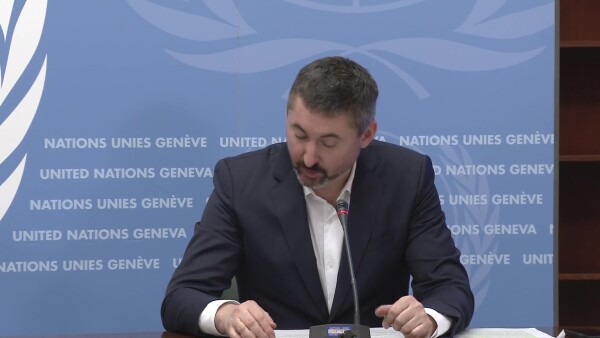
“After three weeks with no access due to the security situation, UNHCR staff members managed to reach Mai Aini and Adi Harush refugee camps in the Tigray region of Ethiopia earlier this week for the first time since the recent air strikes in and near the camps,” said Boris Cheshirkov, UNHCR spokesperson. “Our team found refugees scared and struggling to get enough to eat, lacking medicine and with little or no access to clean water.”
The work of humanitarians has been hindered by a lack of fuel, preventing clean water from being pumped in or trucked to the camps. This has left refugees with no option but to collect water from streams that are rapidly drying up, leaving them vulnerable to water-borne diseases.
“Despite concerted efforts, the complete inability to move supplies into the region means
that extreme hunger is an increasing concern,” Mr Cheshirkov noted, adding that more than 20 people had reportedly died in the last six weeks alone, amid deteriorating conditions and in particular a lack of medicine.
“With food running out in the camp and no additional stocks available for distribution, refugees tell us they have resorted to selling their clothes and few belongings to try to get food,” the UNHCR official said, before warning that more refugees will die, “if food, medicine, fuel and other supplies cannot be immediately brought in, and if we continue to be unable to relocate refugees out of harm's way”.
The development is the latest development in the armed conflict in Tigray which began on 3 November 2020 between Ethiopian national forces, Eritrean troops, Amhara forces and other militias on one side, and forces loyal to the Tigrayan People’s Liberation front on the other.
Echoing the UN-wide call for all parties in Ethiopia to protect civilians and to respect everyone’s
human rights and fundamental freedoms, Mr. Cheshirkov insisted that refugees “must not be held hostage” in the conflict.
“The desperate situation in these camps is a stark example of the impact of the lack of access and supplies affecting millions of displaced persons and other civilians throughout the region,” he added.
The development comes as UN aid coordination office, OCHA, warned that food distribution in Tigray is at its “all-time lowest”.
Food stocks and fuel are almost entirely exhausted, meaning that only about 10,000 people received assistance between 6 and 12 January – a drop in the ocean compared to the estimated 9.4 million who require humanitarian food assistance in Tigray, Afar and Amhara regions, which is an increase of 2.7 million from four months ago.
ends
STORY: Tigray: Eritrean Refugees’ Plight - UNHCR
TRT: 01 min 40s
SOURCE: UNTV CH
RESTRICTIONS: NONE
LANGUAGE: ENGLISH / NATS
ASPECT RATIO: 16:9
DATELINE: 21 JANUARY 2022 GENEVA, SWITZERLAND
SHOTLIST
- Exterior wide shot, United Nations Palace of Nations, Geneva. UN flag flying.
- Wide shot, press room UN Geneva.
- SOUNDBITE (English): Boris Cheshirkov, spokesperson for the Office of the High Commissioner for Human Rights (OHCHR): “After three weeks with no access due to the security situation, UNHCR staff members managed to reach Mai Aini and Adi Harush refugee camps in the Tigray region of Ethiopia earlier this week for the first time since the recent air strikes in and near the camps.”
- Medium-wide shot, large TV screen showing speaker, podium speakers to rear.
- SOUNDBITE (English): Boris Cheshirkov, spokesperson for the Office of the High Commissioner for Human Rights (OHCHR): “Our team found refugees scared and struggling to get enough to eat, lacking medicine and with little or no access to clean water.”
- Wide shot, podium speakers seated with TV screens on either side.
- SOUNDBITE (English): Boris Cheshirkov, spokesperson for the Office of the High Commissioner for Human Rights (OHCHR): “Despite concerted efforts, the complete inability to move supplies into the region means that extreme hunger is an increasing concern.”
- Medium shot, photographer taking photos.
- SOUNDBITE (English): Boris Cheshirkov, spokesperson for the Office of the High Commissioner for Human Rights (OHCHR): “The desperate situation in these camps is a stark example of the impact of the lack of access and supplies affecting millions of displaced people and other civilians throughout the region.”
- Medium shot, masked participant looking at laptop, in profile.
- SOUNDBITE (English): Boris Cheshirkov, spokesperson for the Office of the High Commissioner for Human Rights (OHCHR): “If food, medicine, fuel and other supplies cannot be immediately brought in, and if we continue to be unable to relocate refugees out of harm's way to where we can provide them with life-saving assistance, more refugees will die.”
- Medium shot, masked participant looking towards podium.
- Close-up, showing hand and pen taking notes on notepad.
- Wide shot, press room UN Geneva, with participants and podium speakers to rear.
- Medium shot, podium speakers taking notes during the briefing.
Similar Stories

1
1
1
Edited News | UNICEF
A little over one year since a ceasefire agreement was announced between Hamas fighters and Israel, more than 340 children have been reported killed and hundreds more injured, the UN Children’s Fund, UNICEF, said on Friday.

1
1
1
Edited News | UNICEF , IFRC
Six weeks after Nepal’s deadly flooding disaster, communities are still struggling to rebuild their lives, but they will need sustained help as global warming increases the risk of another Himalayan catastrophe, the UN Children’s Fund (UNICEF) said on Friday.

1
1
1
Edited News | WHO
In suspected Russia plague death, testing and monitoring underway – WHO
The death of a lab worker in Russia’s Siberia region has sparked concerns about plague being the cause, the UN World Health Organization (WHO) said on Tuesday, adding that it was following the situation closely.

1
1
Edited News | OHCHR , UNOG
UN Human Rights Chief Volker Türk on Friday provided and oral update to the 63rd session of the Human rights Council on Ukraine.

1
1
1
Edited News | OHCHR , UNOG
UN Human Rights Chief Volker Türk on Friday provided and oral update to the 63rd session of the Human rights Council on the human rights situation in Haiti.

1
1
1
Edited News | WHO
Repeated delays in bringing lifesaving medicines, prosthetics and more from Israel into Gaza risk having devastating consequences on Palestinians who urgently need them in the wartorn enclave, the UN World Health Organization (WHO) said on Friday. “A truck full of non-priority supplies or the right supplies arriving too late, doesn't save lives. That's the question that actually matters," said Dr Reinhilde Van De Weerdt, WHO Representative in the OPT.

1
1
1
Edited News | WHO
DRC: Early access to care and oxygen decisive for Ebola patients’ survival – WHO
In the Democratic Republic of the Congo (DRC), health workers fighting the country’s largest-ever Ebola outbreak are struggling to overcome critical challenges to patient care, the UN World Health Organization (WHO) warned on Tuesday.

1
1
1
Edited News | OCHA , UN
Civilians in Iran are continuing to feel the consequences of months of conflict and military escalation, the UN’s top official in the country has said, as loss of life, damage to civilian infrastructure and mounting economic pressures leave many facing continued uncertainty.
1
1
1
Edited News | WHO , UNICEF
Aid agencies in Yemen highlighted the growing hunger emergency sparked by renewed fighting between Houthi opposition forces and Government troops, after mobile health clinics reported that hundreds of children displaced by the violence are suffering from the most deadly form of malnutrition.
1
1
1
Edited News | UNHCR
Displacement on the rise in Yemen as fighting continues - UNHCR
As hostilities worsen in Yemen, more people have been fleeing their homes, further intensifying the humanitarian crisis within the region, the UN Refugee Agency (UNHCR) warned on Tuesday.
1
1
1
Edited News | IOM , OHCHR , UNFPA , UNOG , UNHCR , WHO
Yemen’s humanitarian crisis growing by the hour amid spike in displacement
Yemenis displaced by renewed fighting have described fleeing for their lives amid shelling and gunfire, aid agencies reported on Friday, while highlighting the dramatic increase in humanitarian needs in the country and in Djibouti, where thousands have sought shelter.
1
1
1
Edited News | OHCHR , UNOG
The UN Human Rights Office issued on Friday a report documenting a shocking pattern of sexual violence amid Russia’s full-scale armed attack on Ukraine.