

The United Nations Office at Geneva
Multimedia Newsroom
Département des opérations de maintien de la paix de l'ONU
Orateur :
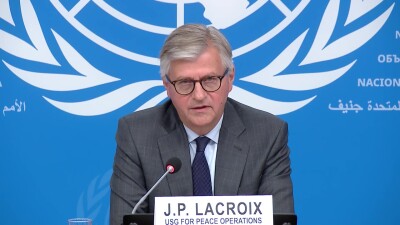
- Jean-Pierre Lacroix, Secrétaire général adjoint aux opérations de maintien de la paix
HISTOIRE : Pénurie de minéraux critiques - CEE-ONU
TRT : 2’59”
SOURCE : UNTV CH
RESTRICTIONS : AUCUNE
LANGUE : ANGLAIS, NATS
FORMAT D'IMAGE : 16:9
DATE : 23 AVRIL 2026, GENÈVE, SUISSE
LISTE DES PLANS
Orateur :
- Jean-Pierre Lacroix, Secrétaire général adjoint aux opérations de maintien de la paix
- Plan large extérieur, drapeau des Nations Unies flottant.
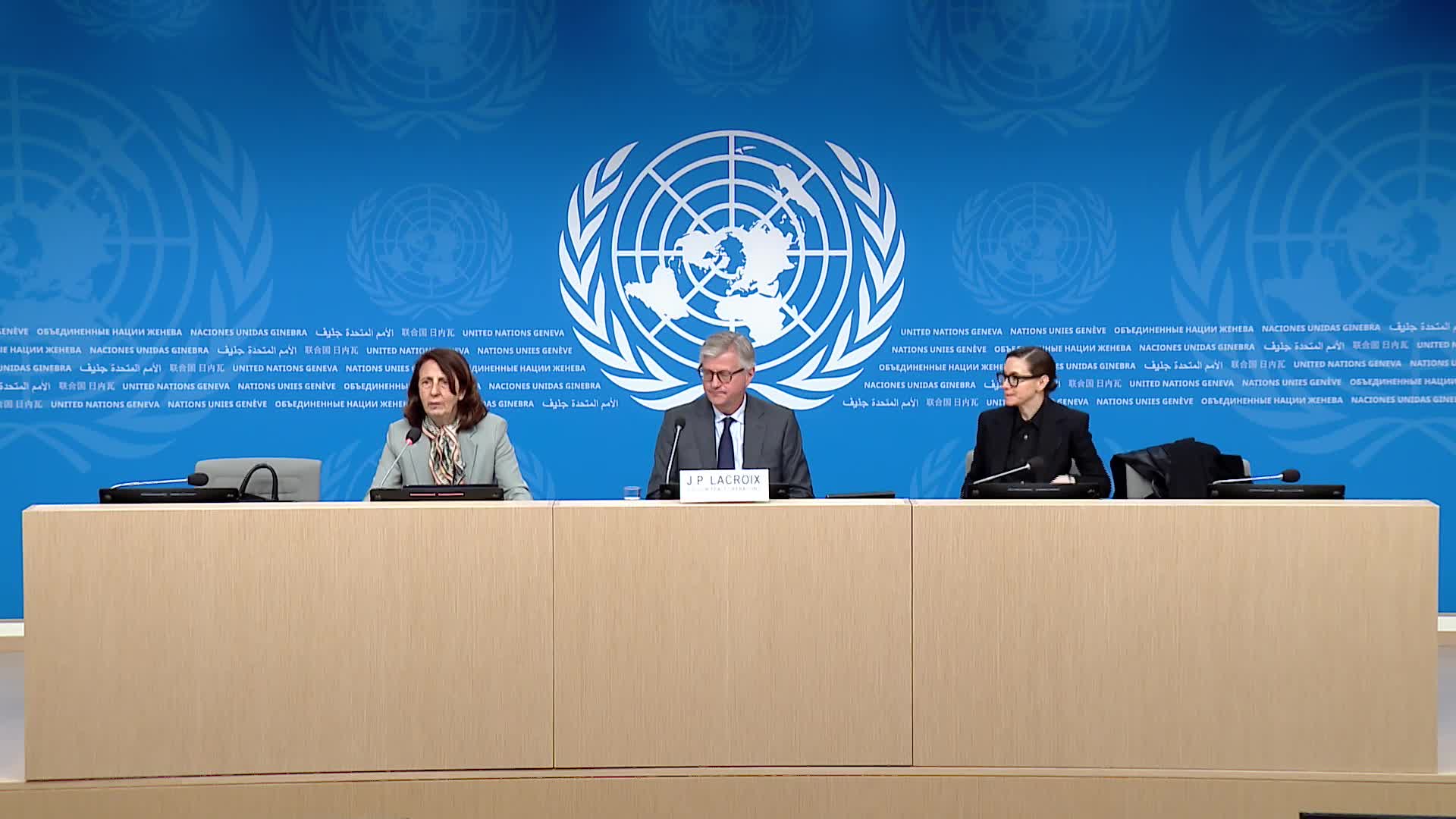
- Plan large des orateurs au podium lors du point de presse.
- EXTRAIT SONORE : (ANGLAIS) : Jean-Pierre Lacroix, Secrétaire général adjoint aux opérations de maintien de la paix : « Malheureusement, hier, nous avons appris avec tristesse le décès du caporal-chef Anicet Girardin de France, un deuxième casque bleu français décédé à la suite de l'incident du 18 avril. Et je pense que ces incidents tragiques - et nous avons également de nombreux casques bleus blessés à la suite des divers incidents qui ont eu lieu à la FINUL. »
- Plan moyen-large, orateurs au podium, écran de télévision montrant l'orateur.
- EXTRAIT SONORE : (ANGLAIS) : Jean-Pierre Lacroix, Secrétaire général adjoint aux opérations de maintien de la paix : « Et bien sûr, nous leur souhaitons à tous un prompt rétablissement. Et bien sûr, je réitère mes condoléances à la France et à l'Indonésie ainsi qu'aux familles des casques bleus décédés. C'est encore une illustration de l'environnement dangereux dans lequel les casques bleus opèrent, mais je pense qu'il est important de souligner ce qu'ils font et la différence qu'ils font. »
- Plan large, orateurs au podium, journalistes.
- EXTRAIT SONORE : (ANGLAIS) : Jean-Pierre Lacroix, Secrétaire général adjoint aux opérations de maintien de la paix : « Nos casques bleus font vraiment une véritable différence et ils le font dans un contexte de plus en plus dangereux. Vous avez vu cela à la FINUL seulement et au cours des dernières semaines, nous avons perdu cinq casques bleus, trois casques bleus d'Indonésie, deux de France. »
- Plan large, journalistes, participants.
- EXTRAIT SONORE : (ANGLAIS) : Jean-Pierre Lacroix, Secrétaire général adjoint aux opérations de maintien de la paix : « Il est vrai que le quartier général de la FINUL à Naqoura se trouve maintenant dans une zone où il y a une présence des Forces de défense israéliennes. Cela ne signifie pas que la FINUL n'est pas capable de se déplacer et d'opérer, même avec des limites et des contraintes. Ces limites se sont quelque peu assouplies depuis le début de ce que j'appelle le cessez-le-feu relatif, pas complet, mais toujours meilleur que pendant ces hostilités actives au cours des dernières semaines. »
- Plan moyen, journaliste.
- EXTRAIT SONORE : (ANGLAIS) : Jean-Pierre Lacroix, Secrétaire général adjoint aux opérations de maintien de la paix : « Nous avons actuellement environ 80 000 civils qui sont restés au sud de la rivière. Certains civils - en fait plus que certains - souhaitent revenir. Cela va être un défi pour eux. Ils auront besoin de soutien. La FINUL a récemment intensifié son activité en soutien à l'assistance humanitaire. »
- Plan large, salle de presse, orateurs au podium.
- EXTRAIT SONORE : (ANGLAIS) : Jean-Pierre Lacroix, Secrétaire général adjoint aux opérations de maintien de la paix : « Évidemment, encore une fois, la présence des Forces de défense israéliennes sur le territoire libanais est une violation de la résolution 1701 et bien sûr nous espérons que cette présence sera éventuellement terminée. »
- Plan moyen, journaliste.
Similar Stories
1
1
1
Press Conferences | UNHCR
End of UNHCR's 77th Annual Executive Committee (ExCom) meeting week

1
1
1
Edited News | UNICEF
A little over one year since a ceasefire agreement was announced between Hamas fighters and Israel, more than 340 children have been reported killed and hundreds more injured, the UN Children’s Fund, UNICEF, said on Friday.
1
1
1
Press Conferences | UNICEF , IOM , UNHCR
UN Special Assistant to the Personal Envoy Office (SUDAN): Peace Initiatives and Efforts in Sudan; UNICEF: Dire situation of children in Gaza; IOM: Damaged Homes and Energy Attacks Risk Displacing Ukrainians for this winter; UNHCR: update on EXCOM week
1
1
1
Press Conferences | IOM , UNDRR
UN stresses importance of household preparedness for disaster risk reduction.

1
1
1
Edited News | UNICEF , IFRC
Six weeks after Nepal’s deadly flooding disaster, communities are still struggling to rebuild their lives, but they will need sustained help as global warming increases the risk of another Himalayan catastrophe, the UN Children’s Fund (UNICEF) said on Friday.
1
1
1
Statements , Press Conferences | OHCHR
1
1
1
Press Conferences | UNHCR , UNICEF , IFRC , OHCHR , UN WOMEN , IOM , OCHA , WHO
UNHCR – ExCom Meeting, UNICEF – Nepal Recovery, IFRC – Flash Floods, WHO – Mental Health, IOM – South Sudan Floods, OCHA – DRC Humanitarian aid, UNHCR – Sahel Displacement, UNICEF – Yemen Update, IOM – Gaza Shelter, UN Women – Gaza Women, OHCHR – Arrests and detentions of Syrians by Israeli force
2
1
2
Press Conferences | UNCTAD
Presentation of the Trade and Developement Report 2026
Embargoed until 9 October 2026 at 11 a.m. (Geneva Time)
UNCTAD: UNCTAD’s flagship report finds that governments increasingly use industrial, trade, financial and technology policies to pursue economic and national security objectives. Market access and the ability to move into higher-value activities now depend more heavily on technology, finance and geopolitics.
1
1
1
Press Conferences | UPU
Release of the State of the Postal Sector Report 2026

1
1
1
Edited News | WHO
In suspected Russia plague death, testing and monitoring underway – WHO
The death of a lab worker in Russia’s Siberia region has sparked concerns about plague being the cause, the UN World Health Organization (WHO) said on Tuesday, adding that it was following the situation closely.
1
1
1
Press Conferences | IOM , ITU , UNECE , UNICEF , WHO , WMO
UNICEF: Ebola, DRC - children orphans or separating them from parents and caregivers; IOM: Humanitarian needs in Djibouti amid arrivals from Yemen and increased migrant movements; WHO: Darfur, scale of health needs far exceeds available resources; WMO co-sponsored Global Heat Forum, Bangkok, monthly Global Seasonal Climate Update; UNECE: UN Forum of Mayors; ITU Plenipotentiary Conference 2026; WHO: child and adolescent obesity guidelines and new global roadmap to tackle pregnancy hypertension, a leading cause of maternal mortality

1
1
Edited News | OHCHR , UNOG
UN Human Rights Chief Volker Türk on Friday provided and oral update to the 63rd session of the Human rights Council on Ukraine.