

The United Nations Office at Geneva
Multimedia Newsroom
Edited News | OHCHR , UNOG
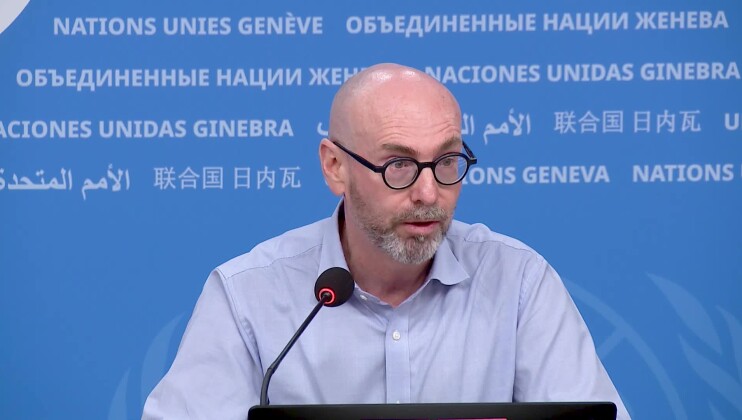
Jeremy Laurence, porte-parole de l'ONU pour les droits de l'homme, parle du risque de famine à Gaza
“La famine imminente projetée à Gaza peut et doit être évitée.
Les sonnettes d'alarme lancées au cours des derniers mois par l'ONU, y compris notre bureau, n'ont pas été entendues. Cette catastrophe est le résultat de l'homme et aurait pu être entièrement évitée,” a déclaré le porte-parole des droits de l'homme de l'ONU.
“La situation de la faim, de la famine et de la famine est le résultat des restrictions importantes imposées par Israël à l'entrée et à la distribution de l'aide humanitaire et des biens commerciaux, du déplacement de la majeure partie de la population, ainsi que de la destruction de l'infrastructure civile cruciale,” a déclaré Laurence.
“Des stratégies dangereuses de survie émergent déjà, face à la famine. L'ordre public se désintègre alors que les gens deviennent de plus en plus désespérés, et des enfants auraient été envoyés pour entreprendre le dangereux voyage du nord au sud de Gaza, sans accompagnement, dans l'espoir désespéré de trouver de la nourriture et du soutien parmi les 1,8 million de personnes déjà déplacées là-bas,” a-t-il déclaré.
Israël, en tant que puissance occupante, a l'obligation de garantir la fourniture de nourriture et de soins médicaux à la population, proportionnellement à ses besoins, et de faciliter le travail des organisations humanitaires pour fournir cette assistance.
“Israël, en tant que puissance occupante, a l'obligation de garantir la fourniture de nourriture et de soins médicaux à la population, proportionnellement à ses besoins, et de faciliter le travail des organisations humanitaires pour fournir cette assistance,” a déclaré Laurence.
“Il doit y avoir une restauration complète des services essentiels, y compris l'approvisionnement en nourriture, en eau, en électricité et en carburant.
Et il doit y avoir un cessez-le-feu immédiat, ainsi que la libération inconditionnelle des otages,” a déclaré Laurence.
“C'est déchirant, évitable et il faut arrêter la souffrance, et vous nous avez déjà entendu dire cela, la souffrance du peuple de Gaza est inadmissible. Vraiment. C'est une tache collective sur l'humanité,” a-t-il dit.
Laurence a ajouté “Nous avons vu des enfants malnutris souffrir. Nous savons qu'il y a des amputations sans anesthésie. Des enfants, comme l'a dit le haut-commissaire, se sont dirigés vers le sud et sans accompagnement. Pouvez-vous imaginer la peur? Pouvez-vous imaginer la désespoir?
FIN
À Genève:
Ravina Shamdasani - + 41 22 917 9169 / ravina.shamdasani@un.org ou Jeremy Laurence - + 41 22 917 9383 / jeremy.laurence@un.org ou Marta Hurtado - + 41 22 917 9466 / Ravina Shamdasani .hurtadogomez@un.orgou Thameen Al-Kheetan - + 41 76 223 77 62 / thameen.alkheetan@un.org
Tag and share
Twitter @UNHumanRights Facebook unitednationshumanrightsInstagram @unitednationshumanrights
HISTOIRE : Le porte-parole des droits de l'homme de l'ONU, Jeremy Laurence, sur le risque de famine à Gaza
DURÉE : 03:14
SOURCE : UNTV/OHCHR
RESTRICTIONS : AUCUNE
LANGUE : Anglais/NATS
FORMAT D'IMAGE : 16:9
DATE LIMITE : 19 mars 2024 GENEVE, SUISSE
LISTE DES PLANS
1. Plans extérieurs : Palais des Nations
2. Plan large : Salle de briefing
3. DÉCLARATION (Anglais)— Jeremy Laurence, porte-parole des droits de l'homme de l'ONU (OHCHR) : “La famine imminente projetée à Gaza peut et doit être évitée. Les sonnettes d'alarme lancées au cours des derniers mois par l'ONU, y compris notre bureau, n'ont pas été entendues. Cette catastrophe est le fruit de l'homme et aurait pu être entièrement évitée.”
1. Plan de coupe : Salle de briefing
2. DÉCLARATION (Anglais)— Jeremy Laurence, porte-parole des droits de l'homme de l'ONU (OHCHR):“La situation de la faim, de la famine et de la famine est le résultat des restrictions importantes d'Israël sur l'entrée et la distribution de l'aide humanitaire et des biens commerciaux, le déplacement de la majeure partie de la population, ainsi que la destruction de l'infrastructure civile cruciale.”
3. Plan de coupe : Salle de briefing
DÉCLARATION (Anglais)— Jeremy Laurence, porte-parole des droits de l'homme de l'ONU (OHCHR):“Des stratégies de survie dangereuses émergent déjà, face à la famine. L'ordre public se désintègre à mesure que les gens deviennent de plus en plus désespérés, et des enfants auraient été envoyés pour entreprendre le voyage périlleux du nord au sud de Gaza, sans accompagnement, dans l'espoir désespéré de trouver de la nourriture et du soutien parmi les 1,8 million de personnes déjà déplacées là-bas.”
4. Plan de coupe : Salle de briefing
DÉCLARATION (Anglais)— Jeremy Laurence, porte-parole des droits de l'homme de l'ONU (OHCHR): “Israël, en tant que puissance occupante, a l'obligation de garantir la fourniture de nourriture et de soins médicaux à la population, proportionnellement à ses besoins, et de faciliter le travail des organisations humanitaires pour fournir cette assistance.”
5. Plan de coupe : Salle de briefing
6. DÉCLARATION (Anglais)— Jeremy Laurence, porte-parole des droits de l'homme de l'ONU (OHCHR):“Il doit y avoir une restauration complète des services essentiels, y compris l'approvisionnement en nourriture, en eau, en électricité et en carburant.
7. Plan de coupe : Salle de briefing
8. DÉCLARATION (Anglais)— Jeremy Laurence, porte-parole des droits de l'homme de l'ONU (OHCHR):“Et il doit y avoir un cessez-le-feu immédiat, ainsi que la libération inconditionnelle des otages.”
9. Plan de coupe : Salle de briefing
10. DÉCLARATION (Anglais)— Jeremy Laurence, porte-parole des droits de l'homme de l'ONU (OHCHR):“C'est déchirant, évitable et doit cesser. La souffrance, et vous nous avez déjà entendu dire cela, la souffrance du peuple de Gaza est inadmissible. Vraiment. C'est une tache collective sur l'humanité.”
11. Plan de coupe : Salle de briefing
12. DÉCLARATION (Anglais)— Jeremy Laurence, porte-parole des droits de l'homme de l'ONU (OHCHR): “Nous avons vu des enfants malnutris souffrir. Nous savons qu'il y a des amputations sans anesthésie. Des enfants, comme l'a dit le haut-commissaire, sont partis vers le sud sans accompagnement. Pouvez-vous imaginer la peur ? Pouvez-vous imaginer la désespoir ?
Similar Stories
1
1
1
Edited News | OCHA , UNICEF , WFP
Aid agencies warned on Friday of the fast-developing humanitarian emergency inside Taiz City in Yemen, which has been encircled by de facto Houthi forces fighting government troops along the country’s west coast.

2
17
1
2
Edited News , Press Conferences , Images | OCHA , WMO
Two UN agencies teamed up on Wednesday to issue an appeal for immediate assistance to help communities already being impacted by the strongest El Niño on record.

3
16
2
2
Edited News , B-roll , Conferences , Images | UNITED NATIONS , UNOG
Sixth Consultative Meeting on Enhancing Coordination of Peace Initiatives and Efforts for Sudan

1
1
1
Edited News | UNICEF , WHO , UNHCR
Yemen war continues to force families from homes amid hunger and disease
More than 250,000 people have now fled renewed fighting in Yemen, the UN said on Tuesday, citing particular concern for those sheltering in the southwestern city of Taiz and the wider governorate, where access is “essentially blocked”.

1
1
1
Edited News | UNICEF
A little over one year since a ceasefire agreement was announced between Hamas fighters and Israel, more than 340 children have been reported killed and hundreds more injured, the UN Children’s Fund, UNICEF, said on Friday.

1
1
1
Edited News | UNICEF , IFRC
Six weeks after Nepal’s deadly flooding disaster, communities are still struggling to rebuild their lives, but they will need sustained help as global warming increases the risk of another Himalayan catastrophe, the UN Children’s Fund (UNICEF) said on Friday.

1
1
1
Edited News | WHO
In suspected Russia plague death, testing and monitoring underway – WHO
The death of a lab worker in Russia’s Siberia region has sparked concerns about plague being the cause, the UN World Health Organization (WHO) said on Tuesday, adding that it was following the situation closely.

1
1
Edited News | OHCHR , UNOG
UN Human Rights Chief Volker Türk on Friday provided and oral update to the 63rd session of the Human rights Council on Ukraine.

1
1
1
Edited News | OHCHR , UNOG
UN Human Rights Chief Volker Türk on Friday provided and oral update to the 63rd session of the Human rights Council on the human rights situation in Haiti.

1
1
1
Edited News | WHO
Repeated delays in bringing lifesaving medicines, prosthetics and more from Israel into Gaza risk having devastating consequences on Palestinians who urgently need them in the wartorn enclave, the UN World Health Organization (WHO) said on Friday. “A truck full of non-priority supplies or the right supplies arriving too late, doesn't save lives. That's the question that actually matters," said Dr Reinhilde Van De Weerdt, WHO Representative in the OPT.

1
1
1
Edited News | WHO
DRC: Early access to care and oxygen decisive for Ebola patients’ survival – WHO
In the Democratic Republic of the Congo (DRC), health workers fighting the country’s largest-ever Ebola outbreak are struggling to overcome critical challenges to patient care, the UN World Health Organization (WHO) warned on Tuesday.

1
1
1
Edited News | OCHA , UN
Civilians in Iran are continuing to feel the consequences of months of conflict and military escalation, the UN’s top official in the country has said, as loss of life, damage to civilian infrastructure and mounting economic pressures leave many facing continued uncertainty.