

The United Nations Office at Geneva
Multimedia Newsroom
Les humanitaires de l'ONU déplorent des conditions inacceptables pour les évacuations médicales et la livraison de l'aide humanitaire à Gaza
Les humanitaires de l'ONU dans la bande de Gaza déchirée par le conflit ont de nouveau exprimé mardi leur profond mécontentement face aux limitations d'accès imposées par l'armée israélienne pour les opérations d'aide désespérément nécessaires. Le week-end dernier, les ambulances transportant des patients nécessitant des soins médicaux depuis l'hôpital Al Amal à Khan Younis, Gaza, ont été arrêtées pendant plusieurs heures par les Forces de défense israéliennes, les ambulanciers ayant été déshabillés et d'autres membres du personnel humanitaire détenus, ont-ils déclaré.
“Les forces israéliennes ont bloqué le convoi dirigé par l'Organisation mondiale de la santé (OMS) pendant de nombreuses heures dès qu'il a quitté l'hôpital. L'armée israélienne a forcé les patients et le personnel à sortir des ambulances et a déshabillé tous les ambulanciers,” a déclaré Jens Laerke, porte-parole du Bureau de la coordination des affaires humanitaires de l'ONU (OCHA) lors d'un point de presse de l'ONU à Genève. “Trois ambulanciers de la Société du Croissant-Rouge palestinien (PRCS) ont ensuite été détenus, bien que leurs coordonnées personnelles aient été partagées à l'avance avec les forces israéliennes, tandis que le reste du convoi est resté sur place pendant plus de sept heures.”
M. Laerke a expliqué que l'ONU n'avait "reçu aucune information ou communication des autorités israéliennes expliquant pourquoi ce mouvement clairement notifié, qu'elles ont d'ailleurs reconnu avoir reçu, a été encore retenu, comme je l'ai dit, pendant au moins sept heures.”
Un ambulancier a maintenant été libéré, selon l'OCHA, qui appelle à la libération immédiate des deux autres, ainsi que de tous les autres travailleurs de la santé détenus.
Selon l'OMS, les 24 patients, dont une femme enceinte, une mère et un nouveau-né, ont dû être transférés vers des hôpitaux à Rafah car plusieurs d'entre eux nécessitaient une intervention chirurgicale qui ne pouvait pas être réalisée à Al Amal. L'hôpital Al Amal est devenu l'épicentre des opérations militaires à Khan Younis depuis près d'un mois maintenant. Quarante attaques contre l'hôpital du 22 janvier au 22 février ont tué au moins 25 personnes et rendu les installations non fonctionnelles, selon l'OCHA.
“Vous pouvez imaginer être déjà transféré dans des circonstances mettant la vie en danger, ne pas pouvoir bouger ou pouvoir bouger puis être obligé de rester dehors et devoir attendre pendant sept heures est assez inimaginable,” a déclaré Christian Lindmeier, porte-parole de l'OMS.
L'OMS a informé que seulement 12 des 36 hôpitaux sont “partiellement fonctionnels à Gaza, dont six dans le sud et six dans le nord. Cependant, 23 hôpitaux ne fonctionnent pas du tout." Le manque de facilitation de la livraison de l'aide à Gaza signifie que les travailleurs humanitaires ne peuvent pas livrer l'aide en toute sécurité à la fois au nord de Gaza et, de plus en plus, à certaines parties du sud de Gaza.
“Aucune aide humanitaire n'a atteint le Nord depuis le 23 janvier,” a noté M. Lindmeier. “Cela fait maintenant plus d'un mois, cinq semaines. L'OMS a atteint pour la dernière fois l'hôpital Al Shifa, par exemple, le 22 janvier. Et l'accès urgent maintenant de l'aide humanitaire est nécessaire pour éviter d'autres décès évitables dus à la malnutrition et aux maladies.”
L'OCHA a également tiré la sonnette d'alarme sur l'inefficacité de la manière actuelle dont les biens doivent être acheminés à Gaza. “C'est très compliqué en ce moment parce qu'il n'y a que l'ouverture vers Gaza depuis le Sud, ce qui signifie que vous devez traverser une zone de guerre entière du sud extrême au nord extrême pour livrer l'aide,” a déclaré le porte-parole de l'OCHA. “Alors qu'il serait beaucoup plus logique, pratique et efficace si nous avions des passages frontaliers directement dans le nord où nous pourrions simplement traverser et livrer l'aide.”
Décrivant Gaza comme une “zone de guerre chaotique”, M. Laerke a ajouté que “nous reconnaissons que nous avons d'énormes difficultés à distribuer l'aide qui arrive à travers Gaza. Ce n'est certainement pas une situation de notre fait. C'est la guerre elle-même qui la crée. En tête de notre liste des choses qui doivent se produire, et il n'y a pas moyen de l'éviter, il y a un cessez-le-feu humanitaire.”
-fin-
HISTOIRE: Mise à jour de Gaza OCHA-WHO
TRT: 3:21”
SOURCE: UNTV CH
RESTRICTIONS: AUCUNE
LANGUE: ANGLAIS / NATS
FORMAT D'IMAGE: 16:9
LIEU DE TOURNAGE: 27 février 2024 GENÈVE, SUISSE
LISTE DES PLANS
- Plan moyen extérieur : Allée du drapeau des Nations Unies au Bureau des Nations Unies à Genève
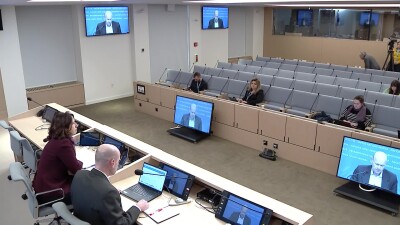
- Plan moyen : Orateurs au pupitre et journalistes dans la salle de briefing de presse
- DÉCLARATION (anglais) – Jens Laerke, porte-parole de l'OCHA : “Les forces israéliennes ont bloqué le convoi dirigé par l'OMS pendant de nombreuses heures dès son départ de l'hôpital. L'armée israélienne a forcé les patients et le personnel des ambulances à sortir et a dépouillé tous les ambulanciers de leurs vêtements. Trois ambulanciers de la Société du Croissant-Rouge palestinien ont été par la suite détenus, bien que leurs coordonnées personnelles aient été partagées avec les forces israéliennes à l'avance, tandis que le reste du convoi est resté en place pendant plus de sept heures.”
- Plan moyen : Journalistes dans la salle de presse avec un orateur à l'écran
- DÉCLARATION (anglais) – Jens Laerke, porte-parole de l'OCHA : “Nous n'avons reçu aucune information ni aucune communication des autorités israéliennes concernant ce mouvement clairement notifié, qu'ils ont d'ailleurs reconnu que nous leur avions envoyé la notification, qui a été détenu, comme je l'ai dit, pendant au moins 7 heures.”
- Plan large : Salle de briefing de presse avec des orateurs au pupitre et des journalistes
- DÉCLARATION (anglais) – Christian Lindmeier, porte-parole de l'Organisation mondiale de la Santé (OMS) : “Vous pouvez imaginer être déjà transféré dans des circonstances mettant la vie en danger, ne pas pouvoir bouger ou pouvoir bouger et être obligé de rester dehors et d'attendre pendant 7 heures, c'est assez inimaginable.”
- DÉCLARATION (anglais) – Christian Lindmeier, porte-parole de l'Organisation mondiale de la Santé (OMS) : “Aucune aide humanitaire n'a atteint le Nord depuis le 23 janvier. Cela fait plus d'un mois maintenant, cinq semaines. L'OMS a atteint l'hôpital Al Shifa pour la dernière fois, par exemple, le 22 janvier. Et l'accès urgent, encore et encore maintenant, à l'aide humanitaire est nécessaire pour éviter d'autres décès évitables dus à la malnutrition et aux maladies.”
- Plan moyen : Personnel de la conférence travaillant dans la salle de contrôle
- DÉCLARATION (anglais) - Jens Laerke, porte-parole de l'OCHA : “C'est très compliqué en ce moment car il n'y a qu'une seule ouverture vers Gaza depuis le sud, ce qui signifie que vous devez traverser une zone de guerre entière du sud extrême au nord extrême pour livrer de l'aide. Alors qu'il serait beaucoup plus logique, pratique et efficace si nous avions des passages frontaliers directement dans le nord où nous pourrions simplement traverser et livrer de l'aide.”
- Plan moyen : Porte-paroles assis au pupitre
- DÉCLARATION (anglais) - Jens Laerke, porte-parole de l'OCHA : “Nous reconnaissons que nous avons d'énormes difficultés à distribuer l'aide qui parvient à traverser Gaza. Ce n'est certainement pas une situation que nous avons créée. C'est la guerre elle-même qui la crée. En tête de notre liste des choses qui doivent se produire, et il n'y a pas moyen d'y échapper, il y a un cessez-le-feu humanitaire.”
- Gros plan : journaliste écoutant
- Plan moyen : Caméraman filmant avec le personnel de la conférence dans la salle de contrôle derrière
- Gros plan : journaliste écoutant
Similar Stories

2
17
1
2
Edited News , Press Conferences | OCHA , WMO
Two UN agencies teamed up on Wednesday to issue an appeal for immediate assistance to help communities already being impacted by the strongest El Niño on record.

3
16
2
2
B-roll , Conferences , Edited News | UNITED NATIONS , UNOG
Sixth Consultative Meeting on Enhancing Coordination of Peace Initiatives and Efforts for Sudan

1
1
1
Edited News | UNICEF , WHO , UNHCR
Yemen war continues to force families from homes amid hunger and disease
More than 250,000 people have now fled renewed fighting in Yemen, the UN said on Tuesday, citing particular concern for those sheltering in the southwestern city of Taiz and the wider governorate, where access is “essentially blocked”.

1
1
1
Edited News | UNICEF
A little over one year since a ceasefire agreement was announced between Hamas fighters and Israel, more than 340 children have been reported killed and hundreds more injured, the UN Children’s Fund, UNICEF, said on Friday.

1
1
1
Edited News | UNICEF , IFRC
Six weeks after Nepal’s deadly flooding disaster, communities are still struggling to rebuild their lives, but they will need sustained help as global warming increases the risk of another Himalayan catastrophe, the UN Children’s Fund (UNICEF) said on Friday.

1
1
1
Edited News | WHO
In suspected Russia plague death, testing and monitoring underway – WHO
The death of a lab worker in Russia’s Siberia region has sparked concerns about plague being the cause, the UN World Health Organization (WHO) said on Tuesday, adding that it was following the situation closely.

1
1
Edited News | OHCHR , UNOG
UN Human Rights Chief Volker Türk on Friday provided and oral update to the 63rd session of the Human rights Council on Ukraine.

1
1
1
Edited News | OHCHR , UNOG
UN Human Rights Chief Volker Türk on Friday provided and oral update to the 63rd session of the Human rights Council on the human rights situation in Haiti.

1
1
1
Edited News | WHO
Repeated delays in bringing lifesaving medicines, prosthetics and more from Israel into Gaza risk having devastating consequences on Palestinians who urgently need them in the wartorn enclave, the UN World Health Organization (WHO) said on Friday. “A truck full of non-priority supplies or the right supplies arriving too late, doesn't save lives. That's the question that actually matters," said Dr Reinhilde Van De Weerdt, WHO Representative in the OPT.

1
1
1
Edited News | WHO
DRC: Early access to care and oxygen decisive for Ebola patients’ survival – WHO
In the Democratic Republic of the Congo (DRC), health workers fighting the country’s largest-ever Ebola outbreak are struggling to overcome critical challenges to patient care, the UN World Health Organization (WHO) warned on Tuesday.

1
1
1
Edited News | OCHA , UN
Civilians in Iran are continuing to feel the consequences of months of conflict and military escalation, the UN’s top official in the country has said, as loss of life, damage to civilian infrastructure and mounting economic pressures leave many facing continued uncertainty.
1
1
1
Edited News | WHO , UNICEF
Aid agencies in Yemen highlighted the growing hunger emergency sparked by renewed fighting between Houthi opposition forces and Government troops, after mobile health clinics reported that hundreds of children displaced by the violence are suffering from the most deadly form of malnutrition.