

The United Nations Office at Geneva
Multimedia Newsroom
Edited News | OHCHR , UNICEF , WHO
Lebanon escalation UNICEF - OHCHR - WHO 24 September 2024
Lebanon escalation: Have we not learned anything from Gaza, UN humanitarians ask
As Lebanon mourns the victims of a wave of Israeli airstrikes believed to have left hundreds dead, UN humanitarians warned on Tuesday against a return to the “dark days of 2006” when full-scale war broke out, calling for an urgent de-escalation and the protection of civilians.
Speaking from Beirut in the aftermath of Lebanon’s “worst day in 18 years”, the UN Children’s Fund (UNICEF’s) deputy representative in the country, Ettie Higgins, insisted that “this violence has to stop immediately, or the consequences will be unconscionable”.
The wide-ranging Israeli strikes conducted on Monday in retaliation to attacks by the armed group Hezbollah killed at least 492 people, including 35 children and 58 women, injuring 1,645 across the country, according to the Lebanese Ministry of Health. UN rights office (OHCHR) spokesperson Ravina Shamdasani expressed alarm at the “sharp escalation of hostilities between Israel and Hezbollah” and called on all parties “to immediately cease the violence and to ensure the protection of civilians”.
Since the start of the war in Gaza last October, cross-border fire between Israel and Hezbollah has intensified, displacing tens of thousands of people in Israel and in southern Lebanon. The situation escalated still further last week when dozens of people in Lebanon were killed and thousands were injured following explosions targeting pagers and walkie-talkies used by Hezbollah members. Over the weekend, Hezbollah reportedly launched 150 rockets into northern Israel.
“Any further escalation in this conflict will be absolutely catastrophic for all children in Lebanon, and especially families from towns and villages in the south and Bekaa, in Eastern Lebanon” who have been forced to leave their homes, UNICEF’s Ms. Higgins insisted. She stressed that the newly displaced were in addition to the 112,000 people already displaced since last October.
The UNICEF official said that schools were closed across the country on Tuesday, “leaving children at home in fear”. Those on the move are “arriving only with clothes that they left in” as many “slept in cars and on the side of the road, in Beirut and Saïda,” she said, while “their caregivers are themselves afraid of the uncertainty of the situation”.
UNICEF said that 87 new shelters now accommodate the displaced, whose numbers are growing by the hour, in the South, Beirut, Mount Lebanon, Baalbek – Hermel, Bekaa and the North governorates. The UN refugee agency (UNHCR’s) spokesperson Matthew Saltmarsh recalled that Lebanon has for many years been a “generous host” to refugees, including an estimated 1.5 million Syrians living in the country.
He warned that due to the current escalation, many of them face displacement once again – a new crisis “after COVID-19, the economic downturn and the impact of the Beirut blast” in the capital’s port more than four years ago.
OHCHR’s Ms. Shamdasani deplored the “spillover” of violence, asking, “Have we not learned anything from what has been happening in Gaza over the past year?”
Referring to the impact of last week’s pager attacks, she said that it was “extremely abnormal” to have “people losing their eyes and when you have hospitals not able to cope with the amount of amputations that they need to carry out”.
“We've heard all this before, haven't we? Last year and throughout the past year. This is not normal and this needs to stop,” she insisted.
“The High Commissioner is calling for an immediate de-escalation. The United Nations General Assembly is meeting. World leaders are gathering in New York. They need to prioritize bringing this conflict to an end.”
Ms. Shamdasani also pointed out that Hezbollah “has been firing hundreds of rockets into Israel”, raising concerns about the “indiscriminate nature” of their attacks.
“Our calls for the respect for international humanitarian law go to all parties to the conflict, and this, of course, includes Hezbollah,” she said.
Addressing the health situation in the country, Dr. Abdinasir Abubakar, the UN World Health Organization (WHO’s) representative in Lebanon, said that following last week’s attacks, over 2,000 surgeries have been performed on the wounded and close to 1,000 people are still hospitalized.
Speaking from Beirut, Dr. Abubakar said that WHO had been working with the Lebanese health authorities since last October to prepare for a potential mass casualty event, but that the impact of the wireless device attacks was “unprecedented” and could “overwhelm any health system”. Most of the related wounds have been to the face and hands, he explained, and many people had both eye and hand injuries, requiring “two different sets of operations”.
“Most of the people who are still in admission in the hospitals… are still waiting for surgery, but also waiting for amputation,” he said. “We have never seen so much of injuries related to the hands and face and nerves,” requiring interventions by highly specialized doctors.
Turning to Monday’s deadly airstrikes, OHCHR’s Ms. Shamdasani addressed reports that tens of thousands of people in Lebanon had received mobile phone messages from the Israeli military instructing them to stay away from places where Hezbollah stores weapons. She said that the messages seemed to assume that civilians would be aware of arms storage locations and contributed to spreading “panic, fear and chaos”.
“If you warn people of an imminent attack, that does not absolve you of the responsibility to protect civilians,” she said. “The obligation to protect civilians is paramount. So, whether you've sent out a warning telling civilians to flee, [it] doesn't make it okay to then strike those areas, knowing full well that the impact on civilians will be huge.”
“What we have seen here raises questions about the respect of international humanitarian law,” which is meant to “protect civilians and thus our common humanity,” Ms. Shamdasani concluded.
-Ends-
STORY: Lebanon escalation UNICEF – OHCHR - WHO
TRT: 3:37”
SOURCE: UNTV CH
RESTRICTIONS: NONE
LANGUAGE: ENGLISH / NATS
ASPECT RATIO: 16:9
DATELINE: 24 SEPTEMBER 2024 GENEVA, SWITZERLAND
1. Exterior wide shot: Palais des Nations, Flag Alley.
2. Wide shot: Speakers at the podium of the press conference; journalists in the Press room.
3. SOUNDBITE (English) – Ettie Higgins, Deputy Representative in Lebanon, UN Children’s Fund (UNICEF): “Yesterday was Lebanon's worst day in 18 years. This violence has to stop immediately, or the consequences will be unconscionable.”
4. Wide lateral shot: Speakers at podium from rear; speaker on screens; journalists in the Press room.
5. SOUNDBITE (English) – Ravina Shamdasani, spokesperson, UN Office of the High Commissioner for Human Rights (OHCHR): “We are extremely alarmed by the sharp escalation of hostilities between Israel and Hezbollah, and call on all parties to immediately cease the violence and to ensure the protection of civilians. Yesterday marked the deadliest day of violence in years, with reports of at least 492 killed and 1,645 injured following a series of Israeli airstrikes across Lebanon. Lebanon's Health Ministry said that 35 children and 58 women were among those killed, as well as a number of medical workers.”
6. Wide lateral shot: Speaker on screens; journalists in the Press room.
7. SOUNDBITE (English) – Ettie Higgins, Deputy Representative in Lebanon, UN Children’s Fund (UNICEF): “Any further escalation in this conflict will be absolutely catastrophic for all children in Lebanon, and especially families from towns and villages in the south and Bekaa, in Eastern Lebanon, where they have been forced to leave their homes. These newly displaced add to the 112,000 people who have already been displaced since last October.”
8. Wide lateral shot: Speakers at podium from rear; speaker on screens; journalists in the Press room.
9. SOUNDBITE (English) – Ravina Shamdasani, spokesperson, UN Office of the High Commissioner for Human Rights (OHCHR): “Have we not learned anything from what has been happening in Gaza over the past year? We are extremely concerned about this spillover. This is not normal. This is extremely abnormal when you have people losing their eyes and when you have hospitals not able to cope with the amount of amputations that they need to carry out. We've heard all this before, haven't we? Last year and throughout the past year. This is not normal and this needs to stop. The High Commissioner is calling for an immediate de-escalation. The United Nations General Assembly is meeting. World leaders are gathering in New York. They need to prioritize bringing this conflict to an end.”
10. Wide lateral shot: Speaker on screens; journalists in the Press room.
11. SOUNDBITE (English) – Ravina Shamdasani, spokesperson, UN Office of the High Commissioner for Human Rights (OHCHR): “Let us be clear. Hezbollah has been firing hundreds of rockets into Israel. So there are serious concerns there as well regarding the conduct of, the means and methods used in warfare, the indiscriminate nature of the attacks as well. Let's be very clear on that. And our calls for the respect for international humanitarian law go to all parties to the conflict, and this, of course, includes Hezbollah.”
12. Wide shot: Speaker on screens; journalists in the Press room.
13. SOUNDBITE (English) – Dr. Abdinasir Abubakar, Representative in Lebanon, UN World Health Organization (WHO): “Most of the people who are still in admission in the hospitals, these are people who are still waiting for surgery, but also waiting for amputation and related elements in the hospitals. And please note that this is one of the unprecedented incidents, because we have never seen so much of injuries related to the hands and face and nerves, and requires more specialized doctors actually to handle that. And that's why many of them are still in the hospital waiting for this surgery.”
13. Wide lateral shot: Speakers at podium from rear; speaker on screens; journalists in the Press room.
14. SOUNDBITE (English) – Ravina Shamdasani, spokesperson, UN Office of the High Commissioner for Human Rights (OHCHR): “If you warn people of an imminent attack, that does not absolve you of the responsibility to protect civilians. The obligation to protect civilians is paramount. So whether you've sent out a warning telling civilians to flee, [it] doesn't make it okay to then strike those areas, knowing full well that the impact on civilians will be huge.”
14. Various shots of journalists in the Press room.
B-roll from UNICEF available here: https://weshare.unicef.org/Share/04swp0e014nyfcrqyswj18drg0of4yhn
Similar Stories

2
17
1
2
Edited News , Press Conferences | OCHA , WMO
Two UN agencies teamed up on Wednesday to issue an appeal for immediate assistance to help communities already being impacted by the strongest El Niño on record.
3
16
2
2
B-roll , Conferences , Edited News | UNITED NATIONS , UNOG
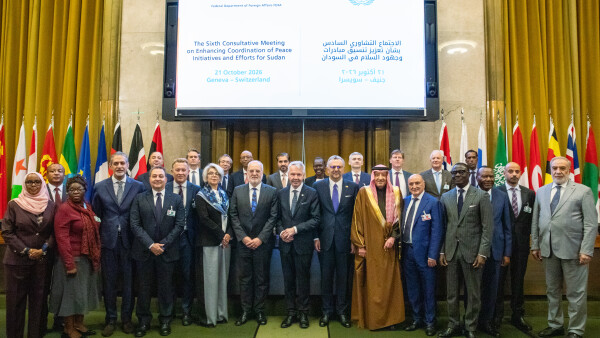
Sixth Consultative Meeting on Enhancing Coordination of Peace Initiatives and Efforts for Sudan

1
1
1
Edited News | UNICEF , WHO , UNHCR
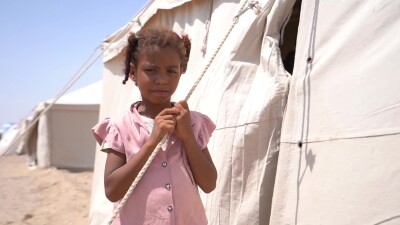
Yemen war continues to force families from homes amid hunger and disease
More than 250,000 people have now fled renewed fighting in Yemen, the UN said on Tuesday, citing particular concern for those sheltering in the southwestern city of Taiz and the wider governorate, where access is “essentially blocked”.

1
1
1
Edited News | UNICEF
A little over one year since a ceasefire agreement was announced between Hamas fighters and Israel, more than 340 children have been reported killed and hundreds more injured, the UN Children’s Fund, UNICEF, said on Friday.

1
1
1
Edited News | UNICEF , IFRC
Six weeks after Nepal’s deadly flooding disaster, communities are still struggling to rebuild their lives, but they will need sustained help as global warming increases the risk of another Himalayan catastrophe, the UN Children’s Fund (UNICEF) said on Friday.

1
1
1
Edited News | WHO
In suspected Russia plague death, testing and monitoring underway – WHO
The death of a lab worker in Russia’s Siberia region has sparked concerns about plague being the cause, the UN World Health Organization (WHO) said on Tuesday, adding that it was following the situation closely.

1
1
Edited News | OHCHR , UNOG
UN Human Rights Chief Volker Türk on Friday provided and oral update to the 63rd session of the Human rights Council on Ukraine.

1
1
1
Edited News | OHCHR , UNOG
UN Human Rights Chief Volker Türk on Friday provided and oral update to the 63rd session of the Human rights Council on the human rights situation in Haiti.

1
1
1
Edited News | WHO
Repeated delays in bringing lifesaving medicines, prosthetics and more from Israel into Gaza risk having devastating consequences on Palestinians who urgently need them in the wartorn enclave, the UN World Health Organization (WHO) said on Friday. “A truck full of non-priority supplies or the right supplies arriving too late, doesn't save lives. That's the question that actually matters," said Dr Reinhilde Van De Weerdt, WHO Representative in the OPT.

1
1
1
Edited News | WHO
DRC: Early access to care and oxygen decisive for Ebola patients’ survival – WHO
In the Democratic Republic of the Congo (DRC), health workers fighting the country’s largest-ever Ebola outbreak are struggling to overcome critical challenges to patient care, the UN World Health Organization (WHO) warned on Tuesday.

1
1
1
Edited News | OCHA , UN
Civilians in Iran are continuing to feel the consequences of months of conflict and military escalation, the UN’s top official in the country has said, as loss of life, damage to civilian infrastructure and mounting economic pressures leave many facing continued uncertainty.
1
1
1
Edited News | WHO , UNICEF
Aid agencies in Yemen highlighted the growing hunger emergency sparked by renewed fighting between Houthi opposition forces and Government troops, after mobile health clinics reported that hundreds of children displaced by the violence are suffering from the most deadly form of malnutrition.