

The United Nations Office at Geneva
Multimedia Newsroom
Les agences d'aide au Yémen ont souligné la crise croissante de la faim liée à l'escalade continue entre les rebelles Houthis en progression et les forces gouvernementales, après que des cliniques mobiles de santé ont trouvé des centaines d'enfants déplacés par la violence souffrant de la forme la plus mortelle de malnutrition.
Sur près de 2 900 enfants examinés dans des zones où l'accès humanitaire est sûr, le Fonds des Nations Unies pour l'enfance, UNICEF, a déclaré que plus d'un sur quatre souffrait de malnutrition aiguë, tandis qu'environ 200 souffraient de malnutrition aiguë sévère.
«Ceci n'est qu'un aperçu de la dévastation de la situation à travers le Yémen ; chaque jour, nous voyons de plus en plus de cas,» a déclaré Akhil Iyer, le principal orateur de l'agence dans le pays.
Des témoignages déchirants de certaines des quelque 130 000 personnes qui ont fui les affrontements dans le sud-ouest illustrent comment les civils ont été gravement touchés par les combats ces dernières semaines.
« Nous avons parlé à Haifa, une jeune mère qui a également fui la côte ouest du Yémen, et elle nous a dit que les armes, les bruits de tirs se rapprochaient de sa maison, alors que sa maison tremblait. Elle nous a dit qu'elle n'avait pas le temps de réfléchir, elle savait juste qu'elle devait courir et courir vite avec sa famille.»
Histoire : Mise à jour sur le Yémen – UNICEF, OMS
SOURCE : UNTV CH
RESTRICTIONS : AUCUNE
LANGUE : ANGLAIS / NATS
FORMAT D'IMAGE : 16:9
Durée : 4’06”
DATELINE : 25 septembre 2026 - GENÈVE, SUISSE & Camp de déplacés d'AlFirdos près d'Aden, Yémen (veuillez créditer UNICEF) Plus de broll disponible ici : https://weshare.unicef.org/Share/aoqbg65bq221k7i4s52t7y82q13ty26s
Orateurs :
- Akhil Iyer, Représentant de pays au Yémen, UNICEF, Aden
- Amna Smailbegović, OMS
LISTE DE PLANS
- Plan moyen extérieur, allée des drapeaux de l'ONU, ONU Genève.
- Vue large, Salle de presse, modérateur au podium, journalistes.
- EXTRAIT SONORE (Anglais) – Akhil Iyer, Représentant de pays au Yémen, UNICEF, depuis Aden : “Absolument, nous constatons une augmentation de la malnutrition aiguë chez les enfants, y compris la forme la plus grave, qui est la malnutrition aiguë sévère. Donc, chaque jour, nous voyons de plus en plus de cas dans ces cliniques mobiles de santé et de nutrition que nous avons mises en place, non seulement autour d'Aden, mais dans toutes les zones accessibles où des déplacés internes sont arrivés et où nous pouvons les aider.”
- Vue large, orateur au podium de la Salle de presse et orateur à distance sur écran TV.
- EXTRAIT SONORE (Anglais) – Akhil Iyer, Représentant de pays au Yémen, UNICEF, depuis Aden : “Nous avons parlé à Haifa, une jeune mère qui a également fui la côte ouest du Yémen, et elle nous a dit que les armes, les bruits de tirs se rapprochaient de sa maison, alors que sa maison tremblait. Elle nous a dit qu'elle n'avait pas le temps de réfléchir, elle savait juste qu'elle devait courir et courir vite avec sa famille.”
- Plan moyen, modérateur au podium de la Salle de presse.
- EXTRAIT SONORE (Anglais) – Akhil Iyer, Représentant de pays au Yémen, UNICEF, depuis Aden : “Aujourd'hui, elle et sa famille vivent dans une chaleur extrême à côté d'une tente sans source de revenus et ils luttent pour obtenir de la nourriture et des médicaments.”
- Vue large, orateur à distance sur écrans TV de la Salle de presse, participants.
- EXTRAIT SONORE (Anglais) – Akhil Iyer, Représentant de pays au Yémen, UNICEF, depuis Aden : “Au cours des dernières semaines, près de 2 900 enfants ont été examinés par les équipes mobiles de nutrition de l'UNICEF dans des zones où nous avons un accès humanitaire sécurisé. Et plus d'un sur quatre de ces enfants souffre de malnutrition aiguë. Et environ 200 avaient la condition très sérieuse de malnutrition aiguë sévère ; et ce n'est qu'un aperçu de la situation dévastatrice à travers le Yémen.”
- Plan moyen, cabine de contrôle.
- EXTRAIT SONORE (Anglais) – Akhil Iyer, Représentant de pays au Yémen, UNICEF, depuis Aden : “Le parcours au Yémen est extrêmement difficile, il est extrêmement ardu. Donc, ils sont beaucoup plus vulnérables aux effets du conflit, qui sont les déplacements forcés. Et leurs chances de survivre et de surmonter leur état désespéré de malnutrition aiguë - souvent sévère - diminuent avec chaque mouvement, avec chaque déplacement forcé.”
- Vue large, modérateur au podium de la Salle de presse, orateur externe sur écran TV.
- EXTRAIT SONORE (Anglais) – Amna Smailbegović, OMS : “Les zones avec certains des besoins de santé les plus élevés sont de plus en plus difficiles à atteindre. Quatre-vingt-dix des 105 districts prioritaires des clusters de santé dans le nord, les opérations de l'ONU ont été suspendues. La perturbation a un impact direct sur les services essentiels, y compris les consultations externes, les accouchements qualifiés et les services de santé infantile.”
- Vue large, Salle de presse.
- EXTRAIT SONORE (Anglais) – Akhil Iyer, Représentant de pays au Yémen, UNICEF, depuis Aden : “Au cours des trois dernières semaines, près de 130 000 personnes, dont 71 000 enfants, ont été forcées de quitter leur domicile en raison du conflit. La majorité sont déplacées à l'intérieur du gouvernorat du sud-ouest de Taiz et elles n'ont pas pu se déplacer vers des zones plus sûres souvent à cause des combats, des routes bloquées ou du manque de transport.”
- Vue large, camp de déplacés d'AlFirdos près d'Aden.
- Vue large, une famille à l'extérieur d'une tente au camp.
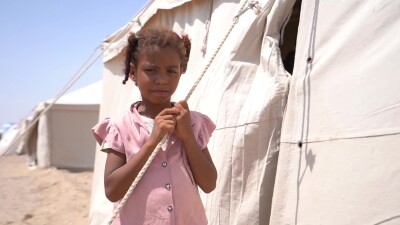
- Plan moyen-large, une jeune fille tenant une corde de tente.
- Vue large, une rangée de tentes sur un terrain vague.
- Enfants se rassemblant à l'extérieur d'une tente.
- Femmes et enfants marchant le long d'un chemin de gravier.
- Une jeune fille assise avec des bouteilles d'eau vides.
Similar Stories

1
1
1
Edited News | OCHA , UNICEF , WFP
Aid agencies warned on Friday of the fast-developing humanitarian emergency inside Taiz City in Yemen, which has been encircled by de facto Houthi forces fighting government troops along the country’s west coast.

2
17
1
2
Edited News , Press Conferences , Images | OCHA , WMO
Two UN agencies teamed up on Wednesday to issue an appeal for immediate assistance to help communities already being impacted by the strongest El Niño on record.

3
16
2
2
Edited News , B-roll , Conferences , Images | UNITED NATIONS , UNOG
Sixth Consultative Meeting on Enhancing Coordination of Peace Initiatives and Efforts for Sudan

1
1
1
Edited News | UNICEF , WHO , UNHCR
Yemen war continues to force families from homes amid hunger and disease
More than 250,000 people have now fled renewed fighting in Yemen, the UN said on Tuesday, citing particular concern for those sheltering in the southwestern city of Taiz and the wider governorate, where access is “essentially blocked”.

1
1
1
Edited News | UNICEF
A little over one year since a ceasefire agreement was announced between Hamas fighters and Israel, more than 340 children have been reported killed and hundreds more injured, the UN Children’s Fund, UNICEF, said on Friday.

1
1
1
Edited News | UNICEF , IFRC
Six weeks after Nepal’s deadly flooding disaster, communities are still struggling to rebuild their lives, but they will need sustained help as global warming increases the risk of another Himalayan catastrophe, the UN Children’s Fund (UNICEF) said on Friday.

1
1
1
Edited News | WHO
In suspected Russia plague death, testing and monitoring underway – WHO
The death of a lab worker in Russia’s Siberia region has sparked concerns about plague being the cause, the UN World Health Organization (WHO) said on Tuesday, adding that it was following the situation closely.

1
1
Edited News | OHCHR , UNOG
UN Human Rights Chief Volker Türk on Friday provided and oral update to the 63rd session of the Human rights Council on Ukraine.

1
1
1
Edited News | OHCHR , UNOG
UN Human Rights Chief Volker Türk on Friday provided and oral update to the 63rd session of the Human rights Council on the human rights situation in Haiti.

1
1
1
Edited News | WHO
Repeated delays in bringing lifesaving medicines, prosthetics and more from Israel into Gaza risk having devastating consequences on Palestinians who urgently need them in the wartorn enclave, the UN World Health Organization (WHO) said on Friday. “A truck full of non-priority supplies or the right supplies arriving too late, doesn't save lives. That's the question that actually matters," said Dr Reinhilde Van De Weerdt, WHO Representative in the OPT.

1
1
1
Edited News | WHO
DRC: Early access to care and oxygen decisive for Ebola patients’ survival – WHO
In the Democratic Republic of the Congo (DRC), health workers fighting the country’s largest-ever Ebola outbreak are struggling to overcome critical challenges to patient care, the UN World Health Organization (WHO) warned on Tuesday.

1
1
1
Edited News | OCHA , UN
Civilians in Iran are continuing to feel the consequences of months of conflict and military escalation, the UN’s top official in the country has said, as loss of life, damage to civilian infrastructure and mounting economic pressures leave many facing continued uncertainty.