

The United Nations Office at Geneva
Multimedia Newsroom
Gazans reeling from intensified malnutrition, heat risks
In Gaza, soaring temperatures, hunger and unsanitary conditions present an ever more deadly threat to a population under constant attack, UN humanitarians warned on Tuesday.
Briefing journalists in Geneva, UN World Health Organization (WHO) spokesperson Tarik Jašarević said that according to the enclave’s health authorities, 34 people have died of malnutrition and dehydration, and “in [northern Gaza’s] Kamal Adwan hospital alone, 60 cases of severe acute malnutrition were detected last week”.
“Malnutrition is definitely one of the factors that reduces the immunity, especially of the vulnerable population, elderly and children, who then can’t really cope with any disease, any pathogen that they can get,” he warned, describing a “vicious circle of not having access to enough food, to clean water, to clean sanitation, not having access to basic health services”.
Beyond the direct consequences of the Israeli military’s relentless bombardment and shelling which continued overnight into Tuesday, “everyone in Gaza” is at risk of getting sick and dying for lack of care, Mr. Jašarević said. The situation is particularly dire for pregnant women, people living with chronic diseases such as cancer or diabetes, injured people who are not treated on time and children threatened by waterborne diseases.
The WHO spokesperson reiterated the agency’s appeal for the opening of all border crossings into the enclave, in order to enable desperately needed medical evacuations. “More than 10,000 people need to receive specialized medical care outside of Gaza. These people cannot wait,” he insisted.
The flow of medical relief is also at a standstill and the UN health agency said that none of its trucks passed last week into Gaza.
Asked about the current state of health facilities in the Strip, Mr. Jašarević said that hospitals were being either evacuated or destroyed by bombing, with no possibility of rebuilding as hostilities continue. According to an update from the UN’s humanitarian affairs coordination office OCHA on Monday, patients and medical staff evacuated three hospitals in southern Gaza in just one week, “in fear of intensified military activities that could render the health facilities non-functional or inaccessible”.
Mr. Jašarević paid tribute to the dedication of health workers who afterwards return to the facilities once they feel secure enough, to try and get vital services running again. Out of Gaza’s 36 hospitals, 13 are “partially functioning”, he said.
The UN health agency reported that the total capacity at the six partially functional hospitals in southern Gaza, including three in Deir al Balah and three in Khan Younis, now stands at only 1,334 beds. Out of 11 field hospitals in the Gaza Strip, three had to temporarily shut down and four are only partially functioning, “due to the hostilities in Rafah and reduced access”, WHO said.
Regarding the hospital infrastructure, “the level of destruction is such that it is difficult to even imagine how much time will it take [to rebuild] once the war is over,” Mr. Jašarević stressed.
- - Ends -
STORY: Gaza health update - WHO
TRT: 2:03”
SOURCE: UNTV CH
RESTRICTIONS: NONE
LANGUAGE: ENGLISH / FRENCH / NATS
ASPECT RATIO: 16:9
DATELINE: 09 JULY 2024 GENEVA, SWITZERLAND
1. Exterior wide shot: Palais des Nations, Flag Alley.
2. Wide shot: Speakers at the podium of the press conference; journalists in the Press room.
3. SOUNDBITE (English) – Tarik Jašarević, spokesperson, UN World Health Organization (WHO): “According to the Ministry of Health, 34 people have died of malnutrition and dehydration so far. In Kamal Adwan hospital alone, 60 cases of severe acute malnutrition were detected last week.”
4. Wide lateral shot: Journalists and speaker on screens in the Press room.
5. SOUNDBITE (English) – Tarik Jašarević, spokesperson, UN World Health Organization (WHO): “Malnutrition is definitely one of the factors that reduces the immunity, especially of the vulnerable population, elderly and children, who then can’t really cope with any disease, any pathogen that they can get. So it’s really, it’s a vicious circle of not having access to enough food, to clean water, to clean sanitation, not having access to basic health services.”
6. Wide lateral shot: Journalists in the Press room; speaker on screen.
7. SOUNDBITE (English) – Tarik Jašarević, spokesperson, UN World Health Organization (WHO): “We keep appealing for opening of all crossings into Gaza. More than 10,000 people need to receive specialized medical care outside of Gaza. These people cannot wait.”
8. Medium shot: Wide lateral shot: speaker at podium from rear; speaker on screens; journalists in the Press room.
9. SOUNDBITE (French) – Tarik Jašarević, spokesperson, UN World Health Organization (WHO): “Ce qu’ils font, les travailleurs de santé, les médecins à Gaza, c’est de revenir quand ils se sentent en sécurité, ils reviennent sur les lieux et ils essaient de redémarrer certains services. Donc maintenant, de 36 hôpitaux à Gaza il n’y a que 13 qui fonctionnent de manière partielle.”
10. Wide shot: Journalists in the Press room; speaker on screens.
11. SOUNDBITE (French) – Tarik Jašarević, spokesperson, UN World Health Organization (WHO): “Pour ce qui est de l’infrastructure, ça c’est vraiment très difficile, parce que le niveau de destruction est tel qu’il est difficile même d’imaginer combien de temps cela va prendre une fois la guerre [est] finie.”
12. Close shots: Journalists in the Press room.
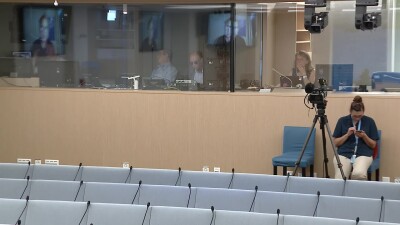
13. Wide shot: Cameraperson and technicians' booths in the Press room.
Similar Stories

1
1
1
Edited News | OCHA , UNICEF , WFP
Aid agencies warned on Friday of the fast-developing humanitarian emergency inside Taiz City in Yemen, which has been encircled by de facto Houthi forces fighting government troops along the country’s west coast.

2
17
1
2
Edited News , Press Conferences , Images | OCHA , WMO
Two UN agencies teamed up on Wednesday to issue an appeal for immediate assistance to help communities already being impacted by the strongest El Niño on record.

3
16
2
2
Edited News , B-roll , Conferences , Images | UNITED NATIONS , UNOG
Sixth Consultative Meeting on Enhancing Coordination of Peace Initiatives and Efforts for Sudan

1
1
1
Edited News | UNICEF , WHO , UNHCR
Yemen war continues to force families from homes amid hunger and disease
More than 250,000 people have now fled renewed fighting in Yemen, the UN said on Tuesday, citing particular concern for those sheltering in the southwestern city of Taiz and the wider governorate, where access is “essentially blocked”.

1
1
1
Edited News | UNICEF
A little over one year since a ceasefire agreement was announced between Hamas fighters and Israel, more than 340 children have been reported killed and hundreds more injured, the UN Children’s Fund, UNICEF, said on Friday.

1
1
1
Edited News | UNICEF , IFRC
Six weeks after Nepal’s deadly flooding disaster, communities are still struggling to rebuild their lives, but they will need sustained help as global warming increases the risk of another Himalayan catastrophe, the UN Children’s Fund (UNICEF) said on Friday.

1
1
1
Edited News | WHO
In suspected Russia plague death, testing and monitoring underway – WHO
The death of a lab worker in Russia’s Siberia region has sparked concerns about plague being the cause, the UN World Health Organization (WHO) said on Tuesday, adding that it was following the situation closely.

1
1
Edited News | OHCHR , UNOG
UN Human Rights Chief Volker Türk on Friday provided and oral update to the 63rd session of the Human rights Council on Ukraine.

1
1
1
Edited News | OHCHR , UNOG
UN Human Rights Chief Volker Türk on Friday provided and oral update to the 63rd session of the Human rights Council on the human rights situation in Haiti.

1
1
1
Edited News | WHO
Repeated delays in bringing lifesaving medicines, prosthetics and more from Israel into Gaza risk having devastating consequences on Palestinians who urgently need them in the wartorn enclave, the UN World Health Organization (WHO) said on Friday. “A truck full of non-priority supplies or the right supplies arriving too late, doesn't save lives. That's the question that actually matters," said Dr Reinhilde Van De Weerdt, WHO Representative in the OPT.

1
1
1
Edited News | WHO
DRC: Early access to care and oxygen decisive for Ebola patients’ survival – WHO
In the Democratic Republic of the Congo (DRC), health workers fighting the country’s largest-ever Ebola outbreak are struggling to overcome critical challenges to patient care, the UN World Health Organization (WHO) warned on Tuesday.

1
1
1
Edited News | OCHA , UN
Civilians in Iran are continuing to feel the consequences of months of conflict and military escalation, the UN’s top official in the country has said, as loss of life, damage to civilian infrastructure and mounting economic pressures leave many facing continued uncertainty.