

The United Nations Office at Geneva
Multimedia Newsroom
Au septième jour de la guerre au Moyen-Orient, pas de répit dans la souffrance
La guerre qui s'intensifie au Moyen-Orient a accru les préoccupations croissantes concernant la souffrance et le déplacement supplémentaires des civils dans la région et bien au-delà, ont déclaré vendredi les agences de l'ONU.
Sept jours après que les bombardements israéliens et américains en Iran ont provoqué des contre-attaques continues à travers le Moyen-Orient, les humanitaires ont confirmé un bouleversement massif au Liban, avec des centaines d'abris désormais pleins, alors que des quartiers entiers de Beyrouth se sont vidés.
« Les incursions terrestres militaires d'Israël dans le sud du Liban, les ordres de déplacement massifs pour la population dans les banlieues sud de Beyrouth, la région de la Bekaa et toute la zone au sud du fleuve Litani, ainsi que ses frappes aériennes continues sur différentes parties du pays, apportent plus de misère, plus de souffrance à une population civile déjà épuisée », a déclaré Ravina Shamdasani, porte-parole du bureau des droits de l'homme de l'ONU, OHCHR.
De l'agence des migrations de l'ONU, OIM, le Chef de Mission au Liban Mathieu Luciano a décrit la détérioration dramatique dans le pays jeudi soir alors que l'armée israélienne a effectué « plusieurs frappes aériennes sur la banlieue sud de Beyrouth durant la nuit ».
Il a ajouté que de nombreux abris collectifs sont à pleine capacité, notamment à Beyrouth et au Mont Liban, « donc, les gens sont simplement redirigés vers d'autres abris, comme je l'ai dit, surtout au nord, à Al Qaa, dans des endroits sûrs dans la Bekaa également, où il y a encore de la place ».
L'agence des réfugiés de l'ONU, le HCR, a déclaré que la crise qui s'aggrave est une urgence humanitaire majeure nécessitant une réponse régionale immédiate.
Le Directeur des urgences du HCR, Ayaki Ito, a déclaré aux journalistes à Genève que le conflit déclenche des mouvements de population significatifs à travers la région et vers l'Asie du Sud-Ouest.
Près de 25 millions de personnes dans les zones touchées sont déjà des réfugiés, des déplacés internes ou des rapatriés récents, exerçant une pression supplémentaire sur les pays hôtes fragiles.
La crise majeure du transport maritime commercial causée par la guerre, qui a pratiquement arrêté tout mouvement de navires dans le détroit d'Ormuz au sud de l'Iran, impacte déjà les agences de l'ONU et les partenaires cherchant à envoyer des secours vitaux à Gaza et au Soudan, entre autres urgences.
Le canal étroit transporte près d'un cinquième du pétrole mondial ainsi que de grandes quantités de marchandises commerciales.
« Tout le trafic maritime a considérablement ralenti », a déclaré Anne Schaefer, Directrice adjointe de l'OIM pour la réponse humanitaire et la récupération. « C'est le cas à Port Soudan, mais aussi dans d'autres ports du continent. »
Pour Gaza, les articles d'abri, les bâches, les tentes et les lampes « sont tous bloqués à différents stades, incapables d'arriver maintenant », a-t-elle déclaré, avant d'avertir d'une « détérioration significative de la chaîne d'approvisionnement très, très rapidement ».
L'impact sur les missions de secours au Soudan est également particulièrement préoccupant car la situation humanitaire « se détériore très, très rapidement », a poursuivi l'officiel de l'OIM. « Et bien sûr, la saison des pluies est juste au coin de la rue, donc, si nous n'obtenons pas les fournitures dans les six à huit prochaines semaines, il va être très, très difficile d'atteindre les populations, surtout au Darfour. »
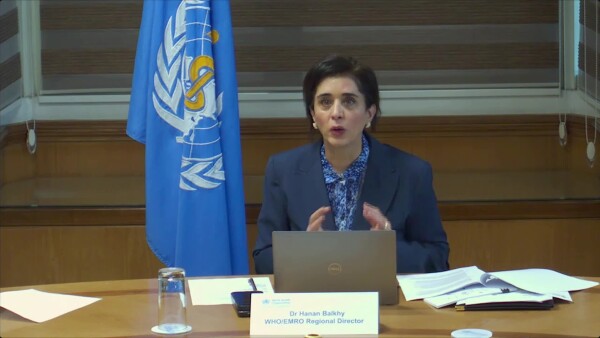
Reprenant ces préoccupations, le Dr Hanan Balkhy de l'agence de santé de l'ONU, Directrice régionale pour la Méditerranée orientale, a confirmé que les fournitures nécessaires ne transitent pas par le détroit d'Ormuz. Mais elle a noté que les vols reprenaient maintenant depuis Dubaï, qui est un important centre logistique pour l'ensemble du système humanitaire.
« Nous avons plus de 50 demandes de fournitures d'urgence dans 25 pays qui ont été affectés par cette pause actuelle », a noté le Dr Balkhy, y compris le Liban, le Yémen et la Somalie.
De retour à Genève, Mme Shamdasani de l'OHCHR a souligné la situation des personnes en Afghanistan, où environ 66 000 personnes ont été déplacées à la suite des derniers combats avec le Pakistan.
« Au Pakistan également, les bombardements et autres tirs ont forcé les gens à fuir leurs maisons et les civils des deux côtés de cette frontière doivent maintenant fuir les frappes aériennes, les tirs d'artillerie lourde, les bombardements de mortiers et les tirs d'armes à feu », a-t-elle déclaré.
fin
Guerre au Moyen-Orient – OHCHR, OIM, OMS
TRT : 3’02”
SOURCE : UNTV CH
RESTRICTIONS : AUCUNE
LANGUE : ANGLAIS / NATS
FORMAT : 16:9
DATELINE : 6 MARS 2026 GENÈVE, SUISSE
Orateurs :
- Mathieu Luciano, Chef de Mission au Liban, OIM (depuis Beyrouth)
- Anne-Kathrin Schaefer, Directrice adjointe pour la réponse humanitaire et la relance, OIM
- Dr Hanan Balkhy, Directrice régionale de l'OMS pour la Méditerranée orientale (depuis Le Caire)
- Ravina Shamdasani, porte-parole, OHCHR
LISTE DES PLANS
- Vue extérieure large, allée des drapeaux de l'ONU Genève.
- Vue large, salle de presse de l'ONU Genève, orateurs au podium.
- EXTRAIT SONORE (Anglais) – Ravina Shamdasani, porte-parole, OHCHR : “Les incursions terrestres militaires d'Israël dans le sud du Liban, les ordres de déplacement massif pour la population dans les banlieues sud de Beyrouth, la région de la Bekaa et toute la zone au sud du fleuve Litani, ainsi que ses frappes aériennes continues sur différentes parties du pays apportent plus de misère, plus de souffrance à une population civile déjà épuisée.”
- Vue large, journalistes.
- EXTRAIT SONORE (Anglais) – Mathieu Luciano, Chef de Mission au Liban, OIM : “La situation au Liban s'est détériorée de manière assez marquée et a pris un tournant dramatique hier soir avec l'armée israélienne effectuant de multiples frappes aériennes sur la banlieue sud de Beyrouth pendant la nuit.”
- Vue large, journalistes, écrans de télévision montrant un orateur à distance.
- EXTRAIT SONORE (Anglais) – Mathieu Luciano, Chef de Mission au Liban, OIM : “Concernant les abris collectifs, en effet, vous savez, beaucoup sont déjà à pleine capacité, surtout dans le Mont Liban à Beyrouth. Donc, d'autres abris, donc juste, vous savez, les gens sont simplement redirigés vers d'autres abris, comme je l'ai dit, surtout dans le nord, à Al Qaa, dans des endroits sûrs dans la Bekaa également, où il y a encore de la place.”
- Vue large, orateurs au podium, écrans de télévision, journalistes.
- EXTRAIT SONORE (Anglais) – Ravina Shamdasani, porte-parole, OHCHR : “Nous avons des rapports indiquant que jusqu'à 66 000 personnes ont été déplacées en Afghanistan à la suite des derniers combats. Au Pakistan également, les bombardements et autres tirs ont forcé les gens à fuir leurs maisons et les civils des deux côtés de cette frontière doivent maintenant fuir les frappes aériennes, les tirs d'artillerie lourde, les bombardements de mortiers et les tirs d'armes à feu.”
- Vue large, podium, journalistes.
- EXTRAIT SONORE (Anglais) – Anne-Kathrin Schaefer, Directrice adjointe pour la réponse humanitaire et la relance, OIM : “Tout le trafic maritime a considérablement ralenti, ce n'est pas seulement le cas à Port Soudan, mais aussi dans d'autres ports du continent.”
- Vue moyenne-large, orateurs au podium.
- EXTRAIT SONORE (Anglais) – Dr Hanan Balkhy, Directrice régionale de l'OMS pour la Méditerranée orientale (depuis Le Caire) : “Le détroit d'Ormuz n'a pas été rouvert pour ces types d'expéditions. Cependant, l'espace aérien a été temporairement, dans une pause temporaire, et maintenant il reprend. Donc, nous avons plus de 50 demandes de fournitures d'urgence à travers 25 pays qui ont été affectées par cette pause actuelle.”
- Vue moyenne-large, orateurs au podium.
- EXTRAIT SONORE (Anglais) – Anne-Kathrin Schaefer, Directrice adjointe pour la réponse humanitaire et la relance, OIM : “Pour Gaza, nous avons actuellement des articles d'abri destinés, des bâches, des tentes et des lampes spécifiquement et ils sont tous bloqués à différents stades, incapables d'arriver maintenant.”
- Vue large, journalistes, journalistes de télévision, cabines de contrôle, techniciens
- EXTRAIT SONORE (Anglais) – Anne-Kathrin Schaefer, Directrice adjointe pour la réponse humanitaire et la relance, OIM : “Nous allons voir une détérioration significative de la chaîne d'approvisionnement très, très rapidement, surtout que certains projets de très grande envergure commencent littéralement juste dans la situation, surtout au Soudan, la situation humanitaire se détériore très, très rapidement. Et bien sûr, la saison des pluies est juste au coin de la rue, à venir. Donc, si nous n'obtenons pas les fournitures dans les six à huit prochaines semaines, il sera très, très difficile d'atteindre les populations, surtout au Darfour.”
- Vue moyenne-large, orateurs au podium, journalistes.
Similar Stories

1
1
1
Edited News | UNICEF
A little over one year since a ceasefire agreement was announced between Hamas fighters and Israel, more than 340 children have been reported killed and hundreds more injured, the UN Children’s Fund, UNICEF, said on Friday.

1
1
1
Edited News | UNICEF , IFRC
Six weeks after Nepal’s deadly flooding disaster, communities are still struggling to rebuild their lives, but they will need sustained help as global warming increases the risk of another Himalayan catastrophe, the UN Children’s Fund (UNICEF) said on Friday.

1
1
1
Edited News | WHO
In suspected Russia plague death, testing and monitoring underway – WHO
The death of a lab worker in Russia’s Siberia region has sparked concerns about plague being the cause, the UN World Health Organization (WHO) said on Tuesday, adding that it was following the situation closely.

1
1
Edited News | OHCHR , UNOG
UN Human Rights Chief Volker Türk on Friday provided and oral update to the 63rd session of the Human rights Council on Ukraine.

1
1
1
Edited News | OHCHR , UNOG
UN Human Rights Chief Volker Türk on Friday provided and oral update to the 63rd session of the Human rights Council on the human rights situation in Haiti.

1
1
1
Edited News | WHO
Repeated delays in bringing lifesaving medicines, prosthetics and more from Israel into Gaza risk having devastating consequences on Palestinians who urgently need them in the wartorn enclave, the UN World Health Organization (WHO) said on Friday. “A truck full of non-priority supplies or the right supplies arriving too late, doesn't save lives. That's the question that actually matters," said Dr Reinhilde Van De Weerdt, WHO Representative in the OPT.

1
1
1
Edited News | WHO
DRC: Early access to care and oxygen decisive for Ebola patients’ survival – WHO
In the Democratic Republic of the Congo (DRC), health workers fighting the country’s largest-ever Ebola outbreak are struggling to overcome critical challenges to patient care, the UN World Health Organization (WHO) warned on Tuesday.

1
1
1
Edited News | OCHA , UN
Civilians in Iran are continuing to feel the consequences of months of conflict and military escalation, the UN’s top official in the country has said, as loss of life, damage to civilian infrastructure and mounting economic pressures leave many facing continued uncertainty.
1
1
1
Edited News | WHO , UNICEF
Aid agencies in Yemen highlighted the growing hunger emergency sparked by renewed fighting between Houthi opposition forces and Government troops, after mobile health clinics reported that hundreds of children displaced by the violence are suffering from the most deadly form of malnutrition.
1
1
1
Edited News | UNHCR
Displacement on the rise in Yemen as fighting continues - UNHCR
As hostilities worsen in Yemen, more people have been fleeing their homes, further intensifying the humanitarian crisis within the region, the UN Refugee Agency (UNHCR) warned on Tuesday.
1
1
1
Edited News | IOM , OHCHR , UNFPA , UNOG , UNHCR , WHO
Yemen’s humanitarian crisis growing by the hour amid spike in displacement
Yemenis displaced by renewed fighting have described fleeing for their lives amid shelling and gunfire, aid agencies reported on Friday, while highlighting the dramatic increase in humanitarian needs in the country and in Djibouti, where thousands have sought shelter.
1
1
1
Edited News | OHCHR , UNOG
The UN Human Rights Office issued on Friday a report documenting a shocking pattern of sexual violence amid Russia’s full-scale armed attack on Ukraine.